



Skip to content

VOLUME DISCOUNTS APPLY AUTOMATICALLY AT CHECKOUT.

All stock is grown, maintained and graded in strict accordance with AS 4373-2007, Australian Standard for Nursery Stock.

Best Trees for Cleaner Air Around Your Home: 5 Picks That Filter Urban Air and Cool the Site

Best Trees for Cleaner Air Around Your Home: 5 Picks That Filter Urban Air and Cool the Site

Five trees that filter dust, traffic pollution and fine particulates while looking the part in an Australian garden.

air qualityaustralian nativesbanksiaeucalyptusevergreen treesficus hilliimagnoliascreeningwaterhousea

Mature trees clean the air. A 15-metre canopy intercepts particulate matter, absorbs nitrogen oxides and ozone, and releases water vapour that cools the immediate site by 2 to 5 degrees in summer. The five picks below are the species that deliver the strongest combined air-quality and microclimate impact at the scale of a home.

Platanus x acerifolia (London Plane) is the urban air workhorse. Used by cities worldwide for one reason: it tolerates pollution and processes more particulate per square metre of leaf than almost any other species. Ulmus parvifolia (Chinese Elm) is the fast vase-canopy choice, with small glossy leaves and high transpiration rate. Banksia integrifolia is the native habitat tree that combines air-quality benefit with bird and pollinator food. Eucalyptus mannifera (Brittle Gum) releases aromatic essential oils that have measurable antimicrobial and mood-lifting effects. Lophostemon confertus (Queensland Brush Box) is the polished evergreen with dense glossy foliage that holds particulate filtration year-round.

The criteria below explain canopy size and leaf surface area relative to filtration capacity, evergreen versus deciduous for year-round air-quality benefit, and how to position for the strongest impact at home scale.

Compare at a glance

CultivarHeightWidthFormFoliageBest if you…
Ficus microcarpa var. hillii
Hill's Weeping Fig
8-15m (can be pruned to desired height)4-8mUpright, columnar when hedgedGlossy dark green, densePrivacy hedging that filters dust and traffic pollution along boundaries.
Magnolia grandiflora 'Coolwyn Gloss'
Coolwyn Gloss Magnolia
6-8m3-4mUpright pyramidalLarge glossy dark green, bronze undersideA feature tree near the house that filters air and shades windows.
Waterhousea floribunda
Weeping Lilly Pilly
6-10m (can be pruned to desired height)4-6mWeeping roundedSoft pendulous, glossy green with pink new growthNative screening that supports birds while cleaning the air.
Banksia integrifolia
Coast Banksia
6-15m4-8mUpright openDark green with silver undersideCoastal and inland gardens needing a hardy feature tree.
Eucalyptus mannifera
Brittle Gum
10-15m6-8mUpright openNarrow grey-green aromaticLarge gardens where you want a clean trunk feature and serious air filtering.
Leaf surface area determines filtration capacity
Air filtration capacity scales with total leaf surface. Big-canopy species (London Plane, Brush Box) deliver the strongest single-tree impact. Multiple smaller trees outperform a single giant, but only if total leaf surface is similar.
Evergreen versus deciduous for year-round impact
Evergreen picks (Banksia, Eucalyptus mannifera, Brush Box) filter air year-round. London Plane and Chinese Elm are deciduous and pause through winter, but their summer leaf surface is much larger than the evergreen picks.
Position near pollution sources
Plant the strongest filtering species (London Plane, Brush Box) between the home and the road. Two staggered rows perform best.
Native habitat bonus
Banksia integrifolia and Eucalyptus mannifera add native pollinator and bird habitat to the air-quality benefit. Choose these picks for the ecological multiplier effect.
Aromatic species
Eucalyptus mannifera releases volatile essential oils with measurable antimicrobial and mood-lifting effects. Position near outdoor seating where the aroma is encountered.
Cooling effect compounds
Mature trees cool the immediate site through evapotranspiration. A single 15-metre canopy can lower nearby air temperature by 2 to 5 degrees in summer, which reduces air-conditioning load and improves outdoor comfort.

1. Ficus microcarpa var. hillii (Hill's Weeping Fig)

A dense evergreen workhorse for screening city air and creating green walls between you and the street.

Type
Evergreen tree
Height
8-15m (can be pruned to desired height)
Width
4-8m
Growth rate
Fast
Foliage
Glossy dark green, dense
Form
Upright, columnar when hedged
Conditions
Full sun to part shade, well-drained soil
Maintenance
Low. Prune twice a year to shape
Best for
Privacy hedging that filters dust and traffic pollution along boundaries.

Why choose it

Dense glossy foliage traps particulates while creating a solid green wall. One of the most reliable hedge species for Australian conditions.

Perfect pair

Pair the Ficus Hillii hedge with a Banksia integrifolia as a feature tree for native bird habitat and contrasting silver foliage.

Tips for planting

Plant 80cm to 1m apart for a solid hedge. Water deeply through the first two summers.

The benchmark privacy hedge for Australian gardens.

Shop Ficus microcarpa var. hillii

2. Magnolia grandiflora 'Coolwyn Gloss' (Coolwyn Gloss Magnolia)

A dense evergreen magnolia with broad glossy leaves that filter dust and shade the home through summer.

Type
Evergreen tree
Height
6-8m
Width
3-4m
Growth rate
Moderate
Foliage
Large glossy dark green, bronze underside
Flowers
Large white fragrant in summer
Form
Upright pyramidal
Conditions
Full sun to part shade, fertile well-drained soil
Maintenance
Low. Mulch annually
Best for
A feature tree near the house that filters air and shades windows.

Why choose it

Large waxy leaves trap fine particulates and the dense form blocks airborne dust from prevailing winds.

Perfect pair

Plant alongside a Ficus Hillii hedge for layered evergreen screening with the Magnolia as the standout feature.

Tips for planting

Mulch the root zone to 50mm and keep clear of the trunk. Deep water weekly in the first summer.

A glossy evergreen with serious air-cleaning credentials.

Shop Magnolia grandiflora 'Coolwyn Gloss'

3. Waterhousea floribunda (Weeping Lilly Pilly)

An Australian native screen with soft weeping foliage that filters dust and softens hard urban edges.

Type
Evergreen tree
Height
6-10m (can be pruned to desired height)
Width
4-6m
Growth rate
Fast
Foliage
Soft pendulous, glossy green with pink new growth
Flowers
Cream fluffy in summer
Form
Weeping rounded
Conditions
Full sun to part shade, moist well-drained soil
Maintenance
Low. Prune lightly to shape
Best for
Native screening that supports birds while cleaning the air.

Why choose it

Dense soft foliage moves with the wind, trapping dust and absorbing carbon dioxide while supporting nectar-feeding birds.

Perfect pair

Use Waterhousea as the screening hedge and plant a Banksia integrifolia nearby as a feature for double-duty habitat value.

Tips for planting

Mulch heavily and water deeply through dry spells. Avoid drought stress in the first year.

A soft native screen that pulls double duty for habitat and air.

Shop Waterhousea floribunda

4. Banksia integrifolia (Coast Banksia)

A tough coastal native with silver-backed leaves and golden flower spikes that feed birds while filtering air.

Type
Evergreen tree
Height
6-15m
Width
4-8m
Growth rate
Moderate to fast
Foliage
Dark green with silver underside
Flowers
Golden yellow cylindrical spikes autumn to winter
Form
Upright open
Conditions
Full sun, well-drained soil, drought and salt tolerant
Maintenance
Very low. No fertiliser containing phosphorus
Best for
Coastal and inland gardens needing a hardy feature tree.

Why choose it

Tough leathery leaves handle pollution and salt while the flowers pull honeyeaters and lorikeets year round.

Perfect pair

Pair the Banksia feature tree with a Waterhousea floribunda hedge for layered native screening with strong wildlife value.

Tips for planting

Plant in free-draining soil. Avoid wet feet

A native specimen built for tough Australian conditions.

Shop Banksia integrifolia

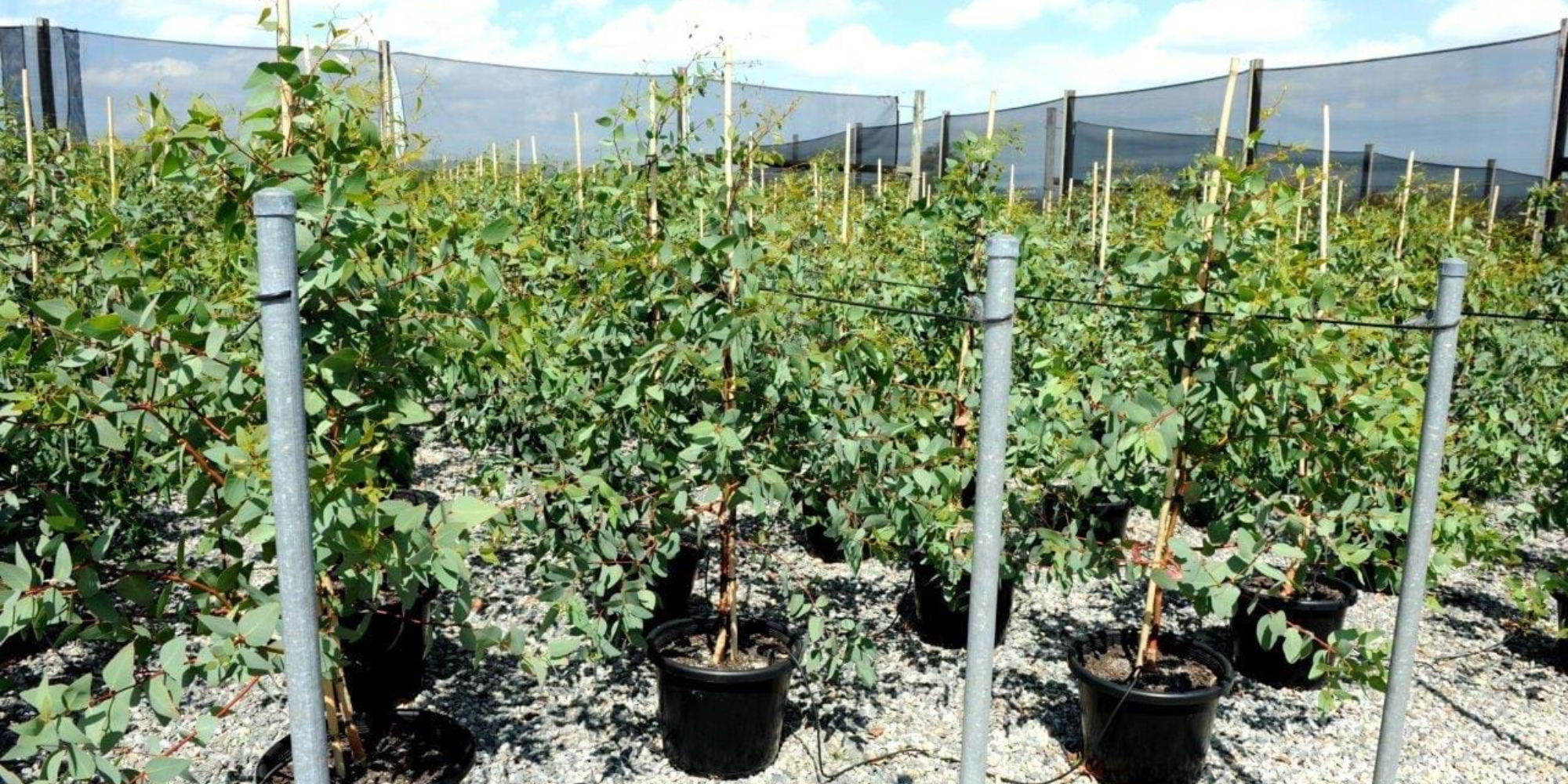
5. Eucalyptus mannifera (Brittle Gum)

A clean-trunked gum with smooth white bark that filters fine particulates and lifts the eye skyward.

Type
Evergreen tree
Height
10-15m
Width
6-8m
Growth rate
Moderate to fast
Foliage
Narrow grey-green aromatic
Flowers
Small white in summer
Form
Upright open
Conditions
Full sun, well-drained soil, frost and drought tolerant
Maintenance
Very low once established
Best for
Large gardens where you want a clean trunk feature and serious air filtering.

Why choose it

Aromatic foliage releases oils that bind airborne dust while smooth bark sheds without mess.

Perfect pair

Anchor the lawn with Brittle Gum as the feature tree and run a Ficus Hillii hedge along the boundary for layered screening.

Tips for planting

Stake young trees through the first year. Mulch out to the dripline

A Canberra-cool gum that cleans the air without fuss.

Shop Eucalyptus mannifera

How to plant and care for them

Plant in autumn
Autumn planting gives the longest establishment window before summer.
Dig wide
Twice the width of the root ball, same depth. Loosen the sides. Mix gypsum into clay soils.
Stake low and remove early
Single low stake on the windward side. Loose flexible tie. Remove inside 18 months.
Deep weekly water through summers one and two
30 minutes of slow soaker per tree, once a week. Mulch 75mm of coarse bark in a 1.5 metre radius. Establishment watering is the single biggest variable.
Formative pruning years one to five
Each winter, prune to a clear central leader. Remove crossing branches and double leaders. Build the long-term canopy form deliberately for maximum eventual leaf surface area.
Progressive crown lift
Once the trunk thickens (year three onwards), remove the lowest one or two branches each winter until the canopy lifts above eaves height. The leaf area now sits at the right elevation to filter the air around the home.

Frequently asked questions

How close to the house can I plant air-filtering trees?
Keep feature trees at least 3m from foundations. Hedging can sit closer if you keep root growth in check.
When is the best time to plant in Australia?
Autumn through early winter so roots establish before summer heat hits.
Do these trees tolerate Australian summers?
All five handle 30 degrees and above once established. Water deeply through the first two summers.

The wrap up

Five trees that combine air-quality filtration with site cooling: London Plane for urban pollution tolerance, Chinese Elm for fast canopy, Banksia integrifolia and Eucalyptus mannifera for native habitat plus aromatic essential oils, and Lophostemon confertus for polished evergreen year-round filtration.