



Skip to content

VOLUME DISCOUNTS APPLY AUTOMATICALLY AT CHECKOUT.

All stock is grown, maintained and graded in strict accordance with AS 4373-2007, Australian Standard for Nursery Stock.

Best Trees to Plant in a Pot: Our 12 Top Recommendations

Best Trees to Plant in a Pot: Our 12 Top Recommendations

Eleven small pot picks — formal Buxus balls, architectural Dracaena, tropical palm, bold Magnolia, productive citrus, sculptural Maple, succulent Agave, Mediterranean Olive and Japanese pine.

AcerBayContainer GardeningMagnoliaPot TreesTerraces

Planting in pots opens up garden design to balconies, courtyards, paved entries and rooftops where in-ground planting isn't possible. The right pick transforms a paved corner into a focal point.

Three principles drive pot planting: generous pot size (always bigger than feels necessary), premium potting mix with extra drainage, and regular feeding and water (pots dry out faster than ground). The twelve picks below all perform reliably in pots when these basics are met.

The twelve picks

  1. Buxus Topiary Balls: pre-trained formal pot spheres.
  2. Dracaena marginata: sculptural architectural twisted trunks.
  3. Phoenix roebelenii: compact tropical resort palm.
  4. Magnolia 'Teddy Bear': bold-leaf evergreen statement.
  5. Calamondin Cumquat: year-round productive Mediterranean citrus.
  6. Pittosporum 'Miss Muffet': refined no-fuss compact evergreen.
  7. Citrus australasica (Finger Lime): Australian native productive pot citrus.
  8. Acer palmatum: refined Japanese Maple living sculpture.
  9. Agave attenuata (Foxtail Agave): spineless architectural succulent.
  10. Olea 'Swan Hill': non-fruiting silver-grey Mediterranean.
  11. Olea europaea (Ex-Ground): mature gnarled Mediterranean Olive with instant century-old character.
  12. Pinus thunbergii (Japanese Black Pine): bonsai-tradition sculptural pot pine.

Compare the twelve picks side by side in the table below.

1. Buxus sempervirens (Topiary Balls) (English Box Topiary Balls)

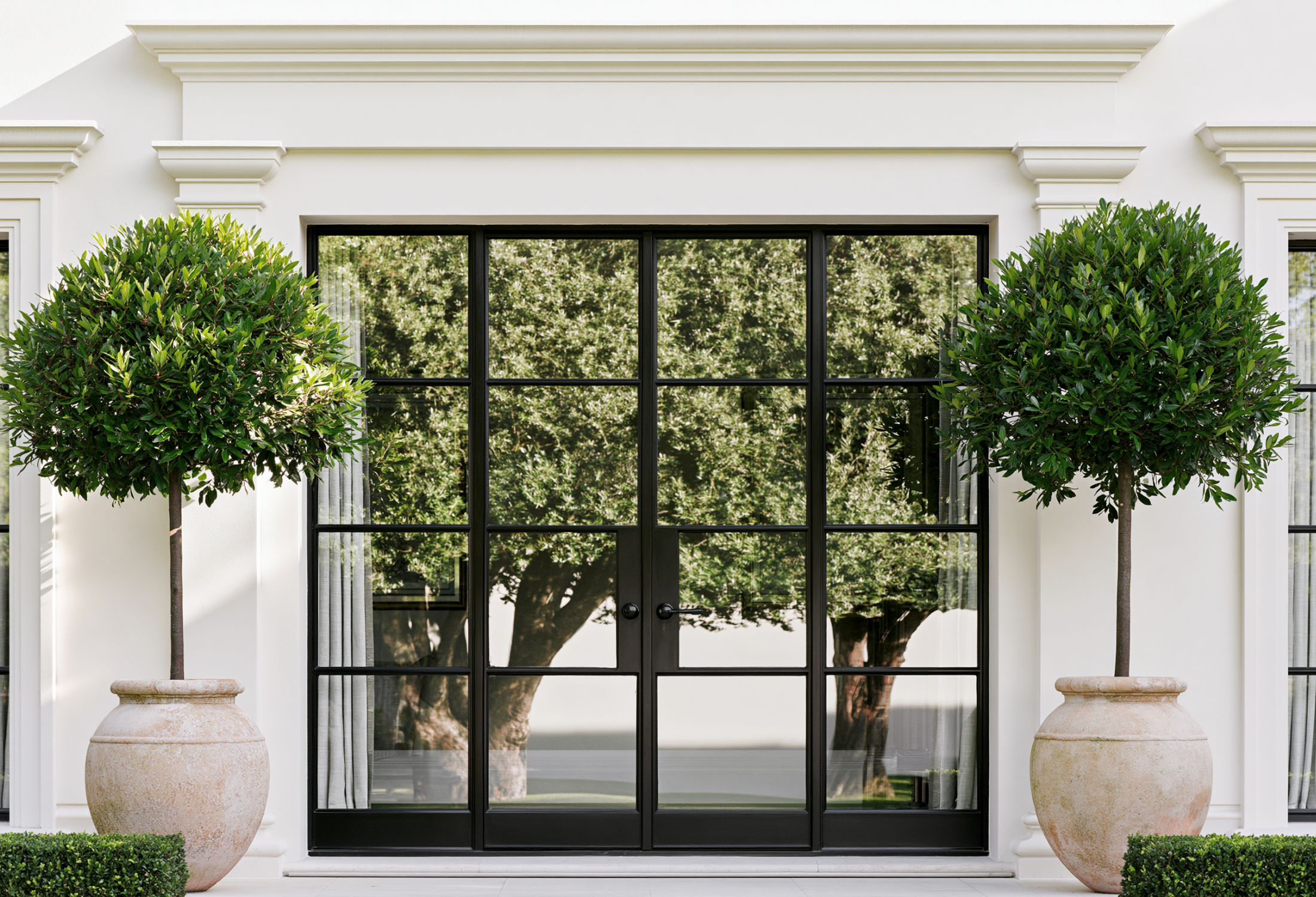
Pre-trained Buxus topiary balls — the most versatile formal pot specimen in cultivation. Matched pairs in matching terracotta pots flank entries with instant formal impact, single specimens punctuate corners. Slow growing, holds shape with light trimming.

Type
Pre-trained formal pot topiary
Height
0.4 to 0.8m
Width
0.4 to 0.8m
Growth rate
Slow
Foliage
Tight dense small dark green
Flowers
Insignificant
Form
Pre-trained sphere
Conditions
Full sun to part shade, well-drained
Maintenance
Light trim twice a year.
Best for
instant formal pot impact in matched terracotta pairs, or pre-trained spheres punctuating corner positions.

Why choose it

Buxus topiary balls are the most reliable formal pot specimens — pre-trained shape arrives ready to install, no years of training time. Matched pairs in pots create instant high-end formal impact.

Perfect pair

Plant in matched terracotta pots flanking the entry, or pair with Laurus Standards for layered formal pot feature.

Tips for planting

Pots: 30 to 50L. Light trim twice a year.

Pre-trained formal spheres. The versatile pot punctuation.

Shop Buxus sempervirens (Topiary Balls)

2. Dracaena marginata (Madagascar Dragon Tree)

Architectural pot specimen with slender twisted trunks and rosettes of narrow strappy leaves edged red. The sculptural indoor-outdoor pot tree — reads as living sculpture in modern courtyards and entry positions.

Type
Architectural pot specimen
Height
1.5 to 3m in pot
Width
0.8 to 1.5m
Growth rate
Slow
Foliage
Narrow strappy dark green edged red
Flowers
Insignificant
Form
Slender twisted trunks topped with leaf rosettes
Conditions
Bright filtered light to morning sun, frost-free
Maintenance
Very low. Remove spent leaves.
Best for
an architectural indoor-outdoor pot specimen, or a sculptural modern entry feature.

Why choose it

Dracaena marginata is the most architectural sculptural pot specimen in cultivation. The slender twisted trunks topped with leaf rosettes read as living modernist sculpture — perfect for contemporary architectural entries and minimalist courtyards.

Perfect pair

Plant in matched designer pots flanking entry, or pair with Phoenix roebelenii for layered architectural pot feature.

Tips for planting

Frost-free. Pots: 30 to 50L. Bright filtered light. Indoor-outdoor friendly.

Slender twisted trunks. Living modernist sculpture.

Shop Dracaena marginata

3. Phoenix roebelenii (Pygmy Date Palm)

Compact tropical palm perfect for pots. Slender single trunk with fine arching pinnate fronds. The iconic resort pot palm — reads as tropical holiday from a single specimen.

Type
Compact tropical pot palm
Height
2 to 3m in pot
Width
1.5 to 2m
Growth rate
Slow to moderate
Foliage
Fine arching pinnate fronds
Flowers
Insignificant cream
Form
Slender trunk with arching crown
Conditions
Full sun to part shade, well-drained, frost-free
Maintenance
Low. Remove spent fronds.
Best for
the iconic tropical resort pot palm, or matched-pair flanks at a pool entry.

Why choose it

Phoenix roebelenii is the resort pot palm. Compact size suits pots perfectly, and the slender trunk plus arching crown reads as tropical holiday from a single specimen — instant pool-resort character.

Perfect pair

Plant in matched pots flanking the pool gate, or pair with Dracaena marginata for layered architectural pot palms.

Tips for planting

Pots: 50 to 80L. Frost-free. Multi-trunk specimens are more dramatic than single.

The resort pool pot palm. Instant tropical.

Shop Phoenix roebelenii

4. Magnolia grandiflora 'Teddy Bear' (Teddy Bear Magnolia)

Compact bold evergreen Magnolia with thick glossy leaves and copper undersides. The most popular bold-leaf pot specimen — dense pyramidal form holds shape, fragrant summer flowers add seasonal feature, large pot required.

Type
Compact bold-leaf pot Magnolia
Height
4 to 5m
Width
2 to 3m
Growth rate
Slow
Foliage
Thick deep glossy green with copper-brown undersides
Flowers
Large fragrant cream-white in summer
Form
Compact dense pyramidal
Conditions
Full sun to part shade, well-drained, frost hardy
Maintenance
Very low.
Best for
the bold-leaf pot statement specimen, or compact courtyard Magnolia with year-round structure.

Why choose it

Teddy Bear is the bold-leaf pot Magnolia. Compact 4 to 5m mature scale suits large pots, and the thick glossy leaves with copper undersides give the pot tree maximum textural impact.

Perfect pair

Plant in matched large pots flanking the entry, or pair with Acer palmatum for bold-fine pot pairing.

Tips for planting

Pots: 80L+. Light pruning only. Frost hardy.

Bold glossy leaves and copper undersides. The pot statement Magnolia.

Shop Magnolia grandiflora 'Teddy Bear'

5. Calamondin (Calamondin Cumquat)

Compact productive citrus with year-round white blossom and bright orange fruit. The iconic Mediterranean pot citrus — always something to look at, always something to harvest.

Type
Productive citrus pot specimen
Height
2 to 3m
Width
1.5 to 2m
Growth rate
Slow to moderate
Foliage
Glossy mid-green evergreen
Flowers
Fragrant white year-round followed by bright orange fruit
Form
Compact rounded
Conditions
Full sun, well-drained, frost protection in cool climates
Maintenance
Citrus feed spring and summer.
Best for
the iconic Mediterranean pot citrus with year-round fragrant flower and orange fruit.

Why choose it

Calamondin is the productive Mediterranean pot citrus that delivers fragrant white blossom AND bright orange fruit year-round. The pot is never visually quiet.

Perfect pair

Plant in matched terracotta pots at entry, or pair with Finger Lime for layered productive citrus pots.

Tips for planting

Pots: 60 to 80L. Citrus feed three times a year. Frost protect cool climates.

Year-round white blossom and orange fruit. The Mediterranean pot citrus.

Shop Calamondin

6. Pittosporum tobira 'Miss Muffet' (Miss Muffet Pittosporum)

Compact dwarf Pittosporum with glossy dark green whorled leaves and fragrant cream spring flowers. The no-fuss pot specimen — holds tight rounded form naturally without clipping, almost zero maintenance.

Type
Compact no-fuss pot evergreen
Height
0.6 to 1m
Width
0.6 to 1m
Growth rate
Slow
Foliage
Glossy dark green in dense whorls
Flowers
Fragrant cream-white in spring
Form
Tight dense rounded mound
Conditions
Full sun to part shade, well-drained
Maintenance
Very low.
Best for
the most no-fuss compact pot evergreen, or refined tidy plant that needs no maintenance.

Why choose it

Miss Muffet is the no-fuss pot specimen. The tight rounded form holds naturally without clipping — plant, walk away, and the shape stays for years.

Perfect pair

Plant in matched-pair pots at courtyard corners, or pair with Buxus Balls for layered compact pot feature.

Tips for planting

Pots: 25 to 35L. Very low maintenance.

No-fuss compact pot evergreen. Naturally tight.

Shop Pittosporum tobira 'Miss Muffet'

7. Citrus australasica 'Australian Blood Red Centre' (Finger Lime)

Australian native citrus producing distinctive elongated finger-shaped fruit filled with bright caviar-like pearls. The most chef-loved native citrus in cultivation, compact thorny form perfect for pots.

Type
Native productive citrus pot specimen
Height
2 to 3m
Width
1 to 1.5m
Growth rate
Slow to moderate
Foliage
Small bright green
Flowers
Small white spring followed by finger-shaped fruit
Form
Compact thorny upright
Conditions
Full sun to part shade, well-drained, frost protection
Maintenance
Citrus feed spring and summer.
Best for
an Australian native productive pot citrus, or the chef's prized lime-pearl harvest at courtyard scale.

Why choose it

Finger Lime is the Australian native productive pot citrus. The finger-shaped fruit filled with caviar-like pearls is prized by chefs globally — having one in your courtyard pot is both productive and a talking-point.

Perfect pair

Plant in matched pots beside Calamondin Cumquat for layered productive native-Mediterranean citrus.

Tips for planting

Pots: 40 to 60L. Citrus feed three times a year. Frost protect cool climates.

Australian native finger lime pearls. The chef's pot citrus.

Shop Citrus australasica 'Australian Blood Red Centre'

8. Acer palmatum (Japanese Maple)

Refined Japanese Maple with deeply-lobed palmate foliage and brilliant red-orange autumn colour. The iconic Japanese pot tree — reads as living sculpture in pots and protected courtyards.

Type
Refined deciduous pot feature
Height
3 to 5m
Width
3 to 4m
Growth rate
Slow
Foliage
Deeply-lobed palmate, brilliant red-orange autumn
Flowers
Insignificant
Form
Layered horizontal vase
Conditions
Part shade preferred, moist well-drained, protected
Maintenance
Light pruning in winter.
Best for
the iconic Japanese pot specimen, or refined sculpture in a protected courtyard pot.

Why choose it

Acer palmatum is the refined pot sculpture. Pot culture suits the species — protected from harsh sun and wind, slow growth allows the same specimen to age in the same pot for decades.

Perfect pair

Plant in single decorative pot as courtyard centrepiece, or pair with Buxus Balls for layered Japanese-formal pots.

Tips for planting

Pots: 50 to 80L. Acidic potting mix. Protect from harsh sun and wind.

The iconic Japanese pot Maple. Living sculpture.

Shop Acer palmatum

9. Agave attenuata (Foxtail Agave)

Soft architectural Agave with pale blue-green rosette of curved leaves and no spines — safe to plant beside paths and seating. The most refined Agave for pot culture, perfect for modern courtyards.

Type
Soft architectural Agave pot specimen
Height
1 to 1.5m
Width
1.5 to 2m
Growth rate
Slow to moderate
Foliage
Pale blue-green curved rosette, no spines
Flowers
Spectacular arching foxtail flower spike once per lifetime
Form
Symmetrical curved rosette
Conditions
Full sun to part shade, well-drained, drought tolerant
Maintenance
Very low. Minimal water once established.
Best for
a soft architectural Agave for pots, or a spineless succulent safe beside seating areas.

Why choose it

Agave attenuata is the spineless Agave — architectural curved-rosette form without the dangerous spines of standard Agave species. Pots are perfect for showcasing the symmetrical structure, and the soft blue-green colour suits modern design.

Perfect pair

Plant in matched designer pots flanking entry, or pair with Dracaena marginata for layered architectural pot succulents.

Tips for planting

Pots: 40 to 60L. Spineless and path-safe. Very drought tolerant.

Spineless architectural Agave. The modern pot succulent.

10. Olea europaea 'Swan Hill' (Swan Hill Non-Fruiting Olive)

Completely non-fruiting Olive with classic silver-grey foliage. The clean pot Olive — Mediterranean character with zero fruit drop staining paving. Ex-ground specimens also work beautifully in very large pots.

Type
Non-fruiting Mediterranean pot Olive
Height
3 to 5m in pot
Width
2 to 3m
Growth rate
Moderate
Foliage
Silver-grey narrow evergreen
Flowers
Sterile — no fruit
Form
Sculptural multi-trunk in pot
Conditions
Full sun, well-drained, drought tolerant
Maintenance
Light pruning to shape.
Best for
the clean Mediterranean pot Olive without fruit drop, or sculptural ex-ground specimens for very large pots.

Why choose it

Swan Hill is the clean pot Olive. Where Manzanillo and Tolley's Upright produce some fruit, Swan Hill is completely sterile — zero fruit, zero mess on paving. Drought tolerant and lives for centuries.

Perfect pair

Plant in matched large pots flanking the entry, or pair with Laurus Standards for layered Mediterranean pot.

Tips for planting

Pots: 80L+. Sterile cultivar. Ex-ground specimens for very large pots.

Non-fruiting silver-grey Olive. The clean pot Mediterranean.

Shop Olea europaea 'Swan Hill'

11. Olea europaea (Ex-Ground) (Ex-Ground Olive Tree)

Mature ex-ground Olive trees with sculptural multi-trunk character developed over decades. The most dramatic pot specimens in cultivation — ancient gnarled trunks transferred into very large pots for instant Mediterranean character no nursery-grown tree can match.

Type
Mature sculptural Mediterranean pot Olive
Height
3 to 5m in pot
Width
2 to 4m
Growth rate
Slow (already mature)
Foliage
Silver-grey narrow evergreen
Flowers
Insignificant cream
Form
Mature sculptural multi-trunk with character
Conditions
Full sun, well-drained, drought tolerant
Maintenance
Light pruning to shape.
Best for
instant mature Mediterranean character in a pot, or sculptural ancient trunk feature at the entry.

Why choose it

Ex-ground Olive trees are the only way to have a mature gnarled Mediterranean Olive in a pot from day one. Where standard nursery-grown Olives take decades to develop the sculptural trunk character, ex-ground specimens arrive with full mature presence — every trunk tells the story of its original century-old life in the grove.

Perfect pair

Install as central courtyard feature in a very large pot, or pair with Olea 'Swan Hill' for layered Mediterranean Olive pot feature.

Tips for planting

Very large pot required (100L+). Each specimen is unique — select for the trunk character you love. Drought tolerant once established.

Instant mature Mediterranean character. Ancient gnarled trunks in a pot.

Shop Olea europaea (Ex-Ground)

12. Pinus thunbergii (Japanese Black Pine)

The bonsai-tradition pine. Distinctive dark needle clusters on twisted character branches, sculptural form that develops with age. The most-trained pot pine in Japanese garden tradition — reads as living artwork.

Type
Sculptural Japanese pot pine
Height
1.5 to 3m in pot
Width
1 to 2m
Growth rate
Slow
Foliage
Dark needle clusters in pairs
Flowers
Insignificant cones
Form
Sculptural twisted multi-branched
Conditions
Full sun, well-drained, drought tolerant
Maintenance
Light shaping annually.
Best for
the bonsai-traditional sculptural pot pine, or Japanese-inspired courtyard centrepiece.

Why choose it

Pinus thunbergii is the sculptural pot pine with Japanese bonsai tradition. The twisted character branches and dark needle clusters develop over years into living artwork — the patient pot specimen that rewards careful shaping.

Perfect pair

Plant as single sculptural specimen in decorative pot, or pair with Acer palmatum for Japanese pot pairing.

Tips for planting

Pots: 50 to 80L. Light annual shaping. Drought tolerant.

The bonsai-tradition sculptural pot pine.

Shop Pinus thunbergii