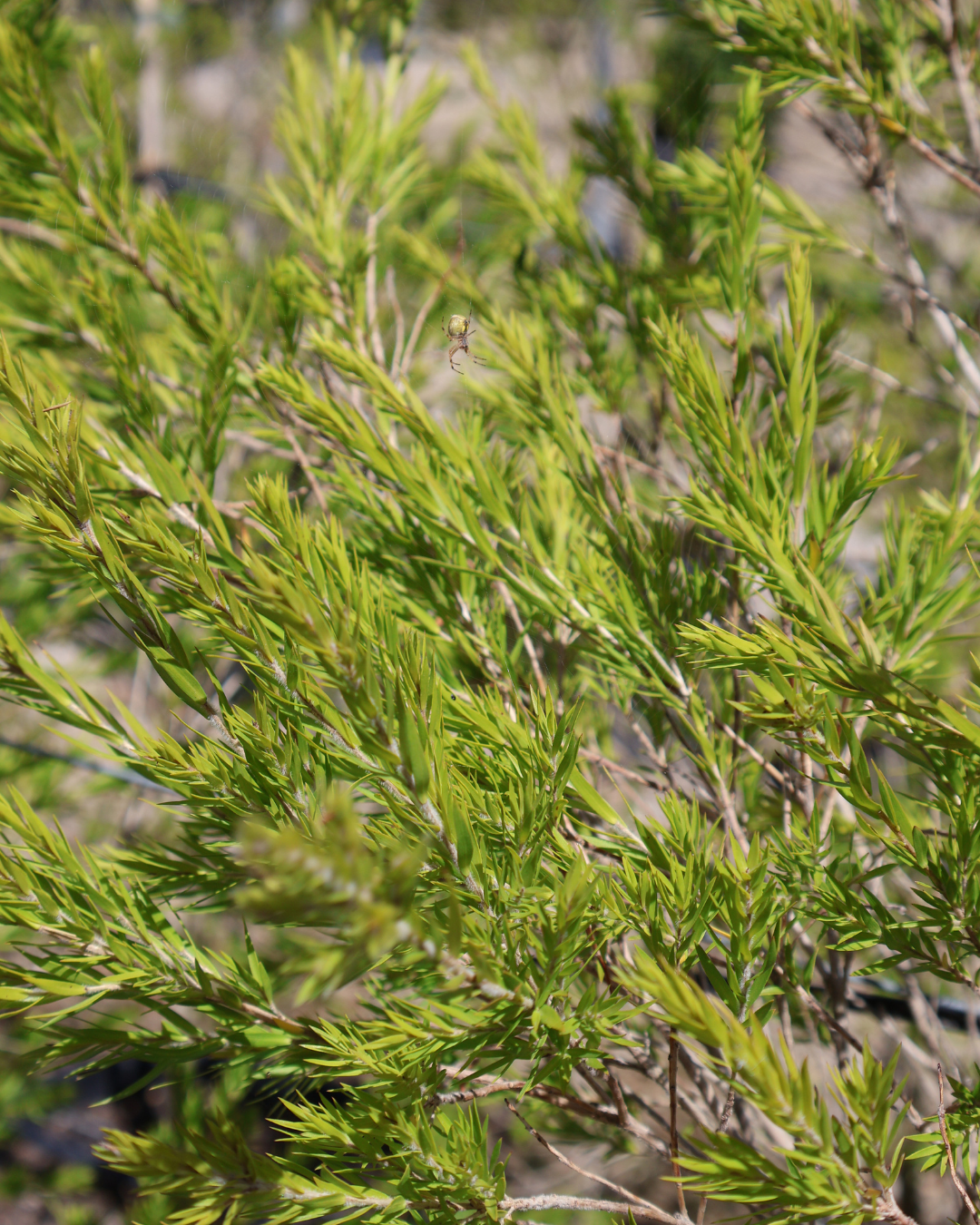
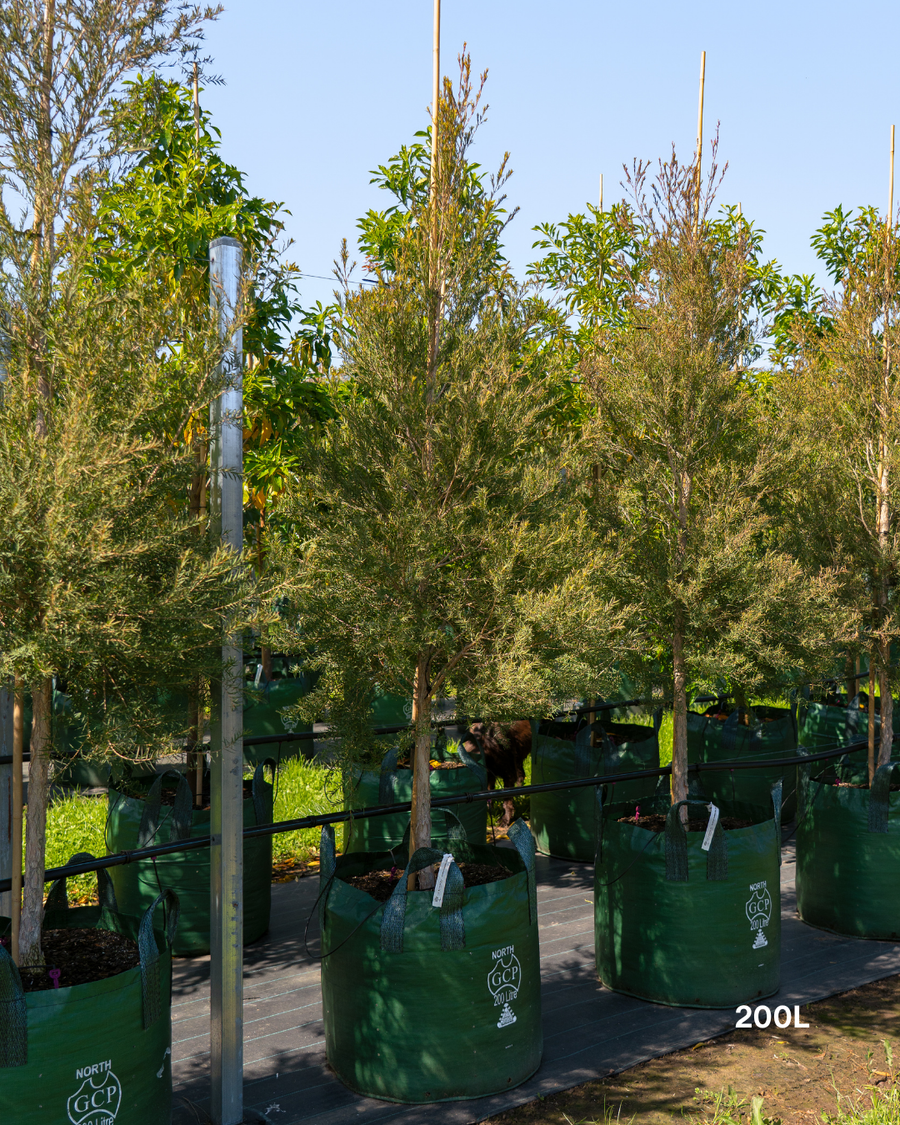
Melaleuca bracteata 'Revolution Green' is a selected form of the Black Tea Tree, grown for its bright green needle like foliage and tidy upright shape. The leaves are aromatic when crushed and hold their colour right through winter. Small cream brush flowers appear in spring against the dense green background.
It reaches 3 to 4 metres tall and 2 to 3 metres wide, gaining roughly 30 to 60 centimetres a year. Full sun keeps it dense, though part shade is tolerated. It copes with heavy clay, periods of waterlogging, drought once established and moderate frost, which makes it useful in difficult urban soils.
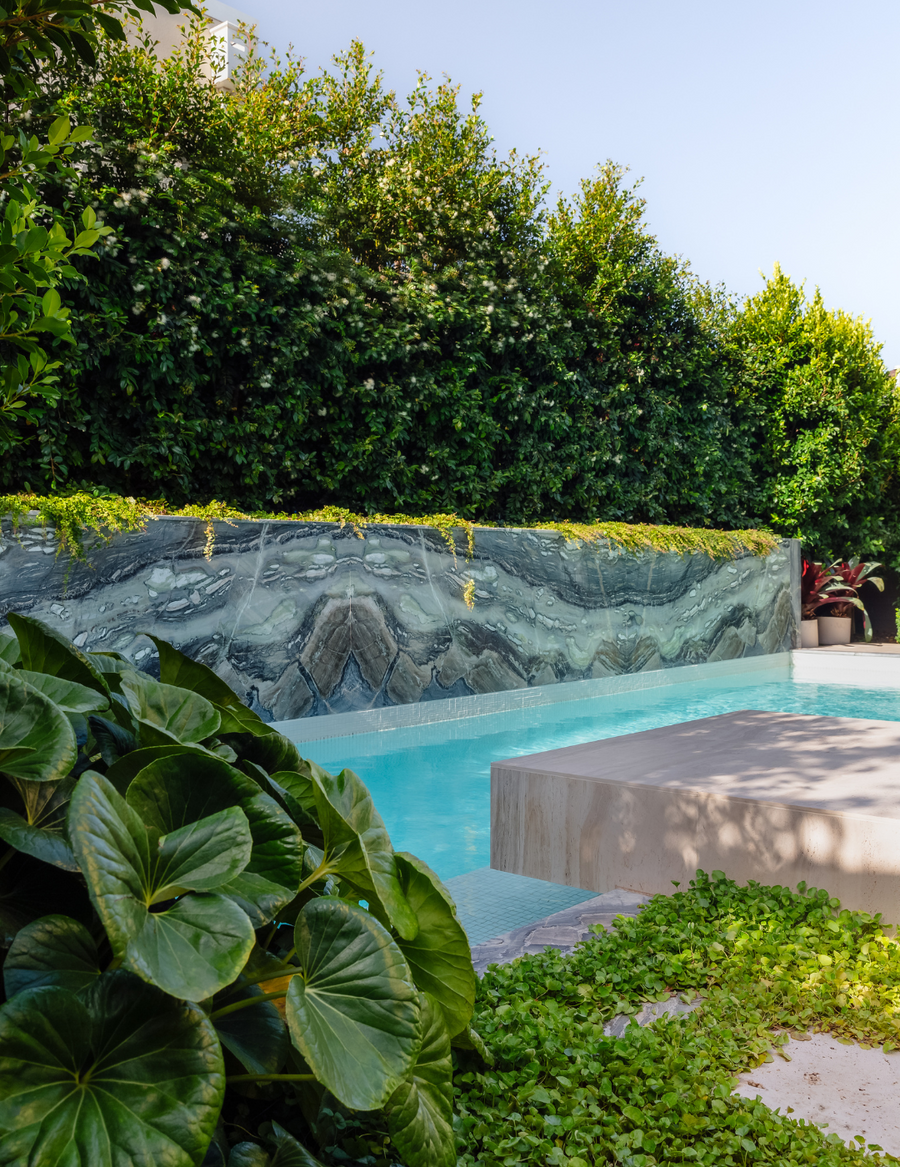
Most often planted as a screening hedge along fences and driveways, or clipped into columns where a formal line is wanted. It also holds up in car park islands and street verges where the soil is compacted and root space is tight. Two trims a year keep a sharp edge on a hedge.
Frequently Asked Questions
About Revolution Green Tea Tree
What is Melaleuca bracteata 'Revolution Green'?
It is a cultivar of the Australian native Black Tea Tree, selected for bright green needle like foliage and a dense upright habit. The foliage is aromatic when crushed and stays green all year. Small cream brush flowers appear in spring. It is grown mainly as a hedging and screening plant rather than for its flowers.
How big does Revolution Green grow?
Left to grow naturally it reaches 3 to 4 metres tall and 2 to 3 metres wide. As a clipped hedge it is normally held between 1.5 and 3 metres, which is where it looks its best. Annual growth of about 30 to 60 centimetres means it fills a gap without getting away from you.
How far apart should I plant it for a hedge?
Plant 1 to 1.5 metres apart for a dense informal screen, or 80 centimetres apart for a tighter formal hedge. For an avenue or a repeated row along a driveway, 3 metres apart gives a uniform, soft textured line. Closer spacing closes the gaps sooner but needs more trimming later.
Does it need sun or shade?
Full sun produces the densest growth and the strongest foliage colour. It will grow in part shade, but the interior thins and the habit becomes more open, which shows in a formal hedge. In hot inland gardens it takes full exposure without trouble once the root system is established.
Is it evergreen or deciduous?
It is evergreen and holds foliage year round, including through winter, so a hedge stays solid in every season. That is the main reason it is chosen over deciduous screening plants. The fine needle like leaves also mean it takes clipping without the cut leaf edges showing, unlike broad leaved hedges.
Is it drought and frost tolerant?
Once established it handles extended dry periods with only occasional deep watering, and it tolerates moderate frost across southern Australia. It also copes with wet ground better than most Melaleucas, which makes it useful in poorly drained clay. Young plants need regular water through their first summer before that toughness sets in.
How do I prune and care for it?
Trim twice a year, once in early spring and again after the summer growth flush, taking a light cut each time rather than one hard cut. It shoots back readily from older wood if it needs renovating. Mulch well, water through the first summer, and feed with a low phosphorus native fertiliser in spring.