



Skip to content

VOLUME DISCOUNTS APPLY AUTOMATICALLY AT CHECKOUT.

All stock is grown, maintained and graded in strict accordance with AS 4373-2007, Australian Standard for Nursery Stock.

Choosing the Right Magnolia: Best Varieties for Hedging and Feature Trees

Choosing the Right Magnolia: Best Varieties for Hedging and Feature Trees

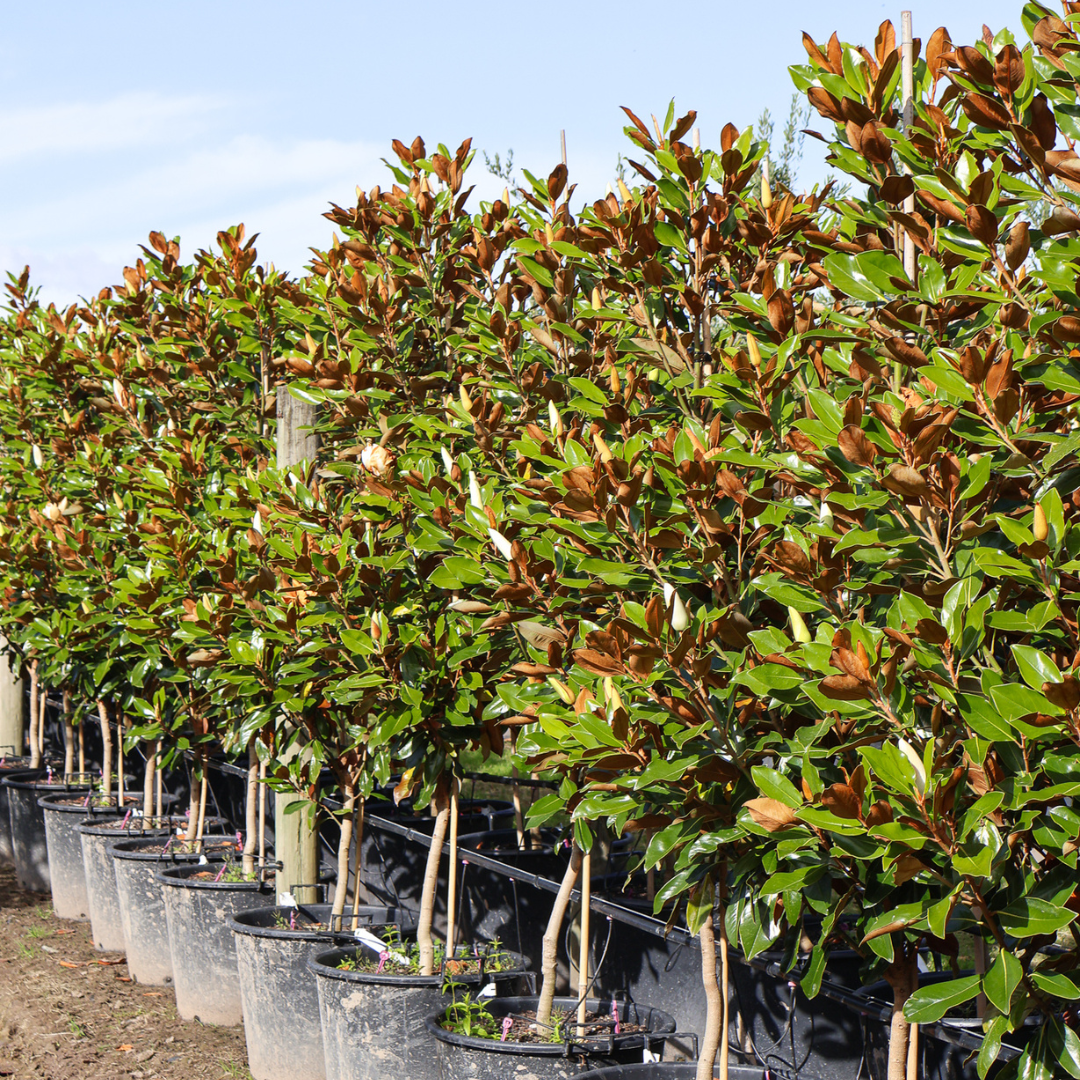
Magnolias work as hedges or feature trees depending on the cultivar. Teddy Bear, Little Gem and Coolwyn Gloss for hedging, Kay Parris, Exmouth and x soulangeana for features. Here is how to pick the right magnolia for your space.

EvergreenFeature TreesHedgingMagnoliaTree Selection

Magnolias do two very different jobs in a garden. Some are dense compact evergreens that work as hedges and screens. Others are large feature trees — evergreen or deciduous — grown for their flowers and form. Choosing the right cultivar for your role and your space is the difference between a Magnolia that quietly delivers and one that always seems out of place.

The six Magnolias below are the ones we recommend most often. They cover both jobs — dense compact hedging grandifloras and statement feature Magnolias — so there's a cultivar here for every common Magnolia question.

  • Magnolia 'Teddy Bear' — the most compact Magnolia hedge available. Dense plush brown-backed foliage and large creamy white summer flowers on a tight pyramidal frame.
  • Magnolia 'Little Gem' — the most prolific flowering compact grandiflora. Taller than Teddy Bear with more flowers over a longer season.
  • Magnolia 'Coolwyn Gloss' — the shiniest leaves in the grandiflora family. The polish gives gardens an instantly expensive look. Tall hedge or large feature.
  • Magnolia 'Kay Parris' — the longest flowering grandiflora. Wavy dark green leaves with dramatic bronze undersides that flash in the breeze.
  • Magnolia 'Exmouth' — the tall upright grandiflora. Slimmer footprint than Coolwyn Gloss, made for formal entries and avenue planting.
  • Magnolia x soulangeana — the classic deciduous Saucer Magnolia. Big pink and white tulip-shaped flowers on bare branches in early spring. Pure drama for a few weeks each year.

Compare at a glance

CultivarHeightWidthFormFoliageBest if you…
Magnolia grandiflora 'Teddy Bear'
Magnolia Teddy Bear
3-5m, can be pruned to desired height1.5-2.5mHighly compact, dense pyramidal habitEvergreen, glossy dark green with bronze undersidesDense hedges, courtyards, small gardens, screen planting
Magnolia grandiflora 'Little Gem'
Magnolia Little Gem
6-7m, can be pruned to desired height3-4mUpright dense pyramidalEvergreen, dark glossy green with bronze undersidesTall hedges, screens, feature trees in medium gardens
Magnolia grandiflora 'Coolwyn Gloss'
Magnolia Coolwyn Gloss
6-8m4-5mUpright spreading pyramidalEvergreen, exceptionally glossy deep greenFeature trees in larger gardens, statement entries, formal landscape design
Magnolia grandiflora 'Kay Parris'
Magnolia Kay Parris
3-5m2-3mIntermediate compactness, neat pyramidalEvergreen, wavy dark green leaves with deep bronze undersidesCompact feature trees, small hedges, borders
Magnolia x soulangeana
Saucer Magnolia
5-8m4-6mSpreading rounded crownDeciduous, large oval leaves green in summer turning yellow in autumnSpring feature trees, traditional gardens, large garden centrepieces
Magnolia grandiflora 'Exmouth'
Magnolia Exmouth
8-10m3-4mUpright columnar, taller than wideEvergreen, large glossy dark green with slight bronze undersideTall feature trees in narrow positions, formal entry trees, avenues
Decide hedge or feature
For privacy, screening or a green wall, plant a hedging grandiflora and prune to the desired height — Teddy Bear, Little Gem or Coolwyn Gloss. For a single statement piece with seasonal flowers, plant a feature — Kay Parris, Exmouth or the deciduous x soulangeana.
Match the height to the space
Teddy Bear and Kay Parris hold 3 to 5m for tight courtyards. Little Gem and x soulangeana sit at 5 to 8m for medium gardens. Coolwyn Gloss spreads to 6 to 8m wide. Exmouth grows tall and narrow at 8 to 10m by 3 to 4m — perfect for slim feature positions.
Pick by flowering window
Kay Parris has the longest flowering season — early spring through autumn. Little Gem flowers prolifically late spring through autumn. Teddy Bear, Coolwyn Gloss and Exmouth flower late spring through summer. Magnolia x soulangeana gives a single dramatic spring window before the leaves emerge.
Evergreen or deciduous
The five grandiflora cultivars are evergreen and carry the garden year round. Magnolia x soulangeana is deciduous — bare in winter, spectacular in spring. Plant it as a feature, not a screen.
Soil and drainage
All Magnolias prefer well-drained slightly acidic soil enriched with compost. On heavy clay sites, mound the planting position or improve drainage with coarse organic matter and sand before planting.
The Magnolia perfect pair
The strongest Magnolia composition is a layered one. Plant a Teddy Bear or Little Gem evergreen hedge as the backdrop, then a single Magnolia x soulangeana or Acer palmatum as the deciduous spring feature in front. Year-round structure plus a seasonal moment.

1. Magnolia grandiflora 'Teddy Bear' (Magnolia Teddy Bear)

Teddy Bear is the compact dense magnolia for small hedges and courtyards. Glossy dark foliage with cinnamon undersides, big creamy white flowers.

Type
Compact evergreen magnolia hedge
Height
3-5m, can be pruned to desired height
Width
1.5-2.5m
Growth rate
Moderate, around 30cm per year
Foliage
Evergreen, glossy dark green with bronze undersides
Flowers
Large creamy white fragrant flowers, late spring through summer
Form
Highly compact, dense pyramidal habit
Conditions
Full sun to part shade. Well drained slightly acidic soil.
Maintenance
Low. Light prune after flowering.
Best for
Dense hedges, courtyards, small gardens, screen planting

Why choose it

The densest grandiflora available. Holds shape with minimal pruning and works in tight spaces other magnolias can't.

Perfect pair

Layers beautifully as a tight hedge behind a single Acer palmatum or Magnolia x soulangeana feature for seasonal contrast, with Japanese Box Topiary Balls at the base for sculptural punctuation.

Tips for planting

Plant at 1m spacing for a dense hedge. Mulch and water deeply for the first two summers.

The compact magnolia that holds its shape with minimum fuss.

Shop Magnolia grandiflora 'Teddy Bear'

2. Magnolia grandiflora 'Little Gem' (Magnolia Little Gem)

Little Gem is the most reliable flowering compact magnolia. Taller than Teddy Bear, with more flowers over a longer season.

Type
Compact evergreen magnolia hedge or feature
Height
6-7m, can be pruned to desired height
Width
3-4m
Growth rate
Moderate
Foliage
Evergreen, dark glossy green with bronze undersides
Flowers
Large fragrant creamy white flowers, abundant from late spring through autumn
Form
Upright dense pyramidal
Conditions
Full sun to part shade. Well drained slightly acidic soil.
Maintenance
Low. Light prune after flowering.
Best for
Tall hedges, screens, feature trees in medium gardens

Why choose it

Flowers more prolifically and over a longer season than other compact grandifloras.

Perfect pair

Layers beautifully as a hedge behind a single Magnolia x soulangeana feature for layered Magnolia interest, with Japanese Box Topiary Balls at the base.

Tips for planting

Plant at 1m spacing for a dense hedge. Water deeply through the first two summers.

If flowers matter, Little Gem is the compact magnolia to plant.

Shop Magnolia grandiflora 'Little Gem'

3. Magnolia grandiflora 'Coolwyn Gloss' (Magnolia Coolwyn Gloss)

Coolwyn Gloss is the high-shine large-flowered grandiflora. Big glossy leaves, large fragrant white flowers, and a stately upright habit.

Type
Large evergreen magnolia feature
Height
6-8m
Width
4-5m
Growth rate
Moderate
Foliage
Evergreen, exceptionally glossy deep green
Flowers
Large tulip-shaped creamy white flowers, fragrant, late spring through summer
Form
Upright spreading pyramidal
Conditions
Full sun to part shade. Well drained slightly acidic soil.
Maintenance
Low. Minimal pruning.
Best for
Feature trees in larger gardens, statement entries, formal landscape design

Why choose it

The shiniest leaves in the grandiflora family. The polish gives gardens an instantly expensive look.

Perfect pair

Layers beautifully as a single feature behind a Magnolia 'Teddy Bear' or 'Little Gem' hedge, with Japanese Box Topiary Balls at the base.

Tips for planting

Plant where the foliage gloss reads in full light. Mulch heavily and water deeply for the first two summers.

The grandiflora cultivar that looks expensive from the day it's planted.

Shop Magnolia grandiflora 'Coolwyn Gloss'

4. Magnolia grandiflora 'Kay Parris' (Magnolia Kay Parris)

Kay Parris is the long-flowering grandiflora with wavy-edged leaves and prominent bronze undersides. Slightly more compact than Little Gem.

Type
Compact evergreen magnolia feature or hedge
Height
3-5m
Width
2-3m
Growth rate
Moderate
Foliage
Evergreen, wavy dark green leaves with deep bronze undersides
Flowers
Large creamy white flowers, prolific from early spring through autumn
Form
Intermediate compactness, neat pyramidal
Conditions
Full sun to part shade. Well drained slightly acidic soil.
Maintenance
Low. Light prune after flowering.
Best for
Compact feature trees, small hedges, borders

Why choose it

The longest flowering season of any grandiflora cultivar, plus the most dramatic bronze leaf undersides.

Perfect pair

Layers beautifully as a feature behind a low Westringia hedge for a calm contemporary composition, with Japanese Box Topiary Balls at the base for sculptural punctuation.

Tips for planting

Position where wind catches the wavy leaves to flash the bronze undersides.

The grandiflora cultivar with the longest flower season.

Shop Magnolia grandiflora 'Kay Parris'

5. Magnolia x soulangeana (Saucer Magnolia)

Magnolia x soulangeana is the classic deciduous saucer magnolia. Big pink-and-white tulip-shaped flowers on bare branches in early spring.

Type
Deciduous feature magnolia
Height
5-8m
Width
4-6m
Growth rate
Moderate
Foliage
Deciduous, large oval leaves green in summer turning yellow in autumn
Flowers
Spectacular pink and white saucer-shaped flowers in early spring before leaves emerge
Form
Spreading rounded crown
Conditions
Full sun to part shade. Rich well drained slightly acidic soil. Frost hardy.
Maintenance
Low. Light shaping prune only. Mulch heavily.
Best for
Spring feature trees, traditional gardens, large garden centrepieces

Why choose it

Nothing matches the early spring drama of bare branches covered in saucer-shaped pink flowers.

Perfect pair

Layers beautifully as a single feature behind a Magnolia 'Little Gem' or 'Teddy Bear' evergreen hedge for layered seasonal interest, with Japanese Box Topiary Balls at the base.

Tips for planting

Choose a position with morning sun and shelter from drying winds to extend the early-spring flower display. Mulch out to the drip line.

The spring magnolia that stops people in their tracks.

Shop Magnolia x soulangeana

6. Magnolia grandiflora 'Exmouth' (Magnolia Exmouth)

Exmouth is the upright tall-growing grandiflora. Large fragrant white flowers, classic dark glossy leaves and a stately columnar form.

Type
Upright evergreen magnolia feature
Height
8-10m
Width
3-4m
Growth rate
Moderate
Foliage
Evergreen, large glossy dark green with slight bronze underside
Flowers
Large fragrant white flowers, late spring through summer
Form
Upright columnar, taller than wide
Conditions
Full sun to part shade. Well drained slightly acidic soil.
Maintenance
Low. Minimal pruning.
Best for
Tall feature trees in narrow positions, formal entry trees, avenues

Why choose it

Exmouth gives grandiflora drama in a slimmer footprint than Coolwyn Gloss or other broad-spreading cultivars.

Perfect pair

Layers beautifully as a feature avenue tree behind a Magnolia 'Teddy Bear' low hedge, with Japanese Box Topiary Balls at the base for sculptural punctuation.

Tips for planting

Stake firmly for the first two years to encourage strong vertical growth.

The tall narrow grandiflora for formal entries and slim feature positions.

Shop Magnolia grandiflora 'Exmouth'

How to plant and care for them

Pick the position
Full sun to part shade. Sheltered from drying winds for deciduous cultivars. Allow the mature width clear of buildings and other trees.
Prepare the planting hole
Dig the hole twice the width of the rootball and the same depth. Mix the original soil with aged compost rather than replacing it. On heavy clay, add coarse sand to lift drainage.
Plant level
Set the rootball so the top sits level with surrounding soil, never deeper. Backfill with the soil and compost mix and leave a watering well at the surface.
Water in deeply at planting
Soak the rootball thoroughly so the new soil settles around the roots. Top up the watering well twice in the first day if the soil drinks fast.
Mulch out to the drip line
Lay 75 to 100mm of organic mulch from 50mm clear of the trunk out to the drip line. Mulch keeps roots cool, holds moisture and feeds the soil as it breaks down.
Water deeply through the first two summers
Water deeply once a week through the first two summers, then only in extended dry spells. Established Magnolias hold their own on rainfall in most years.
Light shaping prune only
Prune lightly after flowering if needed for shape. Magnolias prefer a gentle shaping cut over a hard prune — the natural form is the look.
Feed in early spring
A slow-release fertiliser for acid-loving plants in early spring is enough. Top dress with compost annually for the best foliage health.

The wrap up

The six Magnolias split by role. Teddy Bear and Little Gem hold the compact hedge. Coolwyn Gloss doubles as tall hedge or polished feature. Kay Parris carries the longest flower season. Exmouth fits slim formal entries. Magnolia x soulangeana delivers the early-spring saucer-flower drama.

Pick the right cultivar for the role, plant in well-drained soil enriched with compost, and the Magnolia will look composed rather than crammed in. The strongest Magnolia composition layers a compact hedging grandiflora behind a single deciduous feature in front — year-round structure plus a seasonal moment.

Comments

  • Maritza Gonzalez March 30, 2026

    How can I buy plant from you?

  • Diane Cook June 3, 2025

    Great blog; the detail is so helpful.

  • Grace October 14, 2023

    Great post with valuable info, Thank you!

  • Dion Bright August 28, 2023

    Really good post. Very helpful. Would like to have see details on growth speed and ideal soil type too. Thanks.

  • Suneiah June 10, 2023

    Such a great post. Thank you.

Leave a comment. Comments will be reviewed before being published.