Schinus molle Peppercorn Tree
Couldn't load pickup availability
Current Stock Height Guides
Height guide disclaimer: Height ranges are approximate only. As living products, plant heights naturally vary between individual plants, batches, and seasons. No guarantee is given that supplied plants will fall within the stated range. If minimum heights are required, you mustconfirm current batch heights with Evergreen Trees Direct prior to purchase. Variation in height is normal and is not grounds for return, refund, replacement, or compensation.
Mature Height & Width
Mature Height: 8m - 15m Approximately
Mature Width: 8 – 12 m
Schinus molle Peppercorn Tree is expected to grow Approx. 60 – 90 cm/year per year (Fast).
Root Ball Dimensions (Height & Width)
Use this as a reference when digging your planting hole. We recommend digging at least 10% wider than the dimensions below to encourage strong root development.
- 30cm Pot: 33cm (W) × 30cm (D)
- 40cm/45L Pot: 44cm (W) × 41.5cm (D)
- 50cm Pot / 70L Pot: 55cm (W) × 41.8cm (D)
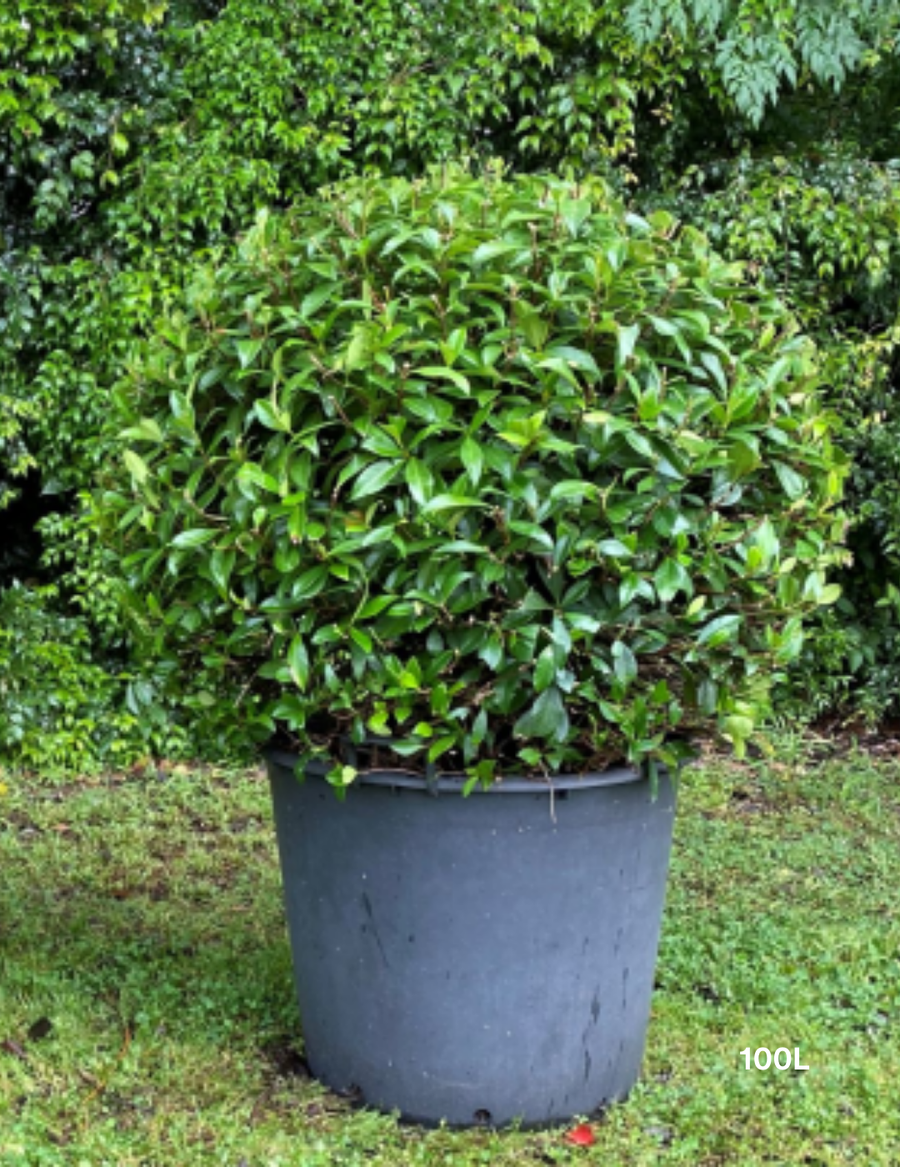
- 100L Bag: 50.6cm (W) × 52.8cm (D)
- 150L Bag: 66cm (W) × 55cm (D)
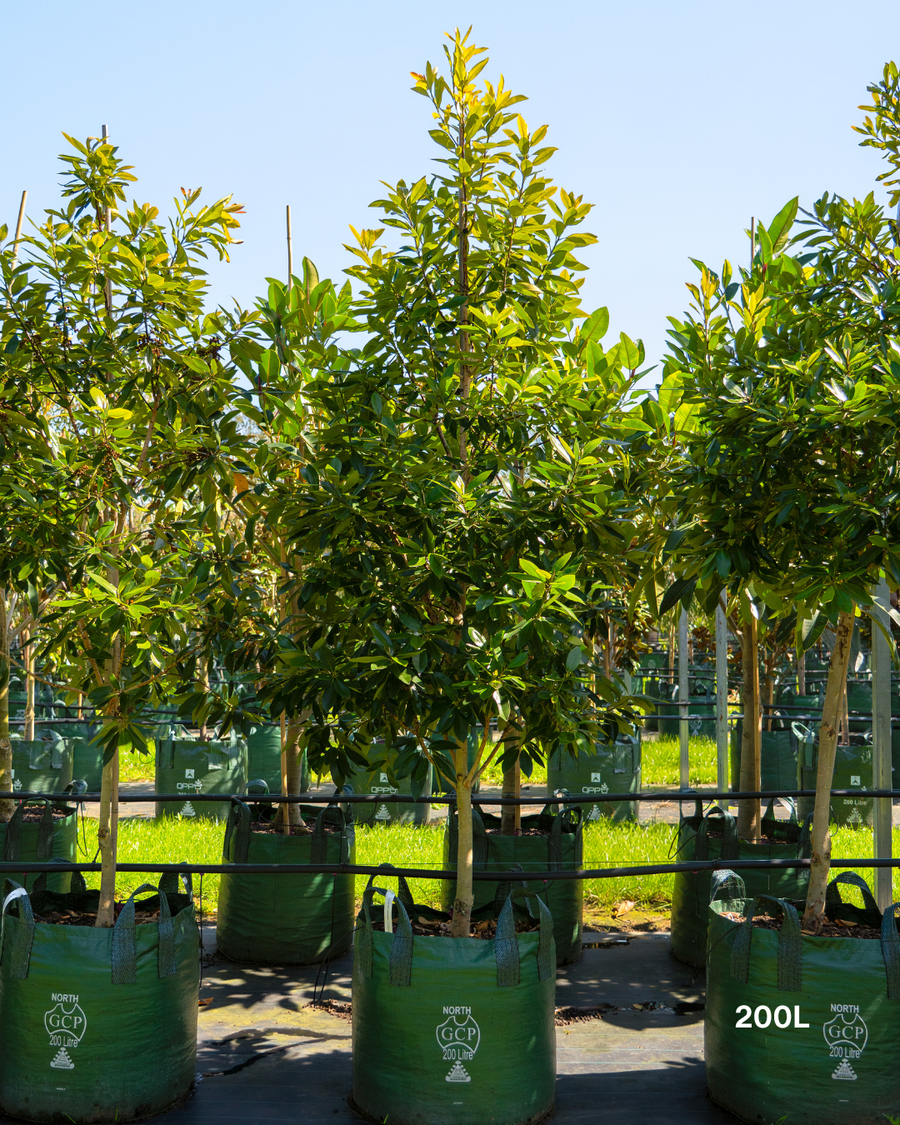
- 200L Bag: 71.5cm (W) × 60.5cm (D)
- 300L Bag: 88cm (W) × 63.8cm (D)
- 400L Bag: 99cm (W) × 66cm (D)
- 500L Bag: 122cm (W) × 66cm (D)
- 750L Bag: 134cm (W) × 69cm (D)
- 1000L Bag: 146.3cm (W) × 71.5cm (D)
- 2000L Bag: 176cm (W) × 82.5cm (D)
Trade Customers
Trade Customers
We supply advanced trees to landscapers, developers, architects, and councils Australia-wide. Trade clients receive fast quotes, expert advice, and access to premium stock with reliable freight.
Shipping Cost
Shipping Cost
Shipping is calculated at checkout based on the pallet space your order occupies in the truck and your delivery location.
There is no charge to calculate your freight.
Contact Us
Contact Us
Have a question or a list to send through to us?
Email: sales@evergreentrees.com.au
Phone: (03) 7042 3318
VOLUME DISCOUNTS
Discounts Apply Automatically At Checkout
Share this product
Evergreen Trees Direct Has Been Featured In:

About Your New Schinus molle Peppercorn Tree
Schinus molle, the Peppercorn Tree, is one of the most drought-hardy shade trees available, instantly recognised by its broad arching canopy of fine feathery grey-green foliage and its hanging clusters of pink-red berries.
Peppercorn Tree grows to 8-12 metres tall and 8-10 metres wide with a wide weeping canopy that creates a striking sculptural presence and generous shade. The broad architectural form makes it a classic choice for rural driveways, paddocks, windbreaks, and large open landscapes. Delicate white flowers appear in late spring, followed by the decorative pink-red berries.
Peppercorn Tree is highly drought tolerant and low maintenance, thriving in poor and sandy soils under full sun. It performs reliably in Mediterranean and semi-arid climates across SA, VIC, NSW, WA and inland QLD, and tolerates frost once established.
Frequently Asked Questions
About Schinus molle Peppercorn Tree
How tall does Peppercorn Tree grow?
Schinus molle grows to 8-12 metres tall and 8-10 metres wide with a broad weeping canopy.
How fast does Peppercorn Tree grow?
Peppercorn Tree is fast-growing, adding 60cm to 1 metre per year once established.
Is Peppercorn Tree drought tolerant?
Yes. Schinus molle is one of the most drought-tolerant feature trees available, performing well in dry inland conditions, paddocks, and Mediterranean climates.
Does Peppercorn Tree produce pink berries?
Yes. Peppercorn Tree produces hanging clusters of small pink-red berries through summer and autumn. The berries are decorative but not the true edible black peppercorn, which comes from Piper nigrum.
Is Peppercorn Tree evergreen?
Yes. Schinus molle is evergreen, holding its fine pendulous foliage year-round.
Is Peppercorn Tree suitable for paddocks and rural properties?
Yes. Peppercorn Tree is one of the most popular rural shade trees in Australia thanks to its drought tolerance, broad weeping canopy, and ability to thrive in poor soils with minimal water.
Where does Peppercorn Tree grow best in Australia?
Peppercorn Tree thrives across most of Australia, particularly in SA, VIC, NSW, WA, and inland QLD. It tolerates frost, drought, and a wide range of soils once established.

Plant Your Schinus molle Peppercorn Tree With:
Type: Australian Native
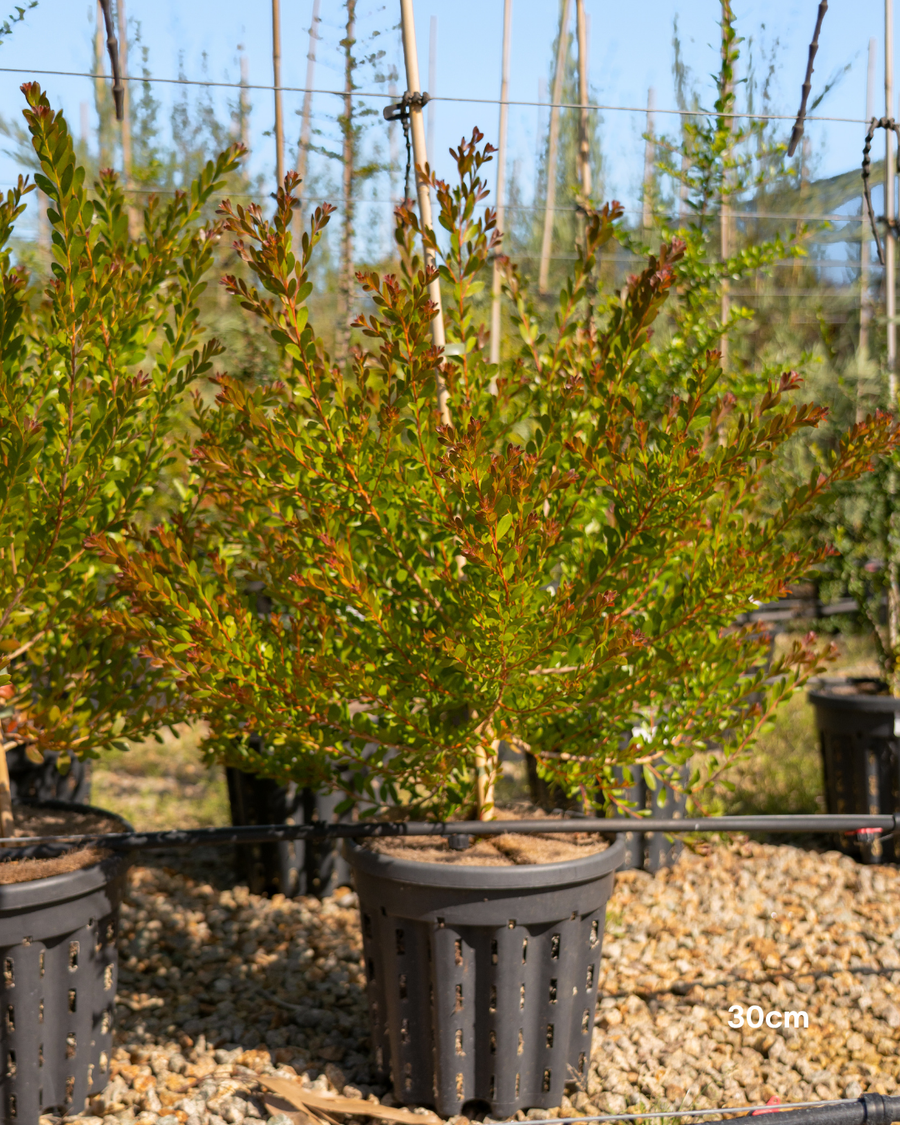
Grevillea x 'Moonlight'
Type: Structural Foliage
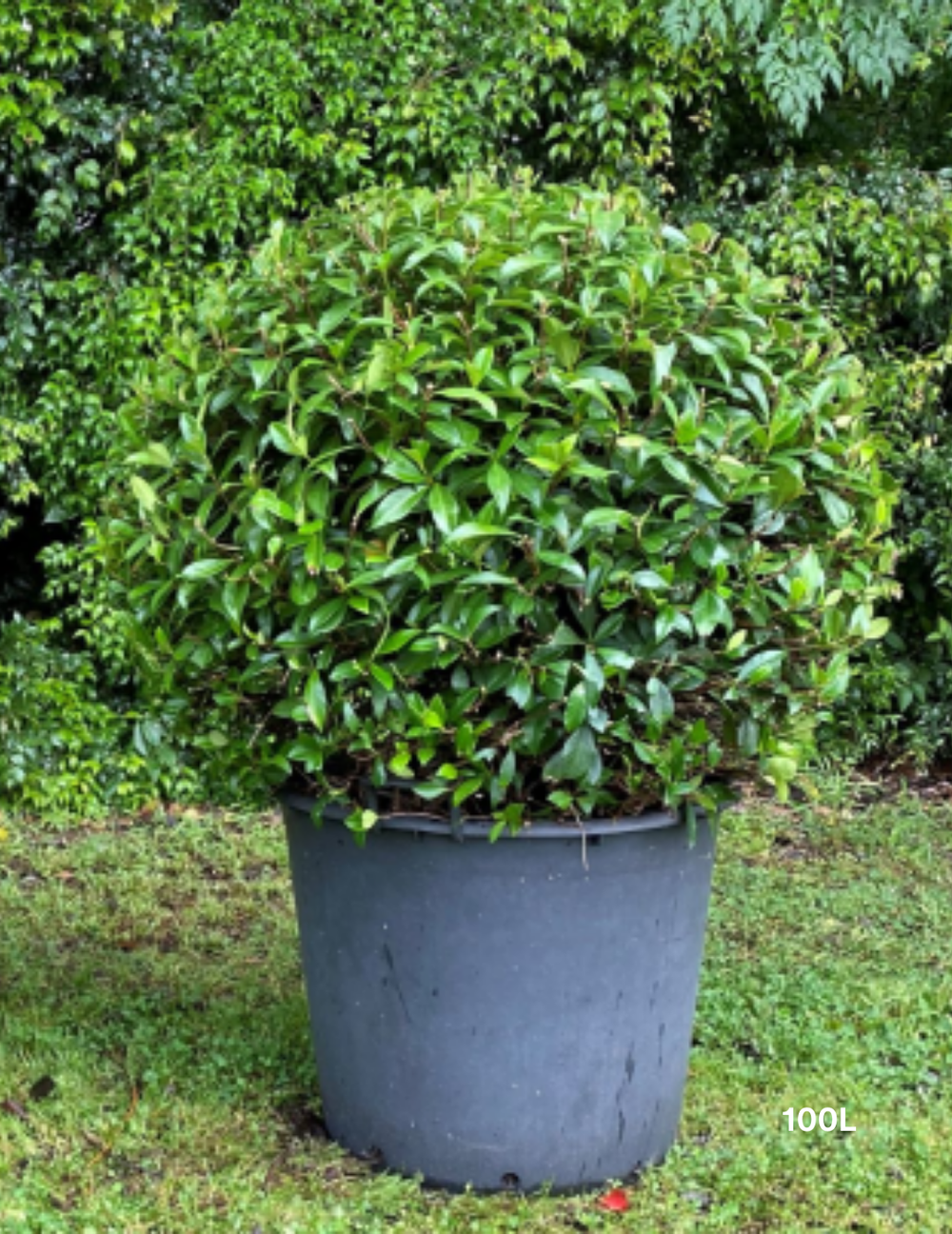
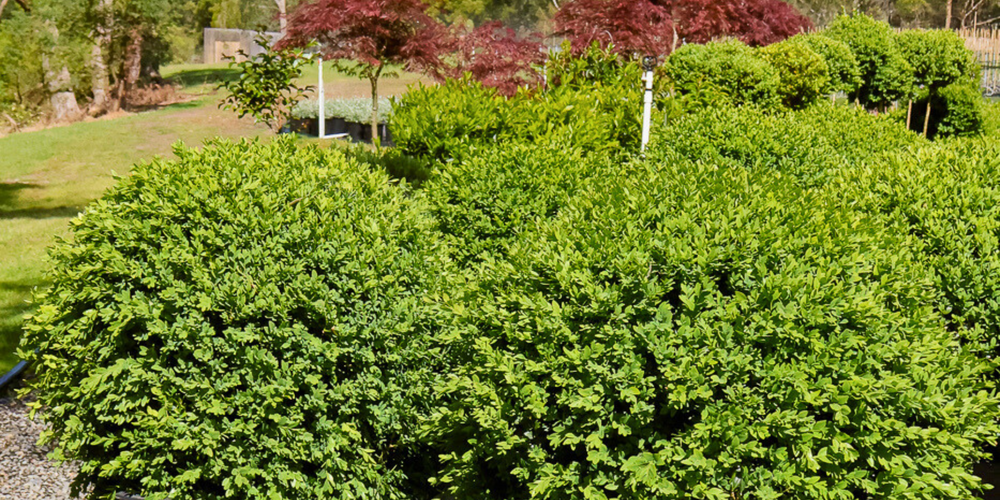
Buxus sempervirens English Box Topiary Balls
Type: Hedging and Screening Trees
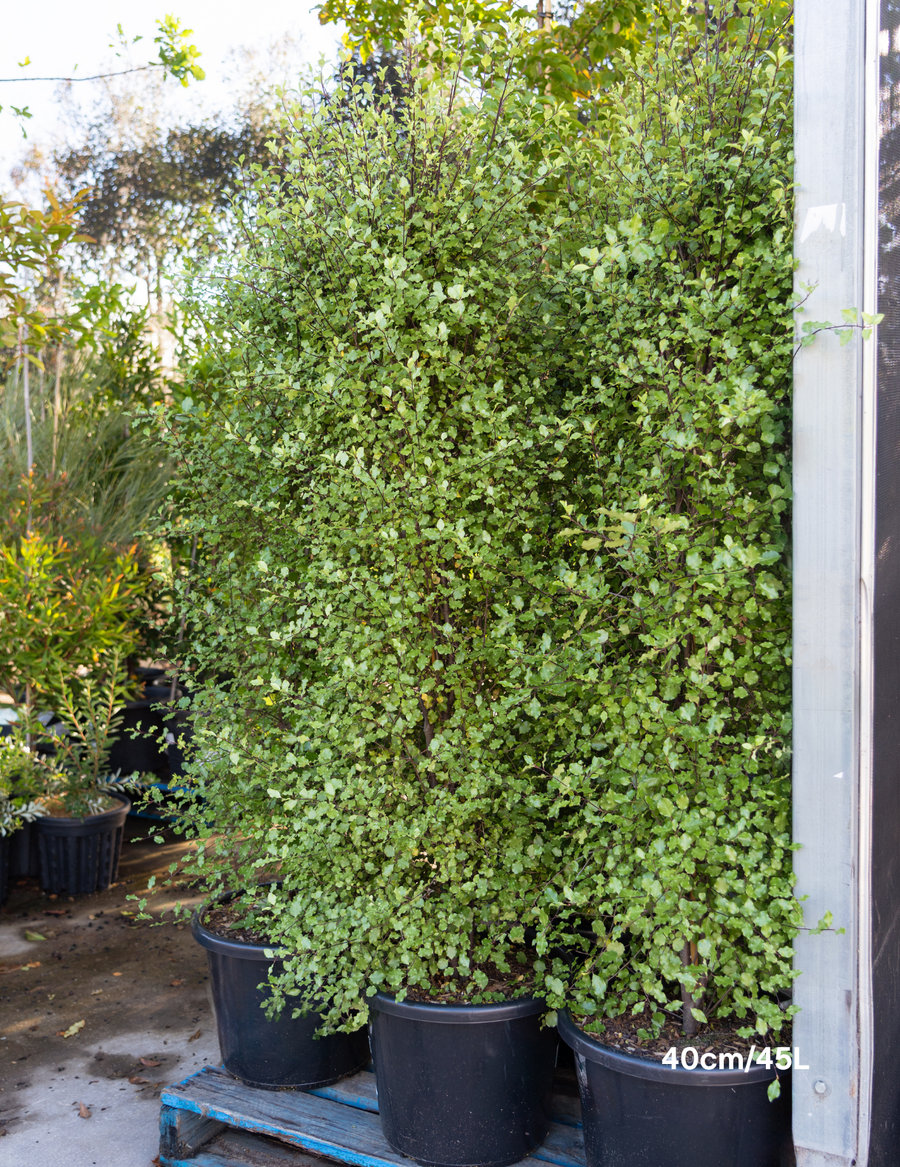
Pittosporum tenuifolium 'Silver Sheen'
Uses in my Garden
Uses in my Garden
Schinus molle Peppercorn Tree works in an:
Is Schinus molle Peppercorn Tree Evergreen or Deciduous?
Schinus molle Peppercorn Tree is an Evergreen (foliage year round) Tree
Mature Height & Width
Mature Height: 8m - 15m Approximately
Mature Width: 8 – 12 m
Schinus molle Peppercorn Tree is expected to grow Approx. 60 – 90 cm/year per year (Fast).
Growth Rate of Schinus molle Peppercorn Tree
Schinus molle Peppercorn Tree is expected to grow Approx. 60 – 90 cm/year per year (Fast).
They are considered to have a:
Frost Tolerance & Ideal Climate to plant Schinus molle Peppercorn Tree
Is Schinus molle Peppercorn Tree frost tolerant?
Schinus molle Peppercorn Tree is Frost Tolerant – Can handle light to moderate frost once established.
Does Schinus molle Peppercorn Tree Flower?
Schinus molle produces clusters of small, creamy-yellow flowers in spring and early summer. While subtle, these blossoms are followed by bright pink berry-like drupes that hang in ornamental clusters, offering a soft seasonal display that stands out against the tree’s graceful, weeping foliage.
Does Schinus molle Peppercorn Tree flower?
Flowering Period:
Flower Type:
Flower Colour:
White
Is Schinus molle Peppercorn Tree an Australian Native Tree?
No
Schinus molle Peppercorn Tree is Native to South America, particularly Peru, where it grows naturally in dry, open forests and rocky soils.
What is the Wildlife Value of Schinus molle Peppercorn Tree ?
Its fine, feathery canopy provides excellent shelter for small birds, while its flowers attract bees and beneficial insects throughout the warmer months. The pink berries that follow are also eaten by some bird species, making Schinus molle a valuable habitat tree for supporting biodiversity in dry and open landscapes.
How much Sunlight does Schinus molle Peppercorn Tree need?
Schinus molle Peppercorn Tree will thrive best in:
Preferred Soil?
Preferred Soil?
Schinus molle performs best in well-drained sandy or loam soils with a neutral to alkaline pH. It will tolerate poorer, drier soils provided drainage remains free-flowing. Avoid heavy clay, compacted or waterlogged sites unless significantly improved, as excess moisture can stress the roots and reduce growth. Keep the soil evenly moist during establishment, then gradually reduce watering as the tree matures and develops its natural drought resilience.
Is Schinus molle Peppercorn Tree Drought Tolerant?
Is Schinus molle Peppercorn Tree Drought tolerant?
As a young tree it benefits from regular deep watering to establish well. Once established, Schinus molle shows excellent drought tolerance and thrives in hot, dry conditions, maintaining its weeping form and fine foliage with minimal supplementary watering. It is one of the most resilient options for tough, exposed sites.
Planting Information
How To Plant Your Schinus molle Peppercorn Tree
Recommended Planting Spacing For Your Schinus molle Peppercorn Tree
Schinus molle Peppercorn Tree is expected to grow Approx. 60 – 90 cm/year per year (Fast).