

Rosmarinus officinalis – Rosemary
Rosmarinus officinalis – Rosemary
Couldn't load pickup availability
Current Stock Height Guides
Current Stock Height Guides
Height guide disclaimer: Height ranges are approximate only. As living products, plant heights naturally vary between individual plants, batches, and seasons. No guarantee is given that supplied plants will fall within the stated range. If minimum heights are required, you mustconfirm current batch heights with Evergreen Trees Direct prior to purchase. Variation in height is normal and is not grounds for return, refund, replacement, or compensation.
Mature Height & Width
Mature Height & Width
Mature Height: 1m to 2m
Mature Width: 1m to 1.5m
Rosmarinus officinalis – Rosemary is expected to grow 30cm to 50cm per year (moderate).
Root Ball Dimensions
Root Ball Dimensions
Use this as a reference when digging your planting hole. We recommend digging at least 10% wider than the dimensions below to encourage strong root development.
- 30cm Pot: 33cm (W) × 30cm (D)
- 40cm/45L Pot: 44cm (W) × 41.5cm (D)
- 50cm Pot / 70L Pot: 55cm (W) × 41.8cm (D)
- 100L Bag: 50.6cm (W) × 52.8cm (D)
- 150L Bag: 66cm (W) × 55cm (D)
- 200L Bag: 71.5cm (W) × 60.5cm (D)
- 300L Bag: 88cm (W) × 63.8cm (D)
- 400L Bag: 99cm (W) × 66cm (D)
- 500L Bag: 122cm (W) × 66cm (D)
- 750L Bag: 134cm (W) × 69cm (D)
- 1000L Bag: 146.3cm (W) × 71.5cm (D)
- 2000L Bag: 176cm (W) × 82.5cm (D)
Trade
Trade
We supply advanced trees to landscapers, developers, architects, and councils Australia-wide. Trade clients receive fast quotes, expert advice, and access to premium stock with reliable freight.
Shipping
Shipping
Shipping is calculated at checkout based on the pallet space your order occupies in the truck and your delivery location.
There is no charge to calculate your freight.
Contact
Contact
Have a question or a list to send through to us?
Email: sales@evergreentrees.com.au
Phone: (03) 7042 3318
Share this product
About Your New Rosmarinus officinalis – Rosemary
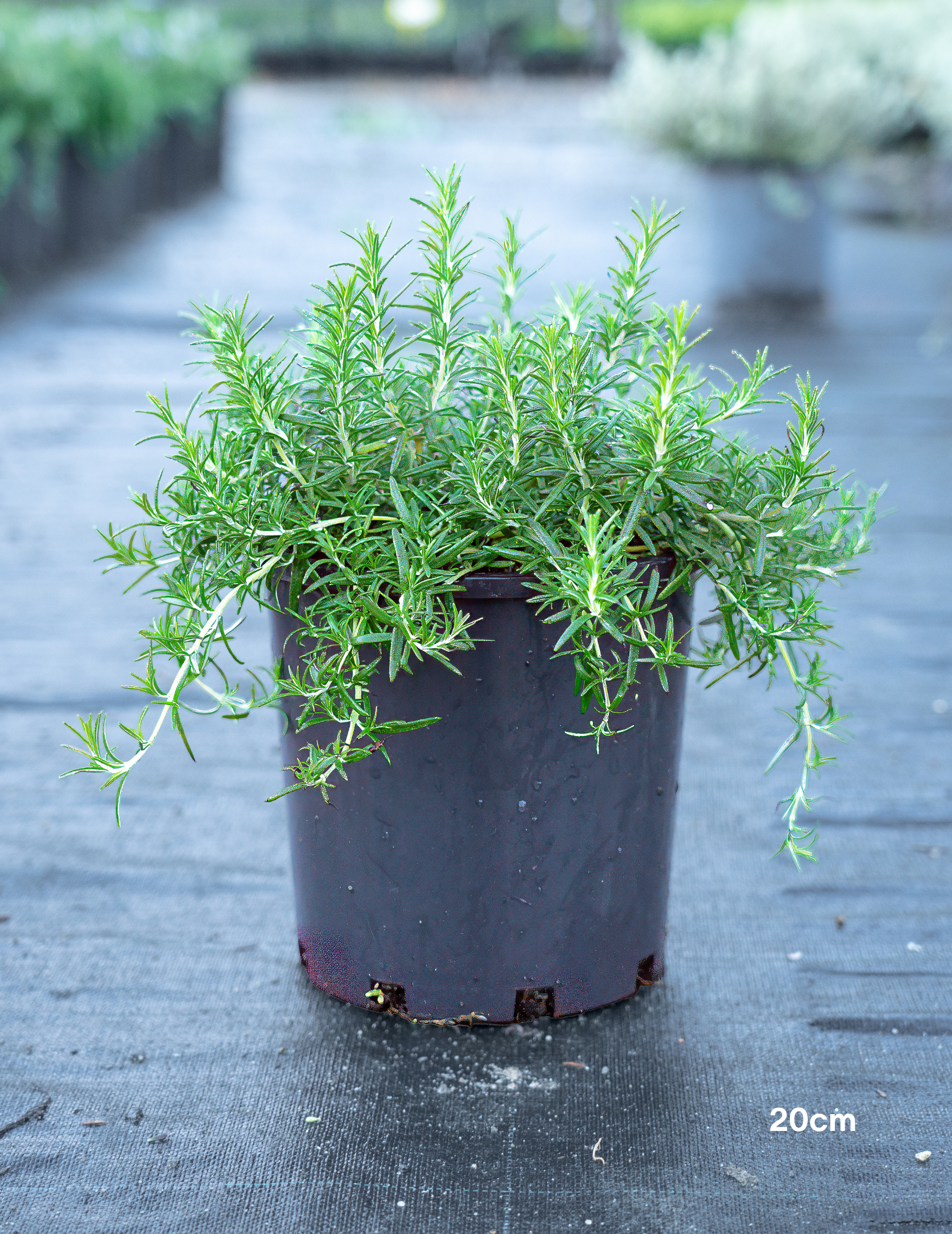
Rosmarinus officinalis, now reclassified as Salvia rosmarinus, is Rosemary, an upright evergreen shrub with narrow needle-like grey-green leaves and a dense woody frame. The foliage is strongly aromatic year round, and small pale blue flowers appear over winter and into spring. Prostrate forms trail rather than stand upright.
It wants full sun and sharp drainage, and it is happier dry than wet. Established plants handle drought, salt wind and exposed positions with ease, which suits warm temperate and Mediterranean climates across southern Australia. Growth is 30 to 50 centimetres a year and maintenance amounts to an annual trim.
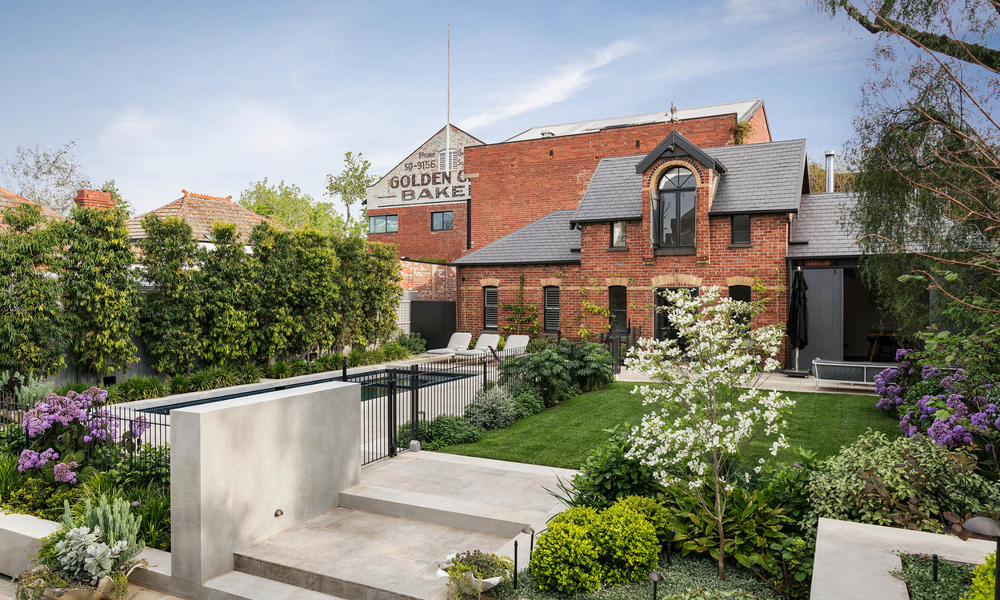
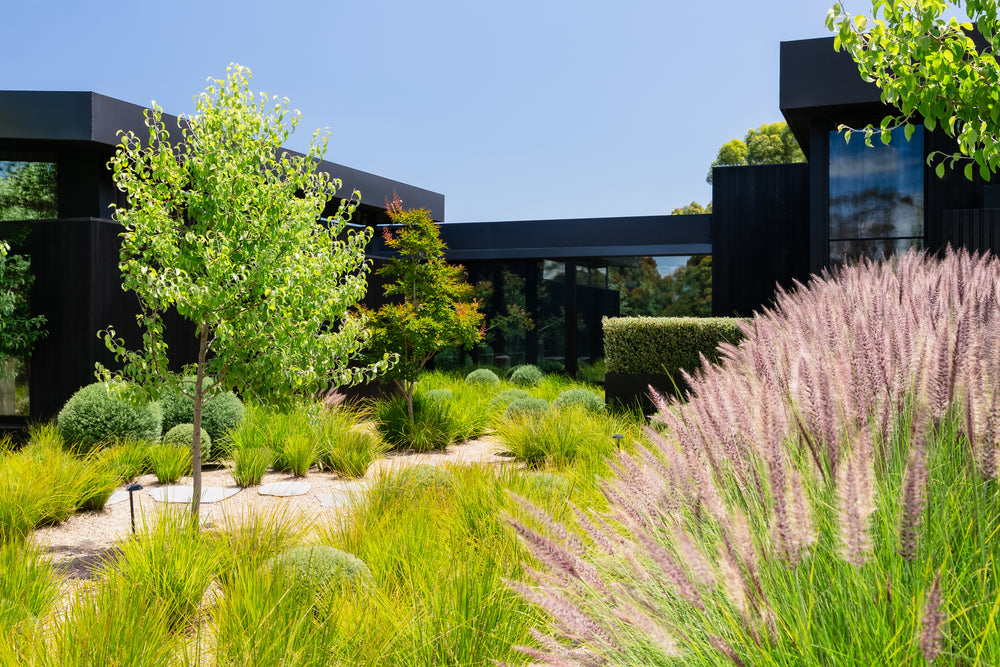
Rosemary is used as low hedging, in borders, as groundcover in its prostrate forms, and in herb and kitchen gardens where it is cut for cooking. It grows happily in a 40 to 50 centimetre pot by a back door. Ornamental structure and a usable crop from the same plant.
Frequently Asked Questions
About Rosemary
What is Rosemary?
Rosmarinus officinalis, now classified botanically as Salvia rosmarinus, is an upright evergreen shrub with narrow needle-like grey-green leaves and a strong resinous scent. Small pale blue flowers appear over winter and spring. The habit is woody and dense, and the aromatic foliage is held all year round.
How big does Rosemary grow?
Upright forms generally reach 1 to 1.5 metres tall and a similar width, while prostrate selections stay under 40 centimetres and spread sideways instead. Growth is around 30 to 50 centimetres a year. Regular light harvesting or trimming holds a plant well below its potential size without any harm.
Does Rosemary need sun or shade?
Full sun, without qualification. Six or more hours of direct sun gives dense growth, strong aroma and good oil content in the leaves. In shade the plant stretches, thins out and becomes prone to fungal problems. Open air movement around the plant matters almost as much as the sun does.
Is Rosemary drought tolerant?
Very. Once established it survives long dry periods on rainfall alone in most temperate districts, and it is far more likely to be killed by wet soil than by dry. Free drainage is essential. Water new plants through their first summer, then only during extended dry spells.
Can Rosemary grow in pots?
Yes, and a pot suits it well because you control the drainage. Use a pot 40 to 50 centimetres wide with a gritty free-draining mix, put it in the sunniest spot you have, and let the mix dry between waterings. A single plant on a courtyard or balcony is easy to keep.
Can I cook with this Rosemary?
Yes. Rosmarinus officinalis is the culinary rosemary, and sprigs can be cut fresh year round for roasts, breads, oils and marinades. Harvest from the soft green growth rather than the old woody stems, and take a little from several places around the bush so it keeps its shape.
How do I care for Rosemary?
Plant in full sun in free-draining soil, on a raised mound if your ground is heavy. Water sparingly once established and avoid rich fertiliser, which produces soft growth and weak flavour. Trim lightly after flowering to keep the bush dense, cutting into green growth only, since bare old wood does not reshoot.
Evergreen Trees Direct Has Been Featured In:


Plant Your Rosmarinus officinalis – Rosemary With:


Type: Garden Supplies
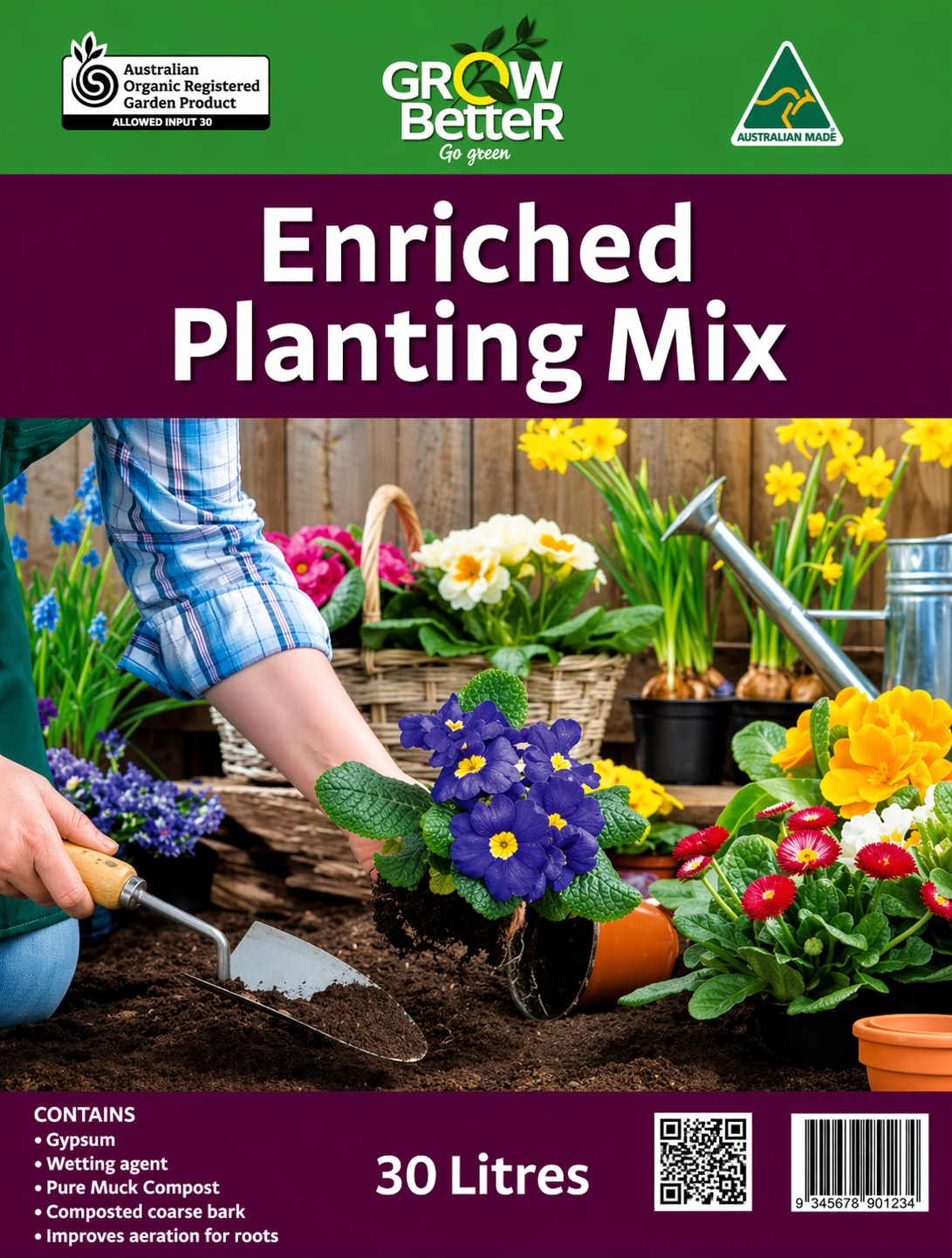
Enriched Planting Mix (AO Certified)

Type: Olive Tree
Olea europaea 'Tolley's Upright' Low Fruiting Olive
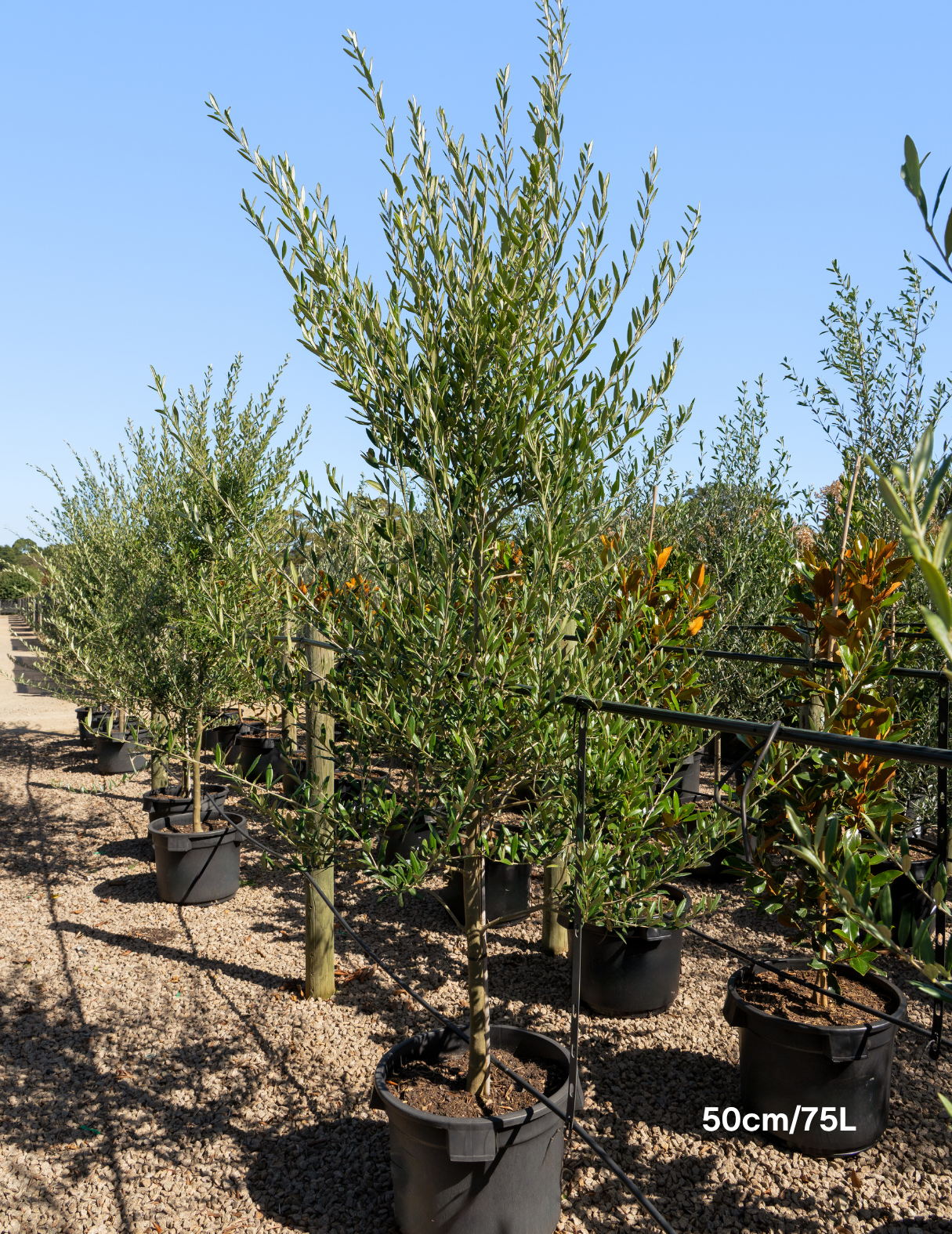
Type: Olive Tree
Olea europaea 'Manzanillo' - Olive

Type: Feature Tree
Lagerstroemia indica 'Natchez' White Crepe Myrtle

Type: Feature Tree
Lagerstroemia indica 'Tuscarora' Dark Pink Crepe Myrtle
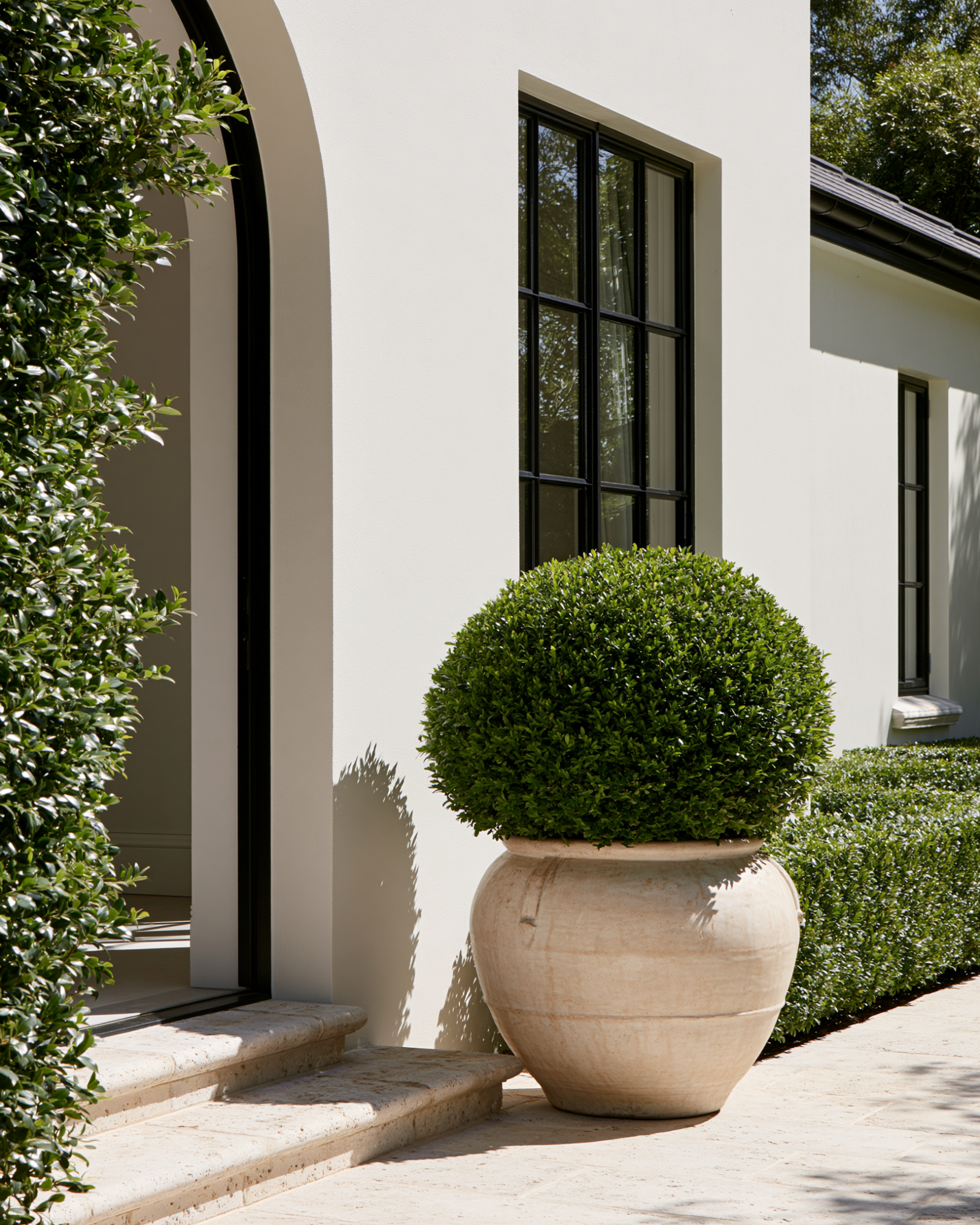
Type: Structural Foliage
Buxus sempervirens English Box Topiary Balls
Type: Feature Trees
Ficus microcarpa ‘Flash’ – Pleached Ficus
Uses in my Garden
Uses in my Garden
Rosmarinus officinalis – Rosemary works in an:
Is Rosmarinus officinalis – Rosemary Evergreen or Deciduous?
Is Rosmarinus officinalis – Rosemary Evergreen or Deciduous?
Rosmarinus officinalis – Rosemary is an Evergreen (foliage year round) Tree
Mature Height & Width
Mature Height & Width
Mature Height: 1m to 2m
Mature Width: 1m to 1.5m
Rosmarinus officinalis – Rosemary is expected to grow 30cm to 50cm per year (moderate).
Growth Rate of Rosmarinus officinalis – Rosemary
Growth Rate of Rosmarinus officinalis – Rosemary
Rosmarinus officinalis – Rosemary is expected to grow 30cm to 50cm per year (moderate).
They are considered to have a:
Frost Tolerance & Ideal Climate to plant Rosmarinus officinalis – Rosemary
Frost Tolerance & Ideal Climate to plant Rosmarinus officinalis – Rosemary
Is Rosmarinus officinalis – Rosemary frost tolerant?
Rosmarinus officinalis – Rosemary is Frost Tolerant – Can handle light to moderate frost once established.
Does Rosmarinus officinalis – Rosemary Flower?
Does Rosmarinus officinalis – Rosemary Flower?
Rosmarinus officinalis produces small blue to violet flowers, typically from winter through spring, with sporadic flowering at other times of the year. While modest in size, the blooms create a soft seasonal display and are highly valued for their ability to support pollinators.
Does Rosmarinus officinalis – Rosemary flower?
Flowering Period:
Flower Type:
Flower Colour:
Not Applicable
Is Rosmarinus officinalis – Rosemary an Australian Native Tree?
Is Rosmarinus officinalis – Rosemary an Australian Native Tree?
No
Rosmarinus officinalis – Rosemary is Native to The Mediterranean region, where Rosmarinus officinalis grows naturally on dry, rocky slopes and coastal hillsides.
What is the Wildlife Value of Rosmarinus officinalis – Rosemary ?
What is the Wildlife Value of Rosmarinus officinalis – Rosemary ?
Its nectar-rich flowers attract bees, hoverflies and other beneficial pollinators, providing an important food source during cooler months when fewer plants are in bloom. The dense, aromatic foliage also offers shelter for insects, supporting a balanced and healthy garden ecosystem.
How much Sunlight does Rosmarinus officinalis – Rosemary need?
How much Sunlight does Rosmarinus officinalis – Rosemary need?
Rosmarinus officinalis – Rosemary will thrive best in:
Preferred Soil?
Preferred Soil?
Rosmarinus officinalis performs best in well-drained sandy or loam soils with a neutral to alkaline pH. It will tolerate poorer soils provided drainage remains excellent. Avoid heavy clay or waterlogged conditions unless significantly improved, as excess moisture can lead to root rot. Keep soil lightly moist during establishment, then reduce watering as the plant matures.
Is Rosmarinus officinalis – Rosemary Drought Tolerant?
Is Rosmarinus officinalis – Rosemary Drought Tolerant?
Is Rosmarinus officinalis – Rosemary Drought tolerant?
As a young plant it benefits from regular watering to establish well, particularly during warmer weather. Once established, Rosemary shows excellent drought tolerance and thrives in dry conditions, making it a reliable choice for low-water gardens and exposed sites.

Planting Information
How To Plant Your Rosmarinus officinalis – Rosemary
How To Plant Your Rosmarinus officinalis – Rosemary
Recommended Planting Spacing For Your Rosmarinus officinalis – Rosemary
Recommended Planting Spacing For Your Rosmarinus officinalis – Rosemary
Rosmarinus officinalis – Rosemary is expected to grow 30cm to 50cm per year (moderate).
Long Term Care For Your Rosmarinus officinalis – Rosemary
Long Term Care For Your Rosmarinus officinalis – Rosemary
Planting Your Rosmarinus officinalis – Rosemary in Different Soil
Planting Your Rosmarinus officinalis – Rosemary in Different Soil
Frequently Asked Questions
Frequently Asked Questions