Pyrus calleryana 'Bradford'
Couldn't load pickup availability
Current Stock Height Guides
Height guide disclaimer: Height ranges are approximate only. As living products, plant heights naturally vary between individual plants, batches, and seasons. No guarantee is given that supplied plants will fall within the stated range. If minimum heights are required, you mustconfirm current batch heights with Evergreen Trees Direct prior to purchase. Variation in height is normal and is not grounds for return, refund, replacement, or compensation.
Mature Height & Width
Mature Height: 10m to 15m (approx.)
Mature Width: 6m to 9m
Pyrus calleryana 'Bradford' is expected to grow 40cm to 70cm per year (moderate) (approx.).
Root Ball Dimensions
Use this as a reference when digging your planting hole. We recommend digging at least 10% wider than the dimensions below to encourage strong root development.
- 30cm Pot: 33cm (W) × 30cm (D)
- 40cm/45L Pot: 44cm (W) × 41.5cm (D)
- 50cm Pot / 70L Pot: 55cm (W) × 41.8cm (D)
- 100L Bag: 50.6cm (W) × 52.8cm (D)
- 150L Bag: 66cm (W) × 55cm (D)
- 200L Bag: 71.5cm (W) × 60.5cm (D)
- 300L Bag: 88cm (W) × 63.8cm (D)
- 400L Bag: 99cm (W) × 66cm (D)
- 500L Bag: 122cm (W) × 66cm (D)
- 750L Bag: 134cm (W) × 69cm (D)
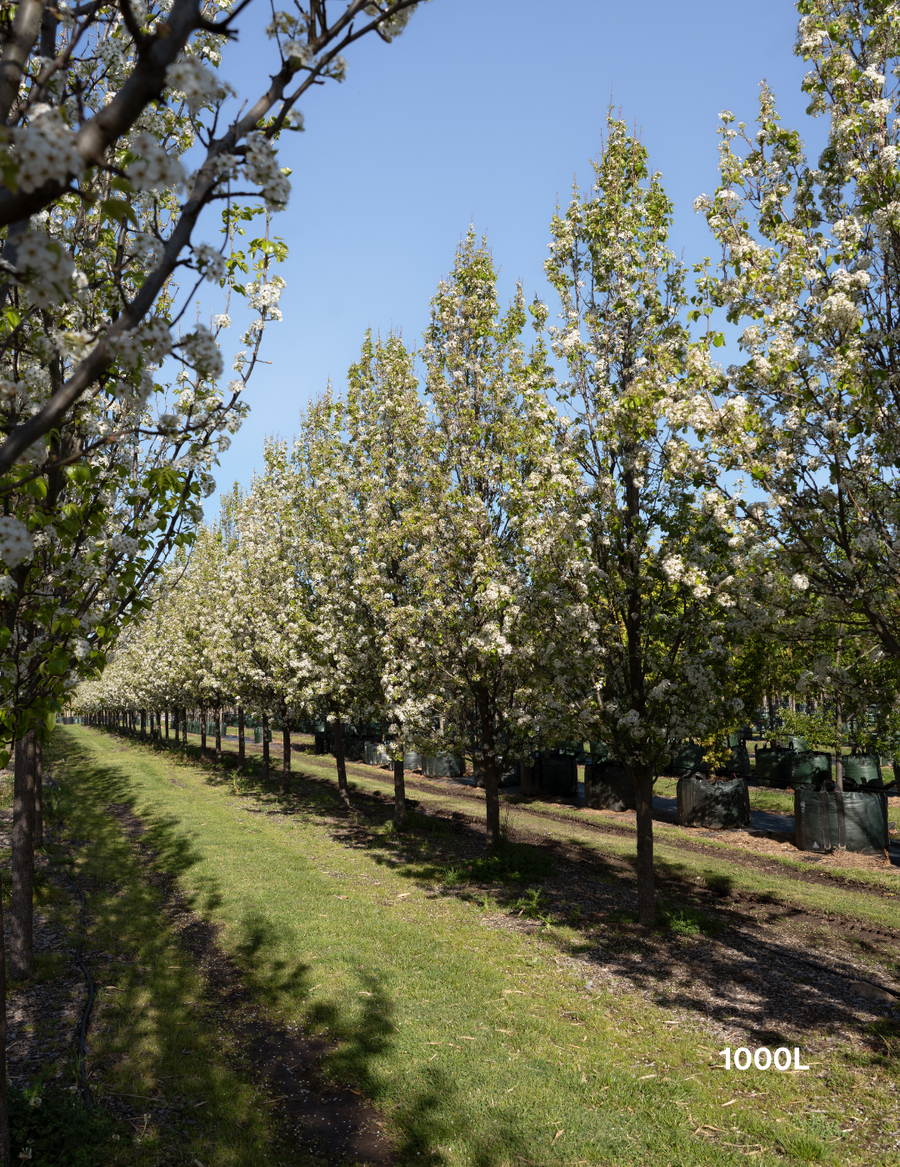
- 1000L Bag: 146.3cm (W) × 71.5cm (D)
- 2000L Bag: 176cm (W) × 82.5cm (D)
Trade
Trade
We supply advanced trees to landscapers, developers, architects, and councils Australia-wide. Trade clients receive fast quotes, expert advice, and access to premium stock with reliable freight.
Shipping
Shipping
Shipping is calculated at checkout based on the pallet space your order occupies in the truck and your delivery location.
There is no charge to calculate your freight.
Contact
Contact
Have a question or a list to send through to us?
Email: sales@evergreentrees.com.au
Phone: (03) 7042 3318
Share this product

About Your New Pyrus calleryana 'Bradford'
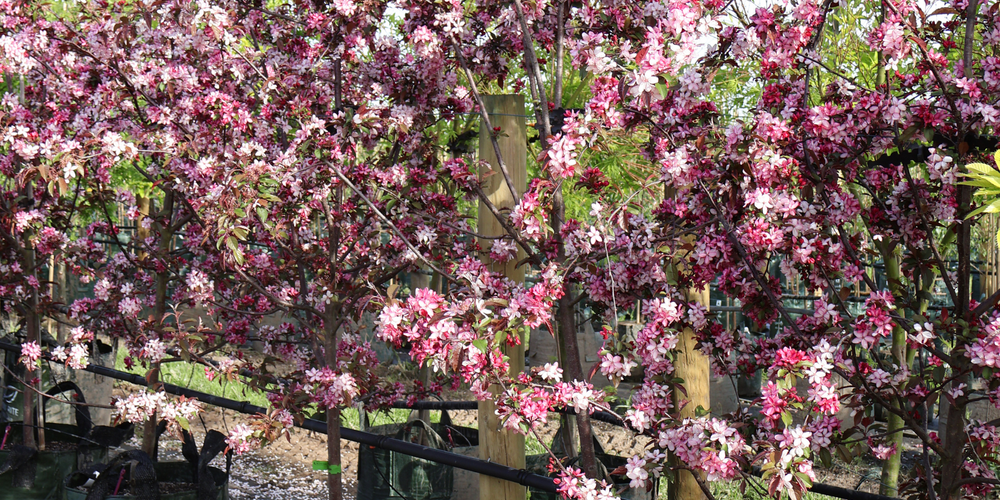
Pyrus calleryana 'Bradford' is a large deciduous ornamental pear, broadly pyramidal when young and rounding out with age. Spring brings a heavy cover of white blossom on bare wood, followed by glossy dark green leaves. Autumn colour runs through red, purple and orange, and holds late into the season in cooler districts.
It does best in full sun in almost any soil that is not permanently wet, and it tolerates urban conditions, wind, heat and frost. Growth is 40 to 70 centimetres a year and drought tolerance is good once established. The one real weakness is narrow branch angles, so formative pruning in the early years is worth the effort.
It reaches 12 to 15 metres tall and 6 to 9 metres wide, which puts it in parks, wide streetscapes, rural driveways and large gardens rather than on small blocks. Give it room away from buildings and powerlines. Where the brief calls for a big, symmetrical, low input shade tree with a spring display, it answers it.
Frequently Asked Questions
About Bradford Pear
What is a Bradford Pear?
Bradford is the original named cultivar of the callery pear, a deciduous ornamental tree grown for its dense white spring blossom, glossy summer foliage and strong autumn colour. It forms a broad pyramidal crown that rounds with maturity. The fruit is a small hard pome of no culinary use, so this is a tree grown purely for display and shade.
How big does a Bradford Pear grow?
It matures at 12 to 15 metres tall with a spread of 6 to 9 metres, making it one of the larger ornamental pears. Most of the height goes on in the first fifteen years, with the crown broadening afterwards. It needs genuine space, so check the distance to buildings, powerlines and boundaries before committing to a position.
How fast does it grow?
Moderate to quick, about 40 to 70 centimetres a year on reasonable soil with water through the establishment period. That rate gives usable canopy within a few seasons, which is part of why it became such a widely planted street tree. Growth eases as the tree matures and puts its energy into widening the crown.
Is it evergreen or deciduous?
Deciduous. It holds foliage from spring through to late autumn, colours strongly, then drops its leaves for winter and stands bare until blossom opens the following spring. That winter bareness is useful in a street or garden setting because it lets low winter sun reach the ground and the buildings behind the tree.
Does it get good autumn colour in Australia?
Yes, and it is one of the more reliable deciduous trees for autumn colour in this country. The display comes late, often May into June, and runs through orange, red and deep purple. Cool nights sharpen the colour, so cold inland and highland gardens get a better and longer show than warm coastal ones.
Is it prone to branch splitting?
It can be. Bradford naturally produces many limbs from a narrow section of trunk at tight angles, and mature trees are known to split in storms. This is manageable rather than fatal. Prune in the first five years to space the main limbs out along the leader and remove the tightest crotches while the wood is small.
How do I prune and care for a Bradford Pear?
Focus your effort early. Establish a single leader, thin competing limbs and widen branch spacing while the tree is young, then prune only for deadwood and clearance later on. Prune in late winter while dormant. Water deeply for the first two summers, mulch a wide ring clear of the trunk, and it will look after itself from there.

Evergreen Trees Direct Has Been Featured In:
Plant Your Pyrus calleryana 'Bradford' With:
Type: Garden Supplies
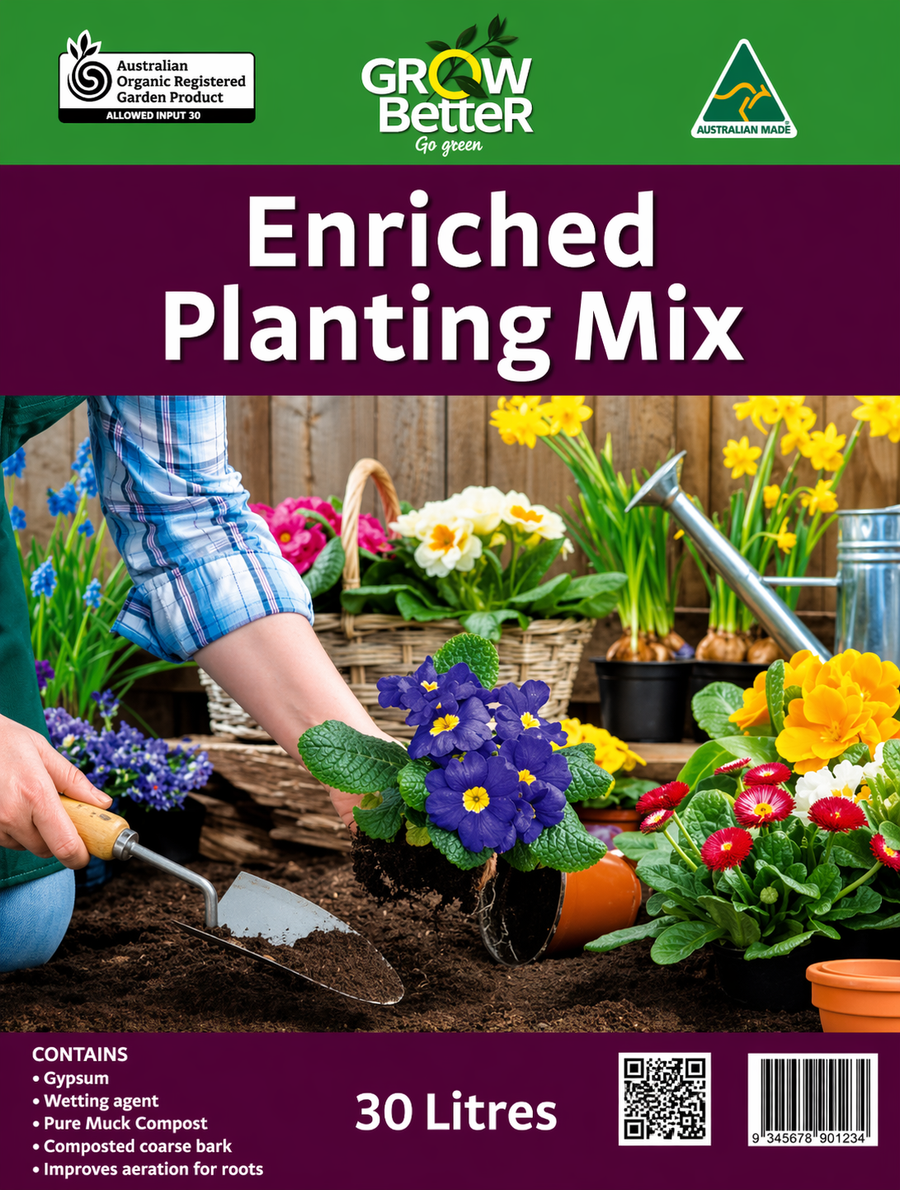
Enriched Planting Mix (AO Certified)
Type: Structural Foliage
Buxus sempervirens English Box Topiary Balls
Type: Hedging and Screening Trees
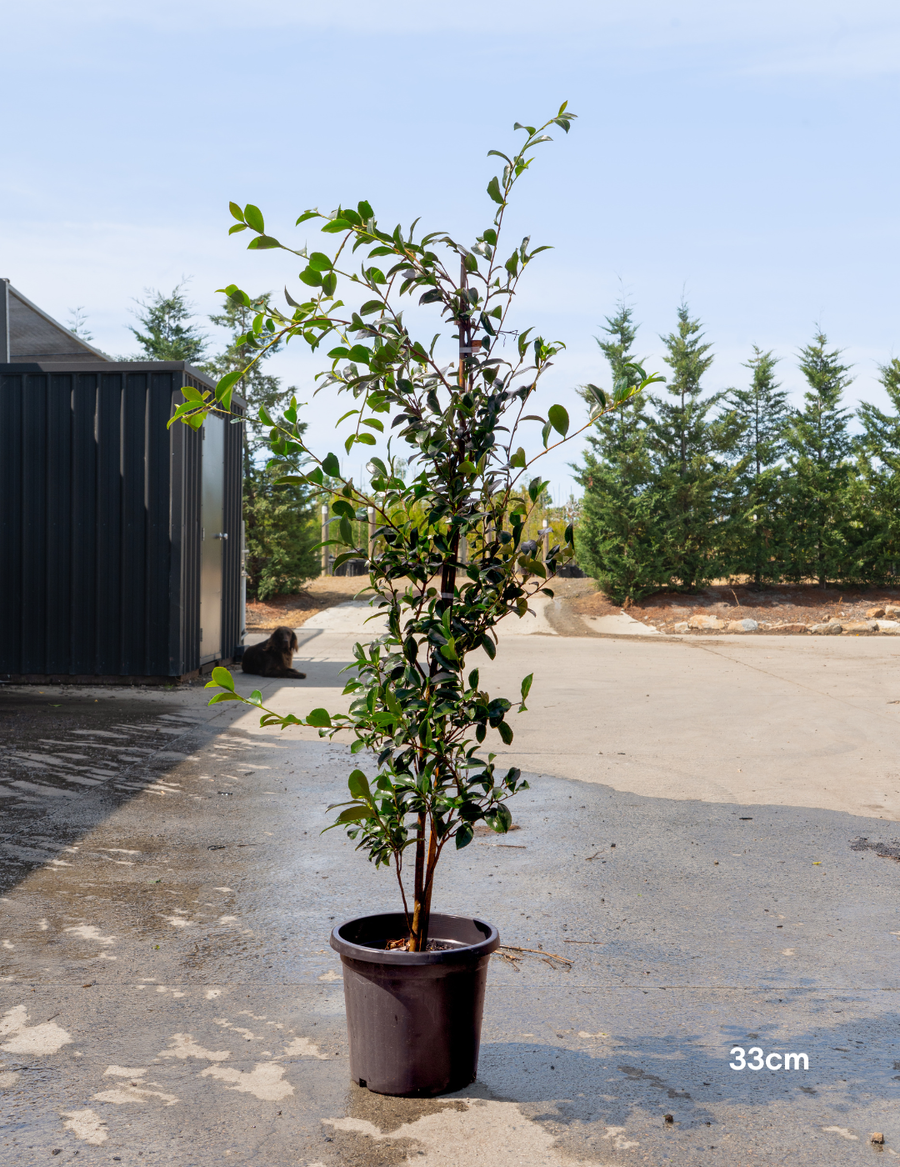
Camellia sasanqua 'Setsugekka'
Type: Hedging and Screening Trees
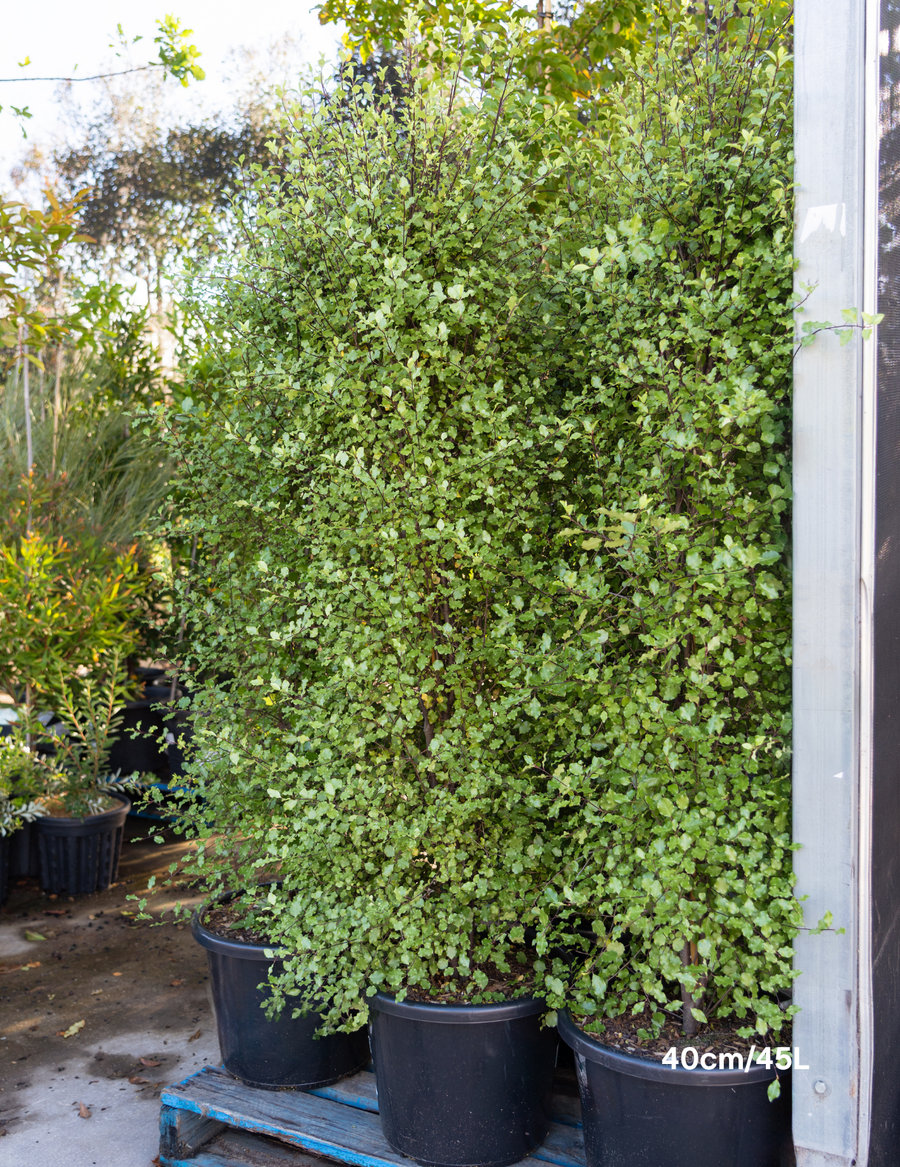
Pittosporum tenuifolium 'Silver Sheen'
Type: Hedging and Screening Trees
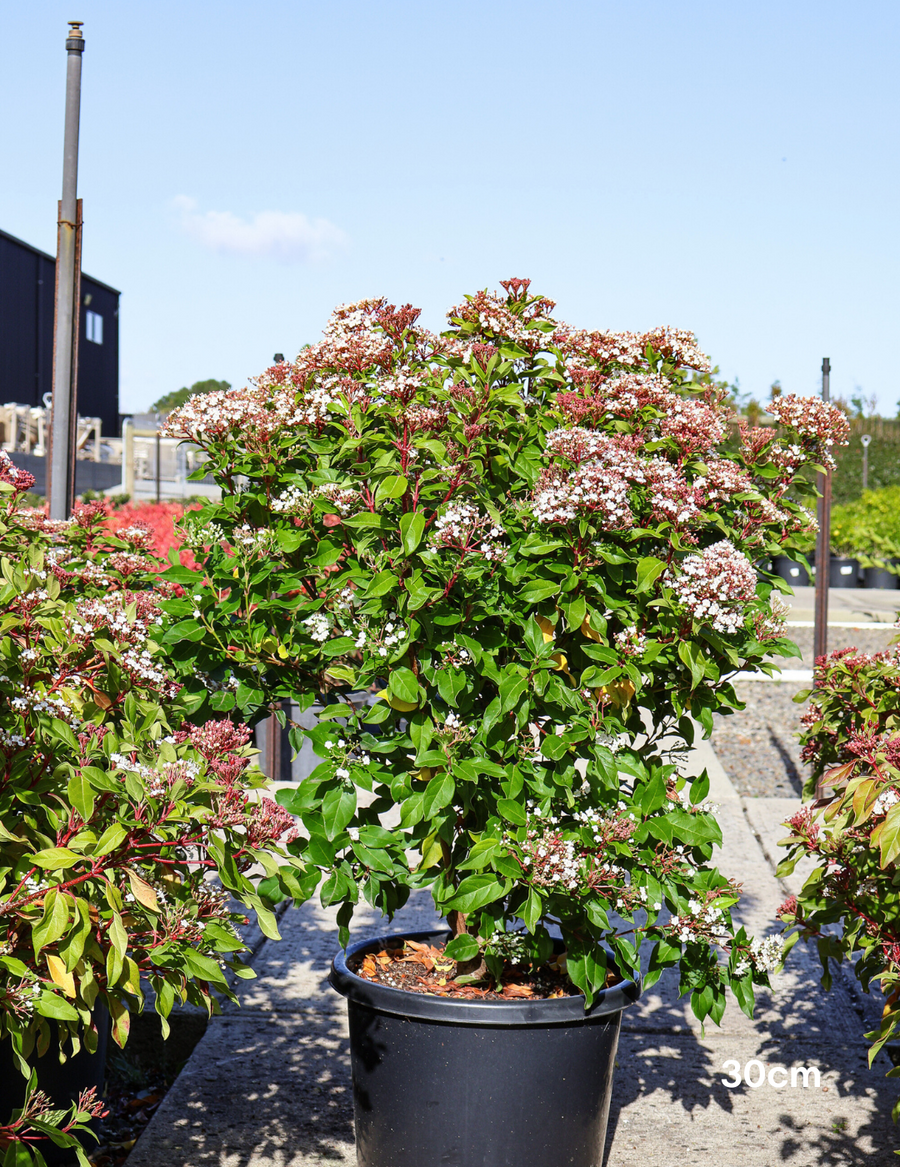
Viburnum tinus
Type: Hedging and Screening Trees
Rhaphiolepis indica 'Snow Maiden'
Uses in my Garden
Uses in my Garden
Pyrus calleryana 'Bradford' works in an:
Is Pyrus calleryana 'Bradford' Evergreen or Deciduous?
Pyrus calleryana 'Bradford' is an Deciduous (Defoliates throughout colder months) Tree
Mature Height & Width
Mature Height: 10m to 15m (approx.)
Mature Width: 6m to 9m
Pyrus calleryana 'Bradford' is expected to grow 40cm to 70cm per year (moderate) (approx.).
Growth Rate of Pyrus calleryana 'Bradford'
Pyrus calleryana 'Bradford' is expected to grow 40cm to 70cm per year (moderate) (approx.).
They are considered to have a:
Frost Tolerance & Ideal Climate to plant Pyrus calleryana 'Bradford'
Is Pyrus calleryana 'Bradford' frost tolerant?
Pyrus calleryana 'Bradford' is Frost Hardy – Survives heavy and frequent frost without damage.
Does Pyrus calleryana 'Bradford' Flower?
Pyrus calleryana ‘Bradford’ produces masses of pure white, five-petalled blossoms in early spring. The rounded flower clusters cover the tree before or as the new leaves emerge, creating a bright, showy display that stands out in streetscapes and ornamental plantings.
Does Pyrus calleryana 'Bradford' flower?
Flowering Period:
Flower Type:
Flower Colour:
White
Is Pyrus calleryana 'Bradford' an Australian Native Tree?
No
Pyrus calleryana 'Bradford' is Native to Native to China and Vietnam, where Pyrus calleryana occurs naturally. ‘Bradford’ is one of the earliest and most widely planted ornamental cultivars, known for its uniform shape and seasonal display.
What is the Wildlife Value of Pyrus calleryana 'Bradford' ?
Its abundant spring blossoms attract bees and early-season pollinators. The small, hard autumn fruits are eaten by certain bird species, while the dense branching offers shelter, perching and seasonal nesting sites, contributing biodiversity value to suburban and landscape plantings.
How much Sunlight does Pyrus calleryana 'Bradford' need?
Pyrus calleryana 'Bradford' will thrive best in:
Preferred Soil?
Preferred Soil?
Pyrus calleryana ‘Bradford’ performs best in well-drained loam or sandy loam soils and tolerates slightly acidic to slightly alkaline conditions. It adapts to poorer urban soils but may struggle in heavy, compacted or waterlogged clay unless improved with organic matter and coarse material to enhance drainage. Keep soil evenly moist during establishment, then move to deep, occasional watering as the tree matures to support drought resilience, strong root development and consistent spring flowering.
Is Pyrus calleryana 'Bradford' Drought Tolerant?
Is Pyrus calleryana 'Bradford' Drought tolerant?
As a young tree it requires regular watering, but once established ‘Bradford’ offers good drought tolerance. Hardy and adaptable, it performs well in warm, dry and urban environments, maintaining its dense, rounded canopy with only occasional deep watering during extended dry periods.
Planting Information
How To Plant Your Pyrus calleryana 'Bradford'
Recommended Planting Spacing For Your Pyrus calleryana 'Bradford'
Pyrus calleryana 'Bradford' is expected to grow 40cm to 70cm per year (moderate) (approx.).