- Mature height
- 8m to 12m (approx.)
- Mature width
- 5m
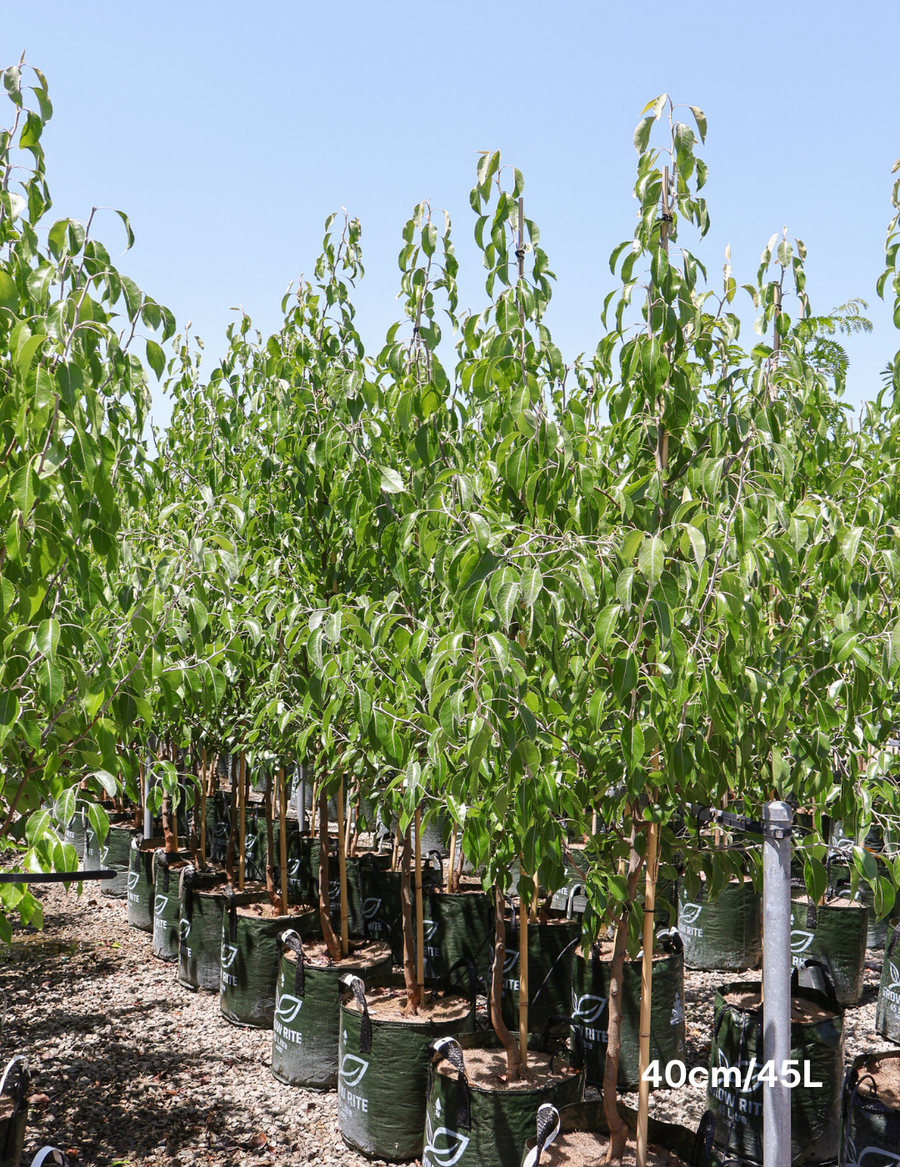
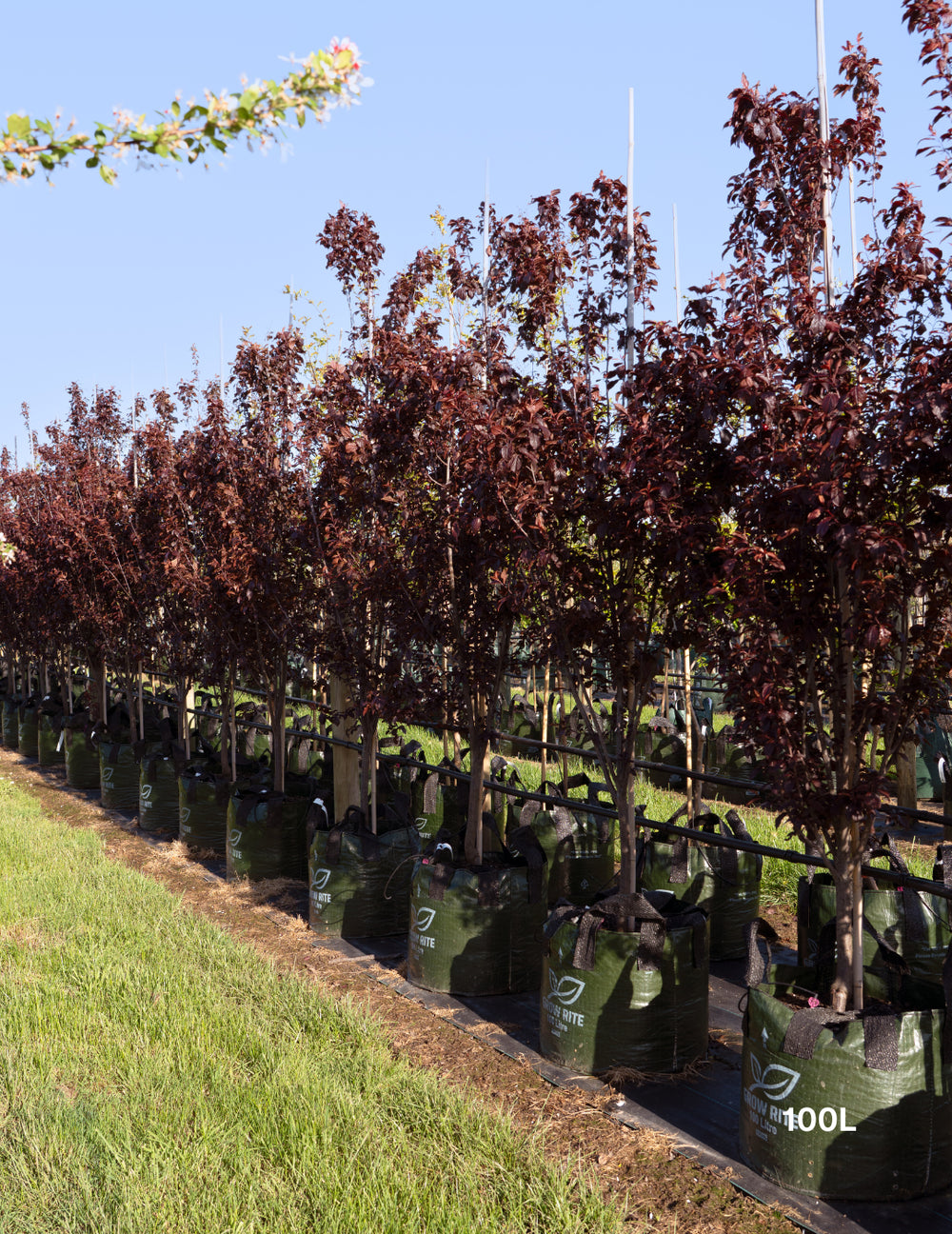
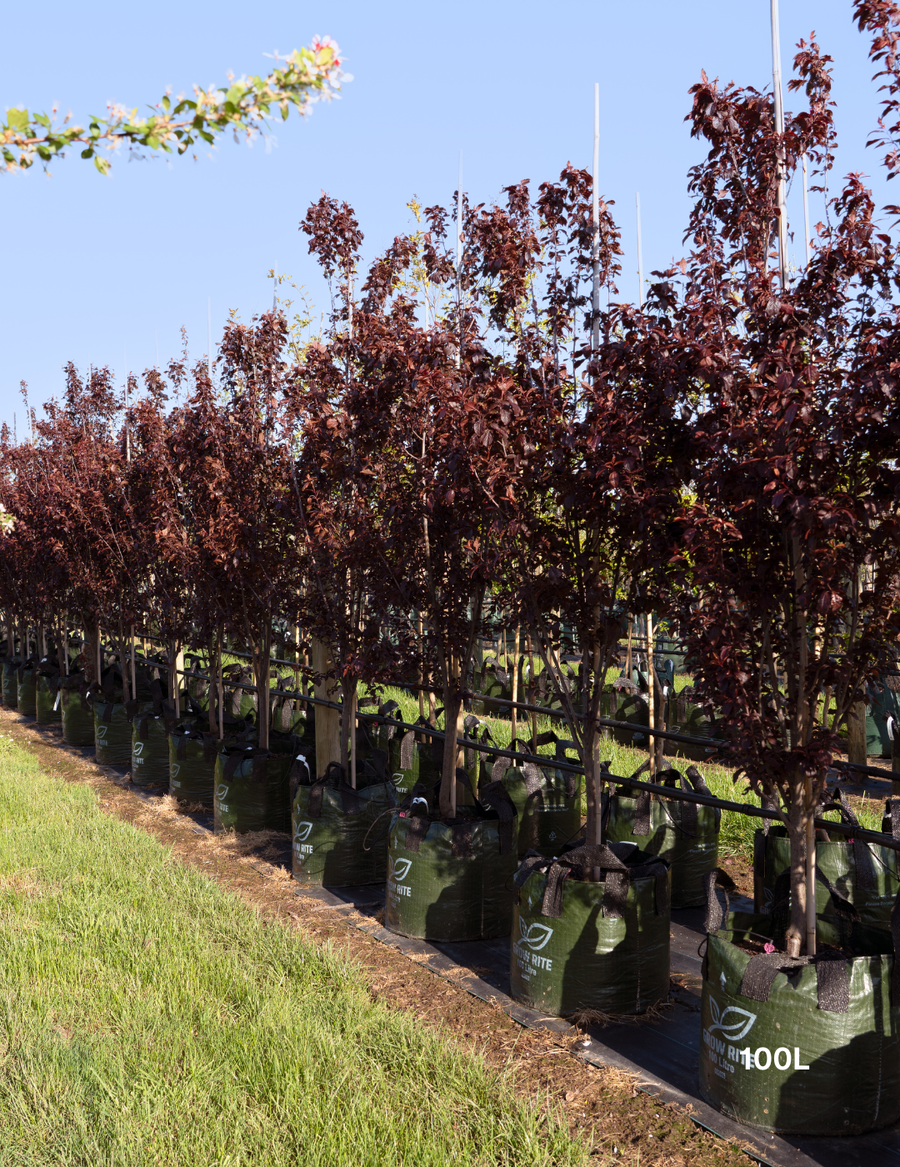
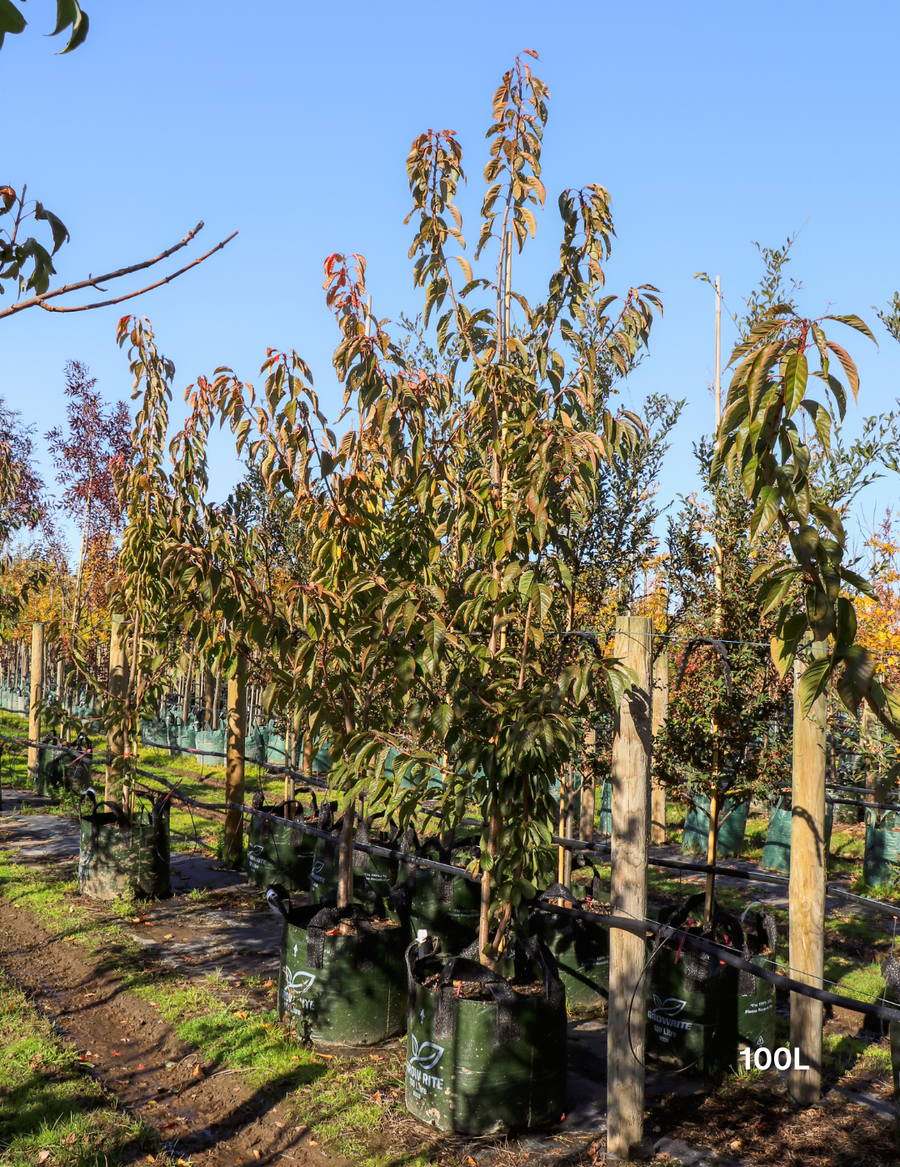
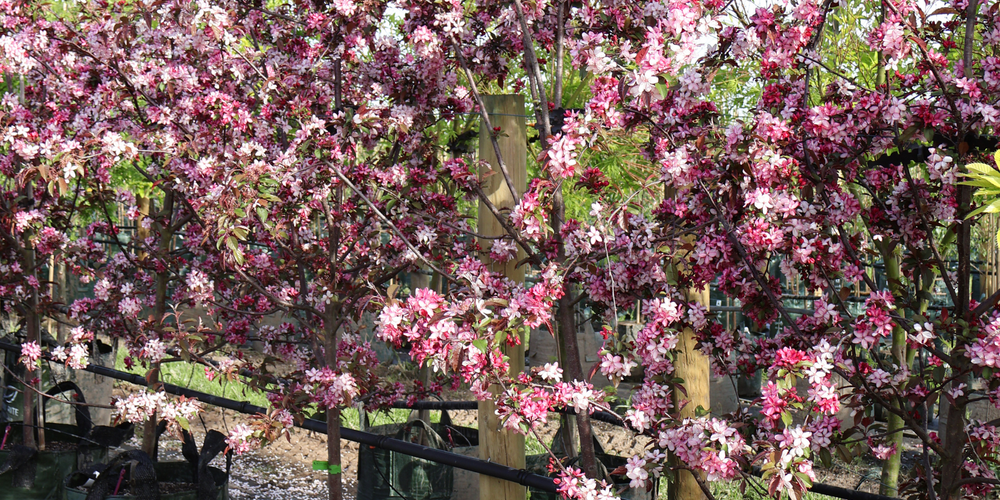
Pyrus betulaefolia x 'Edgedell', sold as Edgewood Pear, is a deciduous ornamental pear with an upright habit and a dense rounded crown. Clusters of white flowers cover the tree in spring as the new leaves break. Foliage is glossy dark green through summer and turns red and bronze in autumn. The small fruit is ornamental only.
It takes full sun to part shade, tolerates a wide range of soils including compacted urban ground, and copes with heat, wind and frost. Growth is moderate at 30 to 60 centimetres a year. Once established it is genuinely drought hardy, and maintenance comes down to a formative prune and the occasional removal of deadwood.
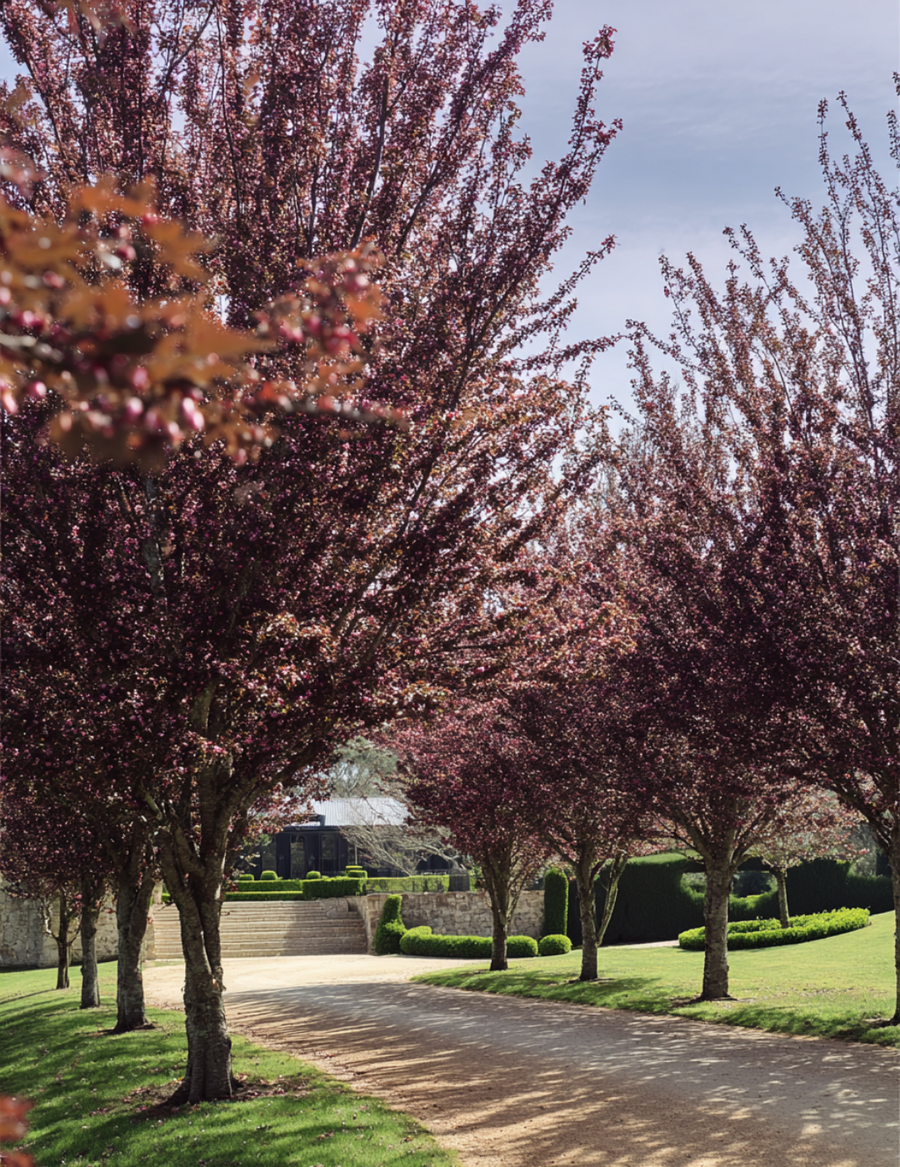
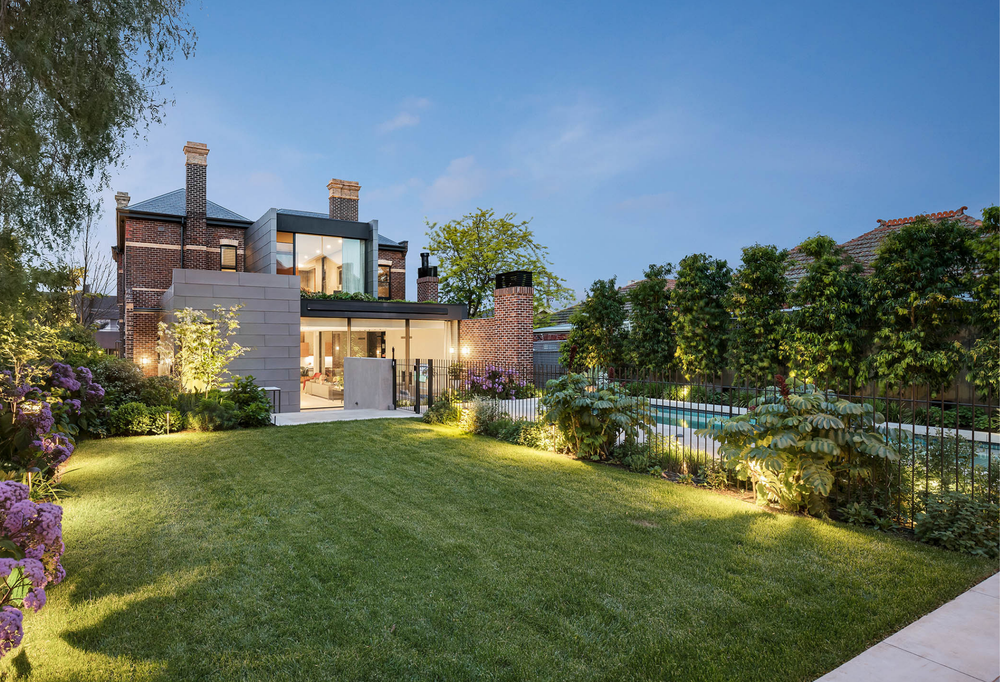
At around 10 metres tall and 5 metres wide it works as a street tree, an avenue tree and a canopy tree for parks, car parks, larger gardens and long driveways. The crown stays narrow relative to its height, which keeps it clear of buildings. Summer shade and winter sun from the one tree.
Frequently Asked Questions
About Edgewood Pear
What is an Edgewood Pear?
Edgewood is an ornamental pear, a hybrid of Pyrus betulaefolia sold under the cultivar name 'Edgedell'. It is deciduous, upright and densely crowned, with masses of white spring blossom, glossy dark green summer foliage and red to bronze autumn colour. It is grown for form and seasonal display in landscape work, not for edible fruit.
How big does Edgewood Pear grow?
Mature width is about 5 metres, with height reaching roughly 8 to 10 metres in good conditions. That gives it a taller, narrower profile than most callery pear cultivars, which is exactly why it gets specified for streets and car parks where a wide canopy would be a nuisance. Allow 5 to 6 metres between trees in an avenue.
Does it produce edible fruit?
No. The fruit is a small hard pome, roughly a centimetre across, produced sparsely and of no value in the kitchen. Birds take some of it and the rest drops without creating much mess, which is a practical advantage over fruiting pears in paved and trafficked areas. Plant it for the blossom and the shape.
How fast does it grow?
Growth is moderate, around 30 to 60 centimetres a year, quicker in the early years on good soil with regular water and slower as the tree fills out its crown. That rate is fast enough to give a useful street tree within five or six years, and steady enough that the wood stays sound rather than brittle.
Does it have invasive roots?
Its roots are not considered aggressive and it is widely used in streetscapes, car parks and near paving without trouble. As with any tree of this size, give it a reasonable soil volume and keep it a sensible distance from small pipes, footings and narrow footpaths. Deep watering while young encourages roots down rather than along the surface.
Is it suitable for street and car park planting?
Yes, and that is where most of them are planted. It tolerates compacted soil, reflected heat, wind and root restriction, sheds little in the way of fruit, and holds a predictable narrow crown that lifts cleanly above traffic. Councils and developers use it where a uniform, low maintenance deciduous canopy is required.
How do I care for an Edgewood Pear?
Water deeply through the first two summers and mulch a wide ring around the base without touching the trunk. Prune while young to establish a single leader and clear trunk to the height you need, then leave it alone apart from removing dead or crossing wood. Mature trees need almost nothing beyond an occasional inspection.