

Prunus lusitanica Portuguese Laurel
Prunus lusitanica Portuguese Laurel
Couldn't load pickup availability
Current Stock Height Guides
Current Stock Height Guides
Height guide disclaimer: Height ranges are approximate only. As living products, plant heights naturally vary between individual plants, batches, and seasons. No guarantee is given that supplied plants will fall within the stated range. If minimum heights are required, you mustconfirm current batch heights with Evergreen Trees Direct prior to purchase. Variation in height is normal and is not grounds for return, refund, replacement, or compensation.
Mature Height & Width
Mature Height & Width
Mature Height: 4m to 8m (approx.) (can be larger if unpruned, or kept smaller as a hedge)
Mature Width: 2m to 3m
Prunus lusitanica Portuguese Laurel is expected to grow 30cm to 50cm per year (moderate) (approx.).
Root Ball Dimensions
Root Ball Dimensions
Use this as a reference when digging your planting hole. We recommend digging at least 10% wider than the dimensions below to encourage strong root development.
- 30cm Pot: 33cm (W) × 30cm (D)
- 40cm/45L Pot: 44cm (W) × 41.5cm (D)
- 50cm Pot / 70L Pot: 55cm (W) × 41.8cm (D)
- 100L Bag: 50.6cm (W) × 52.8cm (D)
- 150L Bag: 66cm (W) × 55cm (D)
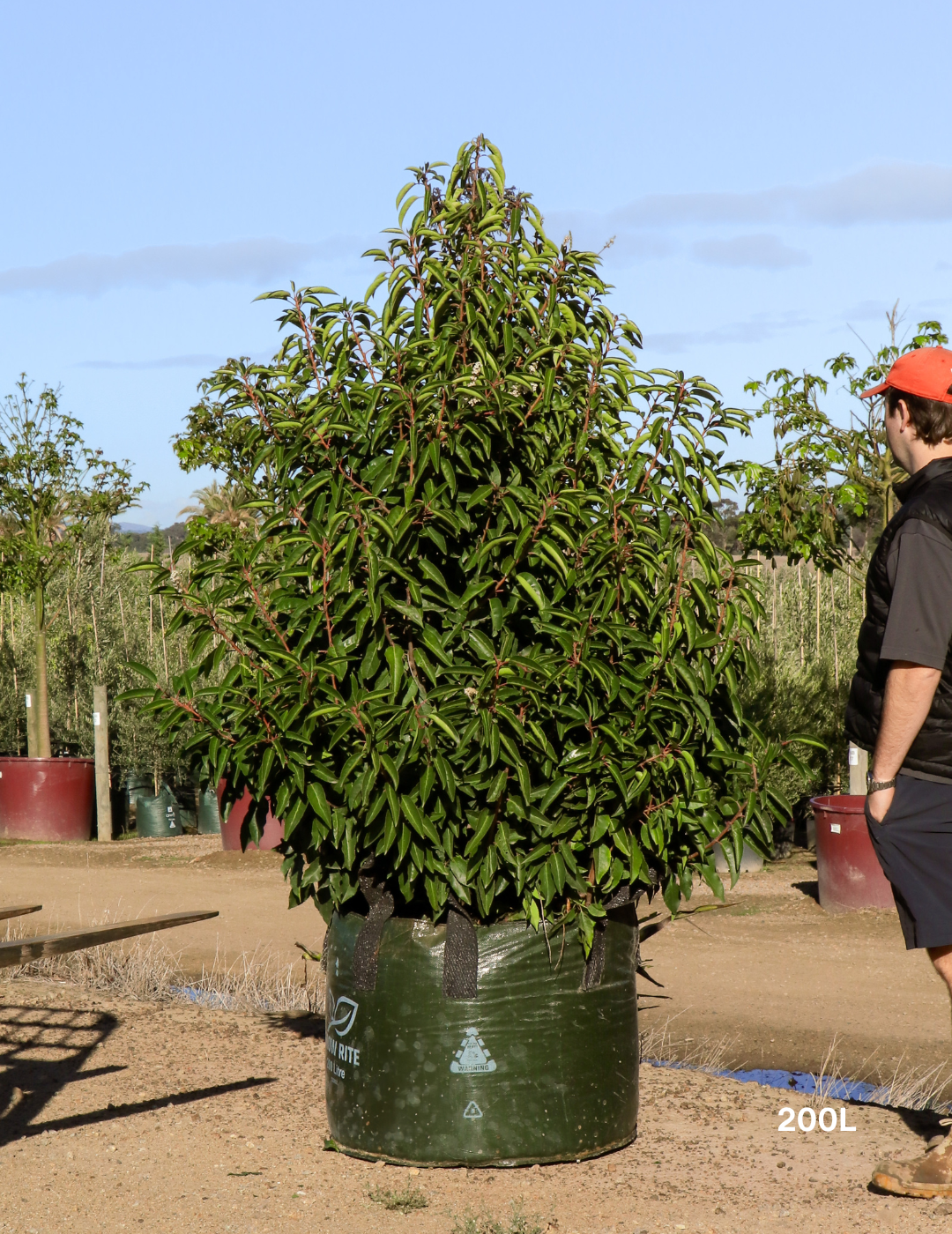
- 200L Bag: 71.5cm (W) × 60.5cm (D)
- 300L Bag: 88cm (W) × 63.8cm (D)
- 400L Bag: 99cm (W) × 66cm (D)
- 500L Bag: 122cm (W) × 66cm (D)
- 750L Bag: 134cm (W) × 69cm (D)
- 1000L Bag: 146.3cm (W) × 71.5cm (D)
- 2000L Bag: 176cm (W) × 82.5cm (D)
Trade
Trade
We supply advanced trees to landscapers, developers, architects, and councils Australia-wide. Trade clients receive fast quotes, expert advice, and access to premium stock with reliable freight.
Shipping
Shipping
Shipping is calculated at checkout based on the pallet space your order occupies in the truck and your delivery location.
There is no charge to calculate your freight.
Contact
Contact
Have a question or a list to send through to us?
Email: sales@evergreentrees.com.au
Phone: (03) 7042 3318
Share this product
About Your New Prunus lusitanica Portuguese Laurel
Prunus lusitanica, the Portuguese Laurel, is a dense evergreen shrub with glossy dark green leaves carried on deep red stalks. Growth is upright and close, holding foliage right down to the base. Small white flower spikes appear in spring, followed by red berries that darken to black. It clips cleanly or grows loose and informal.
Full sun to part shade suits it, and it copes with clay as long as water moves through. Cold is no obstacle. This is one of the few reliable evergreen hedges for genuinely frost prone gardens in the tablelands, Victoria and Tasmania. Growth is around 30 to 50 centimetres a year, with good drought tolerance once established.
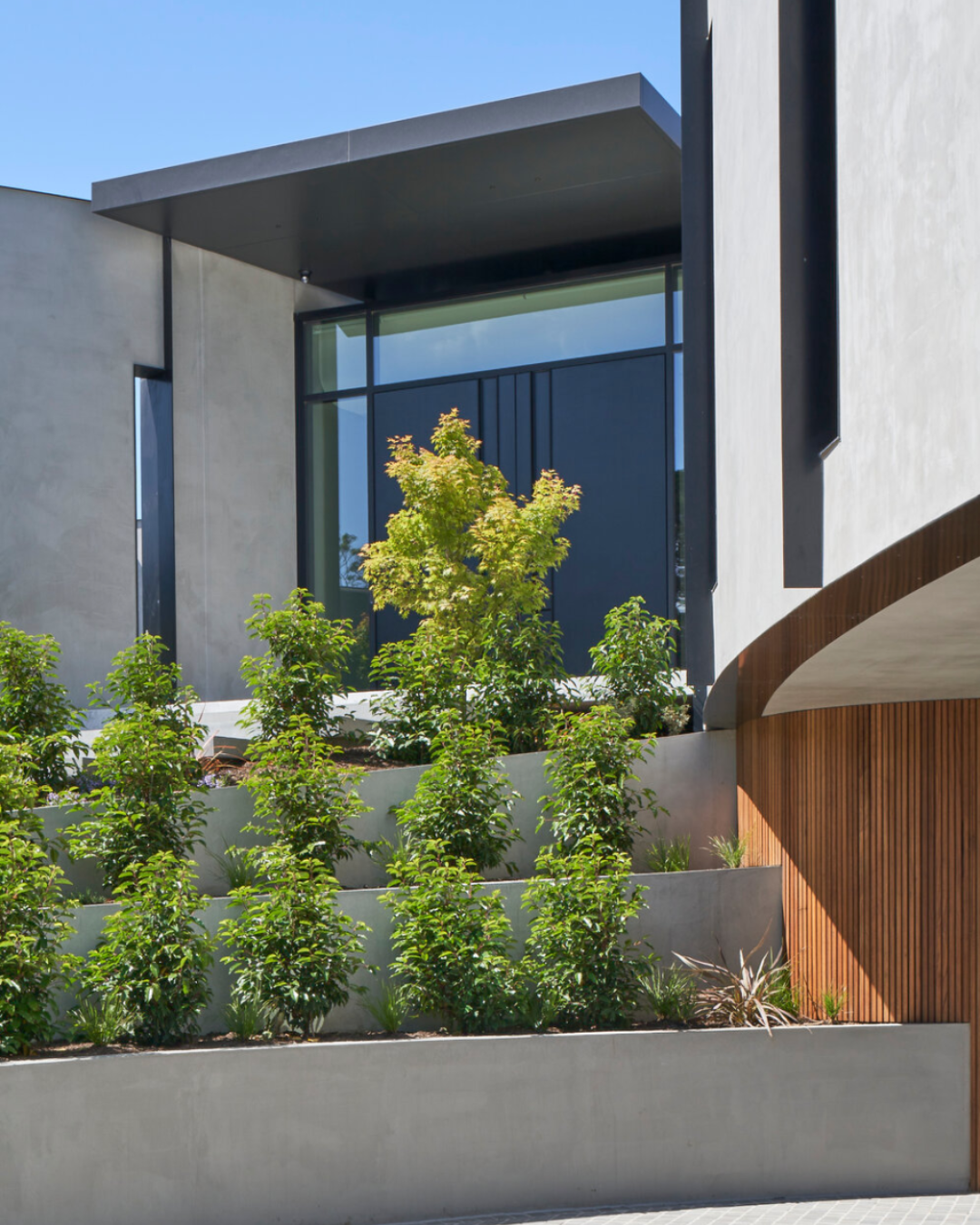
Set plants 80 centimetres apart for a tight formal hedge, or 1 to 1.5 metres for a softer screen. It is a standard choice for boundary screening, courtyard walls and clipped garden structure, and it takes readily to topiary and standards. A hedge that stays furnished at ground level year after year is worth paying for.
Frequently Asked Questions
About Portuguese Laurel
What is Portuguese Laurel?
Portuguese Laurel is an evergreen shrub from the Iberian Peninsula, botanically Prunus lusitanica, grown almost entirely for hedging and screening. It has thick glossy dark green leaves on red stems, a naturally dense upright habit, and small white flower spikes in spring that give way to red then black berries. It is not an Australian native.
How big does Portuguese Laurel grow?
Left unpruned it will reach roughly 4 to 6 metres over many years, with a spread of 2 to 3 metres. In practice almost every hedge is held somewhere between 1.5 and 3 metres by clipping, and it responds to that treatment without thinning out. Growth is a steady 30 to 50 centimetres a year rather than rapid.
How far apart should I plant it for a hedge?
Plant at 80 centimetres apart for a tight formal hedge that closes up quickly, or 1 to 1.5 metres apart for a looser informal screen. Closer spacing fills faster but the plants compete sooner, so keep water and feeding up in the early years. Set the row at least a metre off a fence line to allow access for clipping.
Is it frost tolerant?
Yes, and this is the main reason it gets specified. It shrugs off hard frost that would burn Ficus, Murraya or Viburnum, which makes it one of the safest evergreen hedges for cold inland and highland gardens. It is equally at home in mild coastal climates, so the one plant covers a very wide range of Australian conditions.
Does it grow in shade?
It grows well in part shade, including south facing walls and beds under high canopy, which is unusual for a hedge this dense. Expect slightly more open growth and slower filling than the same plants in full sun. Deep shade with root competition from established trees is the one situation where it will disappoint.
Are the berries poisonous?
Treat them as unsafe to eat. Like most plants in the genus Prunus, the leaves, seeds and stones contain cyanogenic compounds, and the small black berries are not edible. It is commonly planted in family gardens without incident, but teach children not to eat the fruit, and keep clippings well away from horses and grazing stock.
How do I prune and maintain a Portuguese Laurel hedge?
Trim twice a year for a formal face, once in mid spring after the flush and again in late summer, using hedge shears or secateurs rather than a heavy machine so leaves are not shredded. Feed in spring, mulch, and water through the first two summers. Hard renovation pruning back into old wood is tolerated and regrows well.
Evergreen Trees Direct Has Been Featured In:


Plant Your Prunus lusitanica Portuguese Laurel With:



Type: Garden Supplies
Enriched Planting Mix (AO Certified)

Type: Hedging and Screening Trees
Camellia sasanqua 'Setsugekka'

Type: Hedging and Screening Trees
Pittosporum tenuifolium 'Silver Sheen'
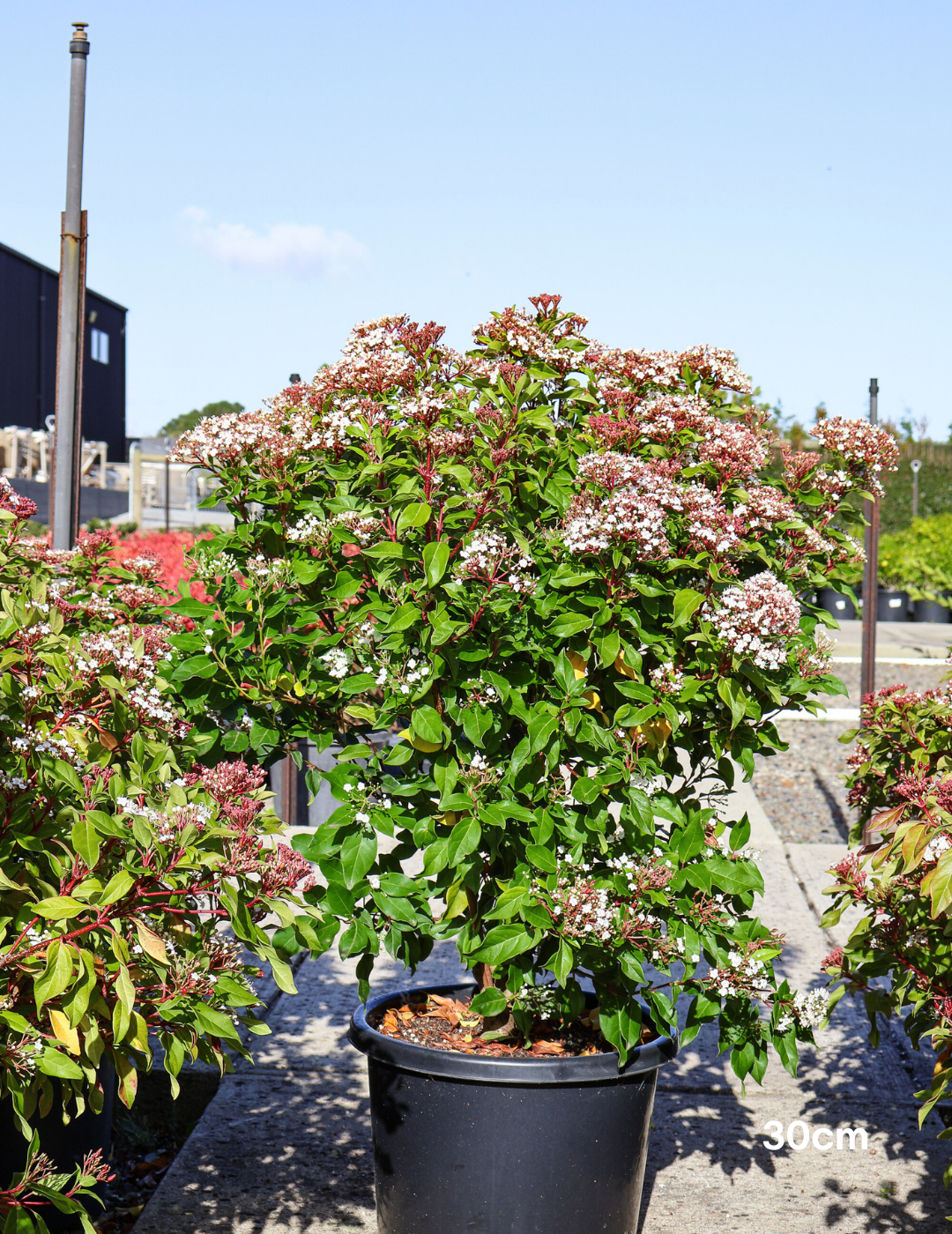
Type: Hedging and Screening Trees
Viburnum tinus

Type: Hedging and Screening Trees
Rhaphiolepis indica 'Snow Maiden'
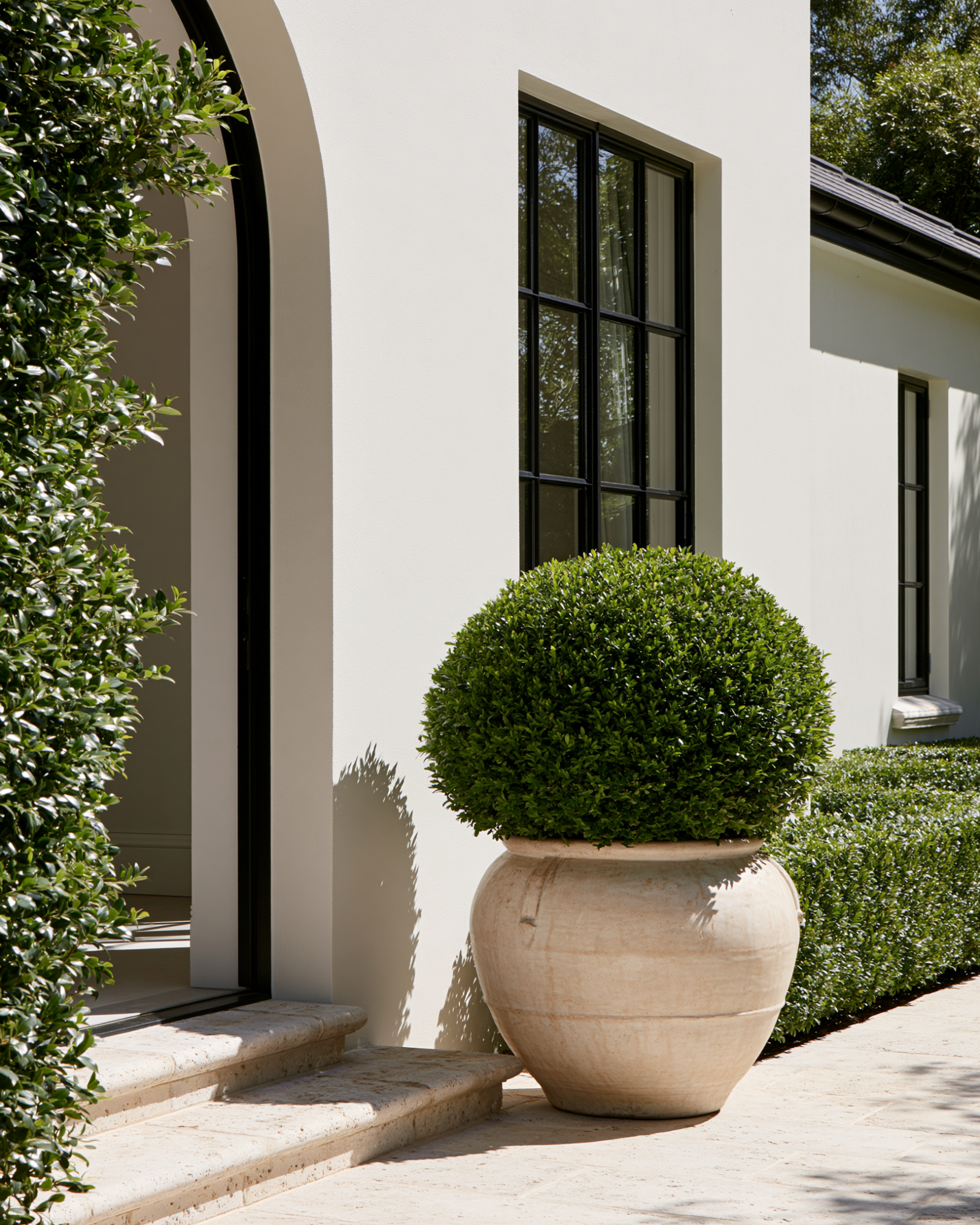
Type: Structural Foliage
Buxus sempervirens English Box Topiary Balls

Uses in my Garden
Uses in my Garden
Prunus lusitanica Portuguese Laurel works in an:
Is Prunus lusitanica Portuguese Laurel Evergreen or Deciduous?
Is Prunus lusitanica Portuguese Laurel Evergreen or Deciduous?
Prunus lusitanica Portuguese Laurel is an Evergreen (foliage year round) Tree
Mature Height & Width
Mature Height & Width
Mature Height: 4m to 8m (approx.) (can be larger if unpruned, or kept smaller as a hedge)
Mature Width: 2m to 3m
Prunus lusitanica Portuguese Laurel is expected to grow 30cm to 50cm per year (moderate) (approx.).
Growth Rate of Prunus lusitanica Portuguese Laurel
Growth Rate of Prunus lusitanica Portuguese Laurel
Prunus lusitanica Portuguese Laurel is expected to grow 30cm to 50cm per year (moderate) (approx.).
They are considered to have a:
Frost Tolerance & Ideal Climate to plant Prunus lusitanica Portuguese Laurel
Frost Tolerance & Ideal Climate to plant Prunus lusitanica Portuguese Laurel
Is Prunus lusitanica Portuguese Laurel frost tolerant?
Prunus lusitanica Portuguese Laurel is Frost Hardy – Survives heavy and frequent frost without damage.
Does Prunus lusitanica Portuguese Laurel Flower?
Does Prunus lusitanica Portuguese Laurel Flower?
Prunus lusitanica produces elegant, upright racemes of small, fragrant white flowers in late spring to early summer. These lightly perfumed blooms stand out against the glossy deep green foliage and are followed by small red berries that mature to black, adding a subtle seasonal highlight.
Does Prunus lusitanica Portuguese Laurel flower?
Flowering Period:
Flower Type:
Flower Colour:
White
Is Prunus lusitanica Portuguese Laurel an Australian Native Tree?
Is Prunus lusitanica Portuguese Laurel an Australian Native Tree?
No
Prunus lusitanica Portuguese Laurel is Native to South-western Europe and North Africa, particularly Portugal, Spain, and Morocco, where it grows naturally in woodlands and mountain slopes.
What is the Wildlife Value of Prunus lusitanica Portuguese Laurel ?
What is the Wildlife Value of Prunus lusitanica Portuguese Laurel ?
Its fragrant flowers attract bees and a variety of pollinating insects, while the berries provide food for birds through summer and autumn. The dense evergreen canopy offers excellent shelter, protection and nesting habitat for small birds, making it highly valuable in screening, hedging and wildlife-friendly gardens.
How much Sunlight does Prunus lusitanica Portuguese Laurel need?
How much Sunlight does Prunus lusitanica Portuguese Laurel need?
Prunus lusitanica Portuguese Laurel will thrive best in:
Preferred Soil?
Preferred Soil?
Prunus lusitanica performs best in well-drained loam or sandy loam soils and tolerates slightly acidic to slightly alkaline conditions. It adapts well to a range of soil types but may struggle in heavy, waterlogged clay unless improved with organic matter and coarse material to enhance drainage. Keep soil evenly moist during establishment, then shift to deep, occasional watering as the plant matures to support drought resilience, dense canopy development and long-term hedging performance.
Is Prunus lusitanica Portuguese Laurel Drought Tolerant?
Is Prunus lusitanica Portuguese Laurel Drought Tolerant?
Is Prunus lusitanica Portuguese Laurel Drought tolerant?
As a young plant it requires regular watering, but once established Portuguese Laurel develops good drought tolerance. Hardy, reliable and adaptable, it performs strongly in warm, dry, coastal and urban conditions and maintains dense evergreen foliage with deep, occasional watering during extended dry spells.

Planting Information
How To Plant Your Prunus lusitanica Portuguese Laurel
How To Plant Your Prunus lusitanica Portuguese Laurel
Recommended Planting Spacing For Your Prunus lusitanica Portuguese Laurel
Recommended Planting Spacing For Your Prunus lusitanica Portuguese Laurel
Prunus lusitanica Portuguese Laurel is expected to grow 30cm to 50cm per year (moderate) (approx.).
Long Term Care For Your Prunus lusitanica Portuguese Laurel
Long Term Care For Your Prunus lusitanica Portuguese Laurel
Planting Your Prunus lusitanica Portuguese Laurel in Different Soil
Planting Your Prunus lusitanica Portuguese Laurel in Different Soil
Frequently Asked Questions
Frequently Asked Questions