- Mature height
- 3m to 5m (approx.) (can be kept smaller by pruning)
- Mature width
- 2m to 3m
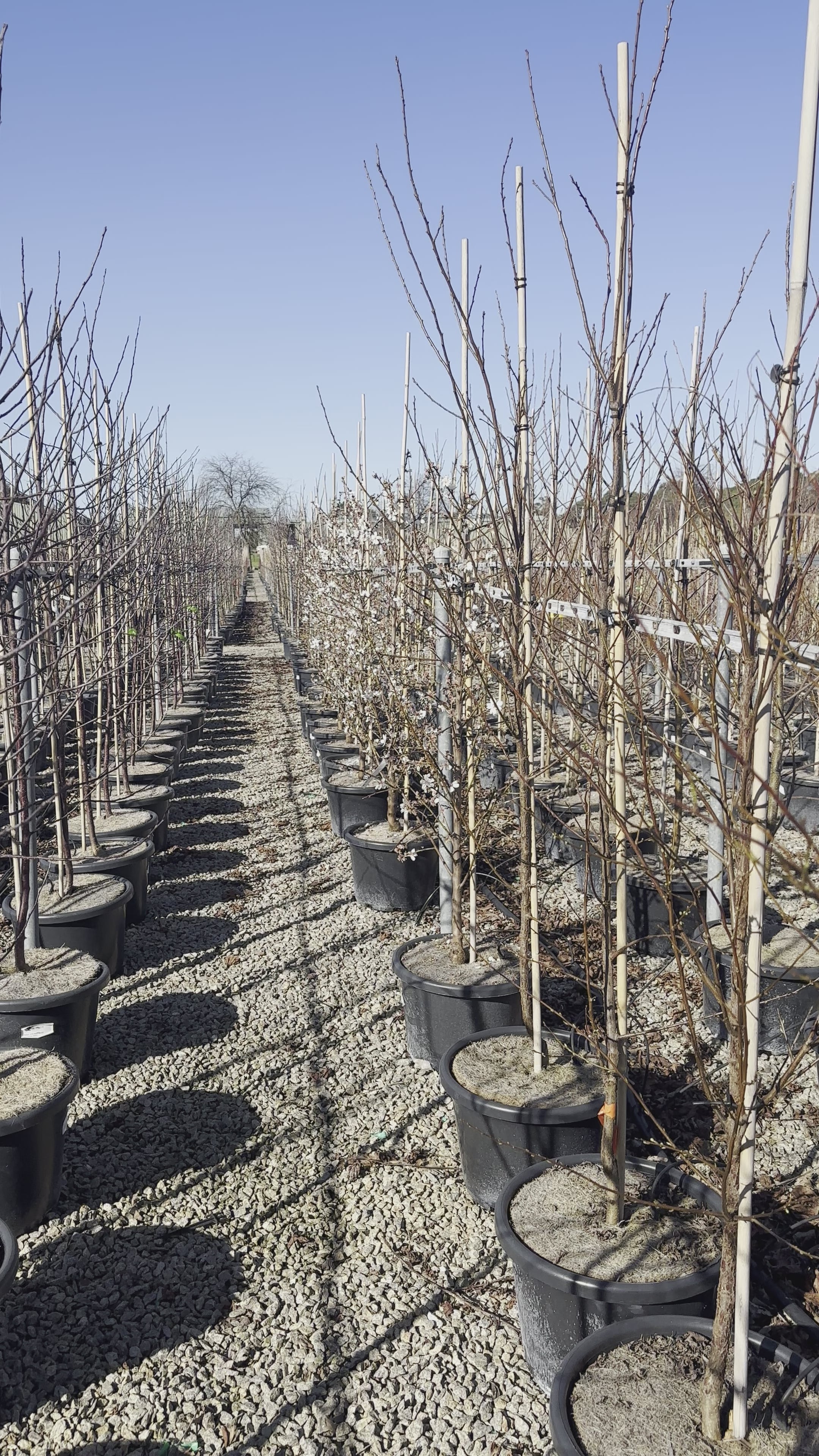
Prunus dulcis 'All In One' is the almond that crops without a partner. Most almonds need a second variety flowering alongside them to set nuts, whereas 'All In One' is fully self-fertile, which makes a single tree viable in a suburban backyard.
'All In One' grows to 3 to 5 metres tall and 2 to 3 metres wide at 60 to 90 centimetres per year, and is easily held smaller with annual pruning. It carries heavy crops of soft-shelled almonds that can be cracked by hand, and covers itself in pale pink blossom in late winter before any leaves appear.
'All In One' is frost hardy, surviving heavy and frequent frost without damage, and needs winter chill and a hot dry summer to ripen its crop. It wants full sun and free-draining soil, and should be pruned after harvest rather than in winter.
Frequently Asked Questions
About Prunus dulcis 'All In One'
Is 'All In One' almond self-fertile?
Yes. 'All In One' is fully self-fertile and will set a heavy crop from a single tree, unlike most almond varieties which need a second variety planted nearby.
How big does an 'All In One' almond grow?
It reaches 3 to 5 metres tall and 2 to 3 metres wide, and is easily held at 2.5 to 3 metres with annual pruning, which keeps the harvest within reach.
When do the almonds ripen?
Nuts ripen through late summer into autumn. The hulls split open on the tree when the crop is ready, which is the signal to harvest.
Are the shells hard to crack?
No. 'All In One' produces soft-shelled almonds that can be cracked by hand or with light pressure, which makes home processing far easier than with hard-shelled varieties.
When does 'All In One' blossom?
Pale pink blossom covers the bare branches in late winter and early spring, before the foliage emerges. It is one of the earliest fruit trees to flower.
What climate do almonds need?
They need winter chill to break dormancy and a hot dry summer to ripen and cure the nuts. Humid summers cause hull rot and poor kernel quality.
When should I prune an almond tree?
Prune after harvest rather than in winter, which reduces the risk of fungal and bacterial infection through open pruning wounds.