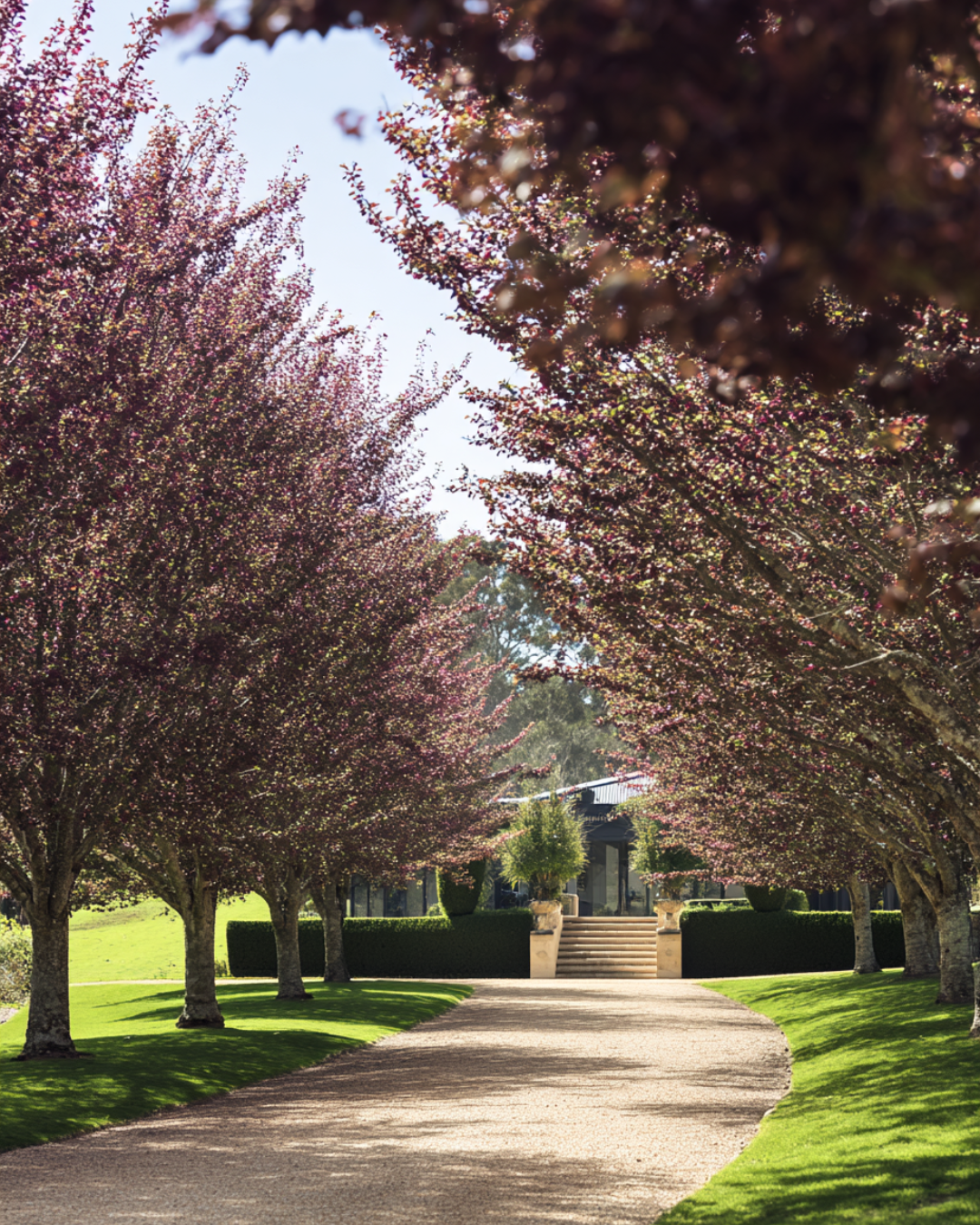
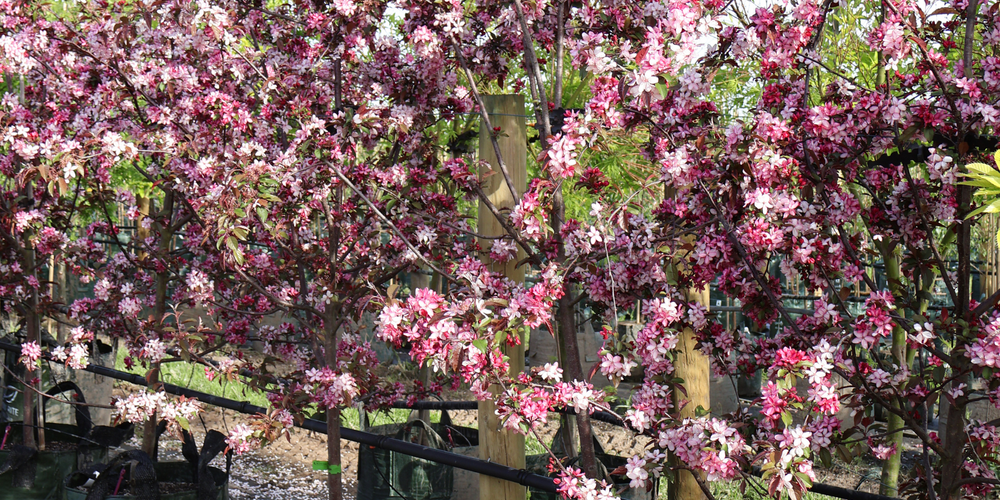
Prunus cerasifera 'Nigra', the Purple-Leaf Plum, is a much-loved deciduous feature tree grown for its deep purple-black foliage and soft pink spring blossom. The rich leaf colour holds through the entire growing season, giving a striking contrast against green plantings.
Purple-Leaf Plum grows to 4-6 metres tall and 3-4 metres wide with a graceful rounded canopy. The compact, well-structured form and manageable size make it an ideal feature tree for gardens, streetscapes, and small yards, where it offers strong architectural appeal. Masses of soft pink blossoms appear in early spring, often before the new foliage emerges.
Purple-Leaf Plum is highly adaptable and thrives across most Australian climates, tolerating heat, frost, and a wide range of soils once established. It performs best in full sun, which encourages the richest leaf colour, and needs only minimal pruning to maintain its shape.
Frequently Asked Questions
About Prunus cerasifera 'Nigra' Purple-Leaf Plum
How tall does Prunus 'Nigra' grow?
Prunus cerasifera 'Nigra', the Purple-Leaf Plum, grows to 4-6 metres tall and 3-4 metres wide with a rounded canopy.
How fast does Purple-Leaf Plum grow?
Purple-Leaf Plum is moderately fast-growing, adding 40-60cm per year once established.
What colour is the foliage?
'Nigra' has deep purple-black foliage that holds its rich colour through the entire growing season, providing strong contrast against green plantings.
When does Purple-Leaf Plum flower?
'Nigra' produces masses of soft pink blossoms in early spring, typically August to September across Australia, often appearing before the new foliage.
Is Purple-Leaf Plum deciduous?
Yes. 'Nigra' is fully deciduous, dropping its purple foliage in winter and producing fresh purple leaves in spring after flowering.
Is Purple-Leaf Plum suitable for street planting?
Yes. The compact size, pink spring flowers, and year-round purple foliage make 'Nigra' a popular street, feature, and small-garden tree.
Where does Purple-Leaf Plum grow best in Australia?
'Nigra' is highly adaptable and thrives across most Australian climates, tolerating heat, frost, and a wide range of soils once established.