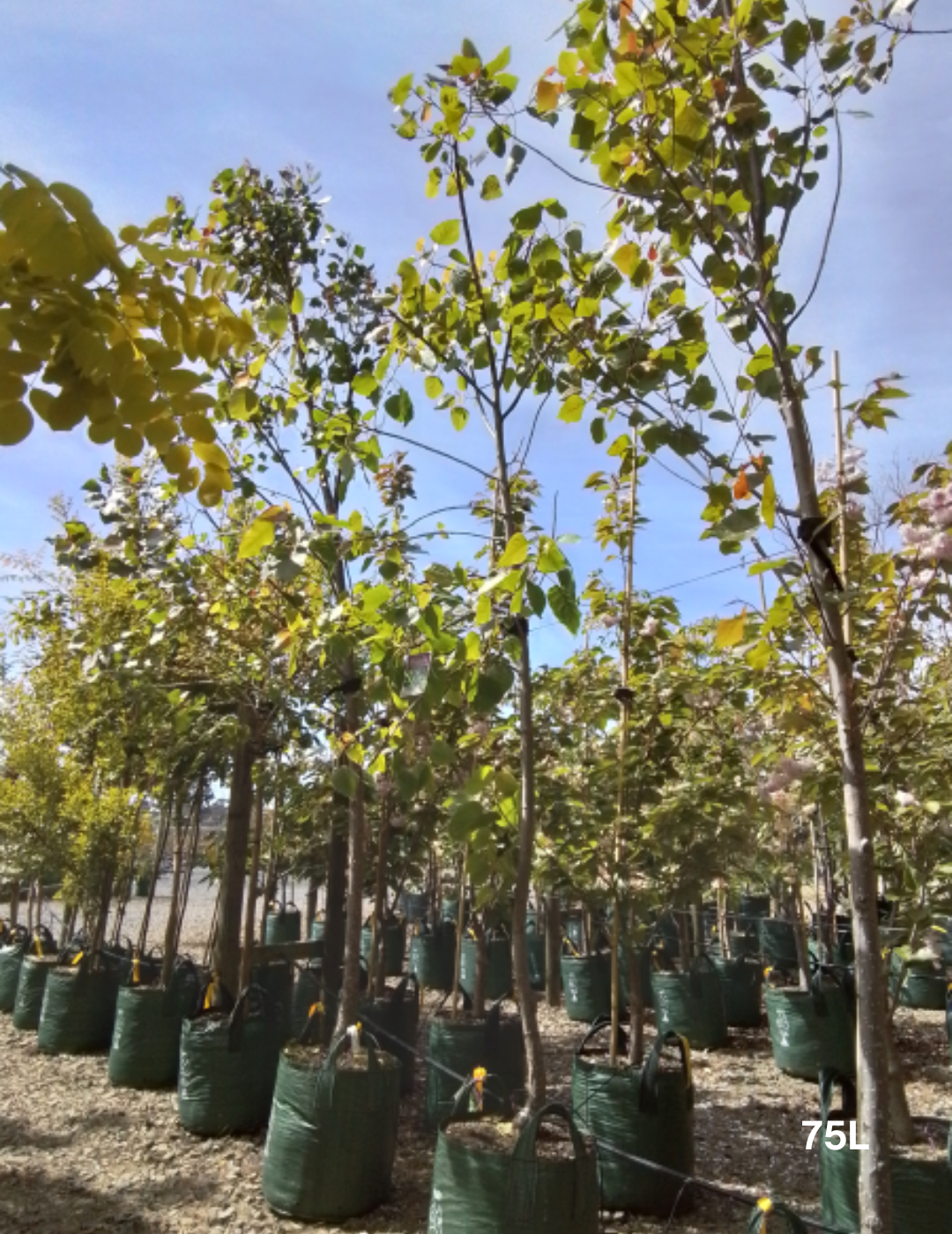


Populus deltoides
Populus deltoides
Couldn't load pickup availability
Current Stock Height Guides
Current Stock Height Guides
Height guide disclaimer: Height ranges are approximate only. As living products, plant heights naturally vary between individual plants, batches, and seasons. No guarantee is given that supplied plants will fall within the stated range. If minimum heights are required, you mustconfirm current batch heights with Evergreen Trees Direct prior to purchase. Variation in height is normal and is not grounds for return, refund, replacement, or compensation.
Mature Height & Width
Mature Height & Width
Mature Height: 20m to 30m (approx.)
Mature Width: 15m to 20m
Populus deltoides is expected to grow 1m to 1.5m per year (approx.).
Root Ball Dimensions
Root Ball Dimensions
Use this as a reference when digging your planting hole. We recommend digging at least 10% wider than the dimensions below to encourage strong root development.
- 30cm Pot: 33cm (W) × 30cm (D)
- 40cm/45L Pot: 44cm (W) × 41.5cm (D)
- 50cm Pot / 70L Pot: 55cm (W) × 41.8cm (D)
- 100L Bag: 50.6cm (W) × 52.8cm (D)
- 150L Bag: 66cm (W) × 55cm (D)
- 200L Bag: 71.5cm (W) × 60.5cm (D)
- 300L Bag: 88cm (W) × 63.8cm (D)
- 400L Bag: 99cm (W) × 66cm (D)
- 500L Bag: 122cm (W) × 66cm (D)
- 750L Bag: 134cm (W) × 69cm (D)
- 1000L Bag: 146.3cm (W) × 71.5cm (D)
- 2000L Bag: 176cm (W) × 82.5cm (D)
Trade
Trade
We supply advanced trees to landscapers, developers, architects, and councils Australia-wide. Trade clients receive fast quotes, expert advice, and access to premium stock with reliable freight.
Shipping
Shipping
Shipping is calculated at checkout based on the pallet space your order occupies in the truck and your delivery location.
There is no charge to calculate your freight.
Contact
Contact
Have a question or a list to send through to us?
Email: sales@evergreentrees.com.au
Phone: (03) 7042 3318
Share this product
About Your New Populus deltoides
Populus deltoides, the Eastern Cottonwood, is a very large deciduous tree from North America with a broad spreading crown and a heavy pale trunk. The bright green triangular leaves are 10 to 20 centimetres across and rustle in the slightest breeze, turning clear yellow before falling in autumn.
It grows extremely fast, at 1 to 1.5 metres a year, in full sun and almost any soil, including wet and periodically flooded ground. It is frost hardy, tolerates air pollution and copes with dry spells once established, which suits it to temperate and inland climates across southern Australia.
Mature trees reach up to 25 metres tall and 15 to 20 metres wide, so this is a tree for acreage, dam surrounds, farm windbreaks and large open parkland. Space specimens 3 to 4 metres apart in a windbreak row. Nothing else gives usable shade and shelter on a big site this quickly.
Frequently Asked Questions
About Eastern Cottonwood
What is Populus deltoides?
Eastern Cottonwood is a fast growing deciduous poplar native to North America, planted in Australia for quick shade, shelter and screening on large properties. It has a broad spreading crown, triangular leaves that flutter in the wind, and greenish catkins in early spring before the new leaves appear.
How big does it grow?
It grows to 25 metres tall with a spread of 15 to 20 metres, making it one of the larger deciduous trees planted in Australia. It reaches a substantial size within a decade or two rather than over a lifetime, so allow for the full dimensions from the day you plant it.
How fast does it grow?
Growth of 1 to 1.5 metres a year is normal on good soil with water available, and it is among the fastest large trees you can plant. That speed comes with soft brittle timber, so shelter from severe wind and formative pruning in the early years both pay off later.
Does it have invasive roots?
Yes. The root system is vigorous, wide spreading and drawn to moisture, and it will invade drains, septic systems and irrigation lines and lift paving. Suckering from the roots is also common. Keep it at least 15 metres from buildings, services and pipework, and do not plant it in small gardens.
Is it deciduous?
Yes. It drops all its leaves through autumn and stands bare through winter, then leafs out quickly in spring. That cycle makes it useful on the northern side of a house or over a yard, where summer shade is wanted and winter sun is not. Expect a substantial leaf fall to clean up.
Does it tolerate wet soil?
Yes, better than almost any other large shade tree. It grows naturally on river flats and floodplains and handles seasonally waterlogged ground, dam edges and heavy soils that would kill most trees. It also copes with dry periods once established, though growth slows noticeably without summer moisture.
How do I care for an Eastern Cottonwood?
Water well through the first two summers to get the roots down. Prune in winter to a single leader and remove dead or damaged wood each year, since the timber is brittle and sheds limbs. Keep suckers cut off at the base. Beyond that it needs very little attention on a large site.
Evergreen Trees Direct Has Been Featured In:


Plant Your Populus deltoides With:



Type: Garden Supplies
Enriched Planting Mix (AO Certified)

Type: Feature Tree
Liquidambar styraciflua Sweetgum

Type: Hedging and Screening Trees
Camellia sasanqua 'Setsugekka'
Type: Structural Foliage
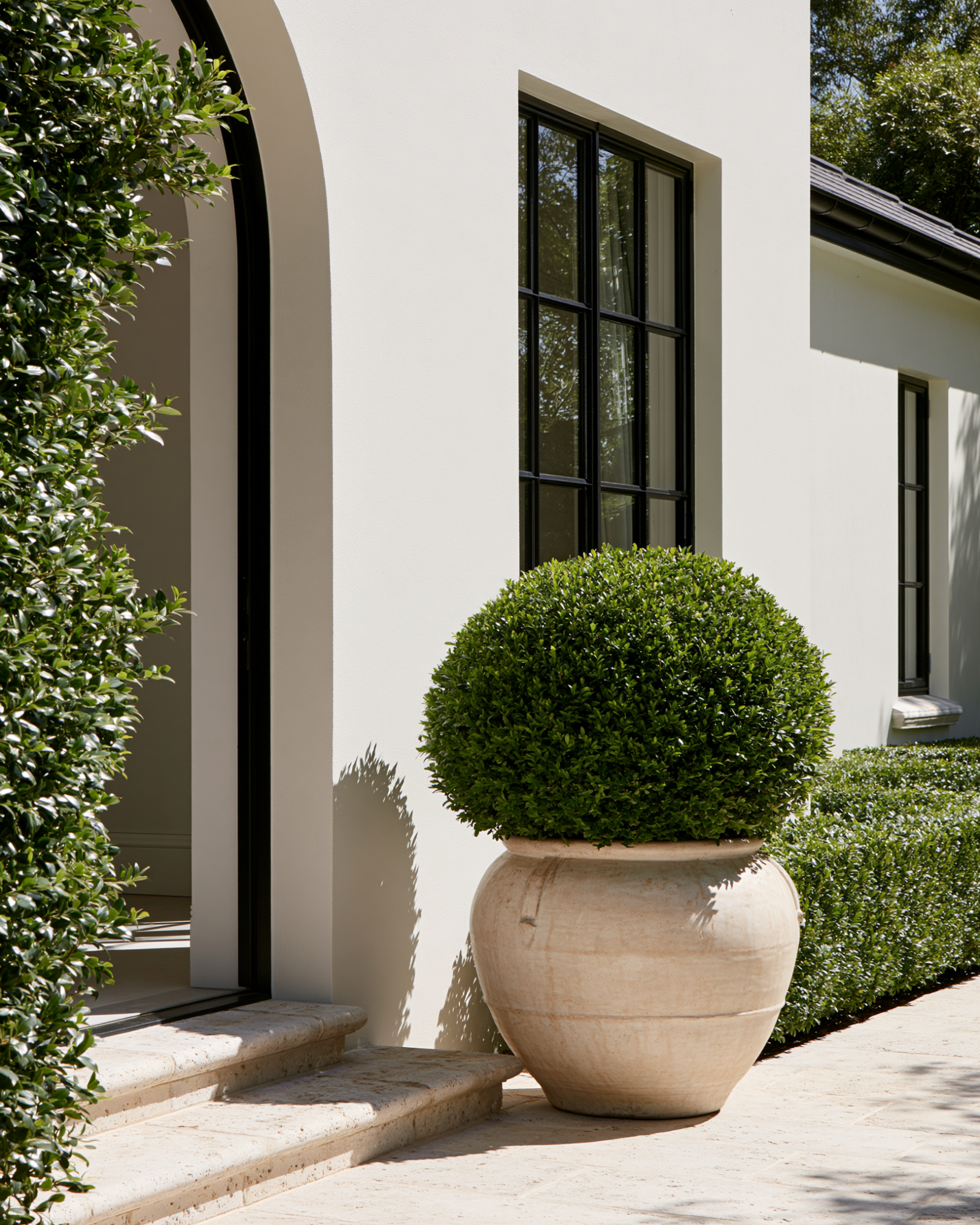
Buxus sempervirens English Box Topiary Balls


Type: Hedging and Screening Trees
Rhaphiolepis indica 'Snow Maiden'

Type: Hedging and Screening Trees
Pittosporum tenuifolium 'Silver Sheen'
Uses in my Garden
Uses in my Garden
Populus deltoides works in an:
Is Populus deltoides Evergreen or Deciduous?
Is Populus deltoides Evergreen or Deciduous?
Populus deltoides is an Deciduous (Defoliates throughout colder months) Tree
Mature Height & Width
Mature Height & Width
Mature Height: 20m to 30m (approx.)
Mature Width: 15m to 20m
Populus deltoides is expected to grow 1m to 1.5m per year (approx.).
Growth Rate of Populus deltoides
Growth Rate of Populus deltoides
Populus deltoides is expected to grow 1m to 1.5m per year (approx.).
They are considered to have a:
Frost Tolerance & Ideal Climate to plant Populus deltoides
Frost Tolerance & Ideal Climate to plant Populus deltoides
Is Populus deltoides frost tolerant?
Populus deltoides is Frost Hardy – Survives heavy and frequent frost without damage.
Does Populus deltoides Flower?
Does Populus deltoides Flower?
Populus deltoides produces long, pendent catkins in early spring, with males displaying yellow pollen-bearing tassels and females producing greenish seed catkins. Though not ornamental, the fluffy cotton-like seeds released later in the season are a distinctive natural feature.
Does Populus deltoides flower?
Flowering Period:
Flower Type:
Flower Colour:
White
Is Populus deltoides an Australian Native Tree?
Is Populus deltoides an Australian Native Tree?
No
Populus deltoides is Native to North America, where it grows naturally along rivers, floodplains, and moist lowlands from Canada through the United States to Mexico.
What is the Wildlife Value of Populus deltoides ?
What is the Wildlife Value of Populus deltoides ?
Its catkins provide early-season pollen for bees, while the seeds are eaten by small birds. The broad, fast-growing canopy offers excellent shade, shelter and nesting habitat for a variety of bird species, and the rough trunk and fallen leaf litter support insects and microfauna in riparian and large landscape plantings.
How much Sunlight does Populus deltoides need?
How much Sunlight does Populus deltoides need?
Populus deltoides will thrive best in:
Preferred Soil?
Preferred Soil?
Populus deltoides performs best in moist, well-drained loam or sandy loam soils and prefers slightly acidic to neutral conditions. It thrives in deep, fertile ground but may struggle in compacted, alkaline or very dry soils unless improved with organic matter to enhance moisture retention and structure. Keep soil evenly moist during establishment, then maintain deep, occasional watering as the tree matures to support vigorous growth, strong root development and a full, healthy canopy.
Is Populus deltoides Drought Tolerant?
Is Populus deltoides Drought Tolerant?
Is Populus deltoides Drought tolerant?
As a young tree it requires regular watering, and once established Eastern Cottonwood offers moderate drought tolerance. It grows rapidly in moist, well-drained soils, but can withstand short dry periods when supported with deep, occasional watering. Consistent moisture encourages stronger growth and fuller canopy development.

Planting Information
How To Plant Your Populus deltoides
How To Plant Your Populus deltoides
Recommended Planting Spacing For Your Populus deltoides
Recommended Planting Spacing For Your Populus deltoides
Populus deltoides is expected to grow 1m to 1.5m per year (approx.).
Long Term Care For Your Populus deltoides
Long Term Care For Your Populus deltoides
Planting Your Populus deltoides in Different Soil
Planting Your Populus deltoides in Different Soil
Frequently Asked Questions
Frequently Asked Questions