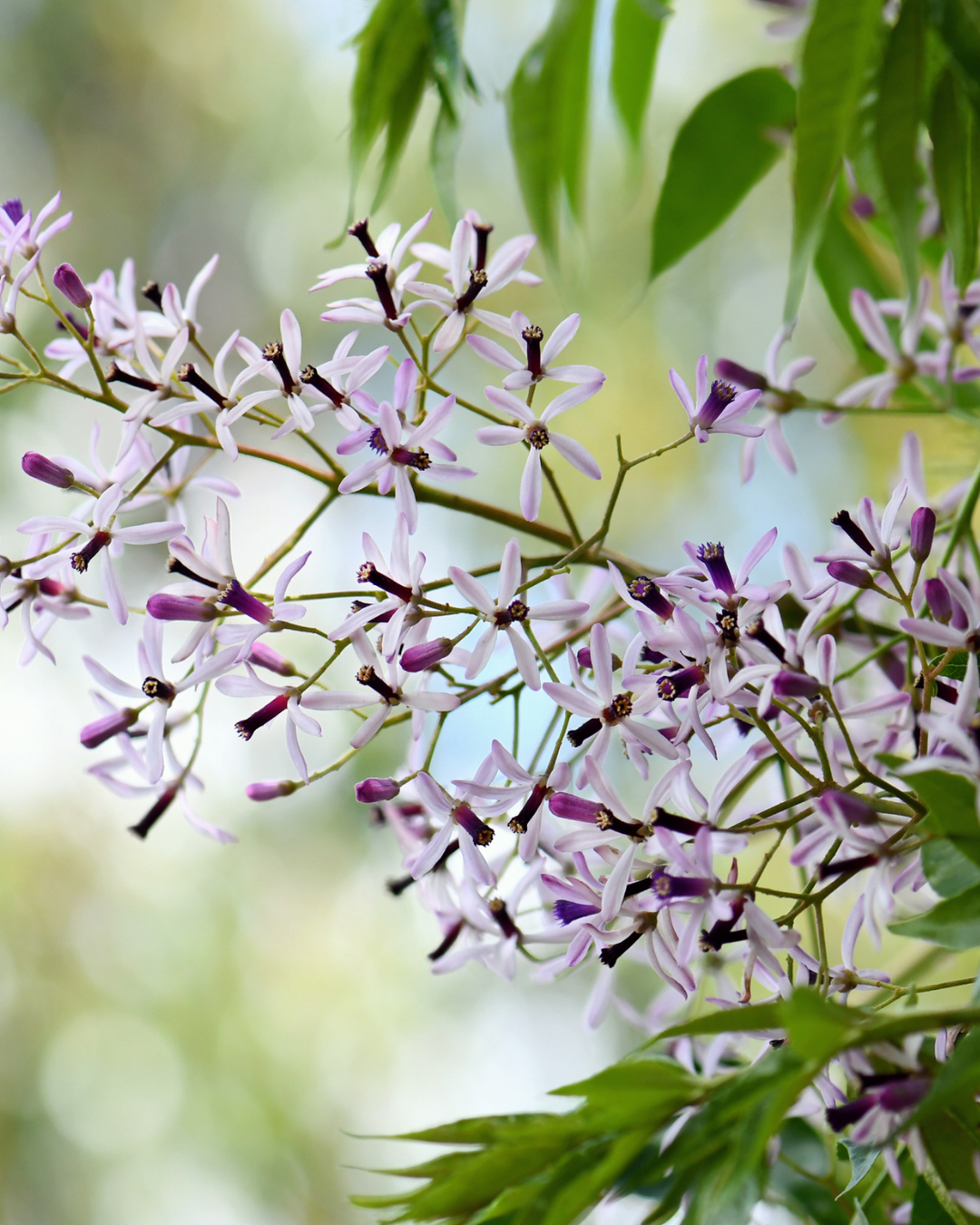
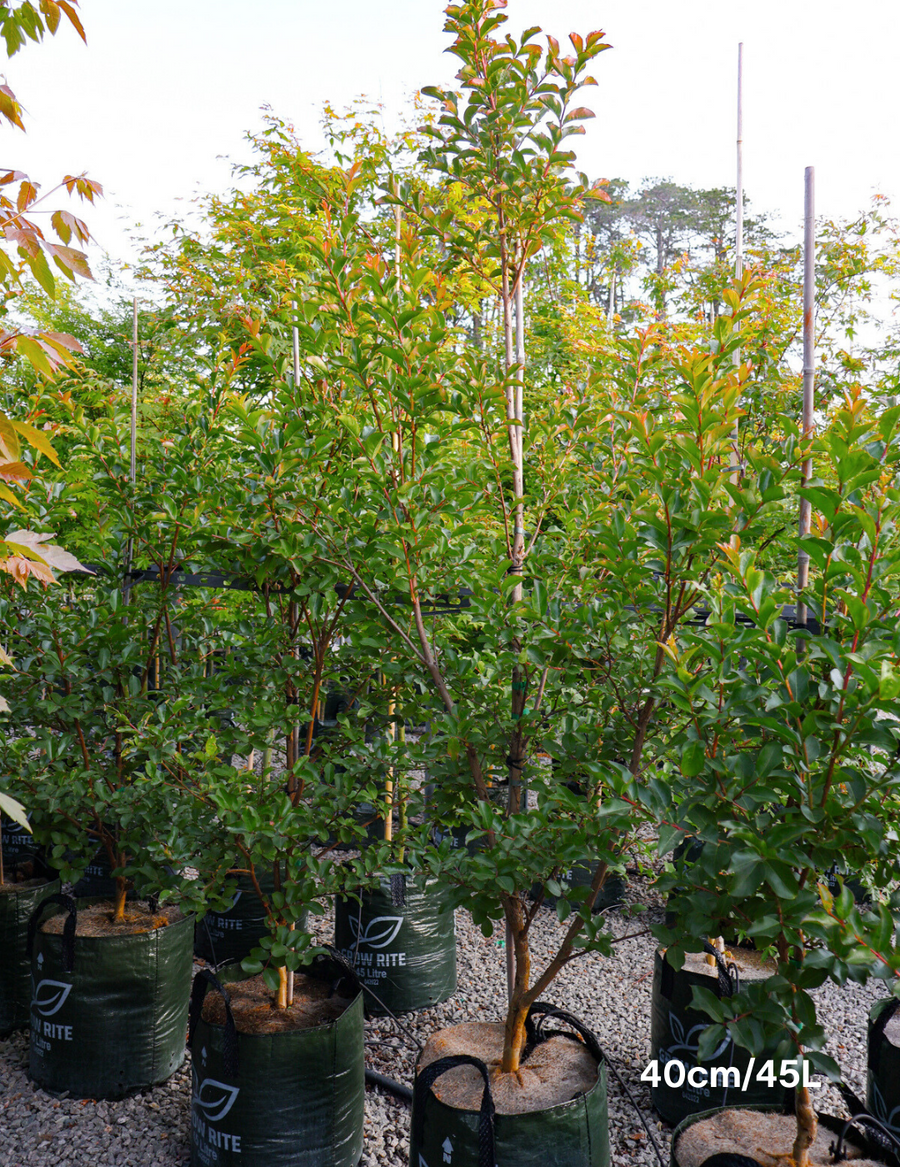
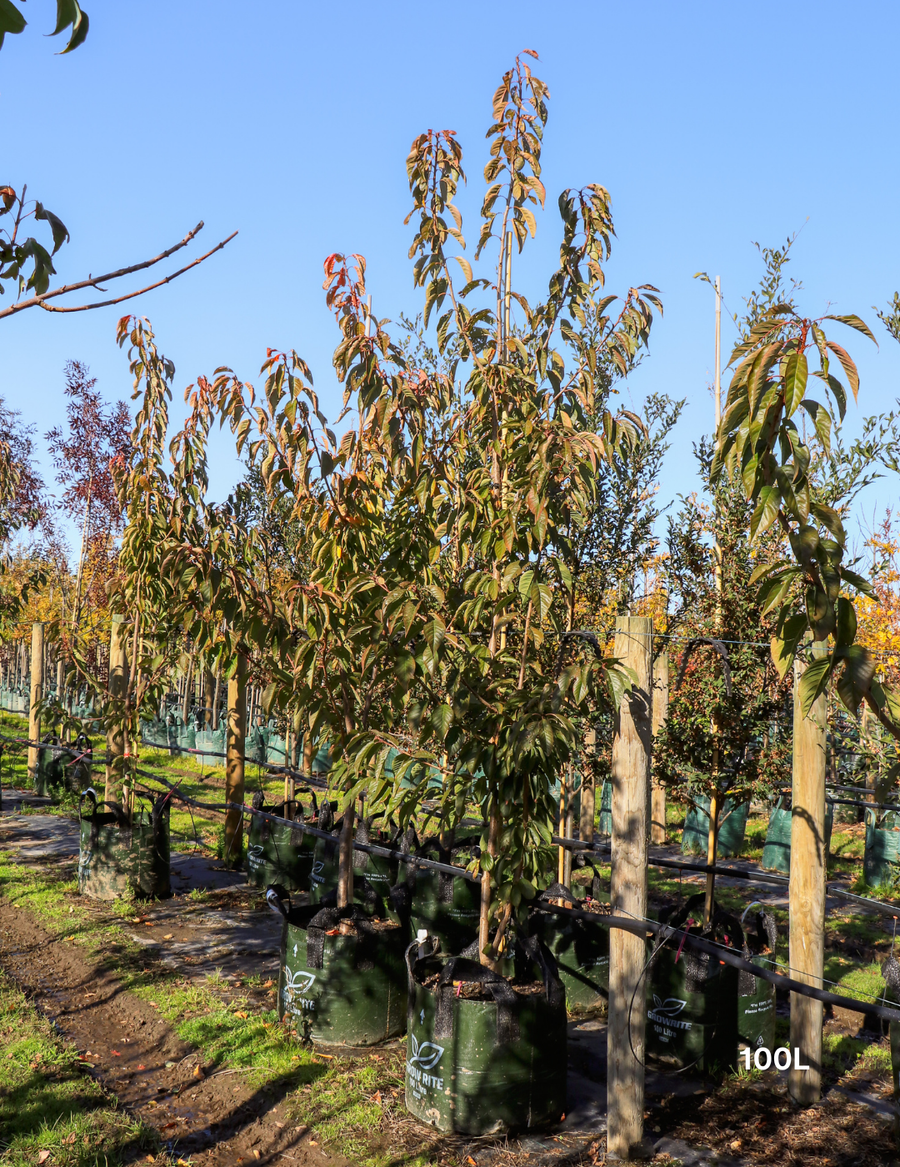
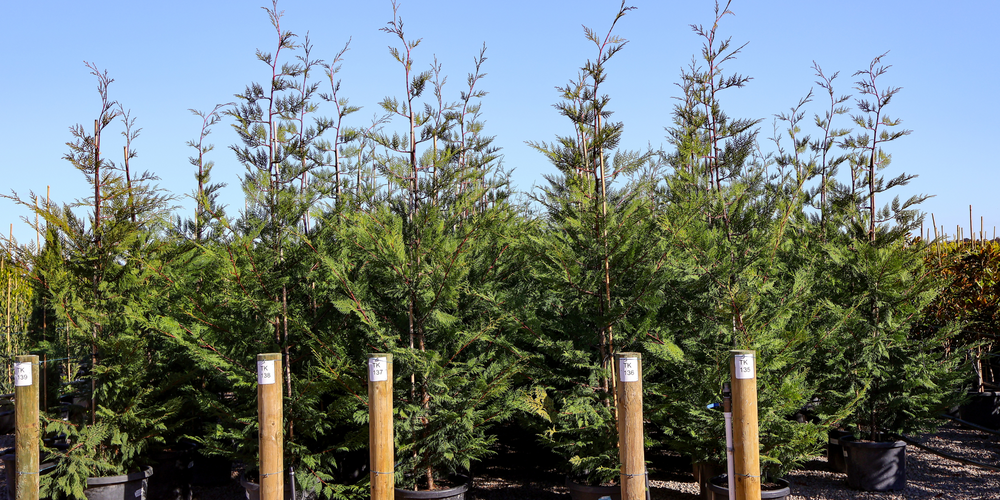
Melia azedarach 'Lilac Lady' is a selected form of the White Cedar, chosen for a more compact and upright frame than the straight species. The fern like divided foliage casts light shade and turns yellow before dropping. Scented lilac flowers cover the canopy in spring, followed by small round fruit.
It reaches 6 to 8 metres tall and 4 to 6 metres wide, adding about 30 to 60 centimetres a year. Full sun to part shade suits it, along with most well drained soils. Frost and drought are both handled once established, and it takes reflected heat off paving and walls in hot inland towns.
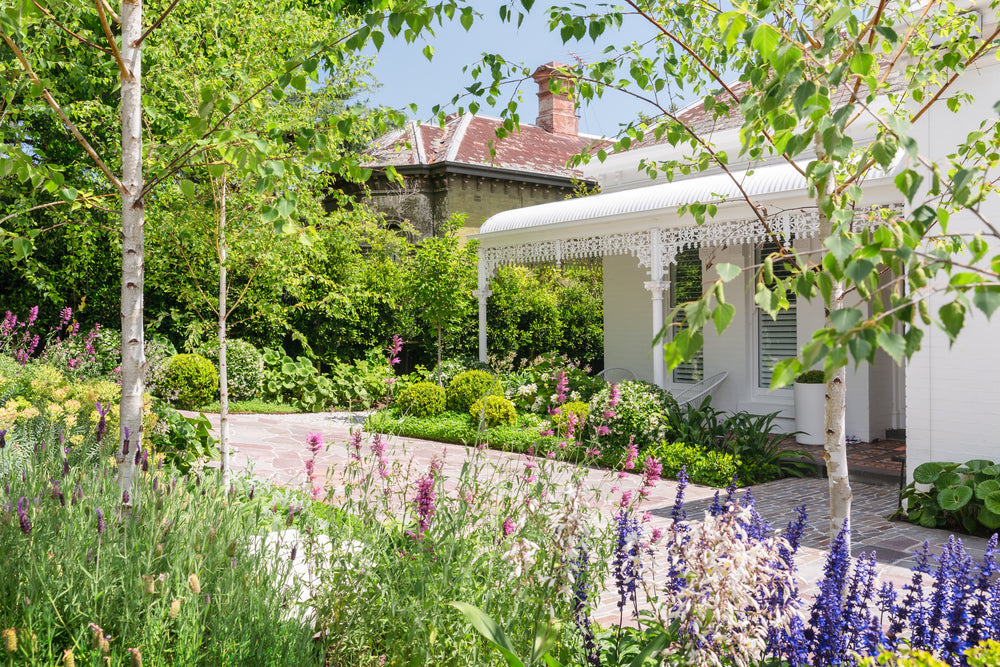
The narrower frame makes it a better fit than the species for suburban blocks, nature strips and courtyards, and for avenue rows at 3 metres. Because the canopy is deciduous, winter sun still reaches the house and garden beneath it, which is worth planning around on a north facing site.
Frequently Asked Questions
About 'Lilac Lady' Chinaberry
What is Melia azedarach 'Lilac Lady'?
'Lilac Lady' is a selected cultivar of White Cedar, chosen for a tighter upright to rounded frame and a heavy display of scented lilac flowers in spring. It carries the same fern like divided foliage and yellow autumn colour as the species, but stays smaller, which suits it to suburban and street planting.
How big does 'Lilac Lady' grow?
It reaches 6 to 8 metres tall and 4 to 6 metres wide, noticeably more contained than the straight species. That size sits well on a standard suburban block or a nature strip without overwhelming it. Space trees 3 to 4 metres apart as features, or 3 metres apart for an even avenue.
How fast does it grow?
It puts on roughly 30 to 60 centimetres a year in reasonable soil with water through the establishment period. From an advanced 100 litre tree you can expect useful shade within three or four summers. Growth is quickest while young, then slows as the canopy broadens and the trunk thickens up.
When does it flower?
Flowering is in spring, mainly October and November. Sprays of small lilac flowers open with the new foliage and carry a light, sweet scent that is noticeable from some distance on a warm day. Small round fruit follows through summer, ripening yellow and holding on the bare branches over winter.
Is it frost and drought tolerant?
Yes to both once established. It handles frost across inland and tableland districts, and being deciduous it is dormant through the coldest part of the year anyway. Established trees cope with long dry spells and reflected heat from paving, which is why it does well in hot inland towns and western suburbs.
Is it suitable for street planting and smaller gardens?
It is one of the better options in this size class. The 6 to 8 metre height and 4 to 6 metre spread fit a nature strip or a modest backyard, and the high, open canopy leaves room to walk and park underneath. The fruit drops, so keep it away from pool surrounds and pedestrian paving.
How do I prune and care for 'Lilac Lady'?
Prune in late winter while the tree is bare, lifting the lower limbs to the clearance you need and thinning any crossing branches. Water deeply through the first two summers, then only in extended dry spells. Sweep up fallen fruit where children or dogs are about, since it is toxic if eaten.