Malus floribunda (Japanese Crabapple)
1000 in stock
Couldn't load pickup availability
Current Stock Height Guides
Trade Customers
Trade Customers
We supply advanced trees to landscapers, developers, architects, and councils Australia-wide. Trade clients receive fast quotes, expert advice, and access to premium stock with reliable freight.
Share this product
About Malus floribunda (Japanese Crabapple)
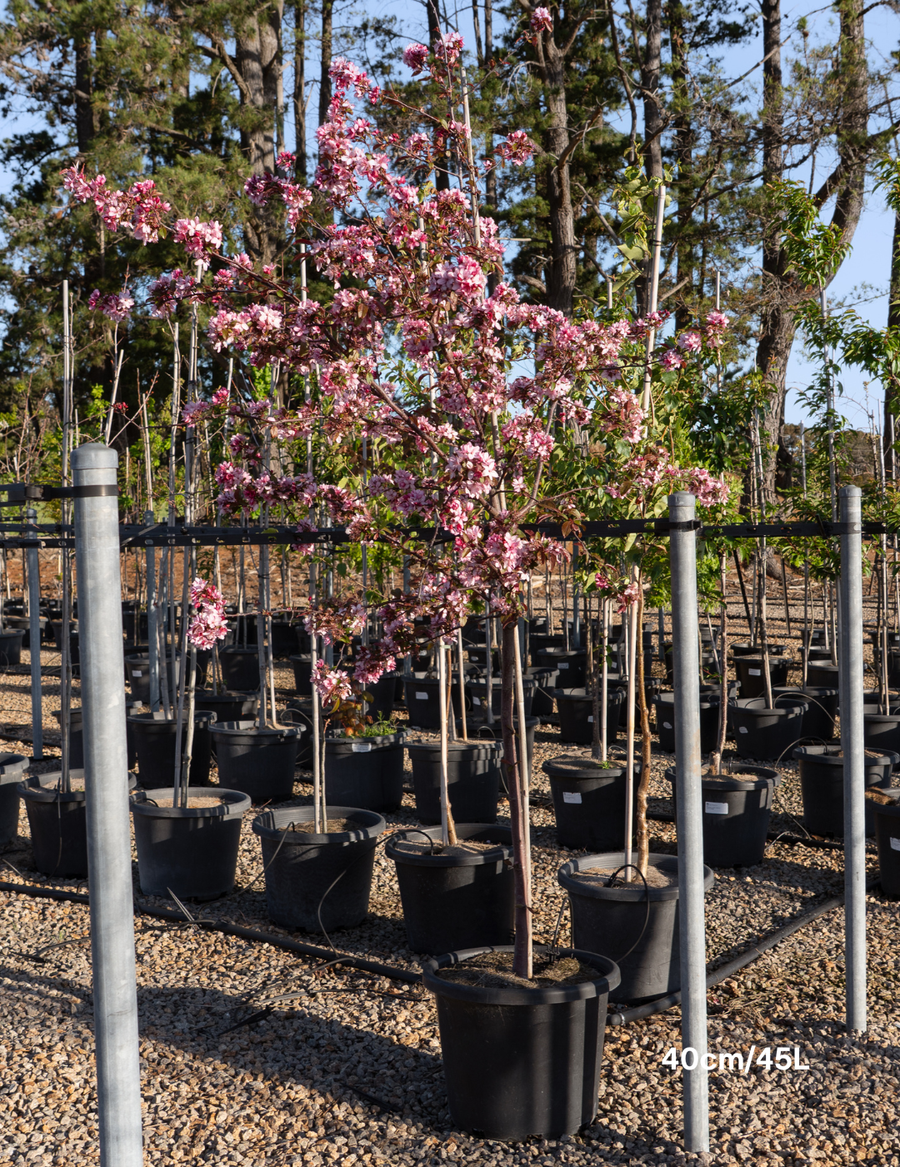
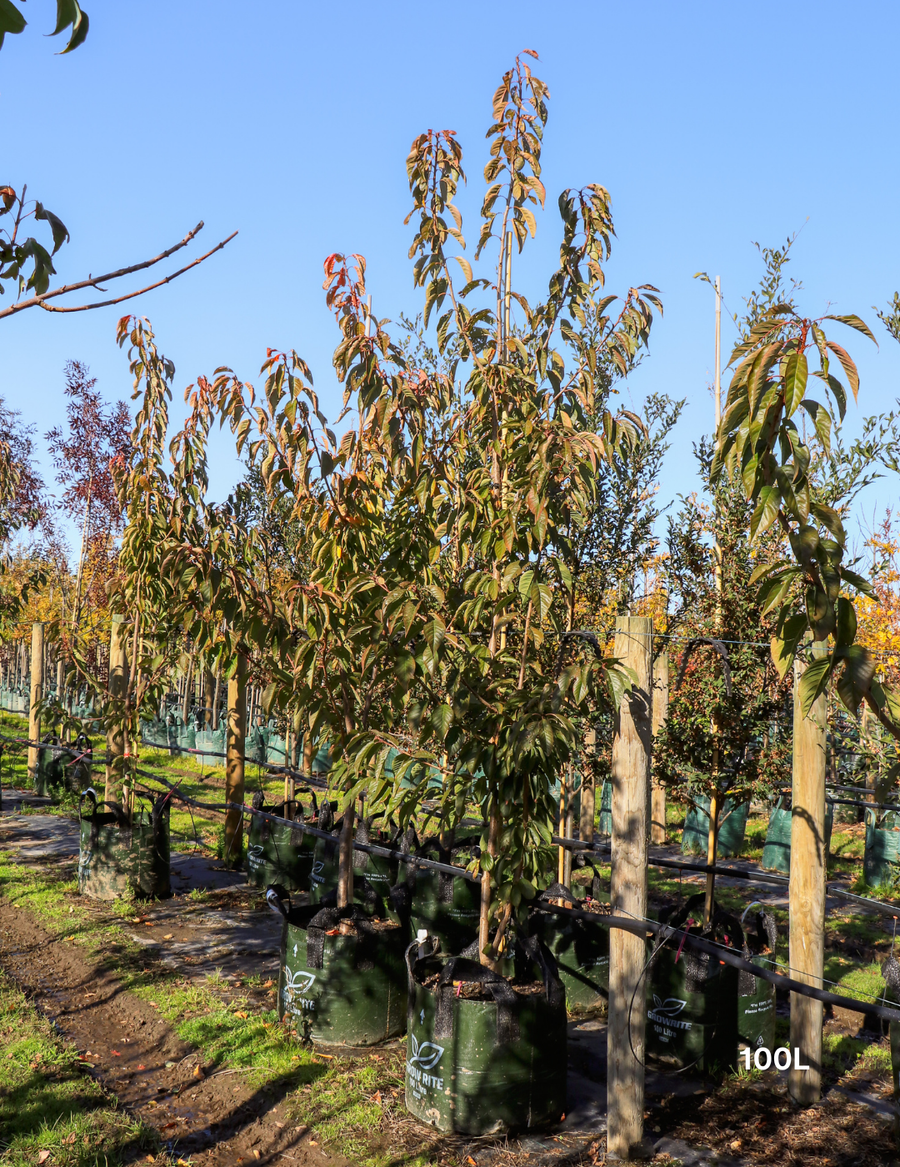
Malus floribunda, known as the Japanese Crabapple, is a stunning deciduous tree valued for its spectacular spring blossoms and compact form. Growing 4–6 meters tall and wide, it features mid-green leaves that turn yellow to red in autumn, adding seasonal color.
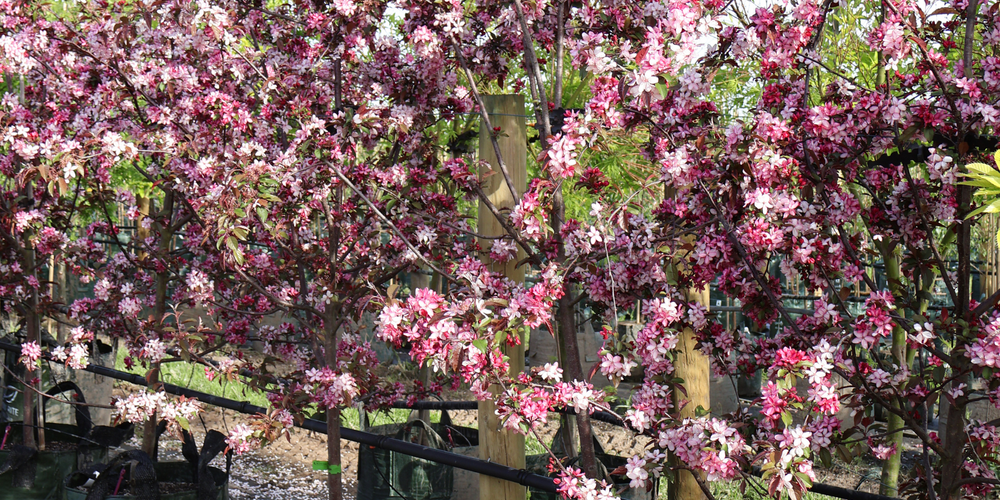
This tree produces profuse pale pink to white fragrant flowers from red buds in spring, attracting pollinators. Small red to yellow crabapples follow, providing food for birds through winter. With a rounded, spreading habit and gracefully arching branches, it creates year-round interest.
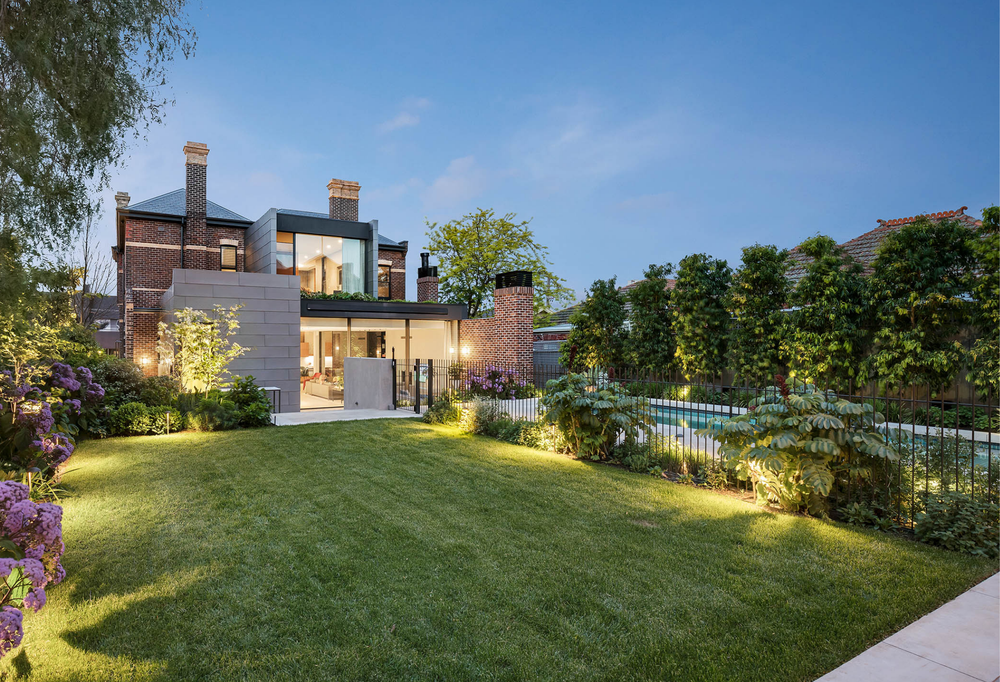
Ideal as a specimen tree, for gardens, parks, or streetscapes, the Japanese Crabapple thrives in full sun to partial shade, requires low maintenance with occasional pruning, and benefits from moderate watering, especially during establishment.
A beautiful, wildlife-friendly choice that adds charm and ecological value to any landscape.
Key Information to Know
Evergreen / Deciduous
Malus floribunda (Japanese Crabapple) is an Deciduous (Defoliates throughout colder months) Tree
Mature Height & Width
Mature Height: 4m - 7m Approximately
Mature Width: 4 – 6 meters
Malus floribunda (Japanese Crabapple) is expected to grow Approx 30 – 60 cm per year (moderate).
Frost Tolerance
Is Malus floribunda (Japanese Crabapple) frost tolerant?
Malus floribunda (Japanese Crabapple) is Frost Hardy – Survives heavy and frequent frost without damage.
Flowering Information
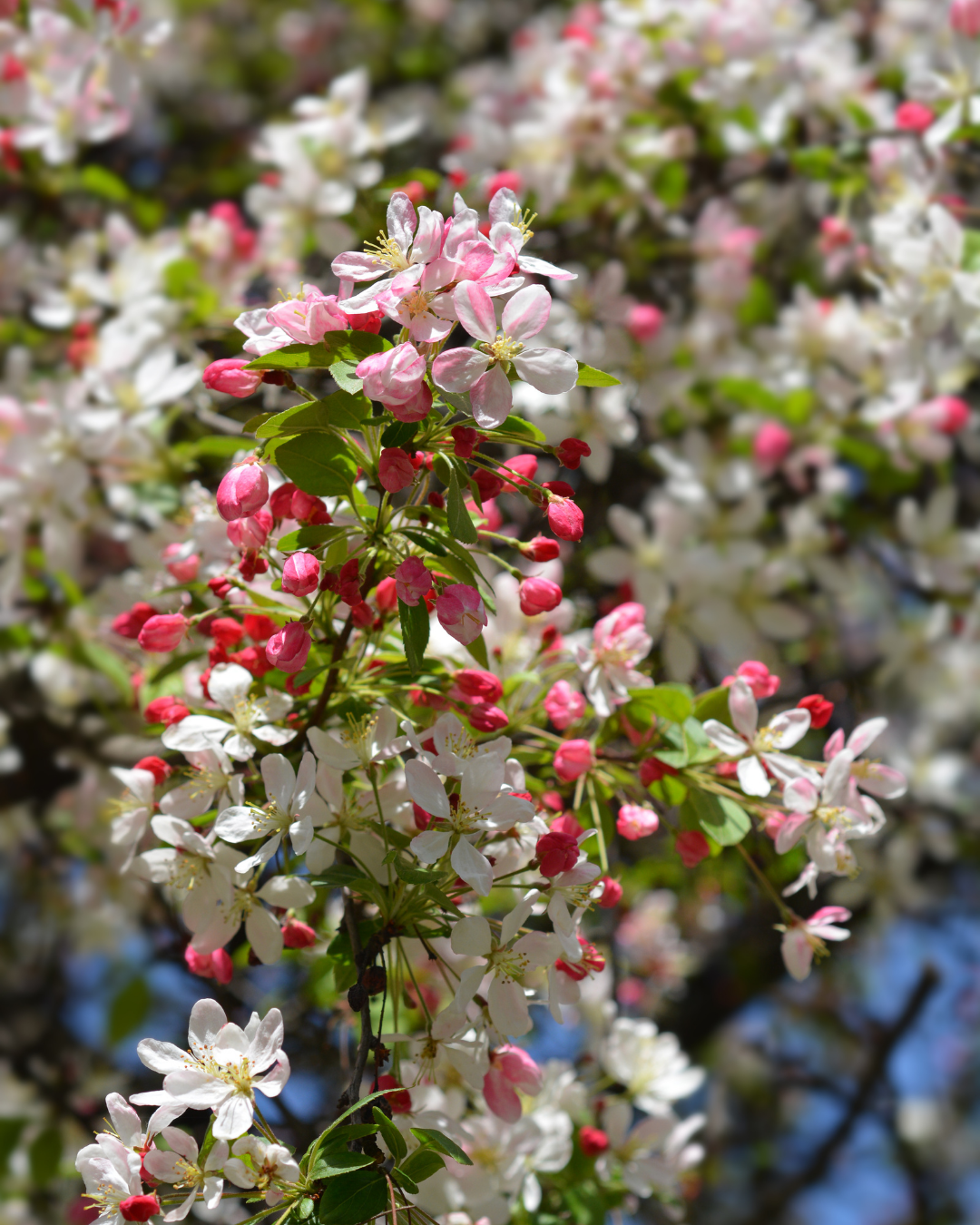
Malus floribunda produces masses of deep pink buds that open into soft shell-pink to white blossoms in mid-spring. The flowers cover the branches in dense clusters, creating a spectacular, cloud-like display that is among the most admired of all flowering crabapples.
Native Information
Is Malus floribunda (Japanese Crabapple) an Australian Native? No
Malus floribunda (Japanese Crabapple) is Native to Japan, where it grows naturally in woodlands and mountain slopes.
Wildlife Value
Its prolific blossoms attract bees, butterflies and a wide range of pollinating insects, while the small, colourful fruits that follow provide food for birds well into autumn. The branching canopy also offers shelter and nesting opportunities for small birds, supporting biodiversity in urban and ornamental gardens.
Sunlight Information
Malus floribunda (Japanese Crabapple) will thrive best in:
Preffered Soil
Malus floribunda performs best in well-drained, slightly acidic to neutral loam or sandy loam soils. It may struggle in heavy clay or poorly drained sites unless improved with organic matter and coarse material to increase aeration and drainage. Keep soil evenly moist during establishment, then transition to deep, occasional watering as the tree matures to support strong root health, prolific flowering and reliable fruit set.
Botanical Information
Common Name: Japanese Crabapple
Genus: Malus
Botanical Species: floribunda
Family: Rosaceae
Botanical Name: Malus floribunda
Landscape Uses
Landscape Uses
Malus floribunda (Japanese Crabapple) works in an:
Planting, Spacing & Care
-
-
-
-
Malus floribunda (Japanese Crabapple) is expected to grow Approx 30 – 60 cm per year (moderate).
Root Ball Dimensions (Width × Depth) For Planting
Use this as a reference when digging your planting hole. We recommend digging at least 10% wider than the dimensions below to encourage strong root development.
- 30cm Pot: 33cm (W) × 30cm (D)
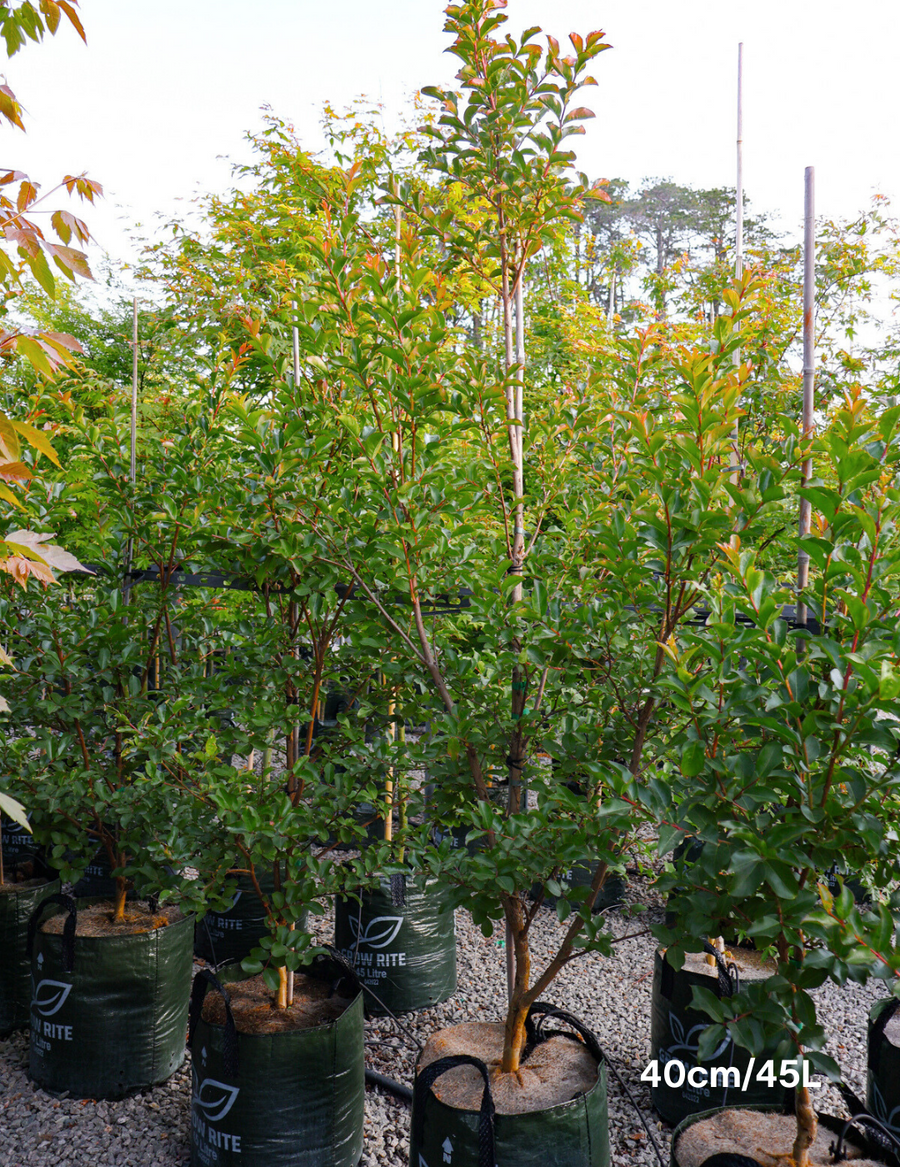
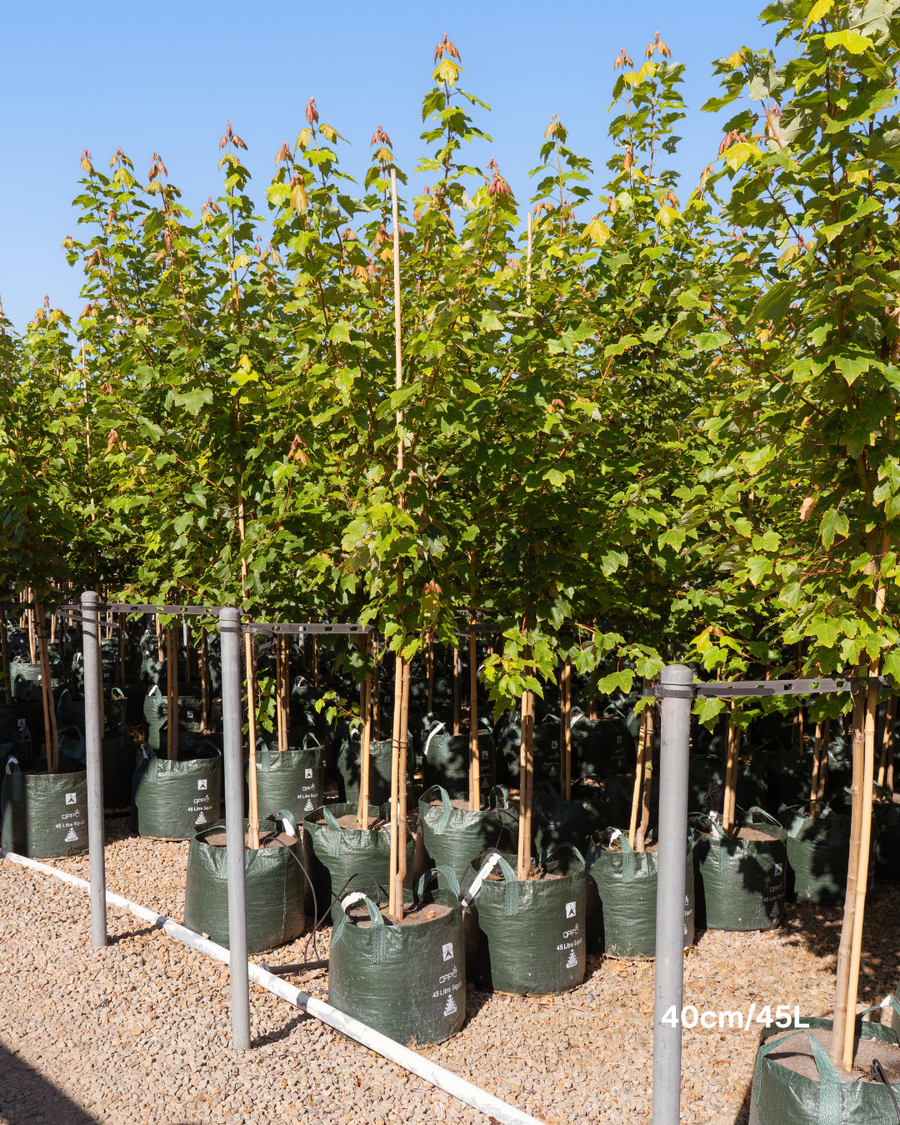
- 40cm/45L Pot: 44cm (W) × 41.5cm (D)
- 50cm Pot / 70L Pot: 55cm (W) × 41.8cm (D)
- 100L Bag: 50.6cm (W) × 52.8cm (D)
- 150L Bag: 66cm (W) × 55cm (D)
- 200L Bag: 71.5cm (W) × 60.5cm (D)
- 300L Bag: 88cm (W) × 63.8cm (D)
- 400L Bag: 99cm (W) × 66cm (D)
- 500L Bag: 122cm (W) × 66cm (D)
- 750L Bag: 134cm (W) × 69cm (D)
- 1000L Bag: 146.3cm (W) × 71.5cm (D)
- 2000L Bag: 176cm (W) × 82.5cm (D)
Ideal Conditions
Ideal Conditions
Thrives in
Frost Tolerance
Frost Hardy – Survives heavy and frequent frost without damage.
Drought Tolerance
As a young tree it requires regular watering, and once established Japanese Crabapple develops moderate drought tolerance. It performs best in well-drained soils and benefits from deep, occasional watering during extended dry periods to maintain healthy foliage, abundant flowering and steady fruiting.
Flowering Information
Does Malus floribunda (Japanese Crabapple) flower?
Flowering Period:
Flower Type:
Flower Colour:
Pink
Malus floribunda produces masses of deep pink buds that open into soft shell-pink to white blossoms in mid-spring. The flowers cover the branches in dense clusters, creating a spectacular, cloud-like display that is among the most admired of all flowering crabapples.
Frequently Asked Questions
We have been featured in