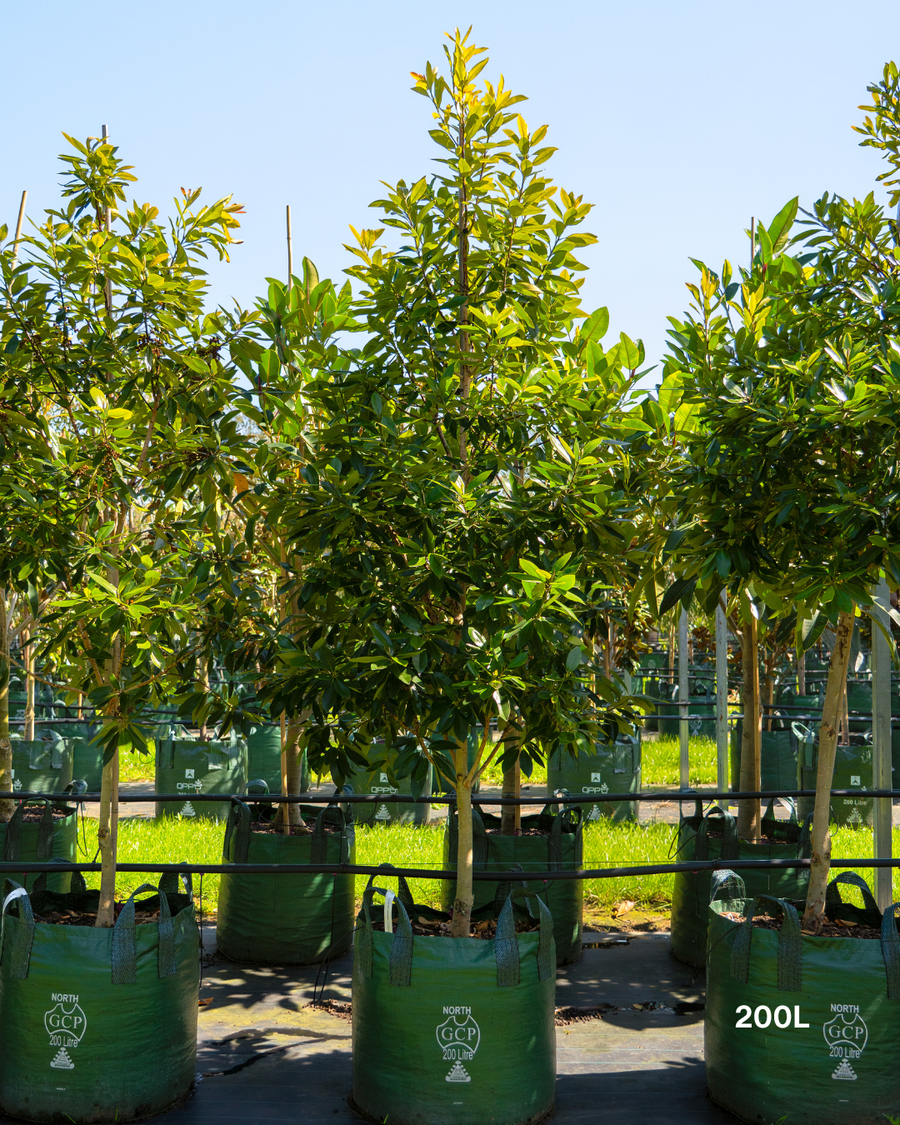
- Mature height
- 2m to 4m (approx.)
- Mature width
- 1m to 2m
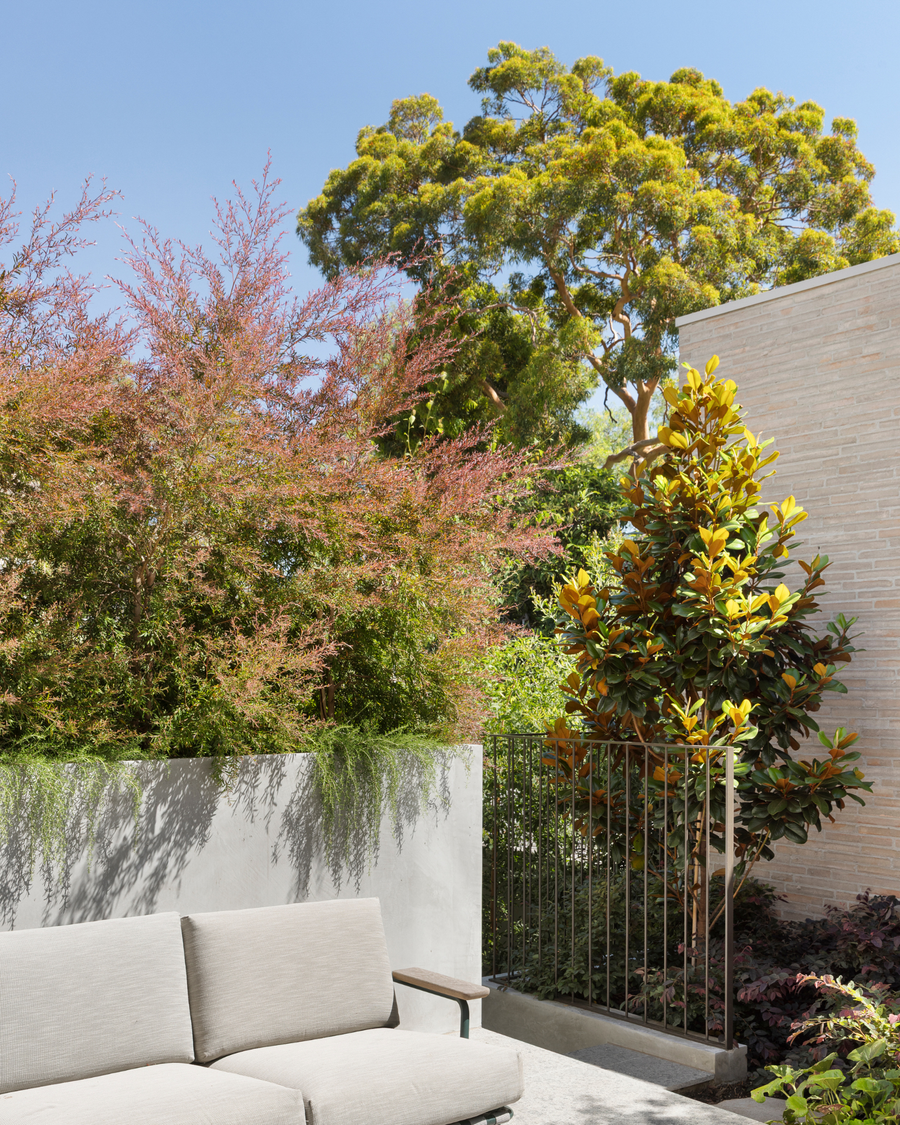
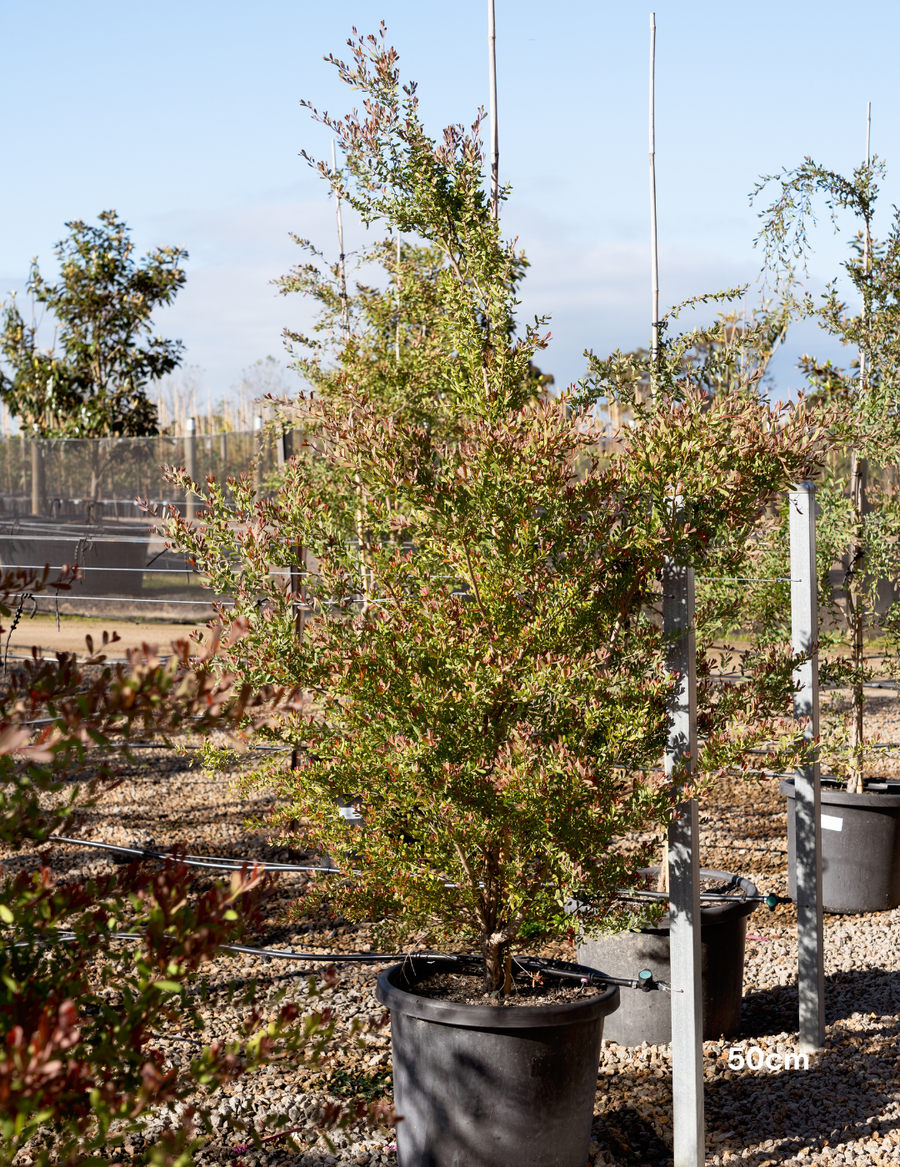
Leptospermum brachyandrum 'Jack Frost' is a compact form of the weeping tea tree, an Australian native evergreen with fine silver grey foliage on softly arching branches and smooth bark that peels away to cream and orange beneath. Small white flowers cover the branches through spring and into early summer.
It grows 30 to 50 centimetres a year to 2 to 3 metres tall and 1 to 2 metres wide. Full sun to part shade suits it, in soil that drains freely. Frost, coastal salt and dry periods are handled once established, and it performs from cool temperate through to subtropical districts.
The weeping habit and pale foliage make a good contrast against dark green natives, timber screens or rendered walls. Use it as a small feature tree, as an informal screen at 1 to 1.5 metres apart, or through a native or coastal garden. It suits nature strips and courtyards with limited root room.
Frequently Asked Questions
About 'Jack Frost' Tea Tree
What is Leptospermum brachyandrum 'Jack Frost'?
'Jack Frost' is a compact selection of the weeping tea tree, an Australian native in the family Myrtaceae. Its appeal is the fine silver grey foliage on weeping branches and the smooth bark that peels to show cream and orange tones underneath. White tea tree flowers appear in spring and early summer.
How big does 'Jack Frost' grow?
It reaches 2 to 3 metres tall and 1 to 2 metres wide, noticeably smaller than the species, which can make a tree of 6 metres or more. Growth of 30 to 50 centimetres a year gets it to useful size within a few seasons. The narrow width suits confined beds and side gardens.
Is the foliage variegated?
No. The silvery appearance comes from a fine covering on narrow, needle like leaves rather than any cream or white leaf margin. The colour is uniform across the plant and reads as pale silver grey from a distance. New growth carries the strongest silver tone, which softens slightly as the foliage matures.
When does it flower?
White tea tree flowers appear through spring and into early summer, roughly September to December, and are carried thickly along the arching branches. The display is short but heavy, and it draws native bees and other beneficial insects. Outside flowering, the silver foliage and peeling bark carry the plant year round.
Is it suitable for coastal gardens?
Yes. Leptospermum species are among the most reliable coastal plants in Australia, and 'Jack Frost' tolerates salt laden wind and sandy soil well once established. Give it free draining ground, avoid positions where water sits after rain, and keep water up for the first summer while roots take hold.
Does it have invasive roots?
No. The root system is fibrous and non aggressive, with no history of lifting paving or invading pipes, which makes it a sensible choice for nature strips, courtyards and beds near paths or pools. As with any tree, allow a reasonable soil volume and keep the plant clear of shallow services.
How do I care for 'Jack Frost' Tea Tree?
Water through the first summer, then only in extended dry spells. Prune lightly straight after flowering, tipping the growth to keep the plant dense, and avoid cutting back into bare old wood as tea trees reshoot poorly from it. Use a low phosphorus native fertiliser in spring and mulch the root zone.