Camellia japonica 'Kingyo-tsubaki' – Fishtail Camellia
Camellia japonica 'Kingyo-tsubaki' – Fishtail Camellia
Couldn't load pickup availability
Current Stock Height Guides
Current Stock Height Guides
Height guide disclaimer: Height ranges are approximate only. As living products, plant heights naturally vary between individual plants, batches, and seasons. No guarantee is given that supplied plants will fall within the stated range. If minimum heights are required, you mustconfirm current batch heights with Evergreen Trees Direct prior to purchase. Variation in height is normal and is not grounds for return, refund, replacement, or compensation.
Mature Height & Width
Mature Height & Width
Mature Height: 2m to 3m
Mature Width: 1.5m to 2m
Camellia japonica 'Kingyo-tsubaki' – Fishtail Camellia is expected to grow 20cm to 40cm per year (slow to moderate).
Root Ball Dimensions
Root Ball Dimensions
Use this as a reference when digging your planting hole. We recommend digging at least 10% wider than the dimensions below to encourage strong root development.
- 30cm Pot: 33cm (W) × 30cm (D)
- 40cm/45L Pot: 44cm (W) × 41.5cm (D)
- 50cm Pot / 70L Pot: 55cm (W) × 41.8cm (D)
- 100L Bag: 50.6cm (W) × 52.8cm (D)
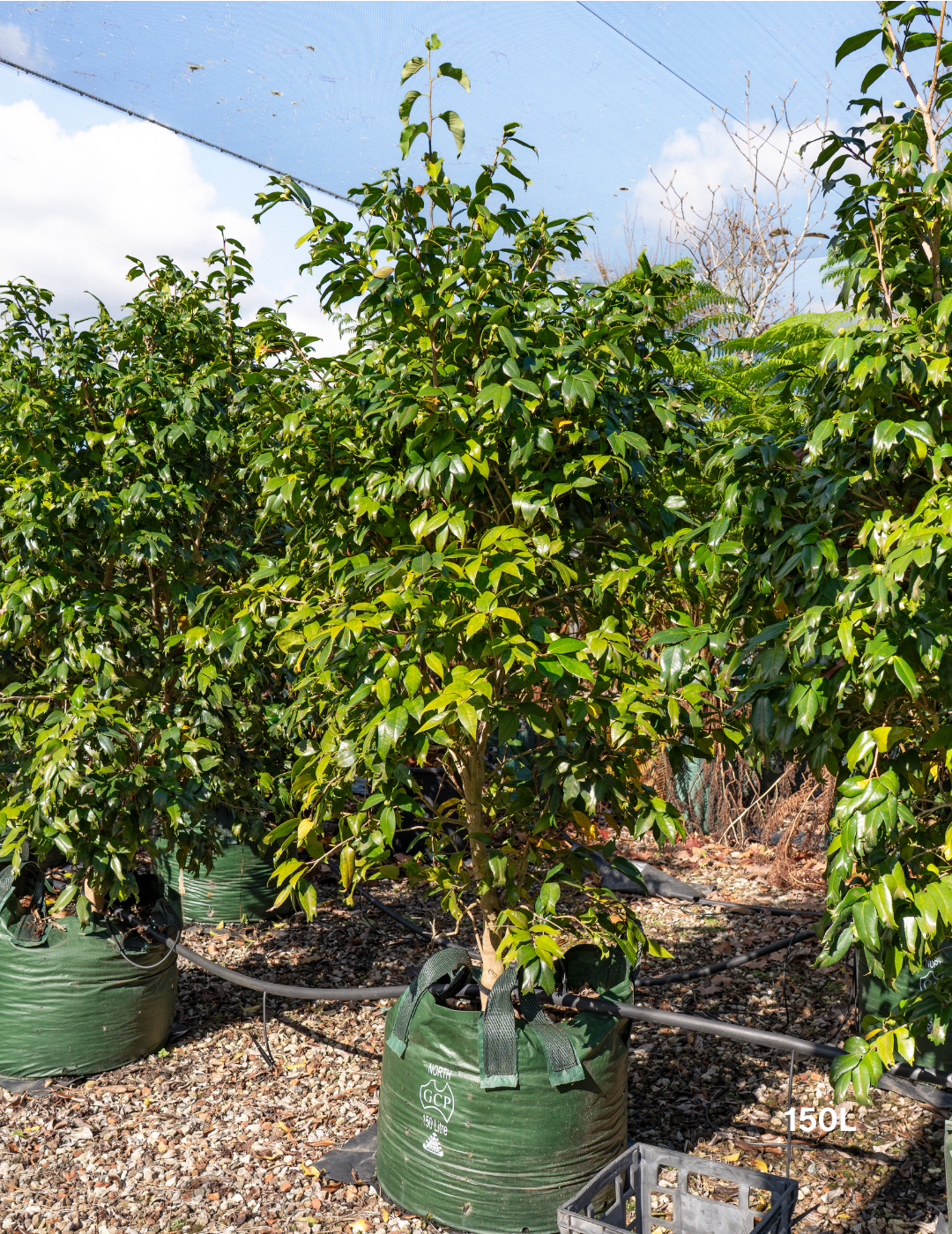
- 150L Bag: 66cm (W) × 55cm (D)
- 200L Bag: 71.5cm (W) × 60.5cm (D)
- 300L Bag: 88cm (W) × 63.8cm (D)
- 400L Bag: 99cm (W) × 66cm (D)
- 500L Bag: 122cm (W) × 66cm (D)
- 750L Bag: 134cm (W) × 69cm (D)
- 1000L Bag: 146.3cm (W) × 71.5cm (D)
- 2000L Bag: 176cm (W) × 82.5cm (D)
Trade
Trade
We supply advanced trees to landscapers, developers, architects, and councils Australia-wide. Trade clients receive fast quotes, expert advice, and access to premium stock with reliable freight.
Shipping
Shipping
Shipping is calculated at checkout based on the pallet space your order occupies in the truck and your delivery location.
There is no charge to calculate your freight.
Contact
Contact
Have a question or a list to send through to us?
Email: sales@evergreentrees.com.au
Phone: (03) 7042 3318
Share this product
About Your New Camellia japonica 'Kingyo-tsubaki' – Fishtail Camellia
Camellia japonica 'Kingyo-tsubaki', the fishtail camellia, is an upright evergreen shrub grown as much for its foliage as its flowers. Each thick glossy leaf splits at the tip into two or three lobes, giving the outline of a fish tail. Single rose pink flowers follow from late winter into early spring, on dense well branched growth.
It prefers morning sun to part shade with shelter from hot westerly exposure, in well drained slightly acidic soil holding plenty of organic matter. Growth is moderate and the habit stays compact. Light to moderate frost is handled once established, suiting cool temperate, warm temperate and protected coastal positions. Deep watering during dry spells supports both flowering and foliage.
At 200 litres this is a specimen plant. It suits a sheltered entry, a courtyard where the leaf shape can be seen at close range, a raised bed or a large decorative container. Collectors and designers ask for it by name. Buying at this size means the unusual foliage reads straight away rather than after several years.
Frequently Asked Questions
About Fishtail Camellia
What is the Fishtail Camellia?
Camellia japonica 'Kingyo-tsubaki' is an old Japanese cultivar of the common camellia, grown for its curiously lobed foliage. Kingyo-tsubaki translates roughly as goldfish camellia, a reference to the leaf shape. It is an evergreen shrub with single rose pink flowers in late winter and early spring, and it behaves in the garden like any other japonica.
Why is the foliage forked?
The leaf tips are genetically split into two or three lobes, a stable mutation that has been propagated in Japan for centuries. Every leaf on a mature plant shows it, though the effect is most pronounced on strong new growth. The lobes are the reason the cultivar exists, so avoid heavy shearing that removes the newest foliage.
How big does Fishtail Camellia grow?
It reaches roughly 2 to 3 metres tall and 1.5 to 2 metres wide over time, with an upright and well branched habit. Growth is moderate, so it takes a number of years to get there. In a large container it stays smaller, generally around 1.5 to 2 metres, held in check by the root volume.
Does it need sun or shade?
Morning sun with afternoon shade is the ideal, or dappled light beneath high canopy. Full afternoon sun in an exposed position scorches the leaves and spoils the foliage effect that makes this plant worth growing. It flowers acceptably in reasonably deep shade, though growth becomes more open and the flower count drops.
When does it flower?
Single rose pink flowers open from late winter into early spring, broadly July through September in most Australian gardens. Warmer districts run a few weeks ahead. The flowers are simple in form with a prominent boss of gold stamens, and they drop cleanly as they finish rather than browning on the bush.
Can it grow in a large container?
Yes. A wide, deep pot with free draining camellia or azalea mix suits it, and a container keeps the unusual foliage at eye level where it can be seen. Water more often than an in ground plant, particularly over summer, and repot or root prune every three to four years to keep the plant vigorous.
How do I care for a Fishtail Camellia?
Water deeply and consistently, especially while buds are forming through autumn, since dry soil at that stage causes bud drop. Mulch the root zone with pine bark or leaf litter. Prune sparingly and only after flowering, taking whole branches rather than shearing. Feed with a camellia fertiliser in spring and avoid lime or fresh manure.
Evergreen Trees Direct Has Been Featured In:


Plant Your Camellia japonica 'Kingyo-tsubaki' – Fishtail Camellia With:


Type: Hedging and Screening Trees
Acmena smithii 'Firescreen' - Lilly Pilly

Type: Hedging and Screening Trees
Acmena smithii 'Minor'

Type: Hedging and Screening Trees
Acmena smithii 'Sublime' Lilly Pilly
Type: Hedging and Screening Trees
Acmena smithii 'Forest Flame' - Lilly Pilly
Type: Flowering Shrub
Camellia japonica ‘Volcano’ – Red Japonica Camellia
Uses in my Garden
Uses in my Garden
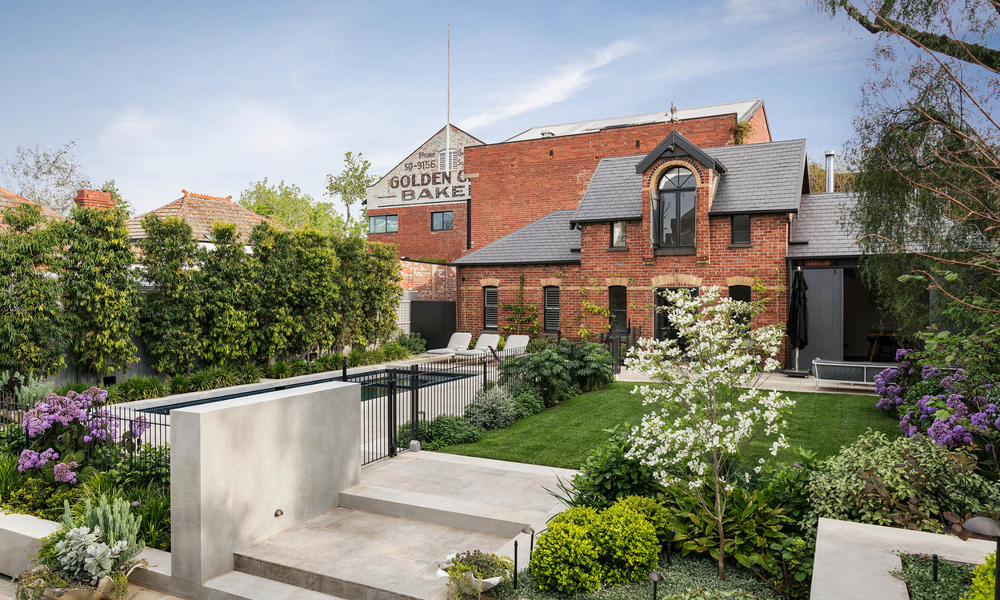
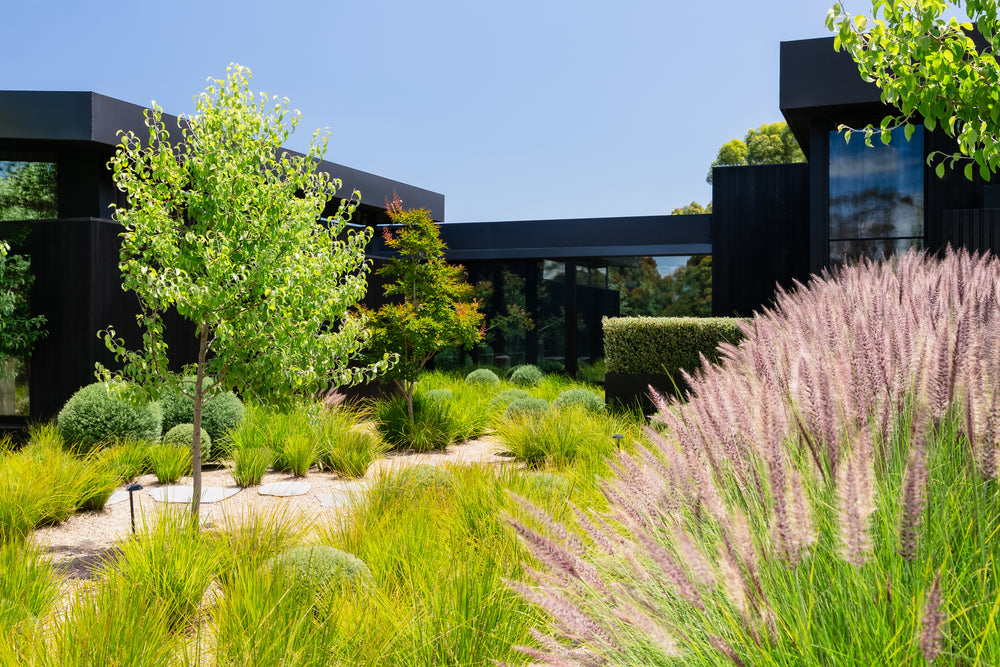
Camellia japonica 'Kingyo-tsubaki' – Fishtail Camellia works in an:
Is Camellia japonica 'Kingyo-tsubaki' – Fishtail Camellia Evergreen or Deciduous?
Is Camellia japonica 'Kingyo-tsubaki' – Fishtail Camellia Evergreen or Deciduous?
Camellia japonica 'Kingyo-tsubaki' – Fishtail Camellia is an Evergreen (foliage year round) Tree
Mature Height & Width
Mature Height & Width
Mature Height: 2m to 3m
Mature Width: 1.5m to 2m
Camellia japonica 'Kingyo-tsubaki' – Fishtail Camellia is expected to grow 20cm to 40cm per year (slow to moderate).
Growth Rate of Camellia japonica 'Kingyo-tsubaki' – Fishtail Camellia
Growth Rate of Camellia japonica 'Kingyo-tsubaki' – Fishtail Camellia
Camellia japonica 'Kingyo-tsubaki' – Fishtail Camellia is expected to grow 20cm to 40cm per year (slow to moderate).
They are considered to have a:
Frost Tolerance & Ideal Climate to plant Camellia japonica 'Kingyo-tsubaki' – Fishtail Camellia
Frost Tolerance & Ideal Climate to plant Camellia japonica 'Kingyo-tsubaki' – Fishtail Camellia
Is Camellia japonica 'Kingyo-tsubaki' – Fishtail Camellia frost tolerant?
Camellia japonica 'Kingyo-tsubaki' – Fishtail Camellia is Frost Tolerant – Can handle light to moderate frost once established.
Does Camellia japonica 'Kingyo-tsubaki' – Fishtail Camellia Flower?
Does Camellia japonica 'Kingyo-tsubaki' – Fishtail Camellia Flower?
Camellia japonica 'Kingyo-tsubaki' produces single pink flowers from late winter through early spring. The blooms are subtle, with the main ornamental display being the uniquely forked fishtail-shaped foliage that holds year-round.
Does Camellia japonica 'Kingyo-tsubaki' – Fishtail Camellia flower?
Flowering Period:
Flower Type:
Flower Colour:
Pink
Is Camellia japonica 'Kingyo-tsubaki' – Fishtail Camellia an Australian Native Tree?
Is Camellia japonica 'Kingyo-tsubaki' – Fishtail Camellia an Australian Native Tree?
No
Camellia japonica 'Kingyo-tsubaki' – Fishtail Camellia is Native to Native to Japan and eastern Asia. 'Kingyo-tsubaki' is an old Japanese cultivar selected for its unique fishtail-shaped foliage.
What is the Wildlife Value of Camellia japonica 'Kingyo-tsubaki' – Fishtail Camellia ?
What is the Wildlife Value of Camellia japonica 'Kingyo-tsubaki' – Fishtail Camellia ?
Its late winter to spring flowers provide nectar and pollen for bees and beneficial pollinators when many other plants are dormant. The dense evergreen canopy offers year-round shelter and habitat for small birds and insects.
How much Sunlight does Camellia japonica 'Kingyo-tsubaki' – Fishtail Camellia need?
How much Sunlight does Camellia japonica 'Kingyo-tsubaki' – Fishtail Camellia need?
Camellia japonica 'Kingyo-tsubaki' – Fishtail Camellia will thrive best in:
Preferred Soil?
Preferred Soil?
Camellia japonica 'Kingyo-tsubaki' performs best in moist, well-drained loamy soils with slightly acidic pH and consistent organic matter. Mulch keeps root conditions cool. Avoid alkaline or persistently waterlogged conditions, which reduce flowering and foliage vigour.
Is Camellia japonica 'Kingyo-tsubaki' – Fishtail Camellia Drought Tolerant?
Is Camellia japonica 'Kingyo-tsubaki' – Fishtail Camellia Drought Tolerant?
Is Camellia japonica 'Kingyo-tsubaki' – Fishtail Camellia Drought tolerant?
During establishment it requires regular watering, but once established Camellia japonica 'Kingyo-tsubaki' develops moderate drought tolerance. Suited to cool temperate, warm temperate, and protected coastal positions, it maintains foliage with only occasional deep watering during extended dry periods.

Planting Information
How To Plant Your Camellia japonica 'Kingyo-tsubaki' – Fishtail Camellia
How To Plant Your Camellia japonica 'Kingyo-tsubaki' – Fishtail Camellia
Recommended Planting Spacing For Your Camellia japonica 'Kingyo-tsubaki' – Fishtail Camellia
Recommended Planting Spacing For Your Camellia japonica 'Kingyo-tsubaki' – Fishtail Camellia
Camellia japonica 'Kingyo-tsubaki' – Fishtail Camellia is expected to grow 20cm to 40cm per year (slow to moderate).
Long Term Care For Your Camellia japonica 'Kingyo-tsubaki' – Fishtail Camellia
Long Term Care For Your Camellia japonica 'Kingyo-tsubaki' – Fishtail Camellia
Planting Your Camellia japonica 'Kingyo-tsubaki' – Fishtail Camellia in Different Soil
Planting Your Camellia japonica 'Kingyo-tsubaki' – Fishtail Camellia in Different Soil
Frequently Asked Questions
Frequently Asked Questions