- Mature height
- 2m to 4m
- Mature width
- 2m to 3m
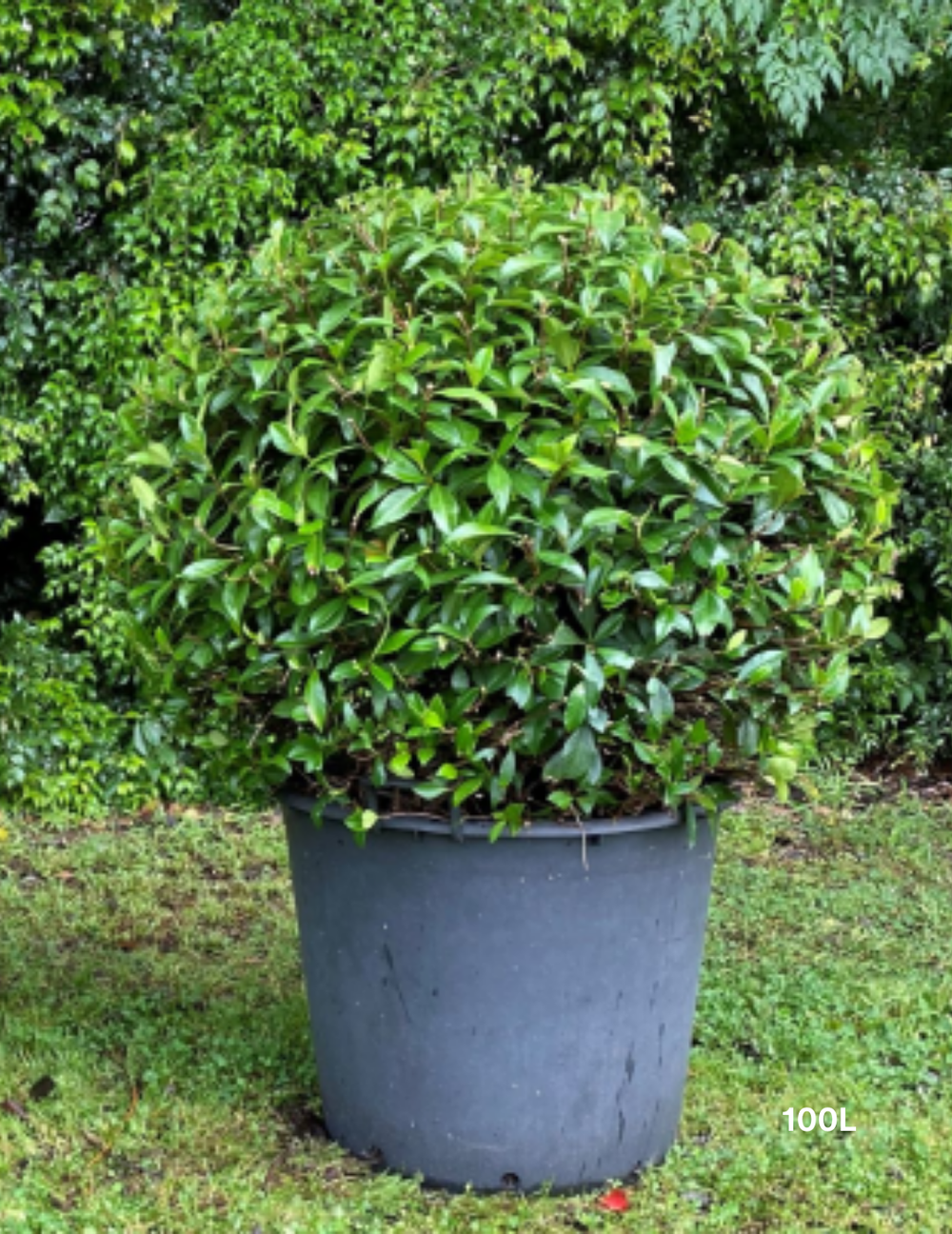
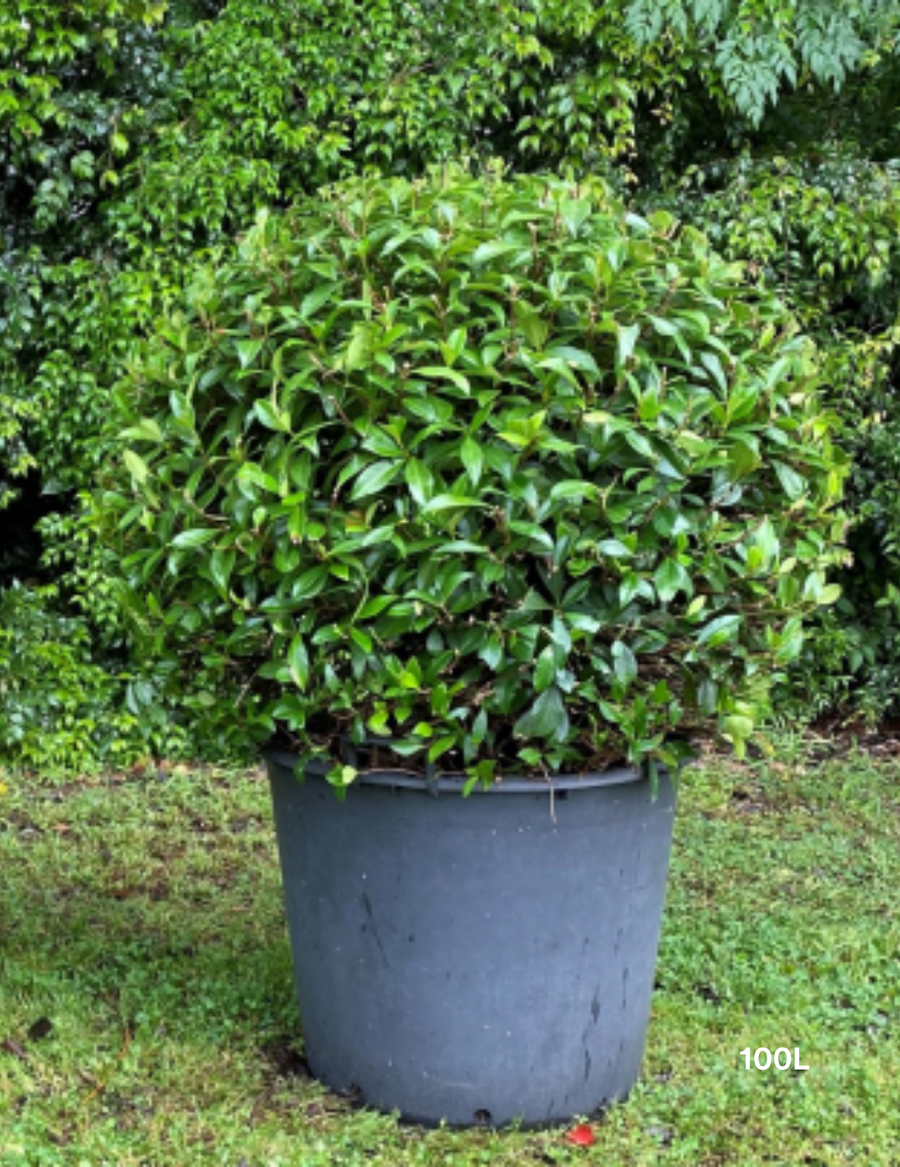
Camellia japonica 'Grand Marshall' is an evergreen shrub bearing large peony form flowers in deep, saturated red with a full informal centre. The leaves are broad, glossy and dark, and the plant develops an upright rounded frame that stays well furnished to ground level rather than going bare at the base.
Plant in partial shade or filtered morning sun, in acidic soil enriched with compost and mulched to keep the root zone cool. It suits temperate gardens across southern and eastern Australia, tolerates light to moderate frost once established, and grows 20 to 50 centimetres a year with reliable summer moisture.
It holds its own as a single specimen, works in a row along a shaded boundary, and combines well with white flowered camellias for contrast. Landscapers use it where a hardy evergreen with strong seasonal colour is needed. The dense base means it keeps its screening value as it matures.
Frequently Asked Questions
About Grand Marshall Camellia
What is a Grand Marshall Camellia?
Grand Marshall is an evergreen shrub bearing large peony form flowers in deep saturated red, with a full informal centre. It flowers through winter and spring. The leaves are broad, glossy and dark, and the plant builds an upright rounded frame that stays well clothed down to ground level.
How big does Grand Marshall grow?
Expect around 2 to 3 metres high and 1.5 to 2.5 metres wide at maturity. It fills out steadily rather than quickly, and holds foliage down to the base. Pruning after flowering each year will keep it to about 1.8 metres for a formal hedge or a smaller garden.
Does Grand Marshall need sun or shade?
Partial shade or filtered morning sun. Full afternoon sun in an Australian summer will scorch the leaves and shorten the flowers, while dense shade reduces bud numbers. The best position gets a few hours of gentle light early in the day and shade for the rest of it.
Is Grand Marshall evergreen or deciduous?
Evergreen. It carries dark glossy foliage all year and never goes bare, which is why it is used for screening as well as for its flowers. Leaf drop is gradual and minimal. New spring growth comes through a paler green and darkens as it hardens off over summer.
How do I prune Grand Marshall Camellia?
Prune immediately after flowering finishes in spring, before new growth starts and buds set for the next season. Take the previous year's growth back by about a third to keep it dense, remove crossing branches and thin the interior. Old neglected plants can be cut hard into bare wood and will reshoot.
Is Grand Marshall suitable for coastal positions?
It grows in coastal gardens when protected from direct salt wind, for example behind a fence, a hedge or a building. Exposed front line planting burns the foliage. On sandy coastal soils, add compost at planting and mulch annually, since camellias need moisture retention and an acidic root zone.
How do I care for a Grand Marshall Camellia?
Mulch the root area, water deeply once or twice a week through summer, and feed with an acid plant fertiliser after flowering. Do not let the soil dry out from December to February or bud set suffers. Watch for scale and the sooty mould that follows it, and treat with horticultural oil.