- Mature height
- 2m to 4m
- Mature width
- 2m to 3m
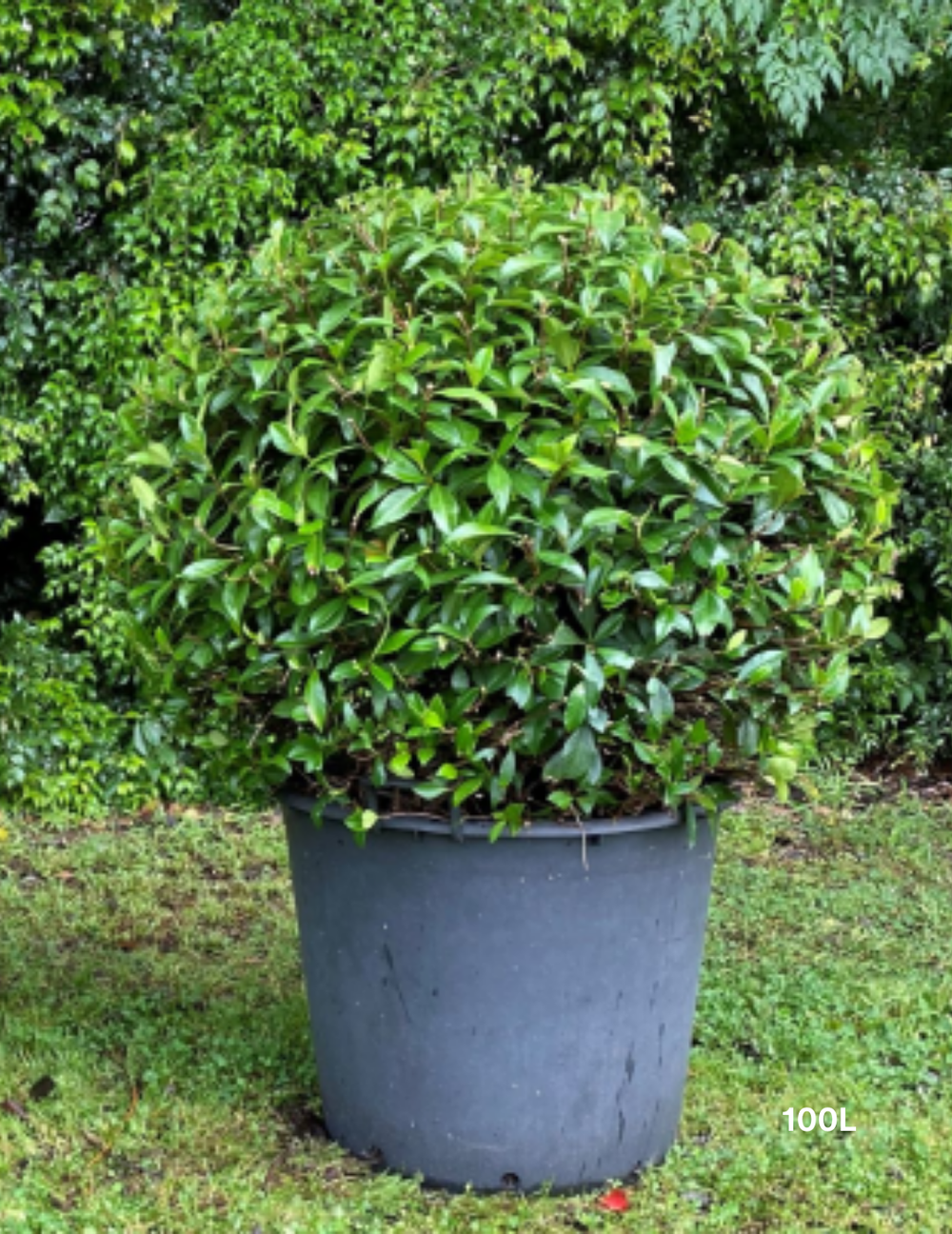
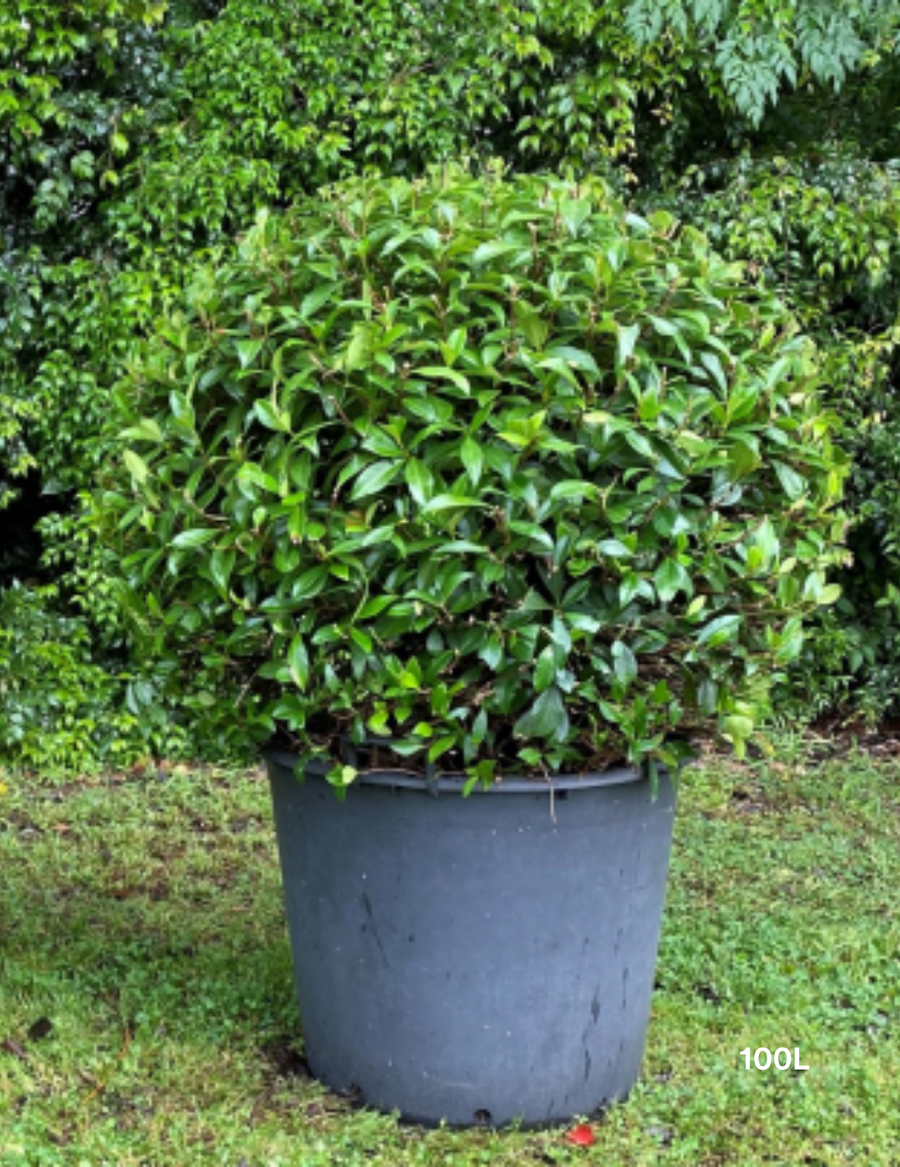
Camellia japonica ‘Betty Ridley’ is an evergreen flowering shrub with formal double blooms in a clear rose pink. The petals sit in even overlapping rows, which gives the flower its precise geometric look. Foliage is dark, glossy and dense right down to the base, and the habit is upright and rounded.
Filtered light suits it, ideally morning sun with afternoon shade. Soil should be acidic to neutral, high in organic matter and free draining. Expect around 20 to 50 cm of growth a year. It tolerates light to moderate frost once established, and performs in cool temperate, warm temperate and elevated subtropical gardens.
Because it stays dense at ground level it works as an informal hedge or a screen along a shaded boundary, as well as a single feature near a seating area. It suits residential courtyards, heritage gardens and shaded commercial planting where the bed has to look presentable in every month of the year.
Frequently Asked Questions
About Betty Ridley Camellia
What is Camellia japonica ‘Betty Ridley’?
It is a japonica camellia cultivar grown for its formal double flowers in a soft rose pink. Like all camellias it is an evergreen broadleaf shrub, originally from east Asia and long established in Australian gardens. The combination of a precise flower shape and dense glossy foliage is what keeps it in demand.
How big does Betty Ridley Camellia grow?
Mature size in the ground is roughly 2 to 4 metres tall by 1.5 to 2.5 metres wide, reached slowly over fifteen years or more. Annual pruning after flowering holds it at whatever height you want. As a clipped hedge most people keep it between 1.5 and 2 metres, where it stays dense and easy to manage.
How far apart should I plant it for a hedge?
Space plants 1 to 1.2 metres apart for a hedge that closes up within a few seasons, or 1.5 metres apart for a looser informal screen. Tighter spacing joins faster but the plants compete for water and root space. Prepare the whole trench rather than individual holes so the roots can spread evenly along the line.
Does it need sun or shade?
Half shade is ideal, with sun in the morning and protection through the afternoon. Pale pink flowers mark and brown more readily in strong sun than dark red ones do, so shelter is worth planning for. In cool southern gardens it will accept more direct sun than it would in Sydney or Brisbane.
Is it evergreen or deciduous?
Evergreen. The dark glossy leaves stay on the plant right through the year, and new growth flushes in a lighter green during spring. This makes it useful where you need a permanent visual barrier, since there is no season in which the screen thins out or drops away entirely.
Is it drought tolerant?
Only moderately. An established plant in shaded, mulched soil copes with normal dry summers, but camellias have shallow roots and will drop buds if they dry out badly in late summer when next season's flowers are forming. Deep watering every week or two through hot weather is a better approach than relying on rainfall.
How do I care for Betty Ridley Camellia?
Mulch well, water deeply in summer, and feed with an acid loving plant fertiliser once flowering has finished. Prune to shape at the same time. Remove spent blooms from around the base to reduce petal blight, which shows as brown blotches spreading through the petals. Avoid lime and avoid cultivating the soil over the roots.