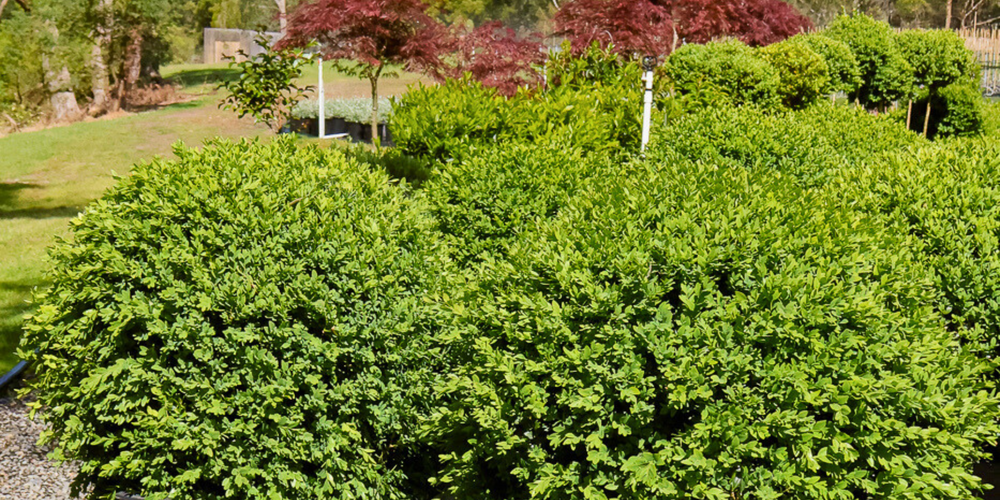
Camellia hybrid ‘High Fragrance’ – High Fragrance Camellia
Camellia hybrid ‘High Fragrance’ – High Fragrance Camellia
Most loved for its strongly fragrant soft pink flowers combined with dense evergreen foliage and reliable flowering performance.
Regular price
$180.00
Sale price
$180.00
Regular price
Tax included.
Shipping calculated at checkout.
01 Choose your pot size
02 Your selection
- Current height guide
- Please enquire
- Pot size
- 30cm/33cm
Approximate only. Minimum height important? Confirm with us.
Height guide disclaimer: Height ranges are approximate only. As living products, plant heights naturally vary between individual plants, batches, and seasons. No guarantee is given that supplied plants will fall within the stated range. If minimum heights are required, you mustconfirm current batch heights with Evergreen Trees Direct prior to purchase. Variation in height is normal and is not grounds for return, refund, replacement, or compensation.
03 How many trees?
Couldn't load pickup availability
About this tree
About this tree
Camellia hybrid 'High Fragrance' is an evergreen shrub bred for scent, which is uncommon in the genus. Pale pink peony form flowers edged in deeper pink open through winter and into spring, carrying a genuine perfume that travels a few metres on still air. The foliage is glossy mid green and dense over an upright rounded frame.
Plant it in full sun to partial shade in rich, free draining soil with a slightly acidic reaction. Growth is moderate at 30 to 60 centimetres a year, reaching about 2 to 2.5 metres tall and 1.5 to 2 metres wide. It takes light to moderate frost once established and grows well through cool and warm temperate Australia.
The fragrance decides where it goes. Place it beside a doorway, along a path, near an outdoor table or under a window that gets opened in winter. It also clips into a low hedge or sits in a wide pot on a sheltered terrace. In a small garden it does two jobs at once, evergreen structure and scent.
Frequently Asked Questions
About High Fragrance Camellia
What is Camellia 'High Fragrance'?
Camellia 'High Fragrance' is a scented hybrid camellia raised from crosses involving the fragrant species Camellia lutchuensis. It is an evergreen shrub with dense glossy foliage and pale pink peony form flowers through the cooler months. Most camellias have no scent at all, so this cultivar is grown specifically for the perfume as well as the flower.
How big does High Fragrance Camellia grow?
It reaches roughly 2 to 2.5 metres tall and 1.5 to 2 metres wide when grown as a free standing shrub. Trimming holds it lower, and it responds well to being kept at around 1.5 metres as a hedge. Container grown plants stay smaller again, typically topping out near 1.5 metres.
When does it flower and how strong is the fragrance?
Flowering runs through winter and into spring, roughly June to October. The scent is sweet and light rather than heavy, noticeable from a metre or two away on a still morning and strongest when the sun first warms the open blooms. Windy positions disperse it, which is worth considering when choosing where to plant.
Does it need sun or shade?
Full sun to partial shade both work well. Around four to six hours of sun gives the fullest flowering and the densest habit, while in hot inland gardens shelter from afternoon sun keeps the foliage in better condition. Avoid deep shade, which reduces the number of buds and thins the plant out over time.
Is it frost tolerant?
Yes, once established it handles light to moderate frost, so it suits cool temperate gardens across Victoria, Tasmania, the ACT and the New South Wales tablelands. Protect first year plants from cold drying wind. Frost landing on open flowers can brown the petals, so a position with some overhead canopy protects the display in colder districts.
Can it grow in pots?
Yes, and a pot near a seating area is one of the better ways to use it, since it brings the scent to where people sit. Use a container 40 to 50 centimetres wide with a quality free draining mix. Water regularly through summer and feed with slow release camellia fertiliser each spring after flowering.
How do I care for Camellia 'High Fragrance'?
Water deeply while it establishes, then weekly through hot weather. Mulch to keep the shallow roots cool and clear of competition from grass. Prune lightly once flowering ends in spring, shortening the longer shoots to encourage branching. Apply a camellia or azalea fertiliser after pruning, and avoid lime, which raises the soil pH too far.
Delivery & pickup
Delivery & pickup
Shipping is calculated at checkout based on the pallet space your order occupies in the truck and your delivery location.
There is no charge to calculate your freight.
Planting, roots & care
Planting, roots & care
Trade enquiries
Trade enquiries
We supply advanced trees to landscapers, developers, architects, and councils Australia-wide. Trade clients receive fast quotes, expert advice, and access to premium stock with reliable freight.
About Camellia hybrid ‘High Fragrance’
Camellia hybrid 'High Fragrance' is an evergreen shrub bred for scent, which is uncommon in the genus. Pale pink peony form flowers edged in deeper pink open through winter and into spring, carrying a genuine perfume that travels a few metres on still air. The foliage is glossy mid green and dense over an upright rounded frame.
Plant it in full sun to partial shade in rich, free draining soil with a slightly acidic reaction. Growth is moderate at 30 to 60 centimetres a year, reaching about 2 to 2.5 metres tall and 1.5 to 2 metres wide. It takes light to moderate frost once established and grows well through cool and warm temperate Australia.
The fragrance decides where it goes. Place it beside a doorway, along a path, near an outdoor table or under a window that gets opened in winter. It also clips into a low hedge or sits in a wide pot on a sheltered terrace. In a small garden it does two jobs at once, evergreen structure and scent.
Frequently Asked Questions
About High Fragrance Camellia
What is Camellia 'High Fragrance'?
Camellia 'High Fragrance' is a scented hybrid camellia raised from crosses involving the fragrant species Camellia lutchuensis. It is an evergreen shrub with dense glossy foliage and pale pink peony form flowers through the cooler months. Most camellias have no scent at all, so this cultivar is grown specifically for the perfume as well as the flower.
How big does High Fragrance Camellia grow?
It reaches roughly 2 to 2.5 metres tall and 1.5 to 2 metres wide when grown as a free standing shrub. Trimming holds it lower, and it responds well to being kept at around 1.5 metres as a hedge. Container grown plants stay smaller again, typically topping out near 1.5 metres.
When does it flower and how strong is the fragrance?
Flowering runs through winter and into spring, roughly June to October. The scent is sweet and light rather than heavy, noticeable from a metre or two away on a still morning and strongest when the sun first warms the open blooms. Windy positions disperse it, which is worth considering when choosing where to plant.
Does it need sun or shade?
Full sun to partial shade both work well. Around four to six hours of sun gives the fullest flowering and the densest habit, while in hot inland gardens shelter from afternoon sun keeps the foliage in better condition. Avoid deep shade, which reduces the number of buds and thins the plant out over time.
Is it frost tolerant?
Yes, once established it handles light to moderate frost, so it suits cool temperate gardens across Victoria, Tasmania, the ACT and the New South Wales tablelands. Protect first year plants from cold drying wind. Frost landing on open flowers can brown the petals, so a position with some overhead canopy protects the display in colder districts.
Can it grow in pots?
Yes, and a pot near a seating area is one of the better ways to use it, since it brings the scent to where people sit. Use a container 40 to 50 centimetres wide with a quality free draining mix. Water regularly through summer and feed with slow release camellia fertiliser each spring after flowering.
How do I care for Camellia 'High Fragrance'?
Water deeply while it establishes, then weekly through hot weather. Mulch to keep the shallow roots cool and clear of competition from grass. Prune lightly once flowering ends in spring, shortening the longer shoots to encourage branching. Apply a camellia or azalea fertiliser after pruning, and avoid lime, which raises the soil pH too far.
- Foliage
Evergreen (foliage year round)
- Position
- Form
- Use
Planting Information
Recommended Planting Spacing For Your Camellia hybrid ‘High Fragrance’ – High Fragrance Camellia
Camellia hybrid ‘High Fragrance’ – High Fragrance Camellia is expected to grow 30cm to 60cm per year (moderate).
Long Term Care For Your Camellia hybrid ‘High Fragrance’ – High Fragrance Camellia
Planting Your Camellia hybrid ‘High Fragrance’ – High Fragrance Camellia in Different Soil
Uses in my Garden
Uses in my Garden
Camellia hybrid ‘High Fragrance’ – High Fragrance Camellia works in an:
Is Camellia hybrid ‘High Fragrance’ – High Fragrance Camellia Evergreen or Deciduous?
Camellia hybrid ‘High Fragrance’ – High Fragrance Camellia is an Evergreen (foliage year round) Tree
Mature Height & Width
Mature Height: 2m to 3m
Mature Width: 1.5m to 2.5m
Camellia hybrid ‘High Fragrance’ – High Fragrance Camellia is expected to grow 30cm to 60cm per year (moderate).
Growth Rate of Camellia hybrid ‘High Fragrance’ – High Fragrance Camellia
Camellia hybrid ‘High Fragrance’ – High Fragrance Camellia is expected to grow 30cm to 60cm per year (moderate).
They are considered to have a:
Frost Tolerance & Ideal Climate to plant Camellia hybrid ‘High Fragrance’ – High Fragrance Camellia
Is Camellia hybrid ‘High Fragrance’ – High Fragrance Camellia frost tolerant?
Camellia hybrid ‘High Fragrance’ – High Fragrance Camellia is Frost Tolerant – Can handle light to moderate frost once established.
Does Camellia hybrid ‘High Fragrance’ – High Fragrance Camellia Flower?
Camellia ‘High Fragrance’ produces masses of soft pink semi-double flowers from autumn through winter. The blooms carry a noticeable sweet fragrance and create an elegant seasonal display against the glossy evergreen foliage.
Does Camellia hybrid ‘High Fragrance’ – High Fragrance Camellia flower?
Flowering Period:
Flower Type:
Flower Colour:
Pink
Is Camellia hybrid ‘High Fragrance’ – High Fragrance Camellia an Australian Native Tree?
No
Camellia hybrid ‘High Fragrance’ – High Fragrance Camellia is Native to Hybrid camellia developed from Asian camellia species native to China and Japan.
What is the Wildlife Value of Camellia hybrid ‘High Fragrance’ – High Fragrance Camellia ?
Its fragrant flowers provide nectar and pollen for bees and other beneficial pollinators during the cooler flowering season when fewer plants are in bloom. The dense evergreen foliage also offers sheltered habitat for small birds and beneficial insects within garden settings.
How much Sunlight does Camellia hybrid ‘High Fragrance’ – High Fragrance Camellia need?
Camellia hybrid ‘High Fragrance’ – High Fragrance Camellia will thrive best in:
Preferred Soil?
Camellia ‘High Fragrance’ performs best in rich, well-drained loam soils with an acidic to neutral pH. It will also tolerate lighter soils if enriched with organic matter to improve moisture retention and fertility. Avoid alkaline, compacted or waterlogged conditions, as these can reduce nutrient uptake and overall vigour. Keep soil evenly moist during establishment, then maintain moderate moisture as the plant matures for best flowering performance.
Is Camellia hybrid ‘High Fragrance’ – High Fragrance Camellia Drought Tolerant?
Is Camellia hybrid ‘High Fragrance’ – High Fragrance Camellia Drought tolerant?
As a young plant it benefits from regular watering to establish evenly, particularly during warmer weather. Once established, ‘High Fragrance’ shows moderate drought tolerance and performs reliably through dry periods when planted in improved soil, with occasional supplementary watering supporting optimal flowering and foliage quality.
Frequently Asked Questions
Frequently Asked Questions
Compare sizes
30cm/33cm
Enquire for current heights
Photographs are not to scale. Heights are approximate and vary between individual trees.
Camellia hybrid ‘High Fragrance’ is loved for its strongly fragrant soft pink flowers combined with dense evergreen foliage and reliable flowering performance.
We take pride in supplying A+ grade advanced trees. When stock at our farm is not yet ready, we work with our trusted trade suppliers to source the best available trees for your garden.
Plant Your Camellia hybrid ‘High Fragrance’ – High Fragrance Camellia With:
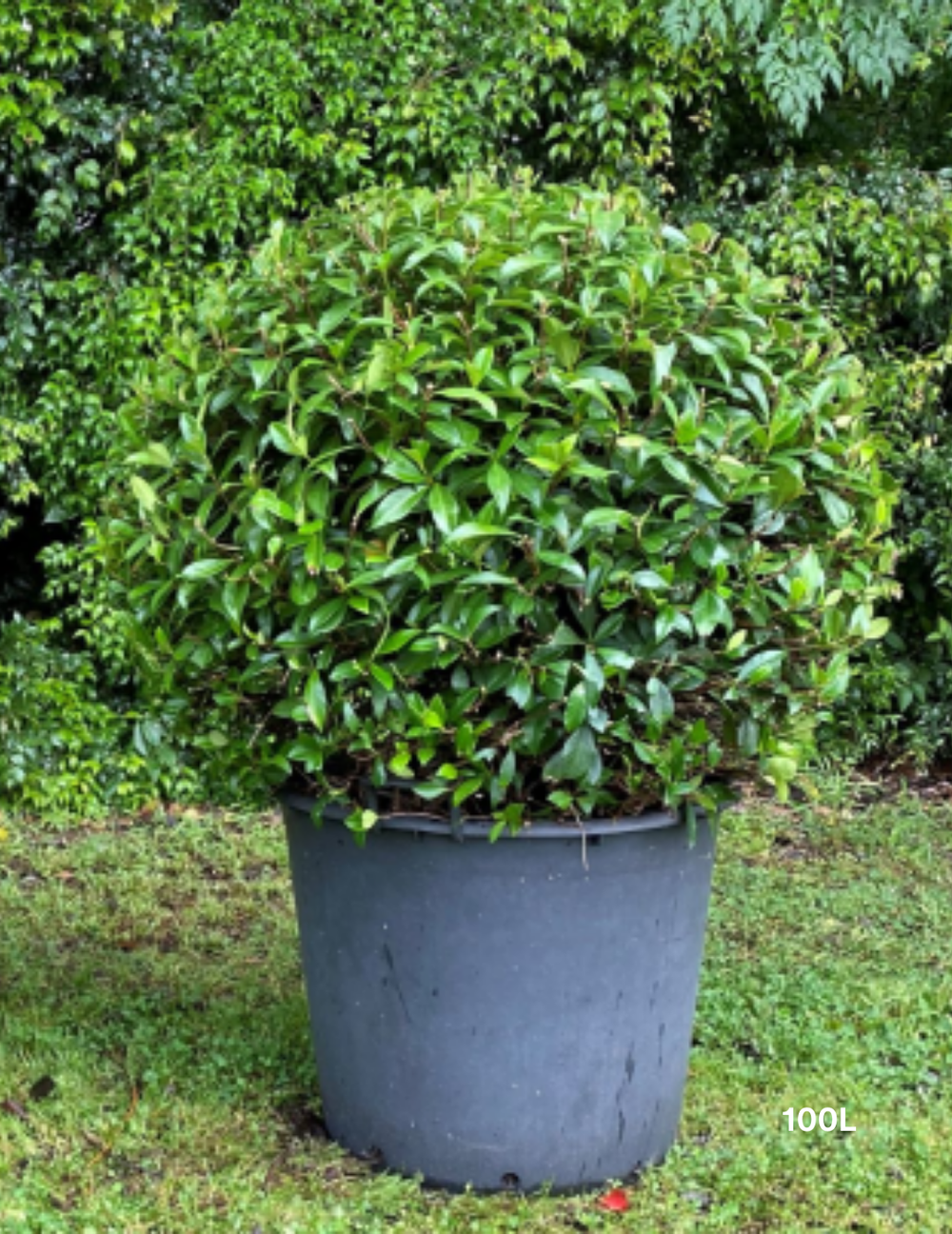
Trachelospermum jasminoides Balls – Star Jasmine Balls
Trachelospermum jasminoides Balls – Star Jasmine Balls
Trachelospermum jasminoides 'Balls' is Star Jasmine grown and clipped into a dense evergreen sphere. The small glossy leaves sit tight on a woody framework, holding a clean rounded outline year round. White pinwheel flowers open in spring and carry a strong sweet scent right across a courtyard.
Ball specimens hold at about 1 to 1.5 metres tall and wide with light clipping. Full sun to part shade suits them, in any free draining soil. Growth is slow to moderate at 30 to 50 centimetres a year. They handle coastal exposure, light frost and dry spells once the roots are down.
Repeat them along a driveway, either side of an entry, or in pots on a terrace where a formal shape is wanted straight away. They read as structure in a planting scheme without the height of a hedge, and because the form is already trained, a new garden looks settled from the day it goes in.
Frequently Asked Questions
About Star Jasmine Balls
What are Star Jasmine Balls?
They are Trachelospermum jasminoides, the common Star Jasmine, grown and clipped into a dense evergreen sphere on a woody framework. Instead of climbing, the plant is trained into a self supporting rounded shape. The foliage is small, glossy and dark green, and the plant carries scented white flowers through spring.
How big do Star Jasmine Balls grow?
They hold at roughly 1 to 1.5 metres tall and 1 to 1.5 metres wide. Growth is slow to moderate at 30 to 50 centimetres a year, so a light clip once or twice a year keeps the ball tight at whatever size within that range suits the setting.
Do Star Jasmine Balls need sun or shade?
Full sun to part shade both work. Full sun gives the densest foliage and the heaviest flowering, while part shade produces slightly softer, more open growth and fewer flowers. Avoid deep shade, where the ball thins out and loses its outline. Morning sun with afternoon protection suits hot inland gardens.
Can Star Jasmine Balls be grown in pots?
Yes, and pots are one of the main uses. A container 50 to 60 centimetres wide with a quality free draining mix will hold a ball for years. Water more often than you would in the ground, especially in summer, and feed in spring and again in late summer. Refresh the mix every few years.
Are Star Jasmine Balls evergreen?
Yes, the foliage is held year round. The glossy dark green leaves take on a bronze tinge in cold weather and green up again in spring, but the plant never goes bare. That is what makes it useful as permanent structure in a scheme, particularly in winter once perennials have died back.
When do Star Jasmine Balls flower?
Flowering runs through spring, roughly September to November, and often carries into early summer in warmer districts. The white pinwheel flowers are small but produced in quantity, and the scent is strong on still evenings. Flowering is heaviest on plants in full sun that were not clipped hard just before bud set.
How do I prune and care for Star Jasmine Balls?
Clip lightly with hedging shears once after flowering and again in late summer if needed, taking only the new growth to keep the outline crisp. Water deeply in dry weather, mulch the base, and feed in early spring. The sap is milky and can irritate skin, so wear gloves when trimming.
Trachelospermum jasminoides Balls – Star Jasmine Balls
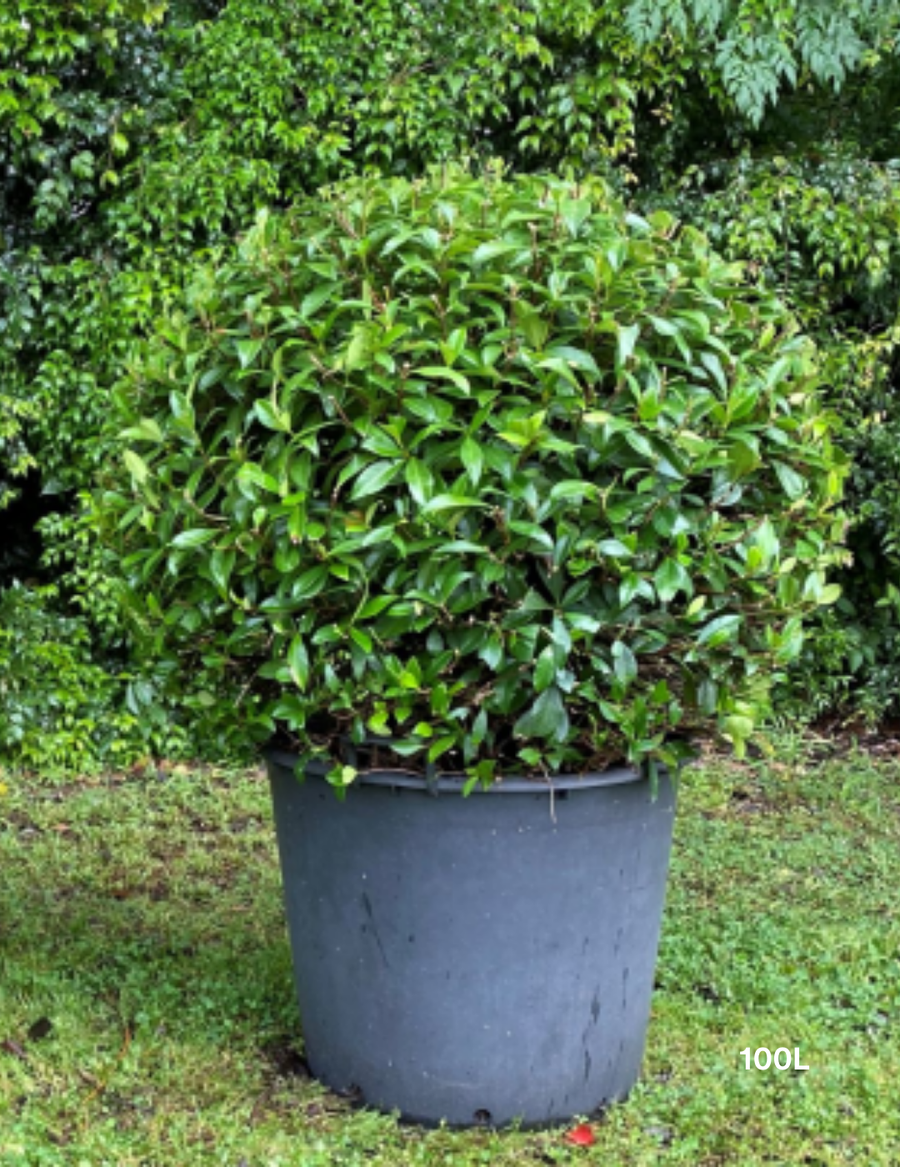
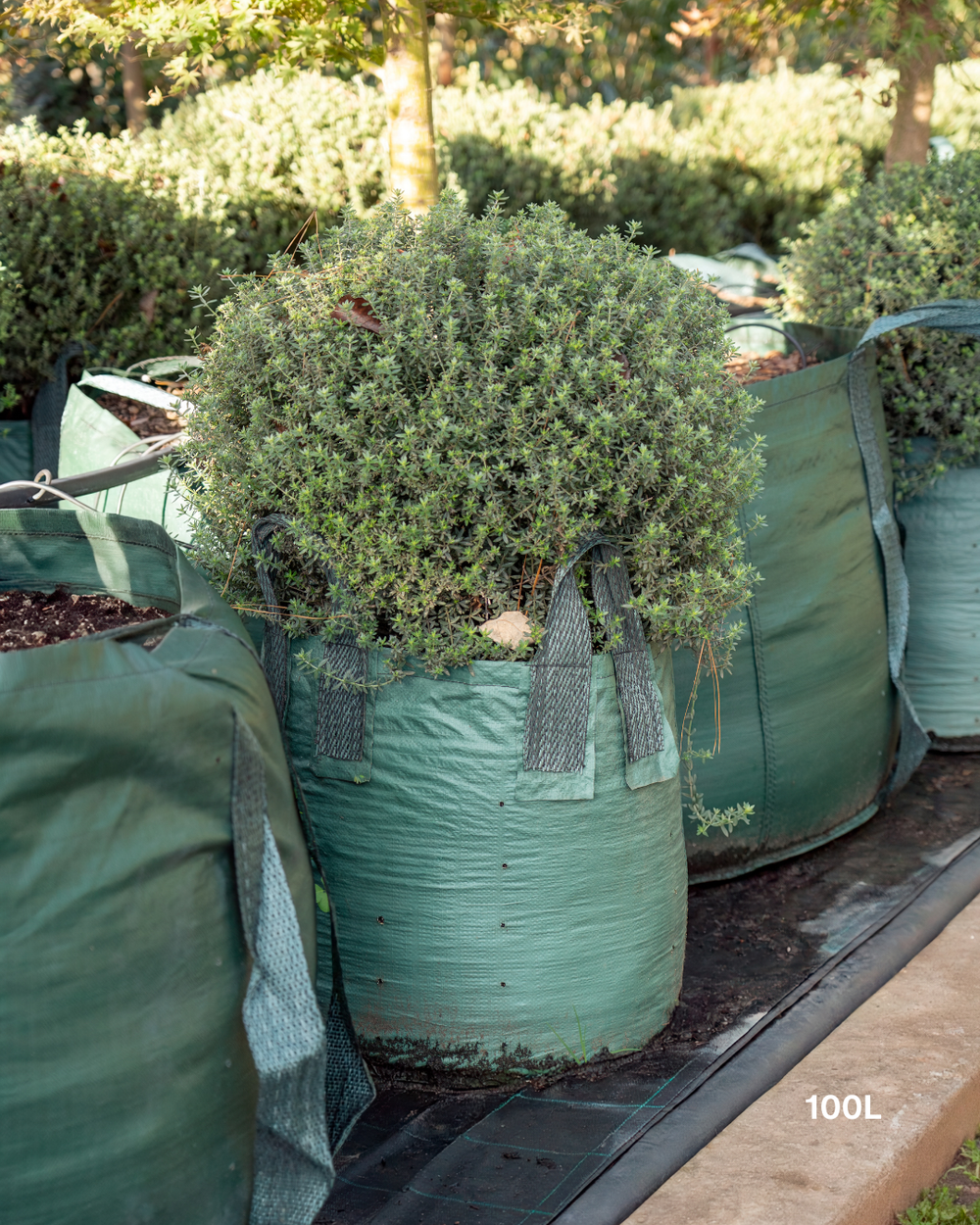
Westringia fruticosa – Coastal Rosemary
Westringia fruticosa – Coastal Rosemary
Westringia fruticosa, Coastal Rosemary, is an Australian native evergreen shrub from the headlands and dunes of the east coast. It builds a dense rounded bush of fine grey green leaves held in whorls, with small white to pale lilac flowers. Despite the common name it is not the culinary herb.
Mature plants sit at 1.5 to 2 metres tall and 1.5 to 2 metres wide, growing 30 to 60 centimetres a year, and they clip smaller without complaint. Full sun to part shade and sharp drainage are the requirements. Salt wind, sandy soil, drought and light to moderate frost are all handled.
It is a standard on coastal projects, road verges, council garden beds and exposed banks that need erosion cover. Plant 1 to 1.5 metres apart for an informal screen, or 80 centimetres for a clipped hedge. A single plant fills a 40 to 50 centimetre pot on a courtyard or balcony.
Frequently Asked Questions
About Coastal Rosemary
What is Coastal Rosemary?
Westringia fruticosa is an Australian native evergreen shrub from the headlands and dunes of the east coast. It forms a dense rounded bush of fine grey green leaves held in whorls, with small white to pale lilac flowers. Despite the common name it is not culinary rosemary and is not used in cooking.
How big does Coastal Rosemary grow?
Mature plants reach 1.5 to 2 metres tall and 1.5 to 2 metres wide. It clips readily to smaller dimensions and is often maintained at around a metre as a hedge or a low mound. Growth is moderate, roughly 30 to 60 centimetres a year, so it holds a trimmed shape well.
Is Coastal Rosemary suitable for coastal positions?
It is one of the best shrubs available for exposed coastal work. It grows naturally on sea cliffs and copes with salt laden wind, sand and reflected heat. It is used constantly on beachfront reserves, dune stabilisation projects and seaside gardens where little else holds a tidy shape.
When does Coastal Rosemary flower?
The main flush is spring and summer, roughly September through February, with scattered flowering at other times of the year in mild districts. The flowers are small, white to pale lilac and sit among the foliage rather than above it. Clipped hedges flower less than plants left to grow informally.
How far apart should I plant Coastal Rosemary for a hedge?
Space plants 80 centimetres apart for a tight formal hedge, or 1 to 1.5 metres apart for a dense informal screen. On banks and batters used for erosion cover, 1 metre in a staggered grid gives full ground coverage within about two growing seasons.
Can Coastal Rosemary grow in pots?
Yes. A pot 40 to 50 centimetres wide suits a single plant for a courtyard, entry or balcony. Use a free draining mix, because the roots will not tolerate sitting wet. Container plants need watering more often than those in the ground, plus a light trim to hold their shape.
How do I prune and care for Coastal Rosemary?
Trim lightly two or three times a year, taking the soft new growth and avoiding cuts into bare old wood, which reshoots poorly. Water through the first summer, then only in extended dry spells. On most soils it needs no feeding at all, and it resents heavy watering and poor drainage.
Westringia fruticosa – Coastal Rosemary
Westringia ‘Wynyabbie Blue’ – Wynyabbie Blue Coastal Rosemary
Westringia ‘Wynyabbie Blue’ – Wynyabbie Blue Coastal Rosemary
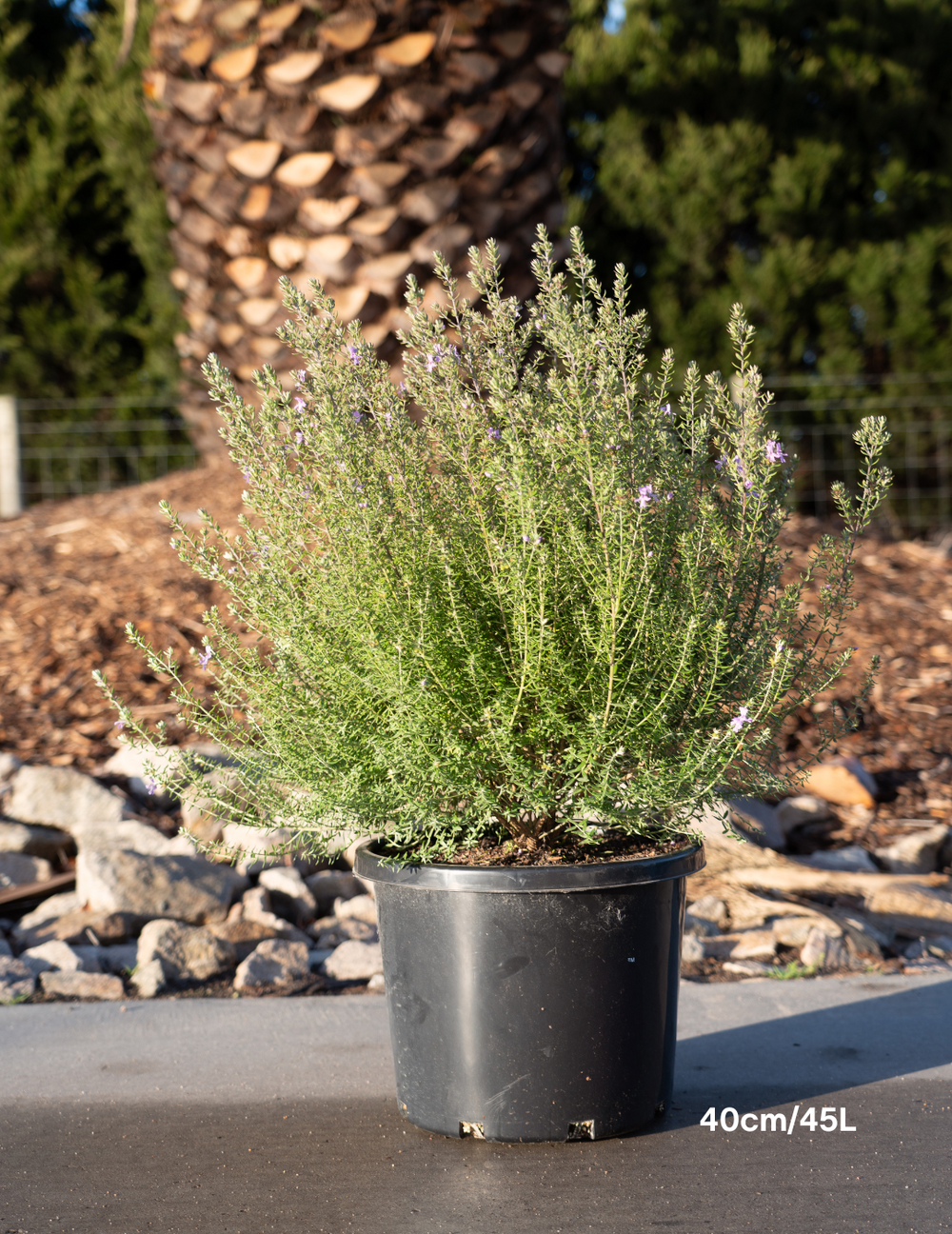
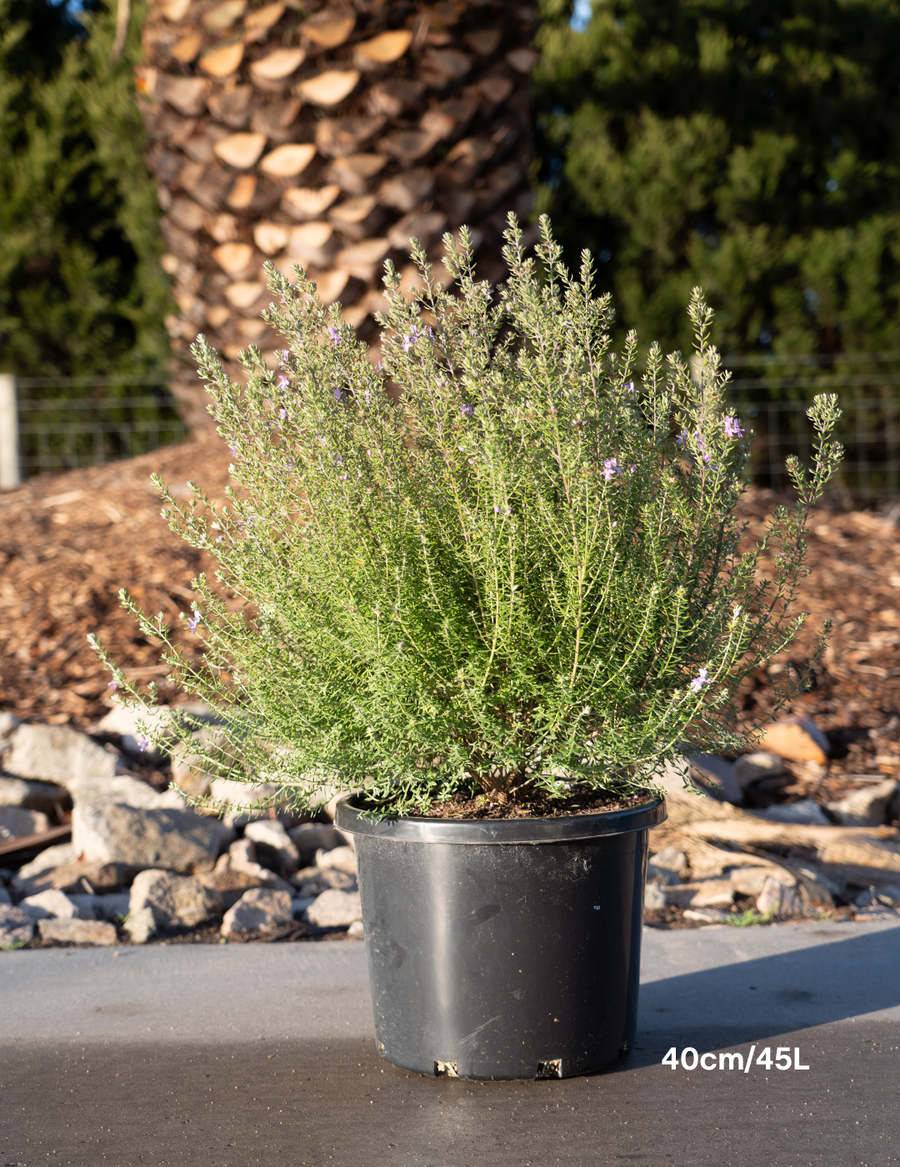
Westringia 'Wynyabbie Blue' is a hardy Australian native shrub grown for its lilac blue flowers, which are larger and more freely carried than those of the common white forms. Narrow grey green leaves sit in neat whorls on a dense rounded frame that holds its shape through the year.
Expect 1.5 to 2 metres in height and width at maturity, at 30 to 60 centimetres a year. Full sun brings the heaviest flowering, though part shade is accepted. Drainage matters above everything else, after which it takes salt wind, sandy or gravelly ground, drought and light to moderate frost.
Mass plantings on batters, median strips and coastal frontages are where it earns its keep, and it clips into a low hedge of about a metre without losing its flowering. Plant 1 to 1.5 metres apart for an informal screen. One plant fills a 40 to 50 centimetre pot neatly.
Frequently Asked Questions
About Wynyabbie Blue Coastal Rosemary
What is Westringia Wynyabbie Blue?
Westringia 'Wynyabbie Blue' is a hardy Australian native shrub grown for its lilac blue flowers, which are larger and more freely carried than those of the common white forms. Narrow grey green leaves sit in neat whorls on a dense rounded frame. It is evergreen and holds its structure all year.
How big does Wynyabbie Blue grow?
It reaches 1.5 to 2 metres tall and 1.5 to 2 metres wide at maturity, growing 30 to 60 centimetres a year. It clips comfortably to around a metre if you want a lower hedge, and it will hold that height indefinitely given two or three light trims a year.
When does Wynyabbie Blue flower?
From spring right through autumn, roughly September to May, with sporadic flowers in winter in mild districts. The lilac blue flowers open in flushes rather than all at once, so there is usually some colour on the plant. Flowering is heaviest in full sun on lean, well drained soil.
Is Wynyabbie Blue drought tolerant?
Yes. Once the roots are established it needs very little water and copes with extended dry periods, which is why it is used on unirrigated median strips and road verges. Drainage matters more than watering, since the plant will die in soggy ground long before it dies of thirst.
Is Wynyabbie Blue suitable for coastal positions?
It is. Salt laden wind, sandy soils and reflected heat are all handled, and it is planted routinely on foreshore reserves and beachside gardens. In very exposed frontal positions the plant stays lower and denser than it would inland, which generally suits the situation anyway.
How far apart should I plant Wynyabbie Blue for a hedge?
Use 80 centimetres between plants for a clipped formal hedge, or 1 to 1.5 metres for a dense informal screen. For mass planting on banks and median strips, 1 metre in a staggered pattern gives full coverage within about two growing seasons and shades out most weeds.
How do I prune and care for Wynyabbie Blue?
Trim lightly after each flowering flush, taking soft growth only. Cutting back into bare old wood leaves gaps that will not fill in, so stay on top of it rather than letting it get away. Water through the first summer, then rarely. Avoid rich soils and heavy fertiliser.
Westringia ‘Wynyabbie Blue’ – Wynyabbie Blue Coastal Rosemary

Evergreen Trees Direct Has Been Featured In:


Perfect Substitutes for Camellia hybrid ‘High Fragrance’ – High Fragrance Camellia
Follow Us On Instagram
@evergreentreesdirect ↗
Tips & Tricks
Best Trees for Creating a Privacy Screen: 10 Picks Across Fast Formal, Native and Narrow Column Options
Read the story
How to Incorporate Trees into Your Modern Landscape Design
Read the story
The Importance of Root Health: How to Choose Quality Trees
Read the story