- Mature height
- 2m to 3m (approx.)
- Mature width
- 3m to 5m
Callistemon sieberi handles what most shrubs cannot. The River Bottlebrush grows naturally in stream beds that flood and then dry out completely, so it tolerates both extended inundation and hard drought, which makes it invaluable along drainage lines and in problem corners.
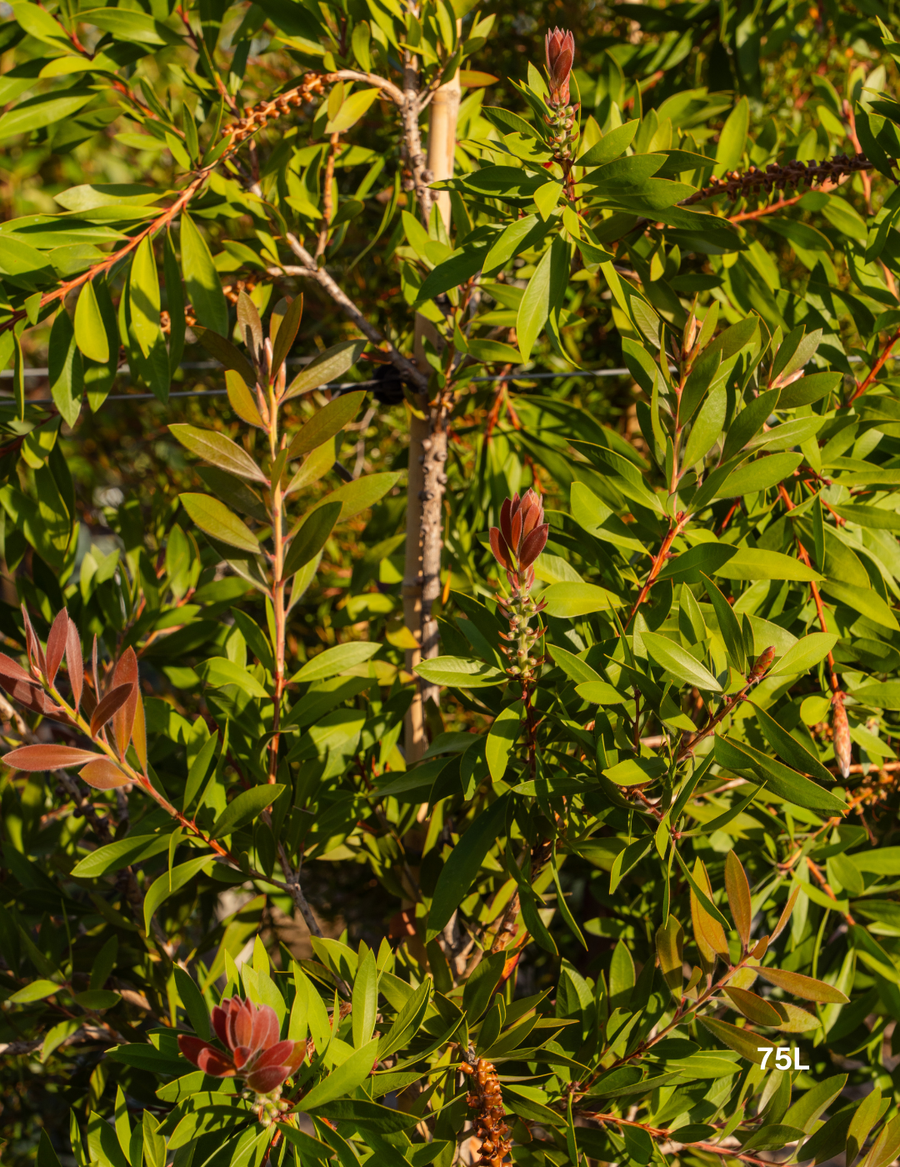
Callistemon sieberi grows to 2 to 3 metres tall and spreads 3 to 5 metres wide at 30 to 60 centimetres per year, forming a broad dense shrub with fine narrow foliage. Soft cream to pale yellow bottlebrush flowers appear through spring and summer, attracting honeyeaters and native bees.
This Australian native is frost hardy, surviving heavy and frequent frost without damage, and tolerates poor and rocky soils. It grows in full sun and is widely used in riparian revegetation, erosion control and low-maintenance civic planting.
Frequently Asked Questions
About Callistemon sieberi
How big does Callistemon sieberi grow?
It grows to 2 to 3 metres tall and spreads 3 to 5 metres wide, forming a broad dense shrub. It is wider than it is tall, unlike most upright bottlebrushes.
Does Callistemon sieberi tolerate flooding?
Yes. It grows naturally in stream beds that flood periodically and then dry out, so it handles both inundation and drought better than almost any other shrub.
What colour are the flowers?
Flowers are soft cream to pale yellow, sometimes with a pink tinge, and are more delicate in tone than the vivid reds of most bottlebrushes.
Is Callistemon sieberi frost hardy?
Yes. It is frost hardy and survives heavy and frequent frost without damage, which suits it to cold inland and tablelands districts.
Where is it best used?
Along drainage lines, creek banks, dam edges and low-lying corners where water sits after rain, and in erosion control and riparian revegetation planting.
Does it attract wildlife?
Yes. The nectar-rich flowers are worked by honeyeaters and native bees, and the dense low branching provides shelter for small birds.
How far apart should I plant it?
Plant 2 to 3 metres apart for a continuous mass or bank stabilisation planting, allowing for its broad spreading habit.