Banksia ericifolia
Banksia ericifolia
Couldn't load pickup availability
Current Stock Height Guides
Current Stock Height Guides
Height guide disclaimer: Height ranges are approximate only. As living products, plant heights naturally vary between individual plants, batches, and seasons. No guarantee is given that supplied plants will fall within the stated range. If minimum heights are required, you mustconfirm current batch heights with Evergreen Trees Direct prior to purchase. Variation in height is normal and is not grounds for return, refund, replacement, or compensation.
Mature Height & Width
Mature Height & Width
Mature Height: 3m to 6m (approx.)
Mature Width: 2m to 5m
Banksia ericifolia is expected to grow 30cm to 50cm per year (approx.).
Root Ball Dimensions
Root Ball Dimensions
Use this as a reference when digging your planting hole. We recommend digging at least 10% wider than the dimensions below to encourage strong root development.
- 30cm Pot: 33cm (W) × 30cm (D)
- 40cm/45L Pot: 44cm (W) × 41.5cm (D)
- 50cm Pot / 70L Pot: 55cm (W) × 41.8cm (D)
- 100L Bag: 50.6cm (W) × 52.8cm (D)
- 150L Bag: 66cm (W) × 55cm (D)
- 200L Bag: 71.5cm (W) × 60.5cm (D)
- 300L Bag: 88cm (W) × 63.8cm (D)
- 400L Bag: 99cm (W) × 66cm (D)
- 500L Bag: 122cm (W) × 66cm (D)
- 750L Bag: 134cm (W) × 69cm (D)
- 1000L Bag: 146.3cm (W) × 71.5cm (D)
- 2000L Bag: 176cm (W) × 82.5cm (D)
Trade
Trade
We supply advanced trees to landscapers, developers, architects, and councils Australia-wide. Trade clients receive fast quotes, expert advice, and access to premium stock with reliable freight.
Shipping
Shipping
Shipping is calculated at checkout based on the pallet space your order occupies in the truck and your delivery location.
There is no charge to calculate your freight.
Contact
Contact
Have a question or a list to send through to us?
Email: sales@evergreentrees.com.au
Phone: (03) 7042 3318
Share this product
About Your New Banksia ericifolia
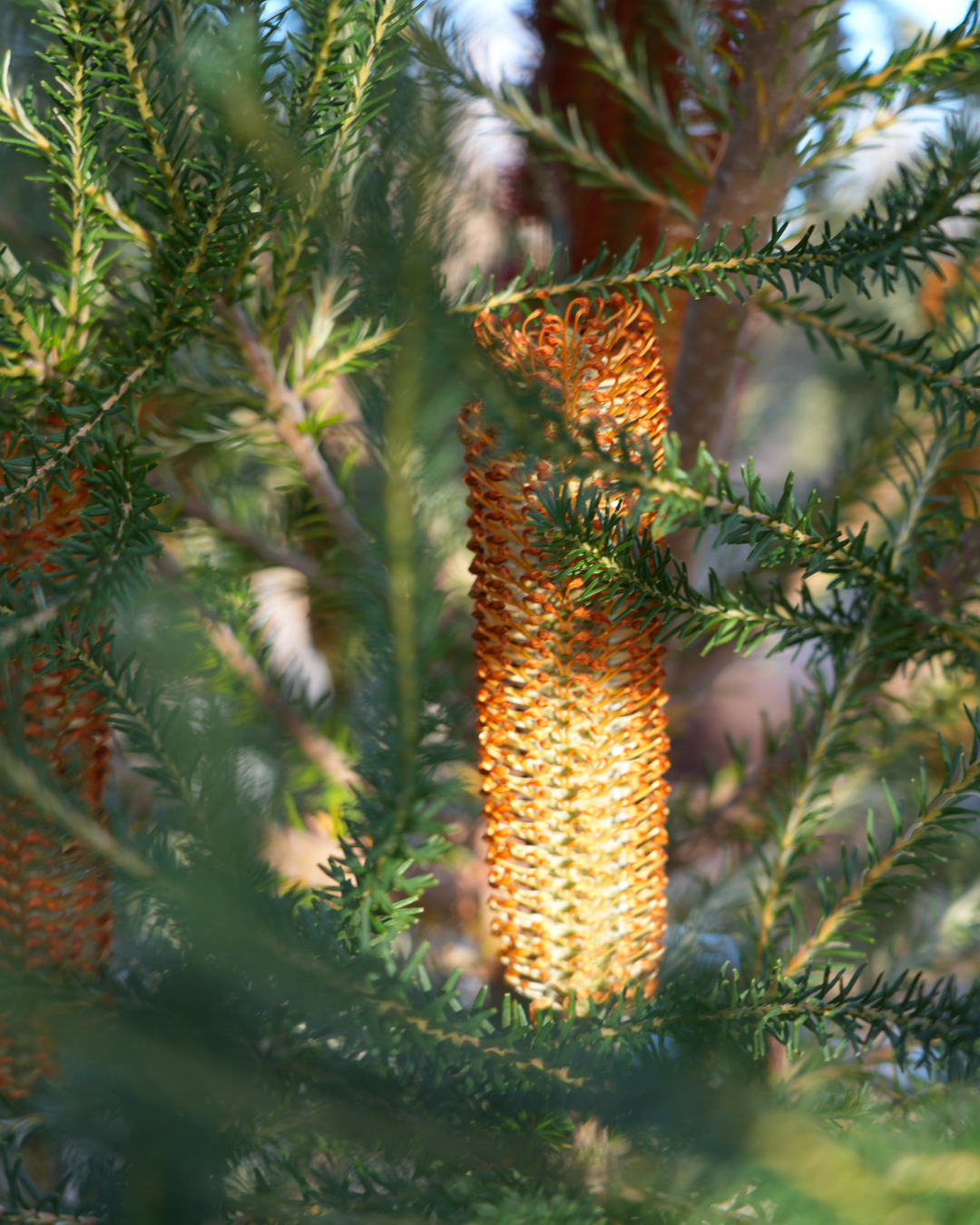
Banksia ericifolia, the Heath-leaved Banksia, is a dense upright Australian native shrub in the family Proteaceae. Fine needle-like foliage gives it a soft heath-like texture, and from autumn into winter it carries thick cylindrical flower spikes in orange to red, held upright through the outer canopy. Old woody cones stay on the plant afterwards.
It grows 2 to 6 metres tall and 2 to 5 metres wide, at roughly 30 to 50 centimetres a year. Full sun, sandy or gravelly soil and free drainage suit it best, and it tolerates poor low-nutrient ground where other shrubs fail. Established plants take light to moderate frost, coastal exposure and extended dry weather.
It is used for screening at 1 to 1.5 metres apart, windbreaks, bush regeneration, rural property planting and habitat gardens. Winter flowering makes it valuable to honeyeaters at a lean time of year. For projects that need native structure and bird habitat with almost no ongoing watering, it is a reliable specification.
Frequently Asked Questions
About Heath-leaved Banksia
What is Banksia ericifolia?
Banksia ericifolia is an Australian native shrub in the family Proteaceae, found naturally on the sandy heaths of coastal New South Wales. It is called the Heath-leaved Banksia because its short fine leaves resemble those of a heath. Dense growth and large cylindrical flower spikes in orange to red are its defining features.
How big does Heath-leaved Banksia grow?
It reaches 2 to 6 metres tall and 2 to 5 metres wide depending on soil, exposure and how often it is pruned. Coastal plants in sandy soil tend to stay lower and denser, while sheltered garden plants run taller. Growth is about 30 to 50 centimetres a year once established.
When does Banksia ericifolia flower?
Flowering runs through autumn and winter, generally from March to August, with the spikes opening progressively from the base upward over several weeks. The flowers are orange to red rather than yellow, and mature shrubs can carry dozens at once. Woody seed cones remain on the branches long after flowering ends.
Does it attract birds?
Yes, and it is one of the better plants for it. The spikes hold large amounts of nectar right through winter, drawing wattlebirds, New Holland honeyeaters and eastern spinebills. The dense prickly foliage also gives small birds safe nesting and shelter, which is why it is widely used in habitat and regeneration planting.
How far apart should I plant it for a screen?
Plant 1 to 1.5 metres apart for a dense informal screen. As freestanding feature shrubs, allow 3 to 4 metres so each plant can develop its full spreading shape. In windbreak rows on rural property, 1.5 metres apart in staggered double rows gives the best density at ground level.
Is it suitable for coastal positions?
It is well suited to coastal gardens and grows naturally on exposed sandy headlands. It tolerates salt wind and poor sandy soil, and stays denser in those conditions than it does inland. Direct salt spray on a front line dune position may burn the foliage tips, so a little shelter helps.
How do I prune and care for Banksia ericifolia?
Tip prune lightly after flowering to keep the shrub dense, cutting into green wood rather than bare stems. Never use a fertiliser containing phosphorus, since members of the Proteaceae are damaged by it, and choose a native blend instead. Water through the first summer, mulch lightly, and keep the mulch off the stem.
Evergreen Trees Direct Has Been Featured In:


Plant Your Banksia ericifolia With:



Type: Structural Foliage
Buxus japonica Japanese Box Topiary Balls
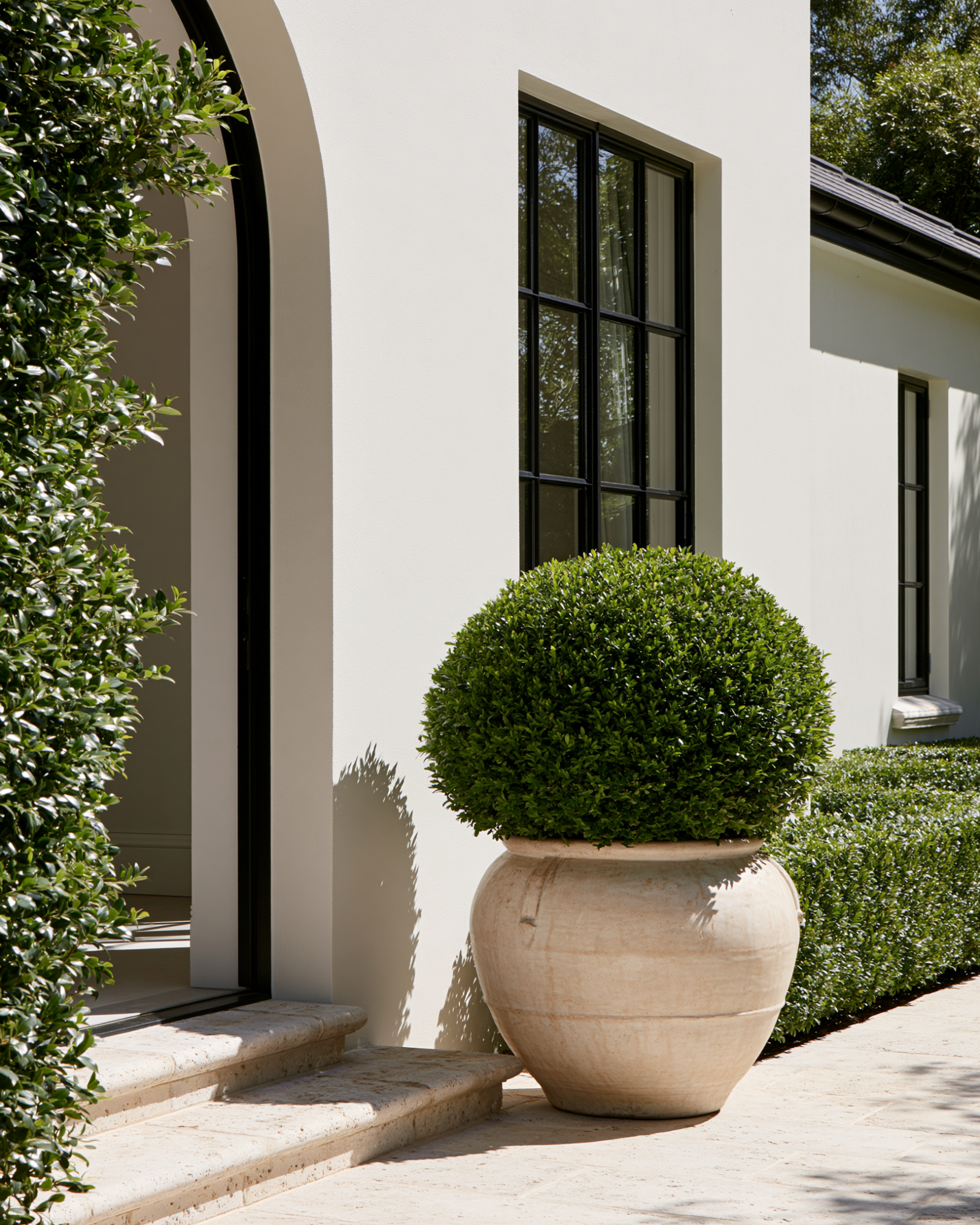
Type: Structural Foliage
Buxus sempervirens English Box Topiary Balls

Type: Hedging and Screening Trees
Rhaphiolepis indica 'Oriental Pearl'
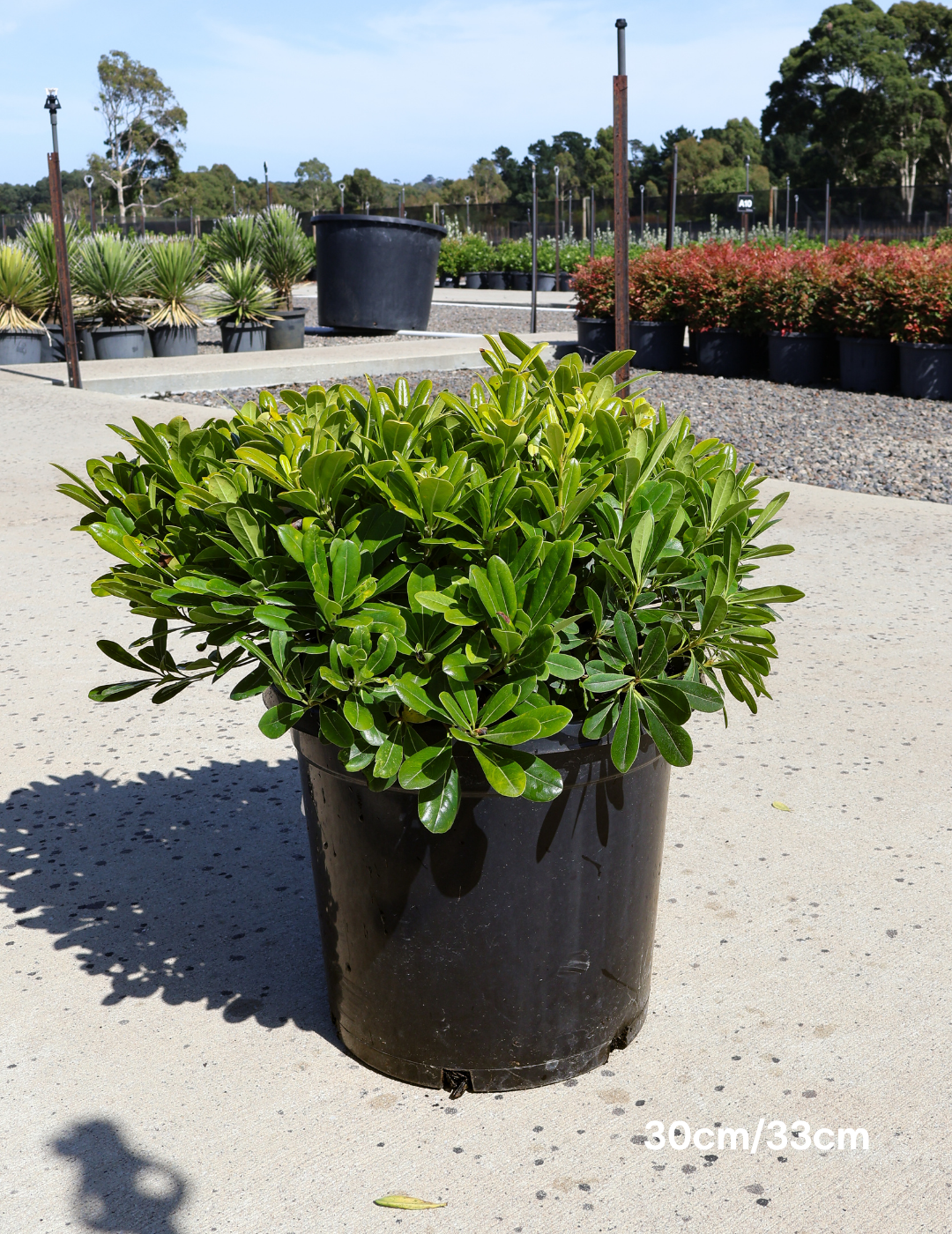
Type: Hedging and Screening Trees
Pittosporum tobira 'Miss Muffet'

Type: Hedging and Screening Trees
Acmena smithii 'Sublime' Lilly Pilly
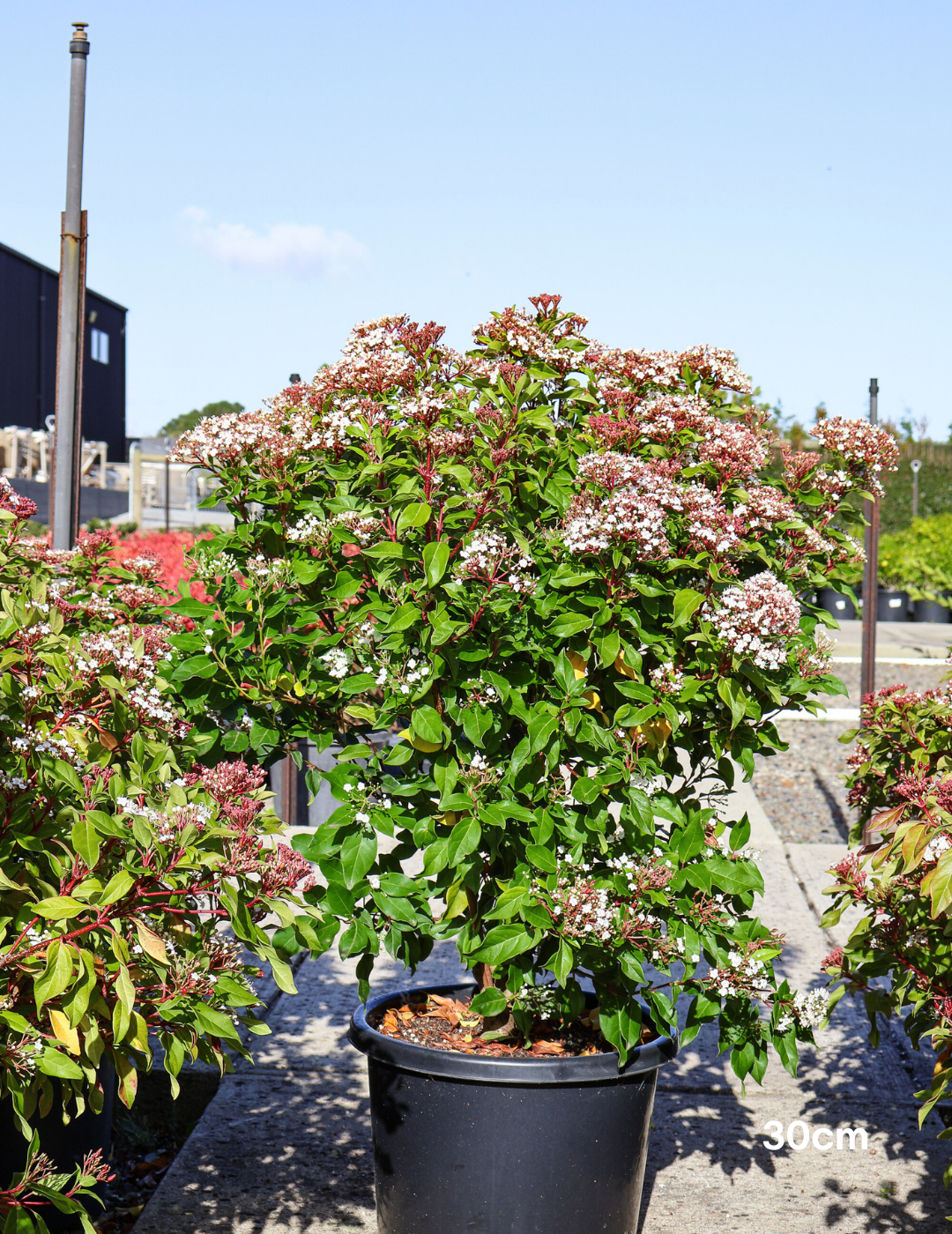
Type: Hedging and Screening Trees
Viburnum tinus
Uses in my Garden
Uses in my Garden
Banksia ericifolia works in an:
Is Banksia ericifolia Evergreen or Deciduous?
Is Banksia ericifolia Evergreen or Deciduous?
Banksia ericifolia is an Evergreen (foliage year round) Tree
Mature Height & Width
Mature Height & Width
Mature Height: 3m to 6m (approx.)
Mature Width: 2m to 5m
Banksia ericifolia is expected to grow 30cm to 50cm per year (approx.).
Growth Rate of Banksia ericifolia
Growth Rate of Banksia ericifolia
Banksia ericifolia is expected to grow 30cm to 50cm per year (approx.).
They are considered to have a:
Frost Tolerance & Ideal Climate to plant Banksia ericifolia
Frost Tolerance & Ideal Climate to plant Banksia ericifolia
Is Banksia ericifolia frost tolerant?
Banksia ericifolia is Frost Tolerant – Can handle light to moderate frost once established.
Does Banksia ericifolia Flower?
Does Banksia ericifolia Flower?
Banksia ericifolia produces large, upright orange to amber flower spikes from autumn through winter. These striking cylindrical blooms sit proudly above the fine, heath-like foliage, creating a bold seasonal display and adding strong colour when little else is flowering.
Does Banksia ericifolia flower?
Flowering Period:
Flower Type:
Flower Colour:
Yellow
Is Banksia ericifolia an Australian Native Tree?
Is Banksia ericifolia an Australian Native Tree?
Yes
Banksia ericifolia is Native to Eastern Australia, mainly coastal New South Wales and southern Queensland, where it grows in heathlands, sandstone soils, and coastal scrub.
What is the Wildlife Value of Banksia ericifolia ?
What is the Wildlife Value of Banksia ericifolia ?
Its nectar-rich flower spikes attract honeyeaters, native bees, butterflies and beetles, while the dense foliage provides shelter for small birds. The long flowering season also supports pollinators and contributes significantly to local biodiversity.
How much Sunlight does Banksia ericifolia need?
How much Sunlight does Banksia ericifolia need?
Banksia ericifolia will thrive best in:
Preferred Soil?
Preferred Soil?
Banksia ericifolia performs best in well-drained sandy or loam soils and prefers slightly acidic conditions. It is highly sensitive to poor drainage and can struggle in heavy clay unless significantly improved with organic matter and coarse sand to enhance aeration. Keep soil evenly moist during establishment, then reduce watering as it matures and develops strong drought resilience.
Is Banksia ericifolia Drought Tolerant?
Is Banksia ericifolia Drought Tolerant?
Is Banksia ericifolia Drought tolerant?
As a young tree it needs regular watering, but once established Banksia ericifolia develops excellent drought tolerance. It thrives in dry, sandy and coastal conditions and maintains its distinctive form with minimal supplementary watering.

Planting Information
How To Plant Your Banksia ericifolia
How To Plant Your Banksia ericifolia
Recommended Planting Spacing For Your Banksia ericifolia
Recommended Planting Spacing For Your Banksia ericifolia
Banksia ericifolia is expected to grow 30cm to 50cm per year (approx.).
Long Term Care For Your Banksia ericifolia
Long Term Care For Your Banksia ericifolia
Planting Your Banksia ericifolia in Different Soil
Planting Your Banksia ericifolia in Different Soil
Frequently Asked Questions
Frequently Asked Questions