- Mature height
- 6m to 10m
- Mature width
- 3m to 6m
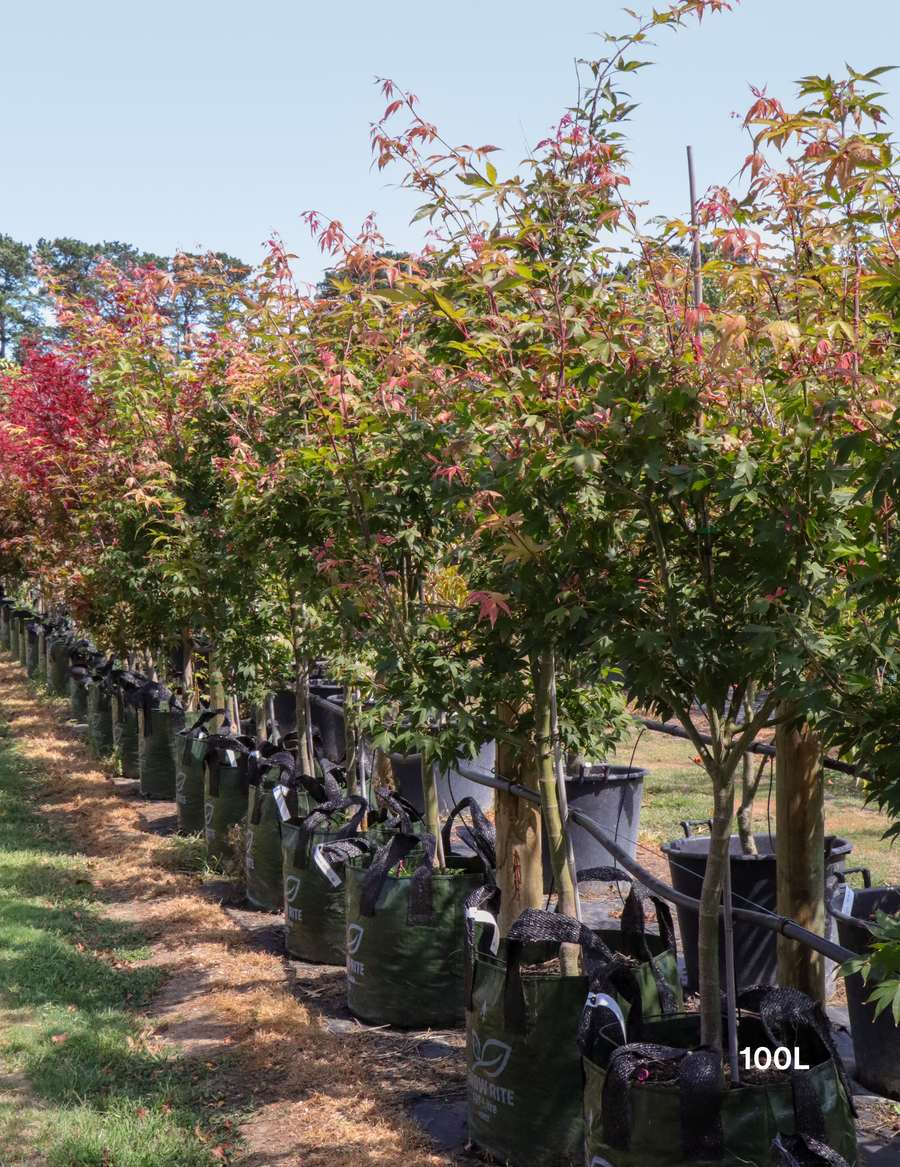
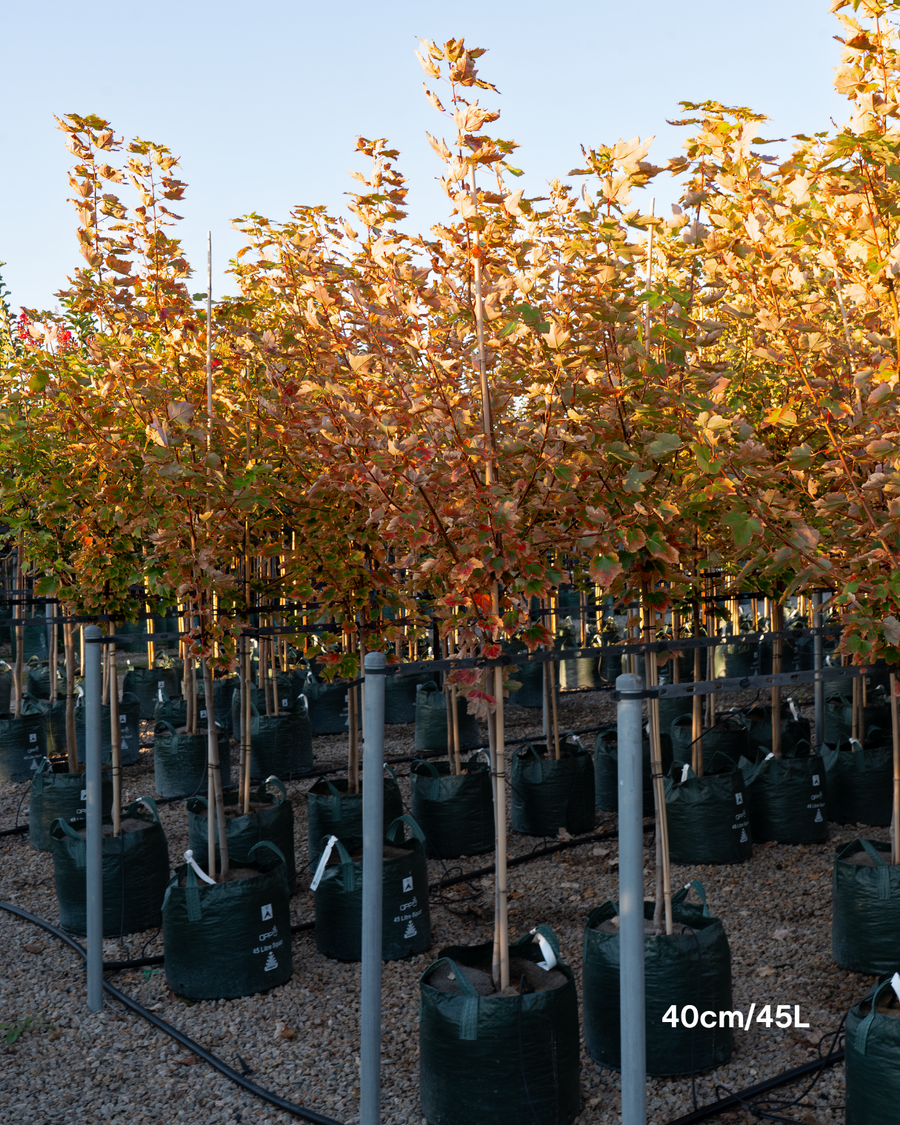
Acer japonicum 'Vitifolium', long sold as Acer vitifolium or grape-leaved maple, is a broad, upright deciduous tree. The large rounded leaves are cut into many shallow lobes, giving them the look of a vine leaf. Green through summer, they turn a mix of yellow, orange and deep red in autumn.
Part shade or filtered light suits it, though it takes full sun in cool districts with reliable moisture. It wants a deep, humus rich, free draining soil and shelter from hot dry wind. Growth is moderate, near 40 to 60 centimetres a year. Frost hardy and at its best in cool temperate regions.
The open branching and soft canopy suit parks, woodland style gardens, large residential blocks and sheltered courtyards. It reads well underplanted with ferns or shade tolerant groundcovers. Where a client wants strong autumn colour and a leaf shape that is not the usual maple outline, this is a straightforward answer.
Frequently Asked Questions
About Grape-leaved Maple
What is grape-leaved maple?
Grape-leaved maple is a broad deciduous tree correctly known as Acer japonicum Vitifolium and commonly listed as Acer vitifolium. The large rounded leaves are cut into many shallow lobes and look much like a vine leaf. Green through summer, they turn yellow, orange and deep red in autumn. Small yellow flowers appear in spring.
How big does grape-leaved maple grow?
It reaches 6 to 10 metres in height and 3 to 6 metres across at maturity, with an upright habit and an open branching pattern. It is narrower than most shade maples of similar height, so it fits into larger residential gardens and park beds where a spreading canopy would not work.
Is grape-leaved maple evergreen or deciduous?
Deciduous. The tree carries fresh green foliage from spring through summer, colours strongly in autumn, then drops its leaves and stands bare through winter. The open branch framework is attractive in its own right during dormancy, and the leaf drop lets winter light through to plantings underneath.
When does the autumn colour appear?
Autumn colour develops from about April into May across southern Australia, later in warmer districts and earlier in the highlands. The display runs through yellow and orange to deep red, often with several colours on the tree at once. Cool nights and a bright open aspect give the strongest result.
Does grape-leaved maple need sun or shade?
Part shade or filtered light suits it in most Australian gardens. It will take full sun in cool districts where soil moisture is reliable, but the large leaves burn in hot dry wind and exposed western positions. Shelter matters more than shade, so a protected site with morning sun is the ideal.
Is grape-leaved maple frost tolerant?
Yes, it is fully frost hardy once established and handles cold winters without difficulty. Cold weather is in fact what drives the autumn display. Late frosts can nip soft spring growth in exposed sites, so a position with some overhead shelter helps in frost prone valleys and hollows.
How do I care for grape-leaved maple?
Plant into deep, humus rich, free draining soil and mulch generously. Water deeply through the first two or three summers, and during extended dry spells after that. Feed in early spring with a slow release fertiliser. Prune only in late winter to take out dead or crossing branches, as the natural form needs little shaping.