



Skip to content

Volume Discounts Apply At Checkout

Best Trees for Creating a Meditation Space: 5 Calm, Layered Picks for Quiet Gardens

Best Trees for Creating a Meditation Space: 5 Calm, Layered Picks for Quiet Gardens

Five trees that turn the garden into a quiet retreat. Japanese Maple, Saucer Magnolia, Forest Pansy, Bay and Camellia sasanqua.

bay treecamelliacercisjapanese maplemagnoliameditation gardenzen garden

A meditation space asks for restraint. Calm, layered, quiet planting. Soft foliage that filters light, sculptural forms that hold the eye without demanding it, and a sense of stillness that the wrong plants disrupt with busy colour or texture. The five picks below are chosen for one outcome: visual quiet that supports stillness.

Acer palmatum (Japanese Maple) is the sculptural deciduous centrepiece, with layered horizontal canopy that filters dappled light. Dicksonia antarctica (Soft Tree Fern) adds the ancient native vertical with prehistoric-looking fronds and a calm dark trunk. Magnolia 'Teddy Bear' is the plush evergreen Magnolia, with bronze-backed leaves that move quietly in the breeze. Cycas revoluta (Sago Palm) brings sculptural symmetrical form and the meditative slow growth of one of the oldest living plant lineages. Japanese Box Topiary Balls deliver tight sculptural punctuation, the small rounded forms that anchor a stone-and-moss palette.

The criteria below explain layering, water and sound design, the choice of evergreen versus deciduous, and the palette restraint a meditation space depends on.

How to choose a tree for a meditation space

Restraint over abundance
A meditation space wants the smallest palette of species you can get away with. Three to five carefully chosen plants in deliberate positions beat a busy mixed planting every time. Use Acer palmatum as the single feature, then layer in two or three of Dicksonia, Cycas, Japanese Box balls and Teddy Bear as quiet support.
Calm leaf signature
Choose leaves that move quietly. Acer palmatum carries the most refined sculptural leaf at courtyard scale. Dicksonia brings prehistoric fronds. Avoid loud variegation or busy colour, which break the meditative palette.
Sound design
Add water (a simple bowl or stone basin) and choose plants whose leaves catch breeze quietly. Acer palmatum and Dicksonia are particularly graceful in light wind. Gravel or stone underfoot adds quiet crunch and reads as Japanese garden.
Evergreen versus deciduous
A meditation space benefits from at least one evergreen anchor (Teddy Bear, Japanese Box, Sago Palm) so the space holds structure through winter. The deciduous picks (Acer palmatum) bring seasonal interest without overwhelming.
Underplanting and ground treatment
Moss, Mondo grass, fine gravel and a single significant stone are the traditional Japanese ground treatments. Avoid lawn, which reads as recreational rather than contemplative. Mass-plant moss or Mondo grass under the Acer palmatum for the cleanest meditative composition.
Position relative to the home
Place the meditation space where it is visible from a quiet room and accessible by a short walk through the rest of the garden. Build a slow approach with a paved path or stepping stones so arrival feels intentional.

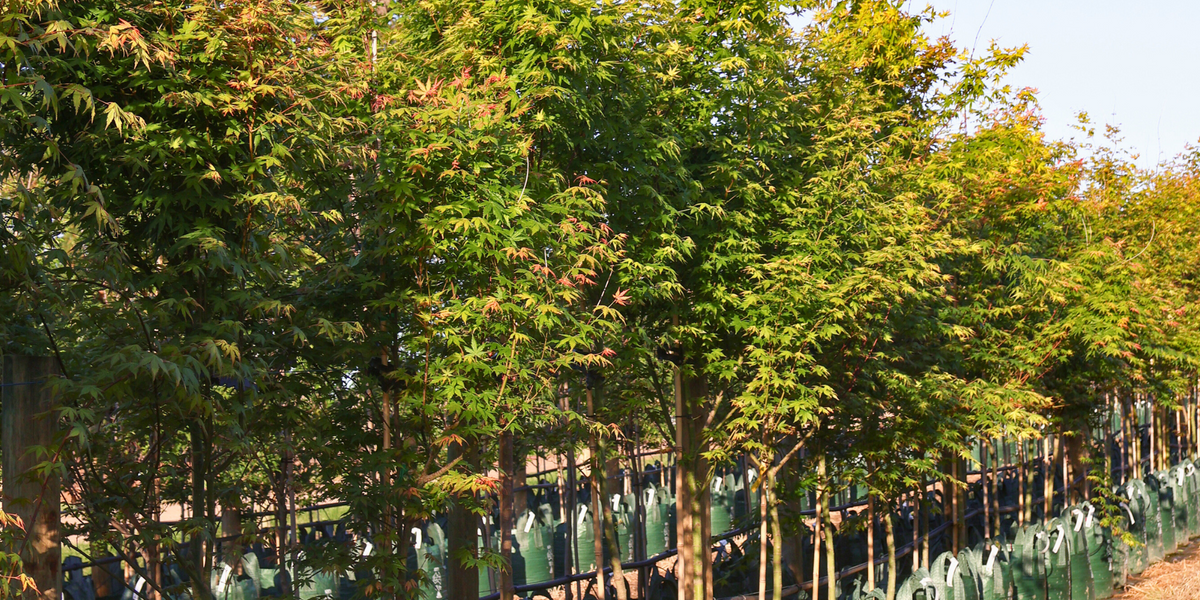
1. Acer palmatum (Japanese Maple)

The classic meditation garden tree. Delicate foliage and layered branching.

Type
Deciduous tree
Height
4-6m
Width
3-4m
Growth rate
Slow to moderate
Foliage
Palmate, brilliant autumn colour
Form
Layered, open
Conditions
Part shade, sheltered, well-drained soil
Maintenance
Low.
Best for
Meditation gardens, zen courtyards, focal points

Why choose it

Soft dappled shade and quiet form invite reflection. The signature meditation garden tree.

Perfect pair

Pair Acer palmatum with a Camellia sasanqua hedge for layered meditation structure.

Tips for planting

Shelter from drying winds. Mulch heavily. Water through summer.

Quiet drama, made for stillness.

Shop Acer palmatum

2. Magnolia x soulangeana (Saucer Magnolia)

Deciduous magnolia with huge spring blooms that arrive on bare branches.

Type
Deciduous tree
Height
5-7m
Width
4-5m
Growth rate
Moderate
Foliage
Mid-green oval leaves
Flowers
Huge pink and white spring blooms
Form
Spreading
Conditions
Full sun to part shade, well-drained acidic soil
Maintenance
Low.
Best for
Meditation focal points, spring drama

Why choose it

Slow ceremonial bloom unfurling marks the seasons in a meditation garden.

Perfect pair

Pair Saucer Magnolia with a Camellia hedge for layered seasonal blooms.

Tips for planting

Mulch heavily. Shelter from wind. Water through summer.

Spring meditation in bloom.

Shop Magnolia x soulangeana

3. Cercis canadensis 'Forest Pansy' (Forest Pansy)

Compact deciduous tree with heart-shaped purple foliage. Calming colour for reflection spaces.

Type
Deciduous tree
Height
5-7m
Width
4-5m
Growth rate
Moderate
Foliage
Heart-shaped burgundy purple
Flowers
Pink pea-flowers in early spring
Form
Spreading, rounded
Conditions
Full sun to part shade, well-drained soil
Maintenance
Low.
Best for
Meditation feature trees, quiet courtyards

Why choose it

Heart-shaped leaves bring symbolism into the meditation space. Purple foliage settles the eye.

Perfect pair

Pair Forest Pansy with an Acer palmatum for layered meditation structure.

Tips for planting

Plant in autumn. Mulch heavily. Water through summer.

Heart-shaped quiet.

Shop Cercis canadensis 'Forest Pansy'

4. Laurus nobilis (Bay Tree)

Mediterranean evergreen for crisp meditation garden structure.

Type
Evergreen tree
Height
5-8m (can be pruned to desired height)
Width
3-4m
Growth rate
Slow
Foliage
Dark green leathery aromatic
Form
Upright, clipped
Conditions
Full sun to part shade, drought tolerant
Maintenance
Low.
Best for
Formal meditation gardens, topiary structure

Why choose it

Aromatic leaves release scent when brushed. Slow growth means quiet permanence.

Perfect pair

Pair Bay topiary with a Magnolia Saucer for meditation contrast.

Tips for planting

Mulch with bark. Trim spring and autumn. Water through year one.

Aromatic stillness.

Shop Laurus nobilis

5. Camellia sasanqua 'Setsugekka' (Setsugekka Camellia)

Evergreen camellia with semi-double white blooms through late autumn and winter.

Type
Evergreen shrub
Height
3-4m
Width
2-3m
Growth rate
Slow to moderate
Foliage
Glossy dark green
Flowers
Large semi-double white blooms late autumn to winter
Form
Upright, dense
Conditions
Part shade, well-drained acidic soil
Maintenance
Low.
Best for
Meditation gardens, winter flowering, quiet hedges

Why choose it

Petals drop slowly across days, marking time in meditation. White blooms in winter when stillness deepens.

Perfect pair

Pair Setsugekka hedge with an Acer palmatum for layered meditation structure.

Tips for planting

Plant in part shade. Mulch with bark. Water consistently.

Winter blooms for quiet practice.

Shop Camellia sasanqua 'Setsugekka'

Compare at a glance

CultivarHeightWidthFormFoliageBest if you…
Acer palmatum
Japanese Maple
4-6m3-4mLayered, openPalmate, brilliant autumn colourMeditation gardens, zen courtyards, focal points
Magnolia x soulangeana
Saucer Magnolia
5-7m4-5mSpreadingMid-green oval leavesMeditation focal points, spring drama
Cercis canadensis 'Forest Pansy'
Forest Pansy
5-7m4-5mSpreading, roundedHeart-shaped burgundy purpleMeditation feature trees, quiet courtyards
Laurus nobilis
Bay Tree
5-8m (can be pruned to desired height)3-4mUpright, clippedDark green leathery aromaticFormal meditation gardens, topiary structure
Camellia sasanqua 'Setsugekka'
Setsugekka Camellia
3-4m2-3mUpright, denseGlossy dark greenMeditation gardens, winter flowering, quiet hedges

How to plant and care for them

Plant the Acer palmatum first
The feature tree position is the most important decision. Place it where you will look at it most often and where it sits in the most graceful natural light.
Layer the supporting plants outward
Work outward from the Acer palmatum, placing supporting plants in odd numbers (one, three or five). Avoid even numbers, which read as symmetrical and formal rather than meditative.
Improve soil before planting
Acer palmatum and Magnolia prefer slightly acid, consistently moist soil. Add compost to the planting hole. For Dicksonia, build a moist organic-rich pocket of soil; never let the trunk dry out.
Mulch with moss, gravel or fine bark
Moss is the most authentic ground treatment for Acer palmatum. Fine bark or coarse gravel suits the rest of the composition. 75mm depth.
Water consistently year-round
Acer palmatum, Dicksonia and Teddy Bear prefer consistent moisture. Cycas revoluta tolerates dryness once established.
Light shape only
Japanese Box balls need two light clips a year. The other picks need almost no pruning beyond the removal of dead foliage. A meditation space is the wrong place for heavy intervention.

Frequently asked questions

Container options?
Acer palmatum and Bay.
Sunlight?
Most prefer part shade.
Maintenance?
Low. Annual prune and mulching.

The wrap up

Five calm, layered picks for a meditation garden: Acer palmatum as the sculptural centrepiece, Dicksonia for ancient vertical fronds, Teddy Bear Magnolia for evergreen anchor, Cycas revoluta for symmetrical sculptural form, and Japanese Box topiary balls for quiet punctuation. The guide explains palette restraint, leaf signature, sound design and the right ground treatment.