

Pyrus calleryana 'Aristocrat'
Pyrus calleryana 'Aristocrat'
Couldn't load pickup availability
Current Stock Height Guides
Current Stock Height Guides
Height guide disclaimer: Height ranges are approximate only. As living products, plant heights naturally vary between individual plants, batches, and seasons. No guarantee is given that supplied plants will fall within the stated range. If minimum heights are required, you mustconfirm current batch heights with Evergreen Trees Direct prior to purchase. Variation in height is normal and is not grounds for return, refund, replacement, or compensation.
Mature Height & Width
Mature Height & Width
Mature Height: 10m to 14m (approx.)
Mature Width: 6m to 9m
Pyrus calleryana 'Aristocrat' is expected to grow 30cm to 60cm (moderate) (approx.).
Root Ball Dimensions
Root Ball Dimensions
Use this as a reference when digging your planting hole. We recommend digging at least 10% wider than the dimensions below to encourage strong root development.
- 30cm Pot: 33cm (W) × 30cm (D)
- 40cm/45L Pot: 44cm (W) × 41.5cm (D)
- 50cm Pot / 70L Pot: 55cm (W) × 41.8cm (D)
- 100L Bag: 50.6cm (W) × 52.8cm (D)
- 150L Bag: 66cm (W) × 55cm (D)
- 200L Bag: 71.5cm (W) × 60.5cm (D)
- 300L Bag: 88cm (W) × 63.8cm (D)
- 400L Bag: 99cm (W) × 66cm (D)
- 500L Bag: 122cm (W) × 66cm (D)
- 750L Bag: 134cm (W) × 69cm (D)
- 1000L Bag: 146.3cm (W) × 71.5cm (D)
- 2000L Bag: 176cm (W) × 82.5cm (D)
Trade
Trade
We supply advanced trees to landscapers, developers, architects, and councils Australia-wide. Trade clients receive fast quotes, expert advice, and access to premium stock with reliable freight.
Shipping
Shipping
Shipping is calculated at checkout based on the pallet space your order occupies in the truck and your delivery location.
There is no charge to calculate your freight.
Contact
Contact
Have a question or a list to send through to us?
Email: sales@evergreentrees.com.au
Phone: (03) 7042 3318
Share this product
About Your New Pyrus calleryana 'Aristocrat'
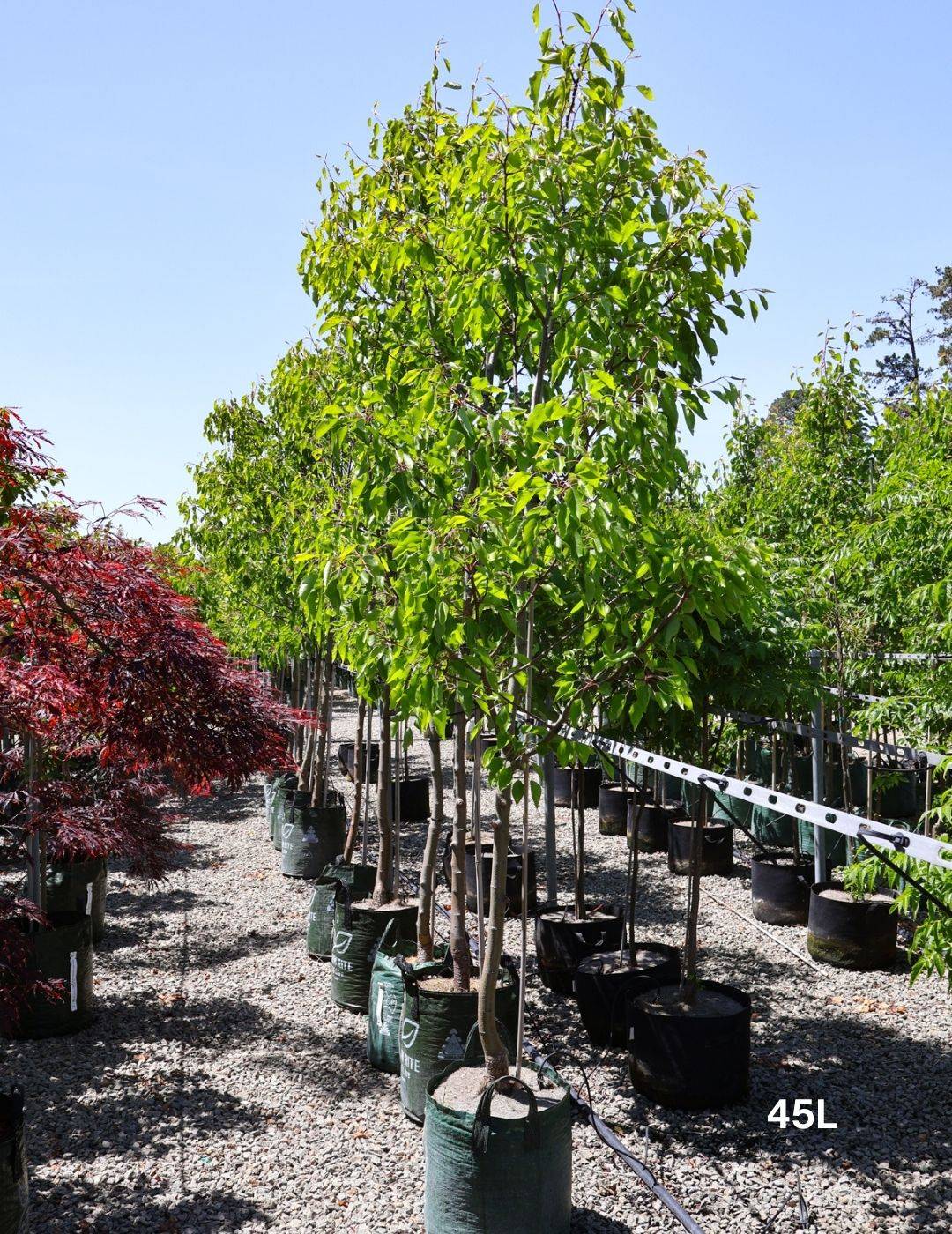
Pyrus calleryana 'Aristocrat' is a deciduous ornamental pear with a broadly pyramidal crown and evenly spaced, near horizontal branching. White blossom smothers the tree in spring, followed by glossy dark green leaves that hold late and finish the season in red and burgundy. The wide branch angles give it better limb strength than older callery selections.
Full sun to part shade, most soil types, and real tolerance of compacted city ground, heat, wind and frost. Growth is moderate at 30 to 60 centimetres a year. It performs across cool and warm temperate Australia, from Melbourne and Canberra through to inland New South Wales, and is drought hardy once the root system has spread.
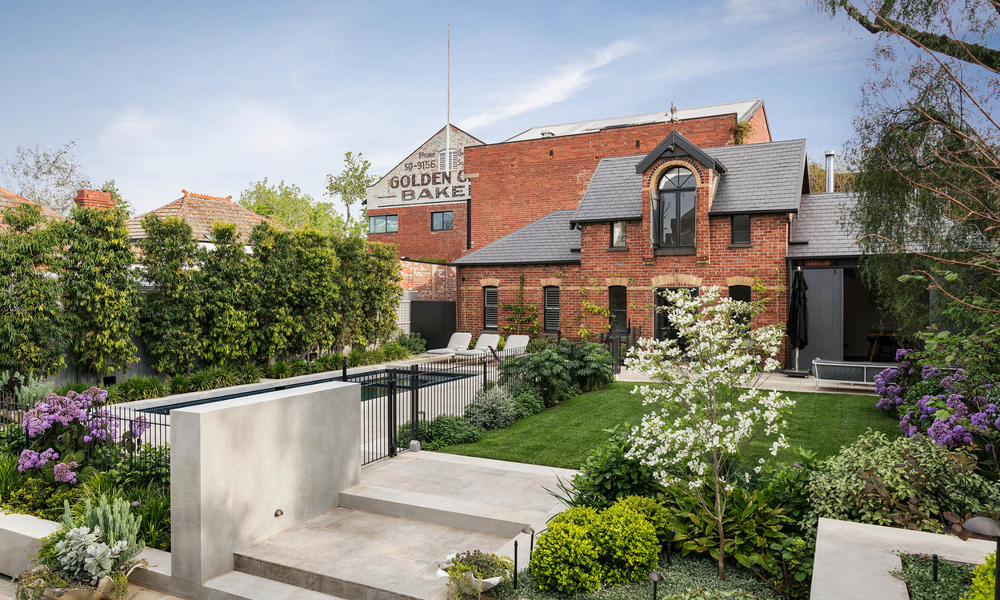
The dependable shape and 6 to 9 metre spread make it a standard street and avenue tree, and it holds its own as a feature in larger gardens and civic planting. It handles the narrow verges and hard surfaces that kill less adaptable species. Where a uniform line of trees is the brief, this one delivers it.
Frequently Asked Questions
About Aristocrat Pear
What is Pyrus calleryana 'Aristocrat'?
Aristocrat is a cultivar of the callery pear, a deciduous ornamental tree grown for spring blossom, glossy summer foliage and late autumn colour. It was selected for its broad branch angles and open pyramidal crown, which make it structurally sounder than earlier callery pear cultivars. The small fruit is decorative only and not eaten.
How big does an Aristocrat Pear grow?
Mature size is 9 to 15 metres tall and 6 to 9 metres wide, with the taller figures reached on deep soils with good water and the lower end more typical of street plantings in restricted soil. It is a large tree at maturity, so match it to the site rather than to the size in the pot.
How far apart should Aristocrat Pears be planted in an avenue?
For a formal avenue, space them at 6 to 8 metres so the canopies meet without crowding at maturity. Tighter spacing of 5 metres closes the line faster and is sometimes used on long driveways, at the cost of some crown distortion later. Keep the planting line at least 3 metres clear of buildings and boundary fences.
When does it flower and when does it colour?
Blossom comes in spring, generally September into October, opening as a dense white cover just before and with the first leaves. Autumn colour arrives late, often May and into June, and runs through red, burgundy and purple. In warmer coastal districts the autumn display is shorter and less intense than in cold inland gardens.
Is it drought and frost tolerant?
Both, once established. It handles hard frost through winter dormancy without damage, which suits Canberra, the tablelands and inland Victoria. It also tolerates extended dry periods and hot exposed sites, though growth slows and autumn colour is weaker in a dry season. Regular deep watering for the first two years builds that resilience.
Is it suitable for street planting near paving?
It is one of the more commonly specified street trees in southern Australia for exactly this reason. It tolerates compacted soil, restricted root volume, reflected heat and wind, and its roots are not notably aggressive. Give it the largest soil volume the site allows and use root barriers where the tree sits tight against new footpaths.
How do I prune and care for it?
Prune in the first few years to a single central leader and lift the canopy to the clearance you need, then keep intervention minimal. Remove dead, crossing or rubbing limbs in late winter. Water deeply while establishing, mulch out to the drip line, and feed lightly in spring if growth on a hard site looks slow.
Evergreen Trees Direct Has Been Featured In:


Plant Your Pyrus calleryana 'Aristocrat' With:


Type: Garden Supplies
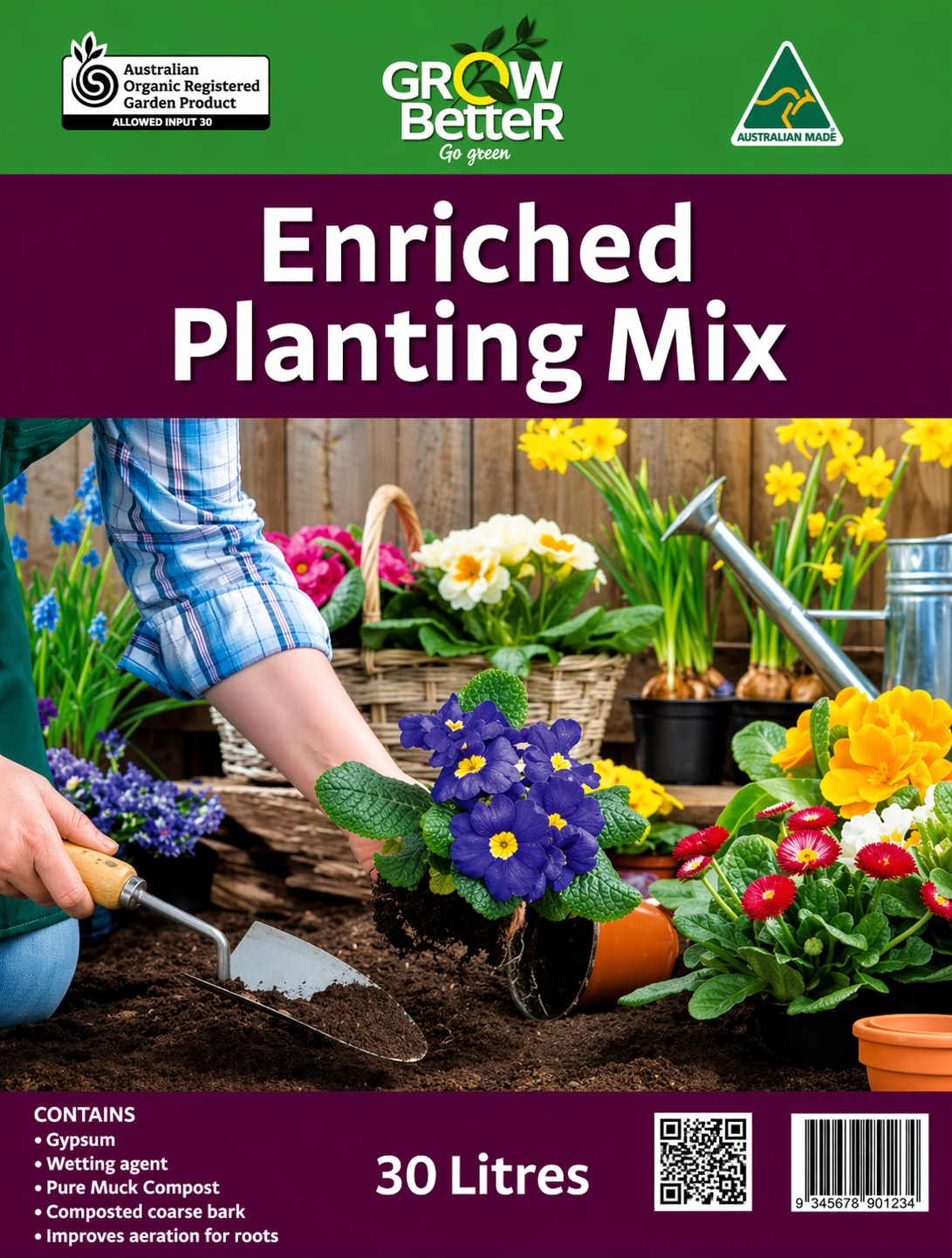
Enriched Planting Mix (AO Certified)
Type: Structural Foliage
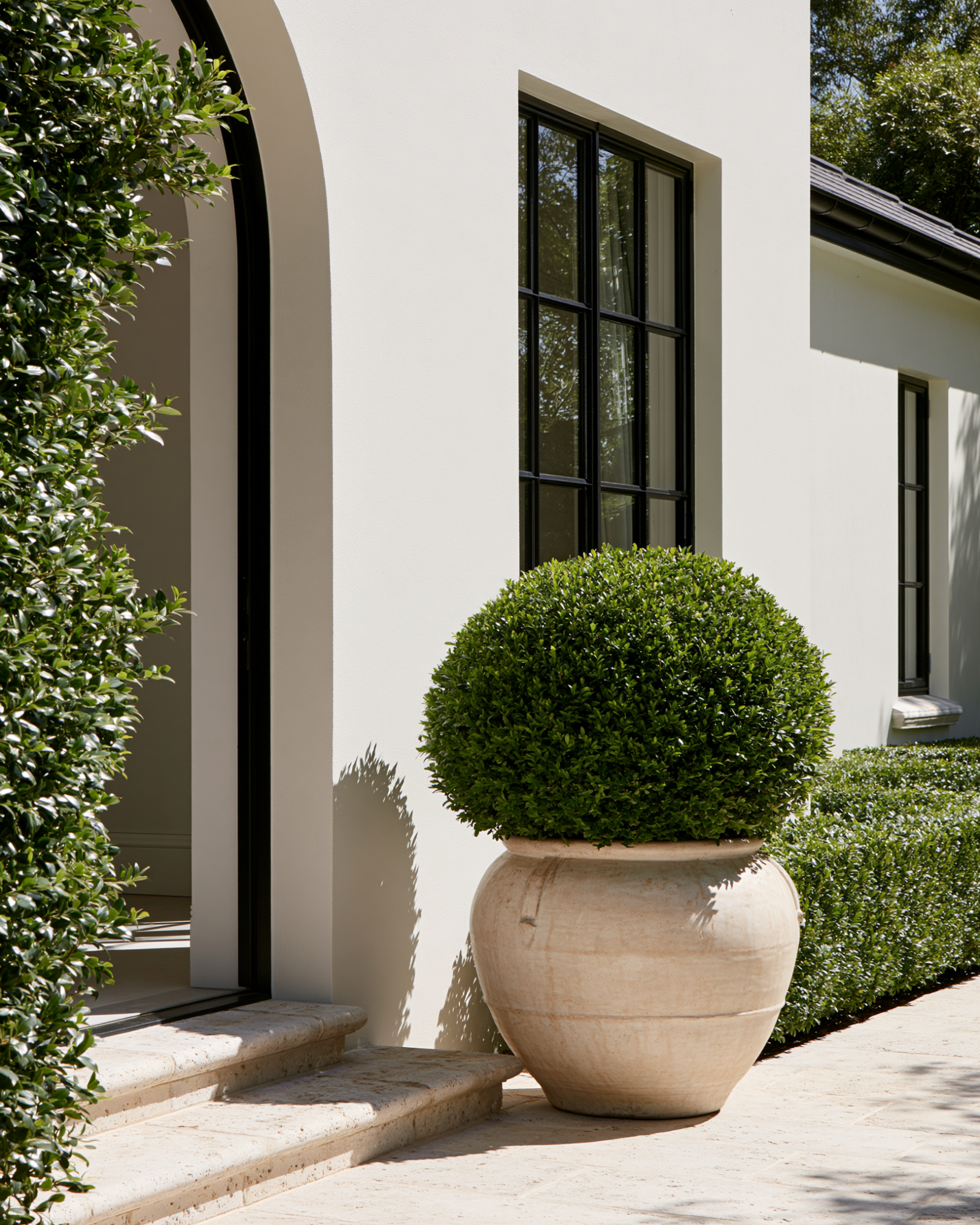
Buxus sempervirens English Box Topiary Balls

Type: Hedging and Screening Trees
Camellia sasanqua 'Setsugekka'

Type: Hedging and Screening Trees
Pittosporum tenuifolium 'Silver Sheen'
Type: Hedging and Screening Trees
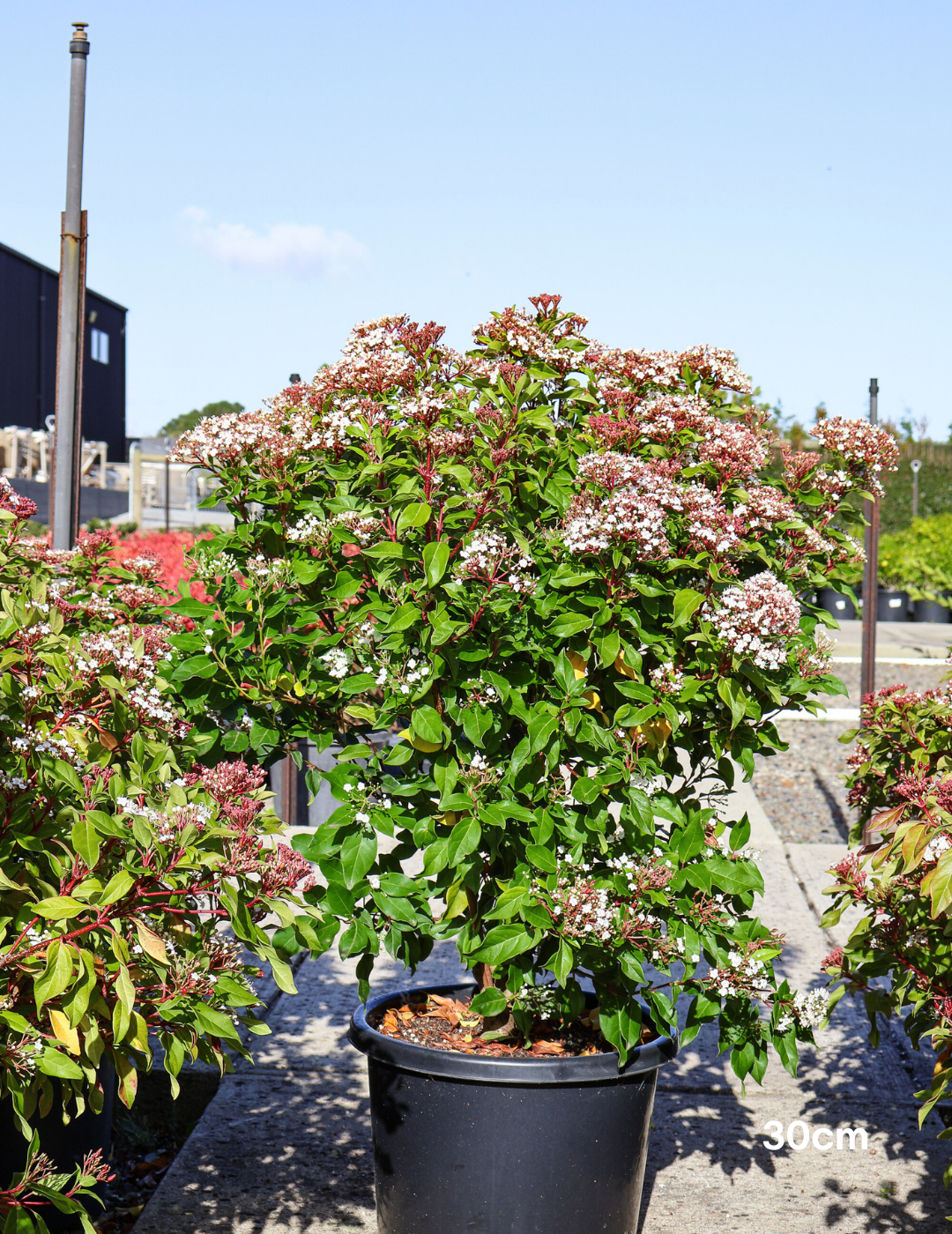
Viburnum tinus


Type: Hedging and Screening Trees
Rhaphiolepis indica 'Snow Maiden'
Uses in my Garden
Uses in my Garden
Pyrus calleryana 'Aristocrat' works in an:
Is Pyrus calleryana 'Aristocrat' Evergreen or Deciduous?
Is Pyrus calleryana 'Aristocrat' Evergreen or Deciduous?
Pyrus calleryana 'Aristocrat' is an Deciduous (Defoliates throughout colder months) Tree
Mature Height & Width
Mature Height & Width
Mature Height: 10m to 14m (approx.)
Mature Width: 6m to 9m
Pyrus calleryana 'Aristocrat' is expected to grow 30cm to 60cm (moderate) (approx.).
Growth Rate of Pyrus calleryana 'Aristocrat'
Growth Rate of Pyrus calleryana 'Aristocrat'
Pyrus calleryana 'Aristocrat' is expected to grow 30cm to 60cm (moderate) (approx.).
They are considered to have a:
Frost Tolerance & Ideal Climate to plant Pyrus calleryana 'Aristocrat'
Frost Tolerance & Ideal Climate to plant Pyrus calleryana 'Aristocrat'
Is Pyrus calleryana 'Aristocrat' frost tolerant?
Pyrus calleryana 'Aristocrat' is Frost Hardy – Survives heavy and frequent frost without damage.
Does Pyrus calleryana 'Aristocrat' Flower?
Does Pyrus calleryana 'Aristocrat' Flower?
Pyrus calleryana ‘Aristocrat’ produces masses of pure white, five-petalled blossoms in early spring. The rounded, open flower clusters cover the tree before or as the new leaves appear, creating a bright, showy display that welcomes the start of the season.
Does Pyrus calleryana 'Aristocrat' flower?
Flowering Period:
Flower Type:
Flower Colour:
White
Is Pyrus calleryana 'Aristocrat' an Australian Native Tree?
Is Pyrus calleryana 'Aristocrat' an Australian Native Tree?
No
Pyrus calleryana 'Aristocrat' is Native to Native to China and Vietnam, where Pyrus calleryana grows naturally. ‘Aristocrat’ is a cultivar selected for its strong branching structure and improved ornamental display.
What is the Wildlife Value of Pyrus calleryana 'Aristocrat' ?
What is the Wildlife Value of Pyrus calleryana 'Aristocrat' ?
Its abundant spring blossoms attract bees and beneficial pollinators. The small autumn fruits are eaten by birds, while the dense branching offers shelter, roosting and seasonal nesting opportunities, supporting biodiversity in parks, avenues and larger gardens.
How much Sunlight does Pyrus calleryana 'Aristocrat' need?
How much Sunlight does Pyrus calleryana 'Aristocrat' need?
Pyrus calleryana 'Aristocrat' will thrive best in:
Preferred Soil?
Preferred Soil?
Pyrus calleryana ‘Aristocrat’ performs best in well-drained loam or sandy loam soils and tolerates slightly acidic to slightly alkaline conditions. It adapts well to poorer, compacted and urban soils but may still struggle in heavy, waterlogged ground unless improved with organic matter and coarse material to increase drainage. Keep soil evenly moist during establishment, then transition to deep, occasional watering as the tree matures to support drought resilience, a strong root system and reliable seasonal flowering.
Is Pyrus calleryana 'Aristocrat' Drought Tolerant?
Is Pyrus calleryana 'Aristocrat' Drought Tolerant?
Is Pyrus calleryana 'Aristocrat' Drought tolerant?
As a young tree it requires regular watering, but once established ‘Aristocrat’ offers good drought tolerance. Hardy, adaptable and fast-growing, it performs reliably in warm, dry, exposed and urban settings, maintaining a broad, symmetrical canopy with only occasional deep watering during extended dry spells.

Planting Information
How To Plant Your Pyrus calleryana 'Aristocrat'
How To Plant Your Pyrus calleryana 'Aristocrat'
Recommended Planting Spacing For Your Pyrus calleryana 'Aristocrat'
Recommended Planting Spacing For Your Pyrus calleryana 'Aristocrat'
Pyrus calleryana 'Aristocrat' is expected to grow 30cm to 60cm (moderate) (approx.).
Long Term Care For Your Pyrus calleryana 'Aristocrat'
Long Term Care For Your Pyrus calleryana 'Aristocrat'
Planting Your Pyrus calleryana 'Aristocrat' in Different Soil
Planting Your Pyrus calleryana 'Aristocrat' in Different Soil
Frequently Asked Questions
Frequently Asked Questions