Juglans nigra Black Walnut
Couldn't load pickup availability
Current Stock Height Guides
Height guide disclaimer: Height ranges are approximate only. As living products, plant heights naturally vary between individual plants, batches, and seasons. No guarantee is given that supplied plants will fall within the stated range. If minimum heights are required, you mustconfirm current batch heights with Evergreen Trees Direct prior to purchase. Variation in height is normal and is not grounds for return, refund, replacement, or compensation.
Mature Height & Width
Mature Height: 20m - 30m Approximately
Mature Width: 15 – 30 meters
Juglans nigra Black Walnut is expected to grow 40 – 60 cm per year (moderate to fast) .
Root Ball Dimensions (Height & Width)
Use this as a reference when digging your planting hole. We recommend digging at least 10% wider than the dimensions below to encourage strong root development.
- 30cm Pot: 33cm (W) × 30cm (D)
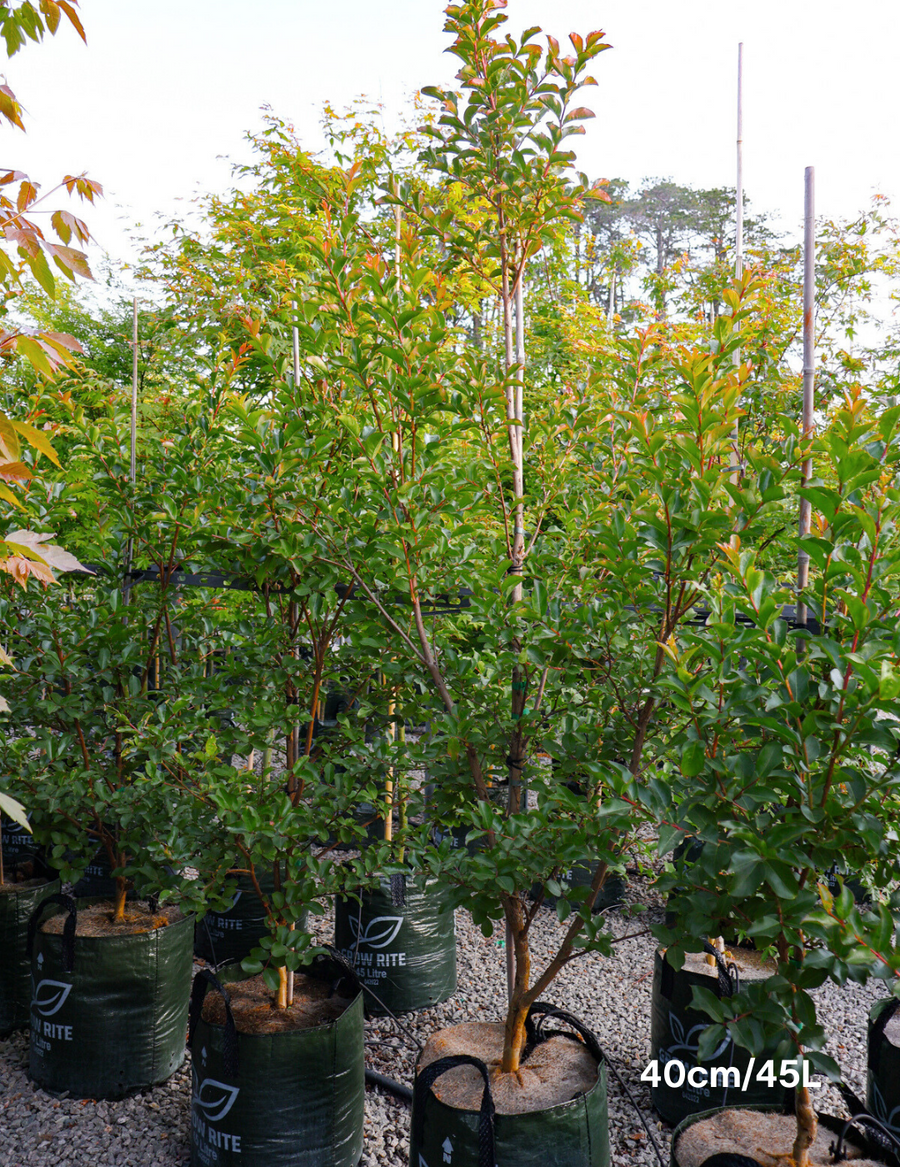
- 40cm/45L Pot: 44cm (W) × 41.5cm (D)
- 50cm Pot / 70L Pot: 55cm (W) × 41.8cm (D)
- 100L Bag: 50.6cm (W) × 52.8cm (D)
- 150L Bag: 66cm (W) × 55cm (D)
- 200L Bag: 71.5cm (W) × 60.5cm (D)
- 300L Bag: 88cm (W) × 63.8cm (D)
- 400L Bag: 99cm (W) × 66cm (D)
- 500L Bag: 122cm (W) × 66cm (D)
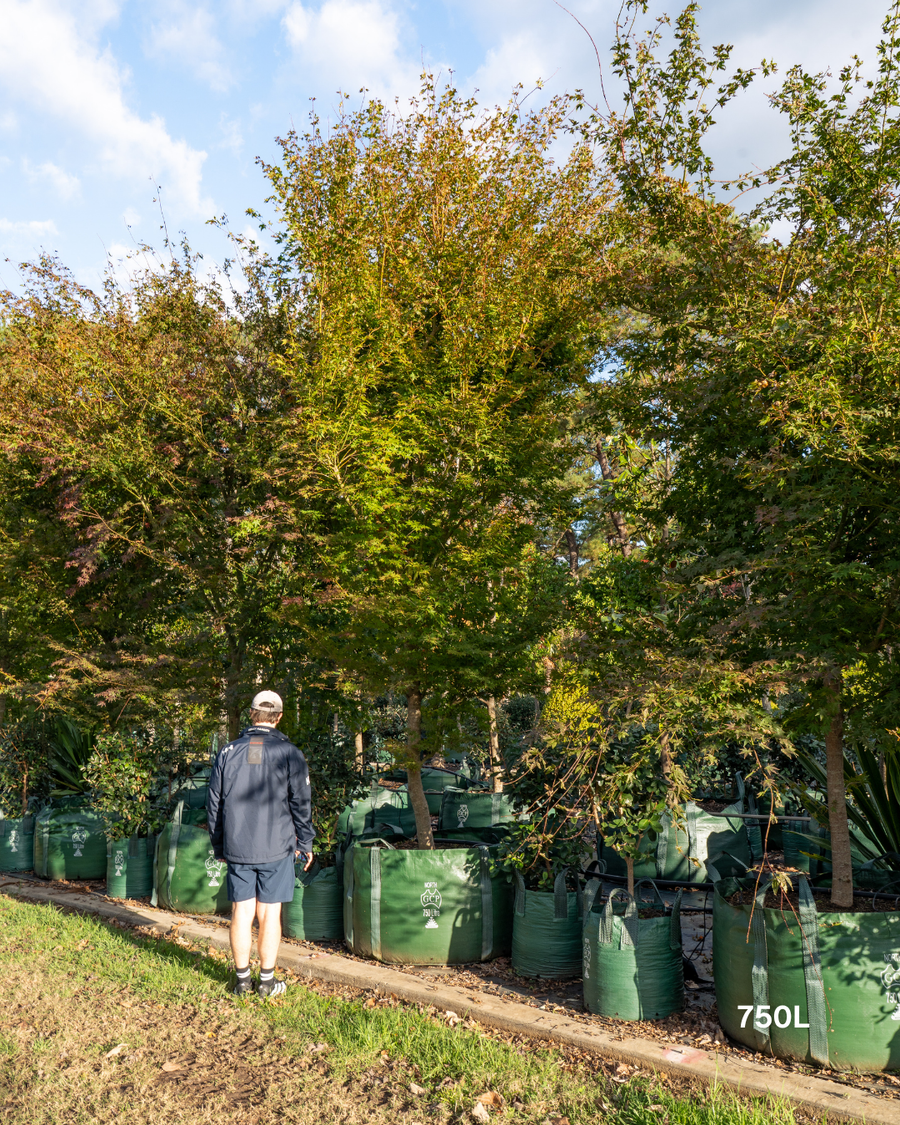
- 750L Bag: 134cm (W) × 69cm (D)
- 1000L Bag: 146.3cm (W) × 71.5cm (D)
- 2000L Bag: 176cm (W) × 82.5cm (D)
Trade Customers
Trade Customers
We supply advanced trees to landscapers, developers, architects, and councils Australia-wide. Trade clients receive fast quotes, expert advice, and access to premium stock with reliable freight.
Shipping Cost
Shipping Cost
Shipping is calculated at checkout based on the pallet space your order occupies in the truck and your delivery location.
There is no charge to calculate your freight.
Contact Us
Contact Us
Have a question or a list to send through to us?
Email: sales@evergreentrees.com.au
Phone: (03) 7042 3318
VOLUME DISCOUNTS
Discounts Apply Automatically At Checkout
Share this product
Evergreen Trees Direct Has Been Featured In:

About Your New Juglans nigra Black Walnut
Juglans nigra, the Black Walnut, is a majestic deciduous tree valued both for its exceptional timber and its stately presence in the landscape. Large pinnately compound leaves provide lush green shade through the warmer months, turning a clear yellow in autumn.
Black Walnut grows to 15-25 metres tall and wide, developing a rounded canopy on a straight trunk for a grand, stately form. It makes a magnificent shade tree for large gardens, rural properties, and parks. Trees produce edible walnuts with a rich distinctive flavour after several years.
Black Walnut performs best in cool to temperate regions including VIC, NSW, ACT, Tasmania, and elevated parts of SA and WA, in full sun with deep well-drained soil. It is drought tolerant once established and low maintenance. Note its roots release juglone, a natural compound that can inhibit some other plants nearby.
Frequently Asked Questions
About Juglans nigra Black Walnut
How tall does Black Walnut grow?
Juglans nigra grows to 15-25 metres tall and 12-18 metres wide with a broad rounded canopy.
How fast does Black Walnut grow?
Black Walnut is moderately fast-growing, adding 50-80cm per year once established.
Does Black Walnut produce edible nuts?
Yes. Juglans nigra produces edible walnuts with a rich, distinctive flavour, encased in a hard shell. Trees take several years to begin bearing.
Is Black Walnut deciduous?
Yes. Black Walnut is fully deciduous, with large compound leaves that turn yellow in autumn before dropping in winter.
Is Black Walnut suitable for residential gardens?
Black Walnut suits large gardens, rural properties, and parks due to its mature size. Note that its roots release juglone, a natural compound that can inhibit some other plants nearby.
Where does Black Walnut grow best in Australia?
Black Walnut performs best in cool to temperate regions including VIC, NSW, ACT, Tasmania, and elevated parts of SA and WA, in deep well-drained soil.
How far apart should I plant Black Walnut?
Plant 8-12 metres apart given the broad mature canopy, or as individual specimens with plenty of room.

Plant Your Juglans nigra Black Walnut With:
Type: Australian Native
Buxus bodinieri Shaggy Box Topiary Balls
Type: Structural Foliage
Buxus sempervirens English Box Topiary Balls
Type: Hedging and Screening Trees
Pittosporum tenuifolium 'Silver Sheen'
Type: Hedging and Screening Trees
Rhaphiolepis indica 'Oriental Pearl'
Type: Hedging and Screening Trees
Rhaphiolepis indica 'Snow Maiden'
Uses in my Garden
Uses in my Garden
Juglans nigra Black Walnut works in an:
Is Juglans nigra Black Walnut Evergreen or Deciduous?
Juglans nigra Black Walnut is an Deciduous (Defoliates throughout colder months) Tree
Mature Height & Width
Mature Height: 20m - 30m Approximately
Mature Width: 15 – 30 meters
Juglans nigra Black Walnut is expected to grow 40 – 60 cm per year (moderate to fast) .
Growth Rate of Juglans nigra Black Walnut
Juglans nigra Black Walnut is expected to grow 40 – 60 cm per year (moderate to fast) .
They are considered to have a:
Frost Tolerance & Ideal Climate to plant Juglans nigra Black Walnut
Is Juglans nigra Black Walnut frost tolerant?
Juglans nigra Black Walnut is Frost Hardy – Survives heavy and frequent frost without damage.
Does Juglans nigra Black Walnut Flower?
Juglans nigra produces long, greenish-yellow male catkins and small, inconspicuous female flowers in mid- to late spring. The blooms are subtle and largely hidden within the canopy, with the tree’s seasonal interest coming more from its bold foliage and developing walnuts than from its flowering display.
Does Juglans nigra Black Walnut flower?
Flowering Period:
Flower Type:
Flower Colour:
Not Applicable
Is Juglans nigra Black Walnut an Australian Native Tree?
No
Juglans nigra Black Walnut is Native to Eastern North America, from southern Canada through the United States, where it grows naturally in fertile, well-drained soils along river valleys and forests.
What is the Wildlife Value of Juglans nigra Black Walnut ?
Its highly nutritious walnuts provide food for birds and small mammals, while the broad, spreading canopy offers excellent nesting and shelter habitat for small birds. The textured bark supports insects and microfauna, and the leaf litter contributes to a rich woodland ecosystem beneath the tree.
How much Sunlight does Juglans nigra Black Walnut need?
Juglans nigra Black Walnut will thrive best in:
Preferred Soil?
Preferred Soil?
Juglans nigra performs best in deep, well-drained loam or sandy loam soils and prefers slightly acidic to neutral conditions. It may struggle in compacted clay or very shallow soils unless improved with organic matter to enhance drainage and root depth. Keep soil evenly moist during establishment, then provide deep, occasional watering as the tree matures to support strong structure, nut development and long-term vigour.
Is Juglans nigra Black Walnut Drought Tolerant?
Is Juglans nigra Black Walnut Drought tolerant?
As a young tree it requires regular watering, but once established Black Walnut develops moderate drought tolerance. It performs well in warm, dry conditions provided it receives deep, occasional watering during extended dry spells to maintain canopy health, nut production and steady growth.
Planting Information
How To Plant Your Juglans nigra Black Walnut
Recommended Planting Spacing For Your Juglans nigra Black Walnut
Juglans nigra Black Walnut is expected to grow 40 – 60 cm per year (moderate to fast) .