
Ginkgo biloba ‘Fishtail’ – Fishtail Maidenhair Tree
Ginkgo biloba ‘Fishtail’ – Fishtail Maidenhair Tree
Couldn't load pickup availability
Current Stock Height Guides
Current Stock Height Guides
Height guide disclaimer: Height ranges are approximate only. As living products, plant heights naturally vary between individual plants, batches, and seasons. No guarantee is given that supplied plants will fall within the stated range. If minimum heights are required, you mustconfirm current batch heights with Evergreen Trees Direct prior to purchase. Variation in height is normal and is not grounds for return, refund, replacement, or compensation.
Mature Height & Width
Mature Height & Width
Mature Height: 4m to 6m
Mature Width: 2m to 3m
Ginkgo biloba ‘Fishtail’ – Fishtail Maidenhair Tree is expected to grow 20cm to 40cm per year under suitable conditions.
Root Ball Dimensions
Root Ball Dimensions
Use this as a reference when digging your planting hole. We recommend digging at least 10% wider than the dimensions below to encourage strong root development.
- 30cm Pot: 33cm (W) × 30cm (D)
- 40cm/45L Pot: 44cm (W) × 41.5cm (D)
- 50cm Pot / 70L Pot: 55cm (W) × 41.8cm (D)
- 100L Bag: 50.6cm (W) × 52.8cm (D)
- 150L Bag: 66cm (W) × 55cm (D)
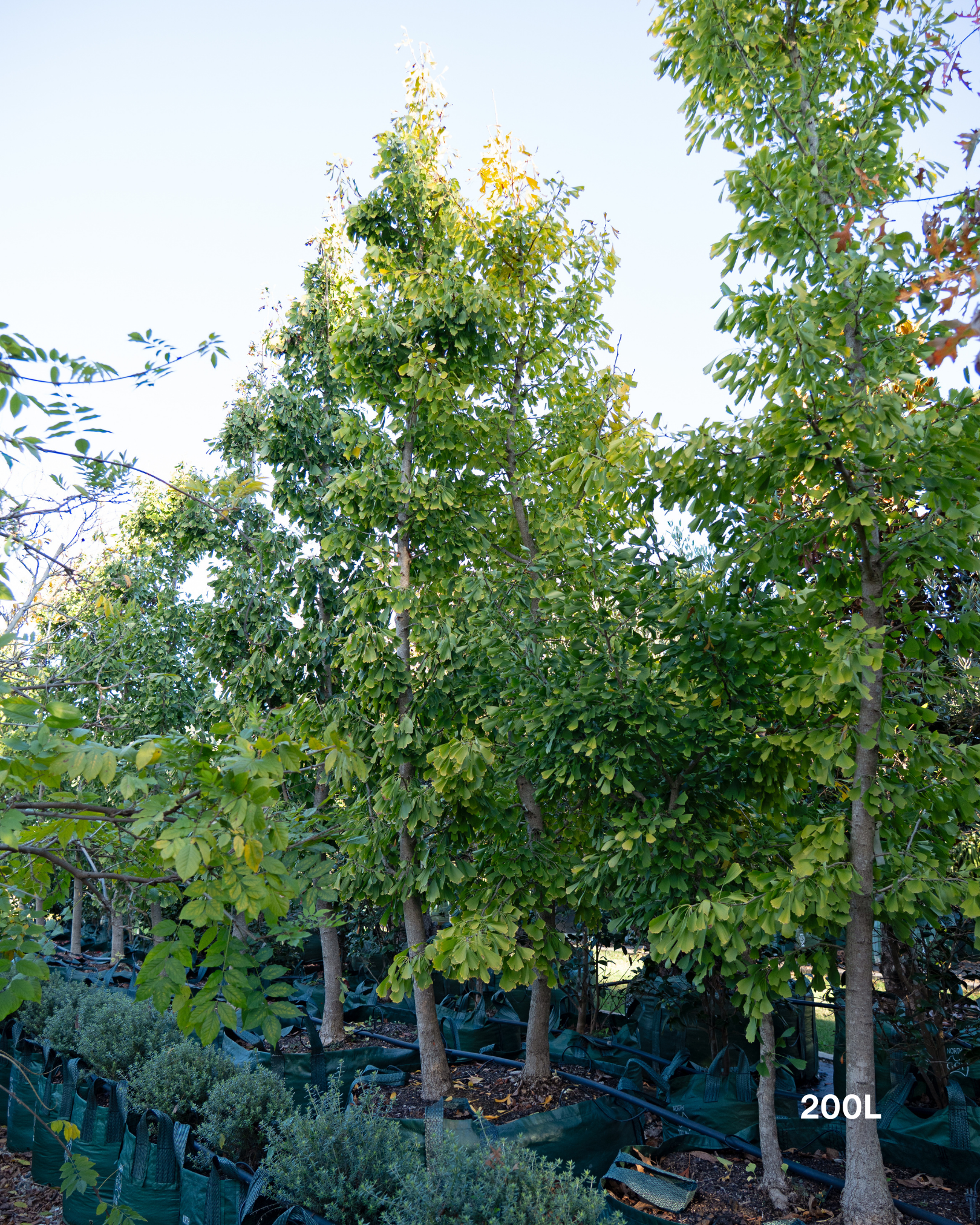
- 200L Bag: 71.5cm (W) × 60.5cm (D)
- 300L Bag: 88cm (W) × 63.8cm (D)
- 400L Bag: 99cm (W) × 66cm (D)
- 500L Bag: 122cm (W) × 66cm (D)
- 750L Bag: 134cm (W) × 69cm (D)
- 1000L Bag: 146.3cm (W) × 71.5cm (D)
- 2000L Bag: 176cm (W) × 82.5cm (D)
Trade
Trade
We supply advanced trees to landscapers, developers, architects, and councils Australia-wide. Trade clients receive fast quotes, expert advice, and access to premium stock with reliable freight.
Shipping
Shipping
Shipping is calculated at checkout based on the pallet space your order occupies in the truck and your delivery location.
There is no charge to calculate your freight.
Contact
Contact
Have a question or a list to send through to us?
Email: sales@evergreentrees.com.au
Phone: (03) 7042 3318
Share this product
About Your New Ginkgo biloba ‘Fishtail’ – Fishtail Maidenhair Tree
Ginkgo biloba 'Fishtail' is a selected form of the maidenhair tree, grown for fan leaves that split deeply into narrow lobes and flare out like a fish tail. It is deciduous, upright and rounded in habit, and the foliage turns clear golden yellow before it drops in autumn.
Plant it in full sun in a well drained soil with reasonable depth. Growth is steady rather than quick, around 20 to 40 centimetres a year. It handles light to moderate frost once established, along with heat, wind, drought and urban pollution, which suits cool temperate through to warm temperate gardens.
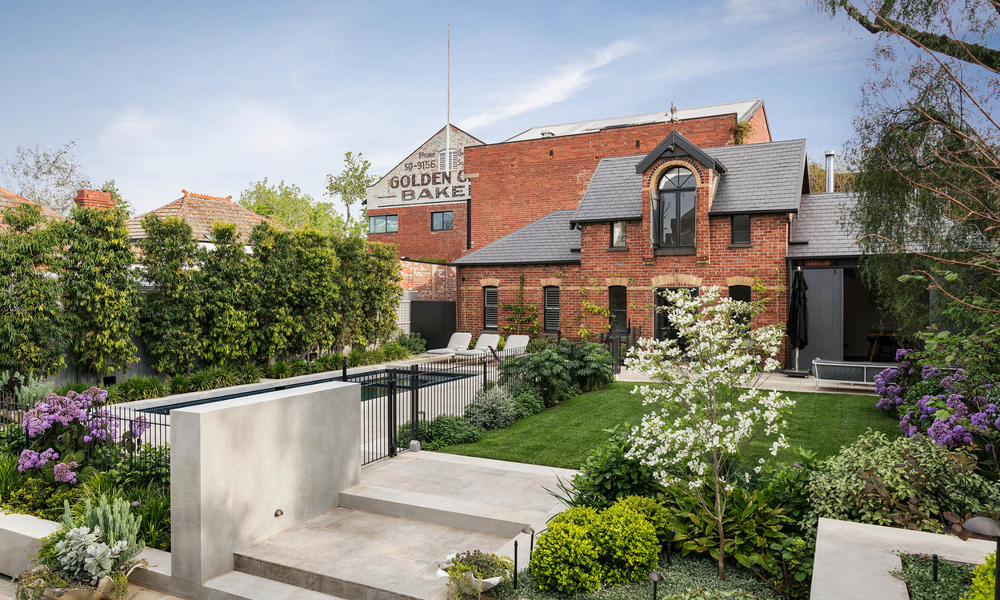
The finer leaf gives it a lighter look than a standard ginkgo, so it holds attention as a courtyard specimen, a lawn feature or a repeated street planting. It also sits well in collector gardens. For a buyer, it is a long lived tree that asks very little once it is in.
Frequently Asked Questions
About Ginkgo 'Fishtail'
What is Ginkgo biloba 'Fishtail'?
It is a cultivar of the maidenhair tree, one of the oldest tree lineages still in cultivation. The species is normally grown for its fan shaped leaves, and this selection takes that further with leaves cut into narrow lobes that spread like a fish tail. It is a small to medium deciduous tree with reliable golden autumn colour.
How big does Ginkgo 'Fishtail' grow?
In a garden setting expect roughly 4 to 6 metres in height and 2 to 3 metres across over many years. It is a slow and compact selection rather than a large shade tree, so it stays in scale with courtyards and smaller blocks. Trees in deep soil with regular water sit at the taller end of that range.
Is it evergreen or deciduous?
Deciduous. The leaves hold green through spring and summer, turn a strong golden yellow in autumn, then drop over a short window in late autumn or early winter. Bare branching through the colder months gives the tree a clear architectural outline, and new growth returns in spring.
When does the autumn colour appear?
Autumn colour usually arrives from April through to May in most southern Australian gardens, running later in warmer districts. Ginkgo is known for dropping its leaves quickly once the colour peaks, often over a few days, which makes the autumn clean up simple. Cold nights sharpen the yellow.
Does it need full sun?
Full sun gives the best form and the strongest autumn colour. It will accept a few hours of light shade, though growth is looser and the yellow is less intense. Avoid deep shade and heavy root competition from established trees. An open position with good air movement suits it well.
Can it be grown in a pot?
Yes. Its slow growth and compact habit make it one of the better ginkgos for a large container. Use a pot of at least 50 to 60 centimetres across, a free draining potting mix, and water through summer since pots dry quickly. Feed in spring, and repot or root prune every few years.
How do I care for Ginkgo 'Fishtail'?
Water deeply through the first two summers while roots establish, then it becomes largely self sufficient. Mulch to 75 millimetres, keeping it clear of the trunk. Feed once in early spring with a balanced slow release fertiliser. Pruning is rarely needed beyond removing damaged wood in winter, since the tree builds its own even framework.
Evergreen Trees Direct Has Been Featured In:


Uses in my Garden
Uses in my Garden
Ginkgo biloba ‘Fishtail’ – Fishtail Maidenhair Tree works in an:
Is Ginkgo biloba ‘Fishtail’ – Fishtail Maidenhair Tree Evergreen or Deciduous?
Is Ginkgo biloba ‘Fishtail’ – Fishtail Maidenhair Tree Evergreen or Deciduous?
Ginkgo biloba ‘Fishtail’ – Fishtail Maidenhair Tree is an Deciduous (Defoliates throughout colder months) Tree
Mature Height & Width
Mature Height & Width
Mature Height: 4m to 6m
Mature Width: 2m to 3m
Ginkgo biloba ‘Fishtail’ – Fishtail Maidenhair Tree is expected to grow 20cm to 40cm per year under suitable conditions.
Growth Rate of Ginkgo biloba ‘Fishtail’ – Fishtail Maidenhair Tree
Growth Rate of Ginkgo biloba ‘Fishtail’ – Fishtail Maidenhair Tree
Ginkgo biloba ‘Fishtail’ – Fishtail Maidenhair Tree is expected to grow 20cm to 40cm per year under suitable conditions.
They are considered to have a:
Frost Tolerance & Ideal Climate to plant Ginkgo biloba ‘Fishtail’ – Fishtail Maidenhair Tree
Frost Tolerance & Ideal Climate to plant Ginkgo biloba ‘Fishtail’ – Fishtail Maidenhair Tree
Is Ginkgo biloba ‘Fishtail’ – Fishtail Maidenhair Tree frost tolerant?
Ginkgo biloba ‘Fishtail’ – Fishtail Maidenhair Tree is Frost Tolerant – Can handle light to moderate frost once established.
Does Ginkgo biloba ‘Fishtail’ – Fishtail Maidenhair Tree Flower?
Does Ginkgo biloba ‘Fishtail’ – Fishtail Maidenhair Tree Flower?
Ginkgo biloba ‘Fishtail’ produces small inconspicuous flowers during spring, although flowering is generally subtle and secondary to the foliage. The tree is primarily valued for its unique fan-shaped leaves with deeply divided fishtail-like lobes that transform to brilliant golden-yellow during autumn.
Does Ginkgo biloba ‘Fishtail’ – Fishtail Maidenhair Tree flower?
Flowering Period:
Flower Type:
Flower Colour:
Not Applicable
Is Ginkgo biloba ‘Fishtail’ – Fishtail Maidenhair Tree an Australian Native Tree?
Is Ginkgo biloba ‘Fishtail’ – Fishtail Maidenhair Tree an Australian Native Tree?
No
Ginkgo biloba ‘Fishtail’ – Fishtail Maidenhair Tree is Native to Cultivar selection of Ginkgo biloba, a species native to China.
What is the Wildlife Value of Ginkgo biloba ‘Fishtail’ – Fishtail Maidenhair Tree ?
What is the Wildlife Value of Ginkgo biloba ‘Fishtail’ – Fishtail Maidenhair Tree ?
Its upright branching structure provides seasonal shelter and habitat for small birds and beneficial insects throughout the year. The distinctive foliage canopy also contributes to biodiversity within urban, avenue and ornamental landscape settings.
How much Sunlight does Ginkgo biloba ‘Fishtail’ – Fishtail Maidenhair Tree need?
How much Sunlight does Ginkgo biloba ‘Fishtail’ – Fishtail Maidenhair Tree need?
Ginkgo biloba ‘Fishtail’ – Fishtail Maidenhair Tree will thrive best in:
Preferred Soil?
Preferred Soil?
Ginkgo biloba ‘Fishtail’ performs best in well-drained loam or sandy soils with a neutral to slightly alkaline pH. It will also tolerate a wide range of general garden and urban soils provided drainage remains reliable. Avoid persistently wet or heavily compacted conditions unless significantly improved, as excess moisture can reduce root health and overall vigour. Keep soil evenly moist during establishment, then gradually reduce watering as the tree matures.
Is Ginkgo biloba ‘Fishtail’ – Fishtail Maidenhair Tree Drought Tolerant?
Is Ginkgo biloba ‘Fishtail’ – Fishtail Maidenhair Tree Drought Tolerant?
Is Ginkgo biloba ‘Fishtail’ – Fishtail Maidenhair Tree Drought tolerant?
As a young tree it benefits from regular watering to establish a healthy root system, particularly during warmer weather. Once established, Fishtail Ginkgo shows good drought tolerance and performs reliably through dry periods, although occasional supplementary watering supports stronger foliage growth and seasonal colour.

Planting Information
How To Plant Your Ginkgo biloba ‘Fishtail’ – Fishtail Maidenhair Tree
How To Plant Your Ginkgo biloba ‘Fishtail’ – Fishtail Maidenhair Tree
Recommended Planting Spacing For Your Ginkgo biloba ‘Fishtail’ – Fishtail Maidenhair Tree
Recommended Planting Spacing For Your Ginkgo biloba ‘Fishtail’ – Fishtail Maidenhair Tree
Ginkgo biloba ‘Fishtail’ – Fishtail Maidenhair Tree is expected to grow 20cm to 40cm per year under suitable conditions.
Long Term Care For Your Ginkgo biloba ‘Fishtail’ – Fishtail Maidenhair Tree
Long Term Care For Your Ginkgo biloba ‘Fishtail’ – Fishtail Maidenhair Tree
Planting Your Ginkgo biloba ‘Fishtail’ – Fishtail Maidenhair Tree in Different Soil
Planting Your Ginkgo biloba ‘Fishtail’ – Fishtail Maidenhair Tree in Different Soil
Frequently Asked Questions
Frequently Asked Questions