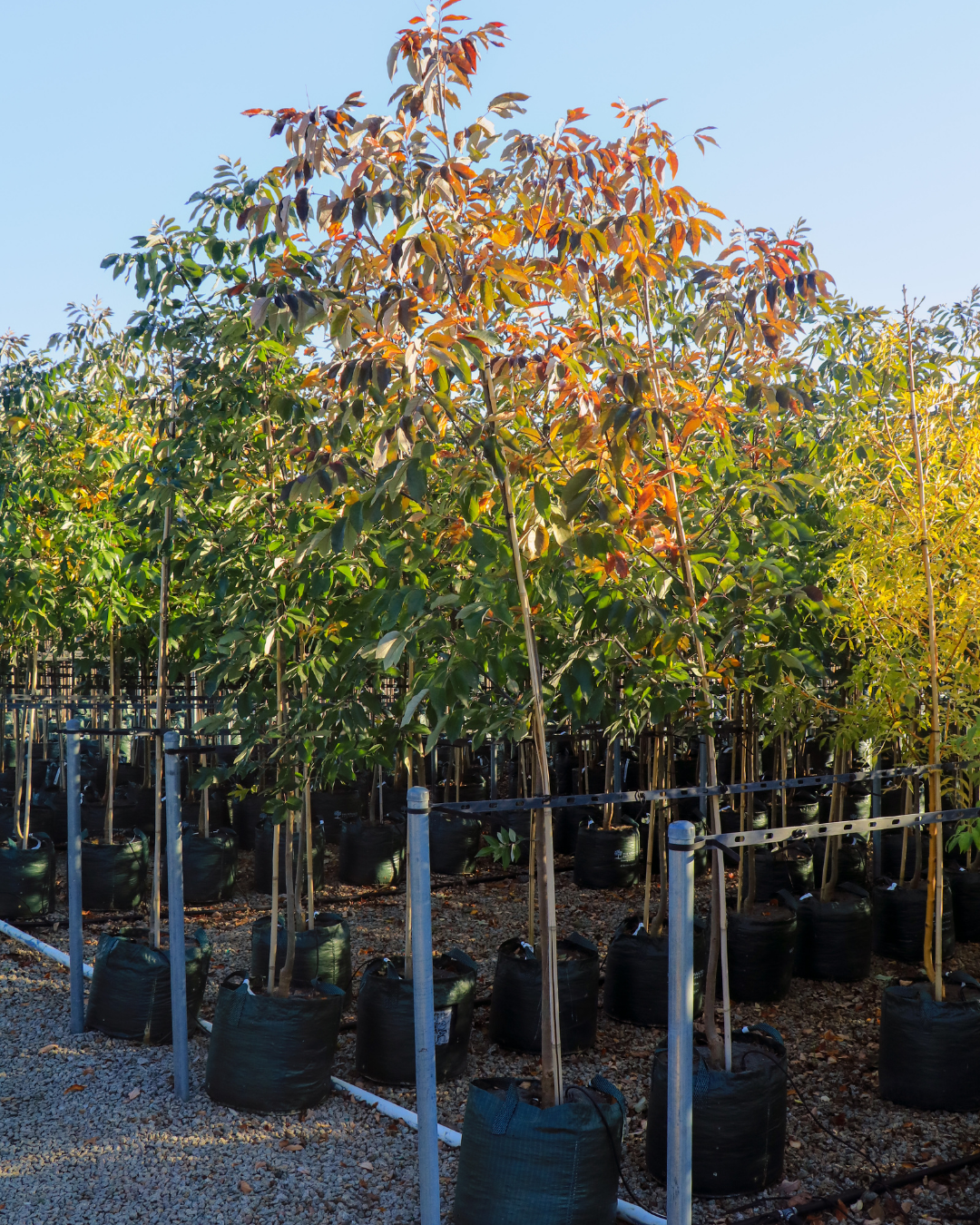
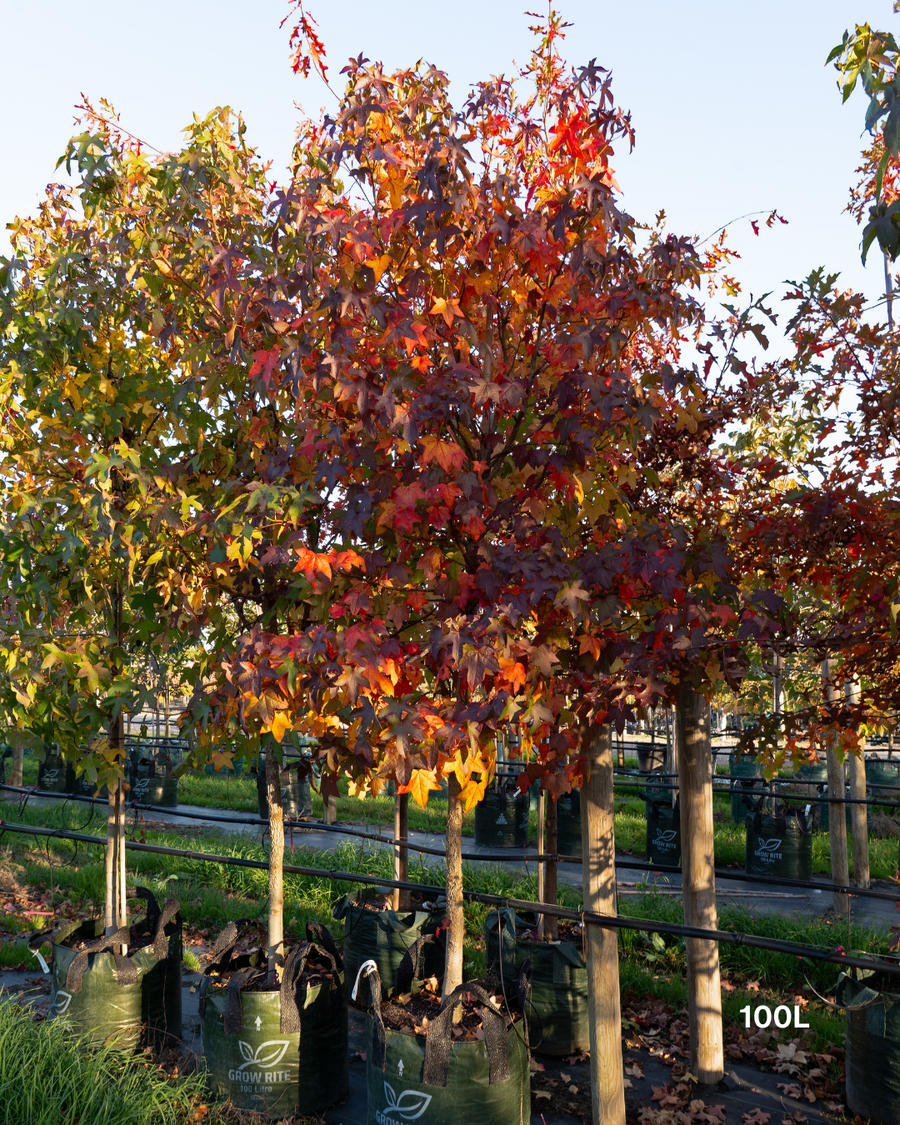
Fraxinus americana, known as White Ash, is a large deciduous tree with an upright trunk and a broad, spreading crown. The pinnate leaves are dark green above and pale beneath, colouring through purple, burgundy and gold in autumn. Clusters of small purple flowers open on bare wood in spring, ahead of the new foliage.
Give it full sun and a deep, free draining soil, with steady water through the first few summers. It is frost hardy and comes through heavy, frequent frost undamaged, which suits cool temperate and inland areas including Victoria, Tasmania, the tablelands and the ACT. Growth is moderate to fast at 80 to 120 centimetres a year.
At 15 to 20 metres tall and 10 to 15 metres wide, this is a tree for open ground: parks, reserves, rural driveways, school grounds and large gardens. It needs room to spread and clear space above for the crown to develop. Where that space exists it returns deep summer shade and a long autumn display for generations.
Frequently Asked Questions
About White Ash
What is White Ash?
White Ash is the common name for Fraxinus americana, a deciduous shade tree from eastern North America. It carries pinnate leaves on a straight trunk and a wide, high branching canopy, and it is grown here mainly for its autumn colour, which runs through purple and burgundy to gold. It is a long lived tree rather than a quick fix.
How big does White Ash grow?
Mature trees reach 15 to 20 metres tall with a canopy 10 to 15 metres wide. That size takes decades, and in average garden soil the tree often settles at the lower end of the range. Allow the full width when siting it, because a crown of that size cannot be pruned back to fit a small space later.
How fast does White Ash grow?
Growth is moderate to fast, around 80 to 120 centimetres a year through the establishment years on good soil with adequate water. It slows as the tree puts energy into trunk and crown structure. Poor drainage, competition from turf and dry summers all reduce that figure, so mulch and water well for the first three seasons.
Is White Ash frost tolerant?
Yes. White Ash is frost hardy and survives heavy and frequent frost without damage, which is why it performs well in the southern tablelands, alpine valleys and cold inland towns. Being deciduous, it is bare when the hardest frosts arrive, so the buds and wood carry the load rather than soft foliage. Late spring frost may burn new leaves briefly.
When does White Ash colour in autumn?
Autumn colour usually develops from April into June depending on how cool the district is. The leaves shift from dark green to purple and burgundy, often with gold and bronze in the same canopy, then fall over a few weeks. Cold nights and a dry autumn sharpen the colour; warm coastal autumns give a softer result.
Does White Ash have invasive roots?
The root system is vigorous and largely shallow, spreading well beyond the canopy line in search of water. Keep the tree a good distance from house footings, paving, retaining walls and sewer or stormwater lines, and avoid planting it in narrow garden beds. In open lawn, park or paddock situations the roots cause no trouble.
How do I care for White Ash?
Water deeply through the first three summers and keep a mulch ring clear of the trunk. Prune in late winter while the tree is bare, removing crossing limbs and any competing leaders to build one strong central trunk. Once established it needs little beyond removing deadwood. Raking or mulching the autumn leaf fall is usually the main ongoing job.