- Mature height
- 4m to 8m
- Mature width
- 3m to 6m
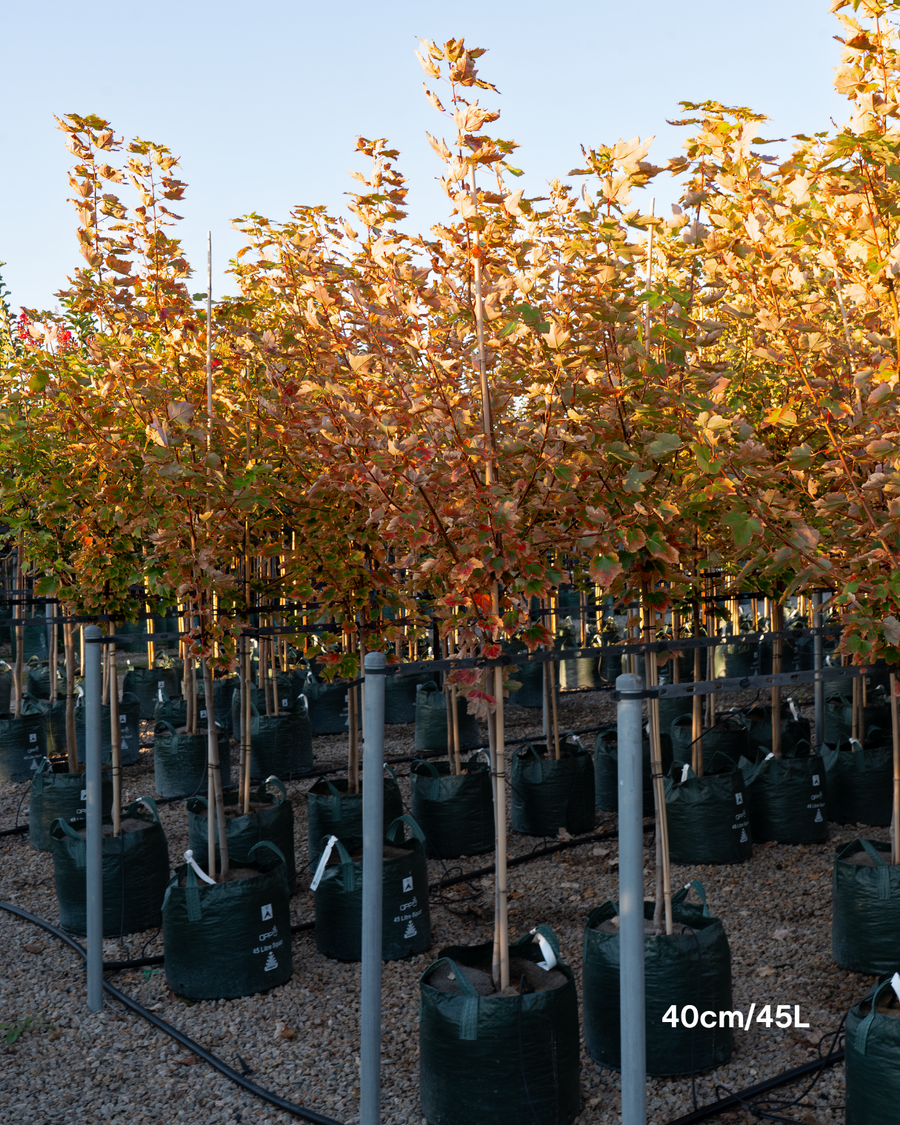
Acer palmatum, commonly known as Japanese Maple, is a deciduous feature tree valued for its palmate leaves and vibrant autumn colour. Native to Japan, Korea, and China, it is one of our best-selling feature trees at Evergreen Trees Direct. It suits modern garden designs and works well in both pots for smaller gardens and as an avenue planting in larger landscapes.
This low-maintenance tree prefers slightly moist, fertile soil but is adaptable to a wide range of soil types. Despite the common belief that it only thrives in cooler climates, Japanese Maple performs well in warmer areas when protected from all-day direct sunlight to prevent leaf scorch. It should be pruned in late winter or early spring to maintain shape.
Mature height ranges from 4 to 8 metres, with a width of 3 to 6 metres. Its elegant form, seasonal colour, and versatility make it an ideal choice for feature planting in residential and landscape settings.
Choosing your Japanese Maple. The standard Acer palmatum species is the versatile all-rounder, with classic palmate leaves that turn red and gold in autumn. If you want a specific look, consider its cultivars: 'Atropurpureum' for rich red-purple foliage all season, 'Osakazuki' for brilliant scarlet autumn colour, 'Seiryu' for an upright laceleaf form, or 'Inaba Shidare' for a cascading weeping laceleaf habit. All thrive in the same cool to temperate Australian climates.
Frequently Asked Questions
About Acer palmatum Japanese Maple
How tall does Japanese Maple grow?
The standard Acer palmatum species grows to 4-8 metres tall and 3-6 metres wide, with an elegant rounded canopy.
How fast does Japanese Maple grow?
Japanese Maple has a moderate growth rate of 30-50cm per year once established.
Where in Australia does Japanese Maple grow best?
Japanese Maple performs best in cool to temperate regions including VIC, NSW Southern Highlands, Tasmania, ACT, and elevated parts of SA and WA. In warmer climates, plant in part shade to prevent leaf scorch.
When does Japanese Maple turn red?
Foliage shifts to vibrant red, orange, and gold in late autumn, typically May to June in southern Australia and April to May in NSW.
Can Japanese Maple grow in pots?
Yes. Japanese Maple is excellent in large pots (60L+) and is a popular choice for courtyards, balconies, and feature planting.
Which Japanese Maple cultivar is right for me?
This is the standard species, which produces green spring foliage transitioning to red and gold in autumn. For specific habits or colours, look at 'Atropurpureum' (rich red-purple foliage), 'Osakazuki' (brilliant scarlet autumn), 'Seiryu' (upright laceleaf), or 'Inaba Shidare' (cascading weeping laceleaf).
How do I prune a Japanese Maple?
Prune in late winter or early spring while the tree is dormant. Take out dead, crossing, or congested branches to open up the canopy and show off the layered branch structure. Keep cuts small and avoid heavy reductions, as Japanese Maple has a naturally elegant shape and responds poorly to hard pruning. Removing lower limbs on a young tree helps develop a clean trunk.