



Skip to content

OUR END OF FINANCIAL YEAR SALE IS LIVE!

20% OFF ORDERS OVER $1,500 - DISCOUNT APPLIES AUTOMATICALLY AT CHECKOUT

Top Avenue Trees to Make a Grand Entrance: 5 Driveway Classics

Top Avenue Trees to Make a Grand Entrance: 5 Driveway Classics

Five avenue trees that deliver scale, structure and seasonal interest along driveways and boulevards.

Avenue TreesDrivewaysFeature TreesMagnoliaPyrusQuercusStreet TreesUlmus

The avenue is the moment your property is judged. Two parallel rows of well-matched trees take a driveway from passable to memorable, draw the eye toward the front door and add tens of thousands of dollars to perceived street value. Done well, an avenue planting is the single highest-impact landscape decision a home can make.

Avenue planting works on three rules. First, matched pairs: identical trees on each side, identical species, identical sizes, identical spacing. Second, crown lift: every tree pruned to a clean trunk that lets the eye travel down the driveway. Third, scale proportional to the home: a single-storey homestead wants a 6 to 10 metre canopy; a double-storey period home or grand modern build can carry a 15 to 25 metre canopy.

The five picks below cover every avenue style we work with in residential gardens. The blossom-led suburban classic is Pyrus calleryana 'Bradford' and Pyrus calleryana 'Aristocrat', both ornamental pears with white spring blossom and burgundy autumn finish. The clean fast-growing canopy is Ulmus parvifolia (Chinese Elm), a tough vase-formed semi-deciduous tree with mottled bark and a wide crown that lifts beautifully with age. The evergreen avenue at compact scale, for narrow suburban driveways or where year-round screening matters, is Magnolia grandiflora 'Little Gem'. The grand heritage scale, for boulevards, long approach drives and rural properties, is Quercus palustris (Pin Oak): pyramidal, deeply lobed leaves, scarlet autumn at full canopy.

What makes a great avenue tree

Matched pairs over alternating species
For a true grand entrance, plant identical trees on each side of the driveway at identical spacing. Alternating species along an avenue reads as decorative rather than architectural. If you must mix, plant in matched pairs at the entrance (the first two trees) and run a single species down the length. The single-species avenue is the move that signals 'estate' from the kerb.
Scale proportional to the home
A single-storey home or compact suburban driveway wants a 6 to 10 metre mature canopy: Little Gem Magnolia at 4 to 6 metres or Bradford Pear at 8 to 12 metres. A double-storey period or grand modern home wants the 15 to 25 metre canopy of Pin Oak or Chinese Elm. A canopy that is too small reads as suburban; a canopy that is too large overwhelms a modest home.
Crown lift for clear sight lines
Every avenue tree should be progressively pruned over the first five to seven years to lift the canopy 2.5 to 3 metres off the ground. The result is a clean trunk from kerb to canopy and an open visual tunnel the eye can travel down. Without crown lift, an avenue reads as a hedge of trees rather than an architectural composition.
Evergreen versus deciduous decision
Evergreen avenues (Little Gem Magnolia) give year-round screening and a clipped formal look. Deciduous avenues (Bradford, Aristocrat, Pin Oak, Chinese Elm) give seasonal drama: spring blossom or fresh foliage, summer shade, autumn colour, winter architecture. Choose deciduous if you want the seasonal show and accept the leaf clean-up; choose evergreen if privacy and consistency matter more.
Spacing for a tight avenue versus a heritage one
Tight suburban avenues sit 4 to 6 metres apart between pairs. Heritage avenues sit 8 to 12 metres apart. Spacing inside the row should equal spacing across the row, so a planted pair forms a perfect square. Little Gem at 1.5 to 2 metres in a row gives a continuous evergreen wall; Pin Oak at 10 to 12 metres gives a cathedral effect.
Soil depth and root run
Avenues fail when the planting strip is too narrow or compacted. Allow a planting bed at least 1.5 metres wide on each side of the driveway and dig out compaction to 60cm. Pin Oak in particular needs deep soil for a stable root plate; in shallow strips, choose Bradford Pear or Little Gem instead.

1. Pyrus calleryana Bradford (Bradford Pear)

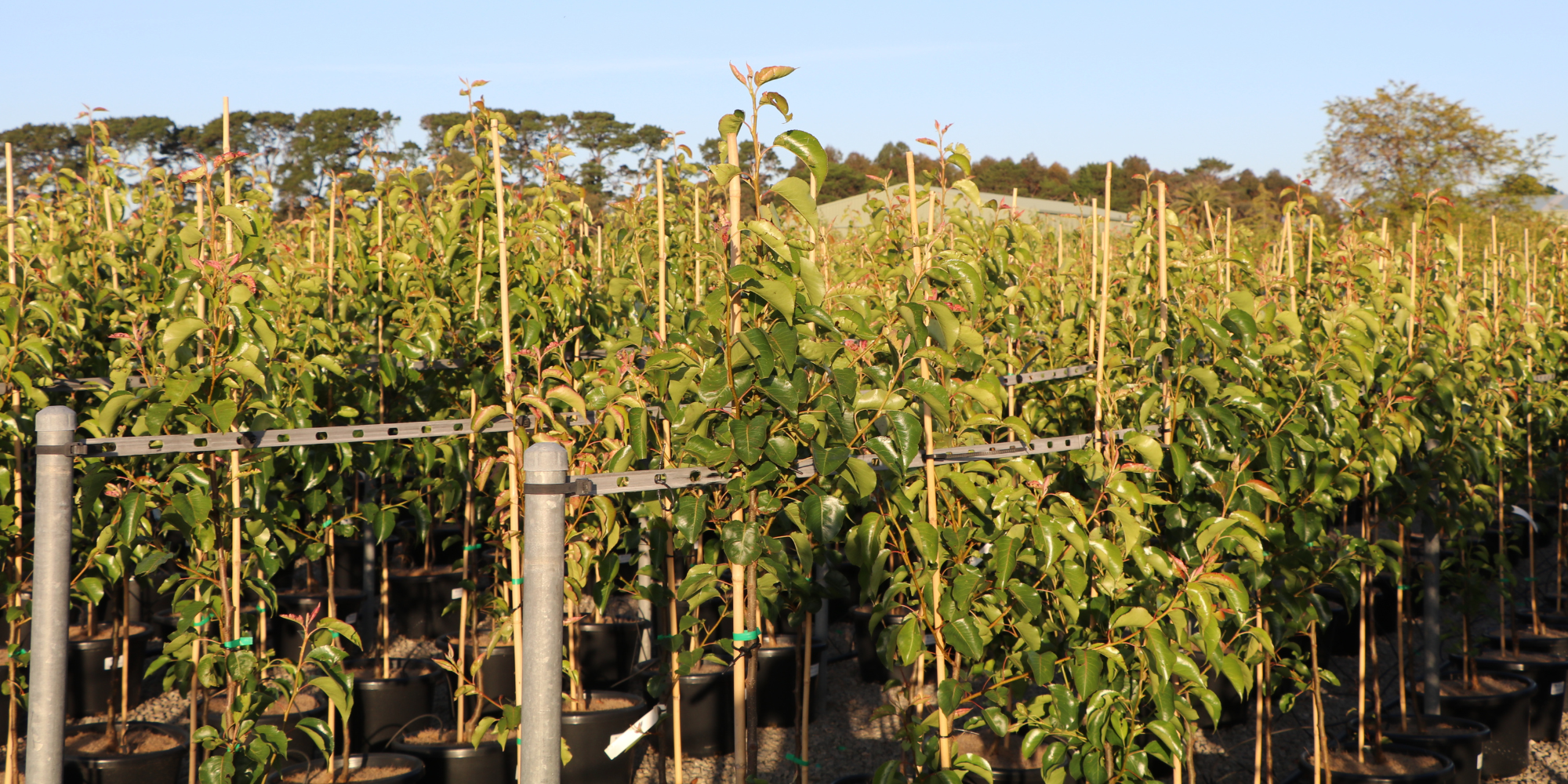
Bradford Pear is the avenue tree most landscape architects reach for first. White spring blossom, glossy green summer, burgundy autumn, uniform crown.

Type
Deciduous ornamental tree
Height
8 to 12 metres
Width
5 to 7 metres
Growth rate
Moderate to fast
Foliage
Glossy green, burgundy autumn colour
Flowers
White spring blossom
Form
Rounded uniform crown
Conditions
Full sun, most soils, frost and drought tolerant
Maintenance
Low, formative pruning only
Best for
Avenue planting, driveways, street trees

Why choose it

Predictable uniform shape for matched plantings, three season interest.

Perfect pair

Pair with an evergreen Magnolia Little Gem as a feature at the avenue entry.

Tips for planting

Space 5 to 7 metres for a tight avenue. Stake until trunk thickens.

The default avenue tree for a reason.

Shop Pyrus calleryana Bradford

2. Pyrus calleryana Aristocrat (Aristocrat Pear)

Aristocrat carries a more open horizontal branch structure than Bradford. White blossom, glossy summer leaves, scarlet autumn, slightly more relaxed shape.

Type
Deciduous ornamental tree
Height
10 to 12 metres
Width
6 to 8 metres
Growth rate
Moderate
Foliage
Glossy green, scarlet autumn
Flowers
White spring blossom
Form
Pyramidal with horizontal branching
Conditions
Full sun, most soils, hardy
Maintenance
Low, formative pruning only
Best for
Avenue planting, feature, street tree

Why choose it

Open shape lets light through, strong autumn finish.

Perfect pair

Pair with a Magnolia Coolwyn Gloss for an evergreen counterpoint.

Tips for planting

Stake young trees. Space 6 to 8 metres for an avenue.

An alternative pear for designers who want more shape.

Shop Pyrus calleryana Aristocrat

3. Ulmus parvifolia (Chinese Elm)

Chinese Elm gives avenue scale with mottled bark, vase form and small glossy leaves. Tough, fast, and beautiful in winter outline.

Type
Semi deciduous feature tree
Height
10 to 15 metres
Width
8 to 12 metres
Growth rate
Fast
Foliage
Small glossy green, yellow autumn
Form
Vase shape with broad crown
Conditions
Full sun, most soils, drought tolerant
Maintenance
Low, formative pruning
Best for
Avenues, shade, urban streetscape

Why choose it

Wide canopy lifts cleanly to give clear sight lines down the avenue.

Perfect pair

Pair with a Magnolia Coolwyn Gloss as an evergreen anchor.

Tips for planting

Lift the canopy as the trunk thickens. Space 8 to 10 metres for a true avenue.

A clean tough avenue tree with great winter bark.

Shop Ulmus parvifolia

4. Magnolia grandiflora Little Gem (Little Gem Magnolia)

Little Gem holds upright dense form with glossy dark leaves and large white fragrant flowers across the warmer months. A reliable evergreen avenue tree at smaller scale.

Type
Evergreen feature tree
Height
4 to 6 metres
Width
2 to 3 metres
Growth rate
Moderate
Foliage
Glossy dark green with bronze undersides
Flowers
Large fragrant white
Form
Upright dense column
Conditions
Full sun to part shade, most soils
Maintenance
Low, light shape if needed
Best for
Avenue planting at small scale, formal entries, screens

Why choose it

Evergreen avenue at compact size, fragrant white flowers.

Perfect pair

Pair with a deciduous Pyrus Bradford or Ulmus parvifolia for contrast.

Tips for planting

Space 1.5 to 2 metres for a tight evergreen avenue. Mulch well, water deeply in dry spells.

An evergreen avenue tree that fits suburban entries.

Shop Magnolia grandiflora Little Gem

5. Quercus palustris (Pin Oak)

Pin Oak is the grand avenue tree at scale. Pyramidal form, deep summer green, strong scarlet autumn, lifts to a clean trunk with age.

Type
Deciduous feature tree
Height
15 to 25 metres
Width
10 to 15 metres
Growth rate
Moderate
Foliage
Deeply lobed, scarlet to bronze autumn
Form
Pyramidal with horizontal lower branches
Conditions
Full sun, deep soils, frost tolerant
Maintenance
Low, formative pruning
Best for
Grand avenues, parks, large gardens, autumn colour

Why choose it

Scale and architecture that lift a long driveway or boulevard.

Perfect pair

Pair with Ginkgo biloba in matched alternating avenues for contrasting autumn colour.

Tips for planting

Allow deep root run. Space 10 to 12 metres for a true avenue. Stake young trees.

The grand scale option for serious avenue planting.

Shop Quercus palustris

Compare at a glance

CultivarHeightWidthFormFoliageBest if you…
Pyrus calleryana Bradford
Bradford Pear
8 to 12 metres5 to 7 metresRounded uniform crownGlossy green, burgundy autumn colourAvenue planting, driveways, street trees
Pyrus calleryana Aristocrat
Aristocrat Pear
10 to 12 metres6 to 8 metresPyramidal with horizontal branchingGlossy green, scarlet autumnAvenue planting, feature, street tree
Ulmus parvifolia
Chinese Elm
10 to 15 metres8 to 12 metresVase shape with broad crownSmall glossy green, yellow autumnAvenues, shade, urban streetscape
Magnolia grandiflora Little Gem
Little Gem Magnolia
4 to 6 metres2 to 3 metresUpright dense columnGlossy dark green with bronze undersidesAvenue planting at small scale, formal entries, screens
Quercus palustris
Pin Oak
15 to 25 metres10 to 15 metresPyramidal with horizontal lower branchesDeeply lobed, scarlet to bronze autumnGrand avenues, parks, large gardens, autumn colour

How to plant and care for them

Mark out spacing before planting
Measure the driveway end to end. Decide how many trees fit at your chosen spacing. Mark each planting position with a stake on both sides so the rows mirror exactly. An avenue that is half a metre out of alignment reads as wrong from the kerb.
Plant in matched stock
Order all trees in the same pot size from the same nursery batch. Avoid mixing 100L and 200L stock in a single avenue: the canopy will never align. Stake young trees with a single low stake; aim to remove stakes within 18 months.
First-year deep watering
All avenue trees need deep weekly watering through their first summer. Use a slow soaker hose for 30 minutes per tree once a week, then taper to fortnightly through the second summer. Mulch with 75mm of coarse bark over a 1.5 metre radius.
Formative pruning years one to five
Each winter, prune to a clear central leader (Pin Oak, Bradford, Aristocrat) or a clean vase (Chinese Elm). Remove crossing branches, double leaders and any branches that conflict with the eventual 2.5 metre crown lift line.
Progressive crown lift years three to seven
Each winter, remove the lowest one or two branches on the trunk. Stop at 2.5 to 3 metres clear trunk. Lift both sides of the avenue in the same year so the rows match.
Mature maintenance
Inspect each tree annually for crossing limbs, dead wood and storm damage. Walk the avenue at the same time each year so any tree falling out of step is corrected before the asymmetry becomes obvious.

Frequently asked questions

How wide should the avenue be?
Six to ten metres between paired trees is typical.

The wrap up

Five hand-picked avenue trees for residential driveways: Bradford and Aristocrat ornamental pears for the suburban blossom-led classic, Chinese Elm for fast clean canopy, Little Gem Magnolia for an evergreen avenue at compact scale, and Pin Oak for grand heritage scale. The guide covers spacing, crown lift, matched pairs and soil depth so every avenue stands straight from year one.