



Skip to content

OUR END OF FINANCIAL YEAR SALE IS LIVE!

20% OFF ORDERS OVER $1,500 - DISCOUNT APPLIES AUTOMATICALLY AT CHECKOUT

Top Trees for Creating a Serene Zen Garden: 5 Sculptural Picks for Stillness and Calm

Top Trees for Creating a Serene Zen Garden: 5 Sculptural Picks for Stillness and Calm

Five trees that build a calm Zen garden: Japanese Maple, upright laceleaf Seiryu, Saucer Magnolia, clipped Bay, and the seasonal accent of Forest Pansy.

courtyardfeature treesgarden designJapanese Maplezen garden

A zen garden is the most disciplined planting style in cultivation. The whole point is restraint: a small number of carefully placed sculptural plants, a calm ground treatment of moss or gravel, and the deliberate absence of busy colour or texture. The five picks below are the species that carry the zen tradition most reliably in our climate.

Acer palmatum (Japanese Maple) is the single most important pick: layered horizontal canopy, deeply cut leaves and the most refined scarlet autumn at courtyard scale. Cycas revoluta (Sago Palm) brings symmetrical sculptural form and the slow meditative growth of one of the oldest plant lineages still living. Japanese Box Topiary Balls deliver tight clipped spheres that anchor the composition and reference traditional Japanese garden geometry. Dicksonia antarctica (Soft Tree Fern) adds the ancient vertical with prehistoric fronds and a calm dark trunk. Cupressus sempervirens 'Glauca' (Italian Pencil Pine) brings the architectural vertical column that reads as both Mediterranean and zen.

The criteria below explain restraint and species count, ground treatment, water as the focal sound element, and the design rules that turn a planting into a calm composition.

How to build a serene zen-garden palette

Restraint over abundance
A zen garden is at most five species, often three. Repetition of each species reads as designed; one-of-each reads as collected. Use Acer palmatum as the single feature, then layer in one or two of Cycas, Dicksonia, Japanese Box balls or Pencil Pine as supporting form.
Ground treatment is half the design
Traditional zen ground treatments: raked coarse gravel, moss, or large flat stepping stones. Avoid lawn, which reads as recreational. Mass-plant moss or Mondo grass under Acer palmatum; use raked gravel under Pencil Pine for the sharpest composition.
Water as the focal sound
A simple stone basin, water bowl or shishi-odoshi (bamboo deer-scarer) anchors the sensory experience of the garden. The sound is more important than the visual; a single water source heard from the seating space transforms the planting from decorative to meditative.
Composition rules
Place plants in odd numbers (one, three, five). Avoid symmetrical planting; asymmetry reads as natural. Use a single large stone as the design anchor; smaller stones cluster around it in groups of three. Empty space between plants is part of the composition.
Position for stillness
Zen gardens benefit from physical separation from busy areas of the home. Place the garden where it is visible from a quiet room and accessible via a slow approach path. The walk to the garden is part of the experience.
Climate match
Acer palmatum demands dappled shade in warm climates. Dicksonia demands consistent moisture and shelter. Cycas revoluta and Pencil Pine handle full sun. Japanese Box tolerates sun to part shade.

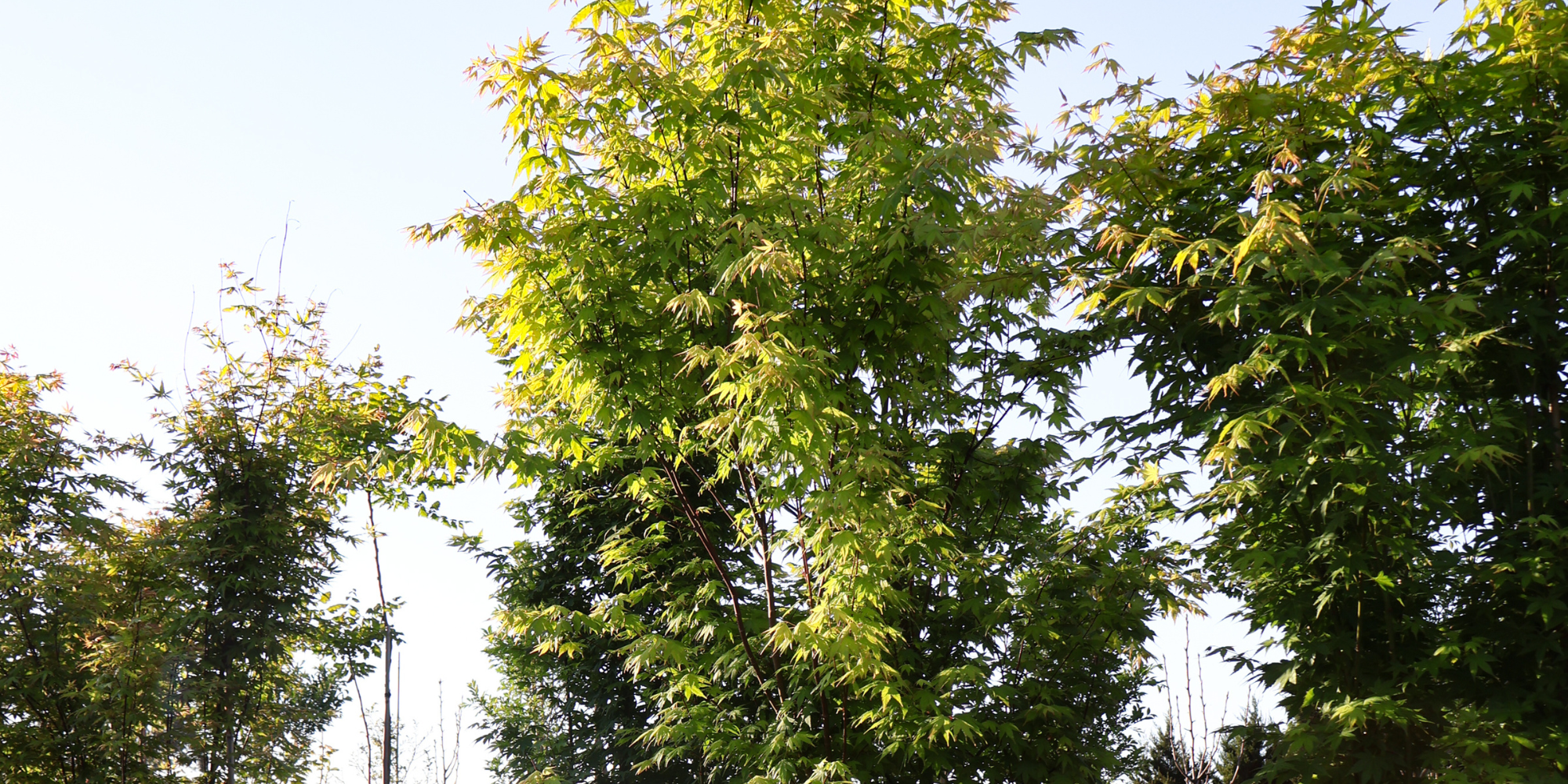
1. Acer palmatum (Japanese Maple)

The benchmark Zen garden tree. Delicately lobed leaves that move through soft greens in summer to fiery red, orange and yellow in autumn. A small tree that feels meditative in any setting.

Type
Deciduous feature tree
Height
4 to 6m
Width
3 to 5m
Growth rate
Moderate
Foliage
Finely lobed, fresh green to fiery autumn
Form
Gently arching, layered
Conditions
Part shade preferred, sheltered from hot wind, well drained soil
Maintenance
Low. Light pruning in winter only
Best for
Zen gardens, courtyards, water feature accents, under-canopy planting

Why choose it

No other small tree carries the meditative quality of Acer palmatum. The seasonal change is what draws you back to a Zen garden each visit.

Perfect pair

Plant beside a clipped Laurus nobilis 'Miles Choice' for the structural calm that frames Acer's seasonal drama.

Tips for planting

Position near a water feature for reflected light. Mulch heavily and avoid root disturbance.

The tree that turns a corner of garden into a place to sit.

Shop Acer palmatum

2. Acer palmatum dissectum 'Seiryu' (Upright Laceleaf Japanese Maple)

The only commonly grown upright dissectum maple. Where weeping laceleaf cultivars cascade, Seiryu stands tall with the same finely cut foliage and brilliant autumn fire.

Type
Deciduous architectural feature
Height
3 to 5m
Width
2 to 3m
Growth rate
Slow to moderate
Foliage
Finely dissected lace, fresh green to crimson-orange in autumn
Form
Upright, vase-shaped, architectural
Conditions
Part shade preferred, sheltered, well drained soil
Maintenance
Low. Light winter prune for shape
Best for
Zen gardens, narrow courtyards, formal entries, stone-edged beds

Why choose it

Seiryu gives you laceleaf delicacy on an upright form, perfect when a weeping habit would feel too soft for the space.

Perfect pair

Pair with Magnolia x soulangeana for an upright laceleaf accent set against a serious flowering feature tree.

Tips for planting

Plant where afternoon shade keeps the fine foliage looking its best.

Laceleaf elegance without the weep.

Shop Acer palmatum dissectum 'Seiryu'

3. Magnolia x soulangeana (Saucer Magnolia)

The spring flowering Magnolia that opens before its leaves: large goblet-shaped pink-white blooms held against bare branches. A meditation tree of seasonal beauty.

Type
Deciduous flowering feature
Height
5 to 8m
Width
4 to 6m
Growth rate
Moderate
Foliage
Mid green, bold, deciduous
Flowers
Large pink and white goblet blooms in early spring, before foliage
Form
Multi-stem, broad, sculptural
Conditions
Full sun to part shade, well drained soil
Maintenance
Low. Avoid root disturbance
Best for
Zen feature trees, spring focal points, courtyards

Why choose it

Saucer Magnolia carries the spring moment in a Zen garden, the brief explosion of flower before the leaves emerge.

Perfect pair

Underplant with a clipped Murraya hedge to anchor the spring drama in evergreen structure.

Tips for planting

Shelter from late frost. Magnolia buds are vulnerable when they open.

The tree that announces spring before any other.

Shop Magnolia x soulangeana

4. Laurus nobilis 'Miles Choice' (Miles Choice Bay)

An improved upright Bay. Glossy aromatic leaves and a refined silhouette that takes clipping into the formal shapes Zen gardens rely on.

Type
Evergreen structural hedge
Height
3 to 5m. Can be pruned to desired height
Width
2 to 3m
Growth rate
Slow to moderate
Foliage
Glossy dark green, aromatic
Form
Upright, naturally dense, holds clipped shape
Conditions
Full sun to part shade, well drained soil
Maintenance
Two clips a year. Holds form between
Best for
Zen hedging, topiary, structural form

Why choose it

Miles Choice Bay is the Zen evergreen that holds structure year round and accepts the clipped formality the style requires.

Perfect pair

Pair with a feature Acer palmatum so the year round green frames the seasonal Acer drama.

Tips for planting

Clip in spring and again in late summer for crisp formal shapes.

The evergreen structure of a calm garden.

Shop Laurus nobilis 'Miles Choice'

5. Cercis canadensis 'Forest Pansy' (Forest Pansy Redbud)

Heart-shaped foliage that moves through rose, burgundy and apricot across the season. Pink spring flowers along bare branches. A Zen accent of constant quiet change.

Type
Deciduous accent feature
Height
4 to 6m
Width
3 to 4m
Growth rate
Moderate
Foliage
Heart-shaped, rose to burgundy to apricot
Flowers
Tiny pink pea flowers along bare stems in early spring
Form
Open, layered, multi-stem
Conditions
Full sun to part shade, sheltered, well drained soil
Maintenance
Low. Light winter shaping
Best for
Zen accent planting, courtyards, mid-layer focal points

Why choose it

Forest Pansy delivers three seasonal moods on a single tree. The kind of slow change that rewards a contemplative space.

Perfect pair

Plant in front of clipped Bay hedging for burgundy heart leaves against polished evergreen structure.

Tips for planting

Avoid windy positions. Stake in the first year.

Three trees of seasonal beauty in a single frame.

Shop Cercis canadensis 'Forest Pansy'

Compare at a glance

CultivarHeightWidthFormFoliageBest if you…
Acer palmatum
Japanese Maple
4 to 6m3 to 5mGently arching, layeredFinely lobed, fresh green to fiery autumnZen gardens, courtyards, water feature accents, under-canopy planting
Acer palmatum dissectum 'Seiryu'
Upright Laceleaf Japanese Maple
3 to 5m2 to 3mUpright, vase-shaped, architecturalFinely dissected lace, fresh green to crimson-orange in autumnZen gardens, narrow courtyards, formal entries, stone-edged beds
Magnolia x soulangeana
Saucer Magnolia
5 to 8m4 to 6mMulti-stem, broad, sculpturalMid green, bold, deciduousZen feature trees, spring focal points, courtyards
Laurus nobilis 'Miles Choice'
Miles Choice Bay
3 to 5m. Can be pruned to desired height2 to 3mUpright, naturally dense, holds clipped shapeGlossy dark green, aromaticZen hedging, topiary, structural form
Cercis canadensis 'Forest Pansy'
Forest Pansy Redbud
4 to 6m3 to 4mOpen, layered, multi-stemHeart-shaped, rose to burgundy to apricotZen accent planting, courtyards, mid-layer focal points

How to plant and care for them

Plant the Acer palmatum first
The feature tree is the single most important decision. Place it where you will look at it most often and where it sits in the most graceful natural light.
Layer supporting plants outward in odd numbers
Work outward from the Acer palmatum. Single specimens of Cycas or Dicksonia; three Japanese Box balls; three or five Pencil Pines if you want a vertical row.
Improve soil before planting
Mix compost into the planting hole for Acer palmatum and Dicksonia (both prefer rich, moist organic soil). For Cycas, Pencil Pine and Buxus, sharper drainage works.
Mulch and ground treatment
Moss is the most authentic ground treatment under the Acer palmatum. Fine gravel or coarse bark works elsewhere. 75mm depth. Position a single large stone as the design anchor.
Water consistently
Acer palmatum, Dicksonia and Japanese Box prefer consistent moisture. Cycas and Pencil Pine handle drying.
Minimal pruning
Japanese Box balls need two light clips a year. The others need almost no pruning beyond removal of dead foliage. A zen garden is the wrong place for heavy intervention.

Frequently asked questions

When is the best time to plant a Zen garden?
Autumn. Soil is still warm and root systems establish before summer stress.
How do I maintain the trees?
Light pruning to shape, mulch annually, and water deeply but infrequently once established.
Can I combine these trees in one garden?
Yes. The five are chosen to work as a composed planting.

The wrap up

Five sculptural picks for a zen garden built on restraint: Acer palmatum as the courtyard feature, Cycas revoluta and Dicksonia for ancient sculptural verticals, Japanese Box topiary balls for clipped geometry, and Italian Pencil Pine for the architectural vertical column.