



Skip to content

OUR END OF FINANCIAL YEAR SALE IS LIVE!

20% OFF ORDERS OVER $1,500 - DISCOUNT APPLIES AUTOMATICALLY AT CHECKOUT

Best Australian Native Trees for Low-Maintenance Gardens: 10 Picks for a Garden That Looks After Itself

Best Australian Native Trees for Low-Maintenance Gardens: 10 Picks for a Garden That Looks After Itself

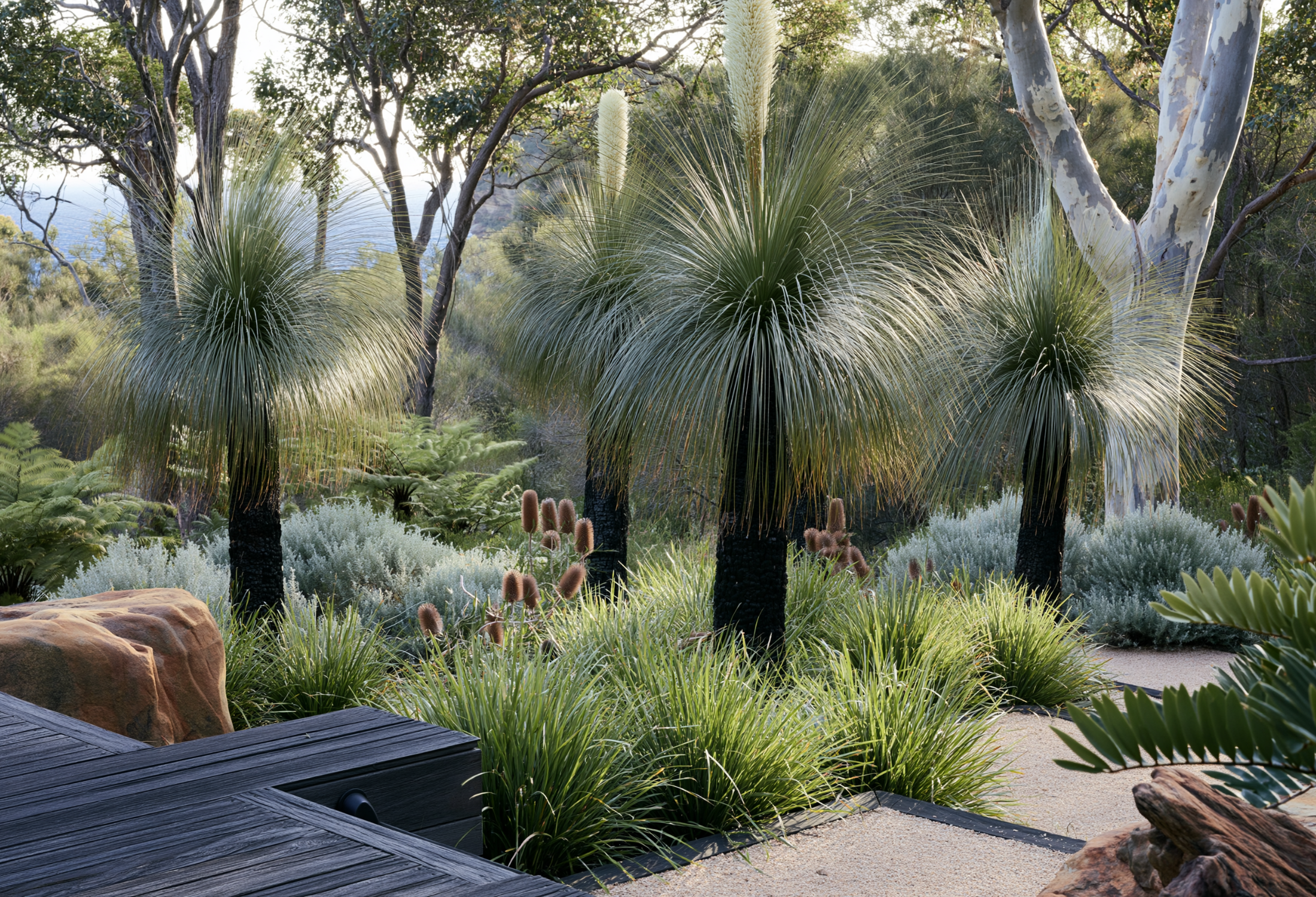
Low-maintenance native gardens aren't sparse, they're well-designed. Ten picks across feature trees, polished mid-tier evergreens and the shrubby ground layer that turns a native planting into a self-sustaining habitat. Plus the three rules that make every native garden genuinely low-input.

Australian nativesBanksiadrought tolerantKurrajonglow maintenance

Low-maintenance in a native garden doesn't mean no work.

It means designing with species that ask for what nature already supplies. The right picks ask for almost no extra input once established.

Three rules underpin every genuinely low-maintenance native garden.

The ten picks

Ordered by layer: four canopy trees, three polished mid-tier evergreens, three shrubby ground-level species.

  1. Brachychiton rupestris (Queensland Bottle Tree): water-storing trunk, no pruning ever needed.
  2. Eucalyptus cinerea (Silver Dollar Gum): silver waxy round leaves, drought and frost hardy, self-shaping.
  3. Angophora costata (Sydney Red Gum): sandstone-evolved, salmon-pink peeling bark.
  4. Corymbia citriodora 'Scentuous': dwarf citrus-scented gum.
  5. Tristaniopsis 'Luscious': polished modern native, no leaf litter issues.
  6. Banksia integrifolia 'Sentinel': narrow columnar Coast Banksia, year-round honeyeater habitat.
  7. Agonis flexuosa 'Burgundy': WA native with burgundy weeping foliage.
  8. Banksia 'Birdsong': compact flowering Banksia, designed for honeyeaters.
  9. Westringia 'Wynyabbie Blue': silver native low hedge with blue flowers.
  10. Grevillea 'Moonlight': large flowering shrub with cream brushes most of the year.

Shop the Look

The Layered Native Habitat Garden

One canopy feature, one polished mid-tier, and a repeated shrubby ground layer turns a native planting into a self-sustaining habitat. Build it in three product groups, or swap in any of the other picks from the list above.

Canopy feature   Brachychiton rupestris  or  Angophora costata

Polished mid-tier   Tristaniopsis 'Luscious'  or  Banksia 'Sentinel'

Shrubby ground layer (buy 5 to 7)   Westringia 'Wynyabbie Blue'  and  Grevillea 'Moonlight'

Browse the Australian native collection

How to choose a self-sufficient native tree

Rule 1: right plant, right place
The biggest maintenance reducer is matching species to site conditions before planting. Sandstone, basalt, sand, clay and rainfall zone all change what thrives.

Sandstone-evolved Angophora costata thrives on thin sharp-drained soils. Inland Bottle Trees and Eucalyptus cinerea handle richer profiles and summer heat. Coastal Banksia handles salt and sand. Match the species to your conditions and most of the maintenance disappears before planting day.
Rule 2: low or no phosphorus
Most Australian natives, especially Banksias, Grevilleas and the wider Proteaceae family, are phosphorus-sensitive. Standard garden fertiliser will burn the foliage or kill mature plants.

Use a low-phosphorus native fertiliser, or nothing at all once established. This is the single most common native garden mistake we see, and it's also the most expensive one.
Rule 3: layer the planting
A single-layer garden of just feature trees needs constant filling. The best low-maintenance native gardens layer three tiers: a canopy feature tree (Brachychiton, Eucalyptus, Angophora, Corymbia), a polished mid-tier evergreen (Tristaniopsis, Agonis, columnar Banksia) and a shrubby ground layer (Banksia, Westringia, Grevillea).

Once layered, the garden becomes a habitat. Birds, lizards, native bees and pollinators take over the maintenance work. Pest balance happens automatically.
Pick species with self-shaping habit
Genuinely low-maintenance natives hold their form without pruning. Brachychiton, Eucalyptus, Angophora, Corymbia, Tristaniopsis and Westringia all self-shape.

Avoid species that need constant clipping to look composed. They're not bad plants, they just don't belong in a low-maintenance brief.
Use native mulch and skip the lawn
Eucalyptus chip mulch slowly feeds the soil without adding phosphorus, suppresses weeds, retains moisture and matches the native aesthetic.

Replacing lawn with mulched native garden beds cuts maintenance dramatically. Lawn is the highest-maintenance surface in any garden.

1. Brachychiton rupestris (Queensland Bottle Tree)

The Bottle Tree is the most visibly low-maintenance native specimen. Its famously swollen trunk literally stores litres of water, so the tree holds itself through extended dry without supplementary irrigation. Sculptural form deepens with age. No pruning is required. Few species in the catalogue ask for less and reward more.

Type
Sculptural native feature tree
Height
8 to 12m
Width
4 to 6m
Growth rate
Slow to moderate
Foliage
Dark green divided leaves
Flowers
Cream bell flowers in spring
Form
Sculptural swollen trunk with rounded canopy
Conditions
Full sun, well-drained soil, frost and drought hardy
Maintenance
Almost none. No pruning required.
Best for
Sculptural canopy feature in low-maintenance native gardens, front gardens, statement single specimens.

Why choose it

The Bottle Tree is the most extreme low-maintenance specimen we sell. Its swollen trunk stores water from wet seasons to draw on through dry. The tree may drop some leaves in long drought to reduce water loss, then re-flushes when rain returns. Once established, it asks for almost nothing for the next several centuries.

Perfect pair

Plant as a single feature with Westringia 'Wynyabbie Blue' and Grevillea 'Moonlight' at the ground layer for a self-sustaining native habitat planting.

Tips for planting

Plant in full sun on free-draining soil. Two summers of deep establishment watering, then leave it alone. No phosphorus fertiliser ever.

The native that asks for nothing and lasts for centuries.

Shop Brachychiton rupestris

2. Eucalyptus cinerea (Silver Dollar Gum / Argyle Apple)

The Silver Dollar Gum is the easiest native shade tree to live with. Round silvery juvenile leaves on a fast-growing self-shaping habit, frost hardy, drought hardy, and the foliage works as cut greenery for the house. A genuinely low-maintenance medium tree that earns its place visually from year one.

Type
Evergreen native shade tree
Height
10 to 15m
Width
6 to 8m
Growth rate
Fast
Foliage
Silver-grey round juvenile leaves, sclerophyll waxy adult leaves
Flowers
Small cream flowers, spring
Form
Upright rounded canopy
Conditions
Full sun, well-drained soil, frost and drought hardy
Maintenance
Almost none. Self-shaping habit.
Best for
Low-maintenance native shade tree, silver foliage feature, florist cut foliage.

Why choose it

Eucalyptus cinerea combines fast establishment with full sclerophyll drought adaptation. The waxy silver foliage reduces water loss while reflecting light. The lignotuber stores water and nutrients underground. Deep roots reach subsoil moisture. The tree self-shapes into a rounded canopy without intervention. Once established, it lives on rainfall in most years.

Perfect pair

Plant with a Mediterranean palette or with Banksia 'Sentinel' as a narrower vertical contrast. Add Westringia 'Wynyabbie Blue' at the ground layer for silver tonal harmony.

Tips for planting

Plant in full sun on free-draining soil. The species can be coppiced if you want to keep it shrubbier for cut foliage.

Silver round leaves on the easiest native shade tree.

Shop Eucalyptus cinerea

3. Angophora costata (Sydney Red Gum / Smooth-Barked Apple)

Angophora costata is the iconic Sydney sandstone tree, evolved for thin soils, low rainfall and summer extremes. Smooth salmon-pink bark sheds itself in patches every year (zero raking required), the sclerophyll foliage resists evaporation, and the deep taproot reaches subsoil moisture below where surface plants struggle. The most architectural low-maintenance native canopy tree.

Type
Large native shade tree
Height
12 to 20m
Width
8 to 12m
Growth rate
Moderate
Foliage
Dark green sclerophyll leaves, evergreen
Flowers
White flowers in summer
Form
Spreading canopy with smooth peeling salmon trunk
Conditions
Full sun, well-drained sandy soil, frost and drought hardy
Maintenance
Almost none. Bark sheds itself.
Best for
Iconic native canopy tree for larger gardens, sandstone country, low-maintenance feature.

Why choose it

Sandstone-evolved natives like Angophora are built for thin soils and low rainfall. The hard waxy leaves lose less water than softer species. The deep root system reaches moisture below. The smooth peeling bark catches and channels rain directly to the trunk base, and the discarded patches break down at the base as natural mulch. The tree is engineered for low input.

Perfect pair

Pair with Banksia 'Birdsong' and Westringia 'Wynyabbie Blue' at the ground layer for an authentic sandstone-country habitat planting.

Tips for planting

Plant in full sun on sharp-drained soil. No fertiliser required. The smooth trunk colour deepens with age, so position where you can see it from inside the house.

Salmon-pink bark, sandstone constitution, almost no input.

Shop Angophora costata

4. Corymbia citriodora 'Scentuous' (Dwarf Lemon-Scented Gum)

'Scentuous' is the compact selection of the iconic Lemon-Scented Gum, bred to give suburban gardens the citrus-scented foliage without the 30m tree. Dwarf habit, full sclerophyll low-maintenance constitution, lemon-scented oil that the leaves release on warm days. The native shade tree that fits a normal block.

Type
Compact native shade tree
Height
8 to 10m
Width
4 to 6m
Growth rate
Moderate
Foliage
Aromatic citrus-scented dark green leaves
Flowers
Cream flowers in summer
Form
Compact upright canopy with smooth pale bark
Conditions
Full sun, well-drained soil, drought hardy
Maintenance
Almost none. Self-shaping habit.
Best for
Low-maintenance native shade for normal-sized gardens, aromatic landscape feature.

Why choose it

Most Lemon-Scented Gums grow to 25 or 30m, which is too big for typical blocks. 'Scentuous' brings the same waxy sclerophyll low-maintenance constitution, smooth pale bark and aromatic foliage to a tree that sits at 8 to 10m. The aromatic oils that scent the leaves also reduce water loss to evaporation, so the tree handles drought beautifully.

Perfect pair

Plant as a compact canopy tree above Grevillea 'Moonlight' and Banksia 'Birdsong' for a layered habitat planting on a normal-sized block.

Tips for planting

Position near the house or outdoor entertaining area so warm days release the citrus scent. Full sun, free drainage, no phosphorus.

Lemon-scented native shade, sized for a real garden.

Shop Corymbia citriodora 'Scentuous'

5. Tristaniopsis laurina 'Luscious' (Luscious Watergum)

Tristaniopsis 'Luscious' is the polished modern native. Large glossy dark green leaves, tidy upright habit, almost zero leaf litter and no pest issues to manage. The native answer to a formal evergreen feature, with full Australian climate adaptation behind it.

Type
Polished evergreen native
Height
6 to 10m
Width
3 to 5m
Growth rate
Moderate
Foliage
Large polished dark green leaves, evergreen
Flowers
Small yellow clusters in summer
Form
Upright tidy habit, multi or single trunk
Conditions
Full sun to part shade, adaptable soil, frost tender when young
Maintenance
Low. Self-shaping habit, minimal pruning.
Best for
Polished native feature tree, courtyard hero, formal native palette.

Why choose it

Most native feature trees have a slightly rustic look. Tristaniopsis 'Luscious' is the exception. The leaves are large, polished and glossy on a clean upright habit, and unlike many natives there's no leaf litter issue or pest pressure. The result is a tree that delivers formal evergreen presence on a fully native plant with low water input once established.

Perfect pair

Plant in pairs flanking an entrance, or as a feature with Banksia 'Birdsong' at its base for layered native habitat.

Tips for planting

Tristaniopsis prefers slightly more moisture than the dry-climate natives. Plant in part shade in hot inland climates. Mulch heavily.

The polished modern native that handles formal positions.

Shop Tristaniopsis laurina 'Luscious'

6. Banksia integrifolia 'Sentinel' (Sentinel Coast Banksia)

'Sentinel' is the narrow columnar form of the bulletproof Coast Banksia, bred for tight spaces, screening duty and structural verticals. Year-round yellow brush flowers fuel honeyeaters, the silver-backed sclerophyll foliage holds form in any conditions, and the columnar habit means almost no shape management required.

Type
Columnar evergreen native screen tree
Height
5 to 6m
Width
1.5 to 2m
Growth rate
Moderate
Foliage
Dark green leaves with silver undersides
Flowers
Year-round yellow brush flower spikes
Form
Narrow columnar
Conditions
Full sun, well-drained sandy soil, salt and drought tolerant
Maintenance
Almost none. Self-shaping columnar habit.
Best for
Narrow native screen, vertical structural accent, honeyeater habitat.

Why choose it

Coast Banksias have proteoid roots that pull water and phosphorus from poor sandy soils, plus silver-backed sclerophyll foliage that reflects sun and slows water loss. The 'Sentinel' cultivar concentrates this constitution into a narrow column that fits where the standard form won't. Year-round flowering keeps the local honeyeaters fed.

Perfect pair

Plant in rows of three or five for a vertical native screen, or beside Eucalyptus cinerea for layered silver tones.

Tips for planting

Absolutely no phosphorus fertiliser. Banksias evolved on phosphorus-deficient soils and standard fertilisers will kill them. Mulch with eucalyptus chip.

The columnar Banksia for tight native verticals.

Shop Banksia integrifolia 'Sentinel'

7. Agonis flexuosa 'Burgundy' (Burgundy Willow Myrtle)

Agonis flexuosa 'Burgundy' is the WA native with burgundy weeping foliage and a soft graceful habit. The weeping form holds itself naturally, the burgundy colour deepens in cool weather, and the species handles dry conditions beautifully once established. A small to medium native feature with the soft look most natives don't carry.

Type
Small evergreen native feature tree
Height
5 to 7m
Width
3 to 4m
Growth rate
Moderate
Foliage
Burgundy-red weeping willow-like leaves
Flowers
Small white flowers in spring
Form
Weeping rounded canopy
Conditions
Full sun to part shade, well-drained soil, drought tolerant
Maintenance
Low. Single annual prune at most.
Best for
Coloured-foliage native feature, soft weeping form, courtyard or garden bed centrepiece.

Why choose it

Western Australian natives are often the easiest-care species in Australian gardens because they evolved on extremely nutrient-poor soils, so they handle anything richer with ease. Agonis 'Burgundy' adds graceful weeping form and dramatic burgundy foliage to that constitution, making it one of very few coloured-foliage native feature trees.

Perfect pair

Plant as a single feature with silver natives around it: Westringia 'Wynyabbie Blue' and Banksia 'Sentinel' create a striking burgundy-and-silver palette.

Tips for planting

Position in full sun for the strongest burgundy colour. Light tip prune annually to maintain density.

Weeping burgundy in a soft native form.

Shop Agonis flexuosa 'Burgundy'

8. Banksia integrifolia 'Birdsong' (Birdsong Banksia)

'Birdsong' is the compact Coast Banksia bred specifically for honeyeater habitat. Smaller, denser and more prolific flowering than the standard species, designed to fit a normal garden and pull native birds in. Tough sclerophyll foliage, almost no maintenance once established, and the year-round flowering keeps the garden audibly alive.

Type
Compact native flowering shrub
Height
2 to 3m
Width
1.5 to 2m
Growth rate
Moderate
Foliage
Silver-backed sclerophyll leaves
Flowers
Prolific year-round yellow brush flowers
Form
Dense rounded shrub
Conditions
Full sun, well-drained soil, salt and drought tolerant
Maintenance
Almost none. Tip prune after flowering if desired.
Best for
Habitat shrub layer in low-maintenance native gardens, honeyeater feature, courtyard native.

Why choose it

Banksias do the heaviest habitat work in an Australian garden. 'Birdsong' was specifically selected to maximise flowering density in a compact form, which means more honeyeaters per square metre and more of the natural pest control that birds bring with them. Combined with the standard Banksia low-maintenance constitution, it's a habitat machine.

Perfect pair

Plant under a canopy tree like Angophora costata or beside Grevillea 'Moonlight' for a layered honeyeater-attracting native palette.

Tips for planting

No phosphorus fertiliser, ever. Mulch with eucalyptus chip. Tip prune lightly after the heaviest flowering flush to maintain density.

Compact Banksia that turns the garden into bird habitat.

Shop Banksia integrifolia 'Birdsong'

9. Westringia 'Wynyabbie Blue' (Wynyabbie Blue Coastal Rosemary)

'Wynyabbie Blue' is the silver native low hedge with continuous soft blue flowers. Westringia is one of the most bulletproof Australian native genera, handling coastal salt, drought, frost and the worst soils with no complaint. 'Wynyabbie Blue' adds longer flowering and richer flower colour on the same constitution.

Type
Evergreen native hedge / shrub
Height
1.5 to 2m
Width
1.5m
Growth rate
Fast
Foliage
Fine silver-grey needle-like leaves
Flowers
Soft blue flowers, continuous through warmer months
Form
Dense rounded shrub, clippable
Conditions
Full sun, any soil, coastal and drought tolerant
Maintenance
Almost none. Optional light clip to formalise.
Best for
Silver native low hedge, structural shrub layer, coastal positions.

Why choose it

Fine needle-like leaves carry vastly less surface area than broad leaves, which means dramatically less water loss to evaporation. Combined with coastal-evolved tolerance for salt and poor soils, Westringia delivers a clean silver-toned hedge or shrub on minimal water input. 'Wynyabbie Blue' carries this on a tougher, longer-flowering selection.

Perfect pair

Plant as a low hedge or massed under a Bottle Tree or Eucalyptus cinerea for silver tonal layering.

Tips for planting

Tolerates clipping if you want a formal shape, or leave natural for soft mounded silver. Avoid phosphorus.

Silver native hedge that takes anything.

Shop Westringia 'Wynyabbie Blue'

10. Grevillea 'Moonlight' (Moonlight Grevillea)

'Moonlight' is the large flowering Grevillea with elegant cream brush flowers carried almost year-round. Dense soft foliage, very fast growing, and one of the most reliable honeyeater attractors we sell. A signature shrubby layer for any native habitat garden.

Type
Large flowering native shrub
Height
3 to 4m
Width
3 to 4m
Growth rate
Fast
Foliage
Soft divided dark green leaves
Flowers
Large cream brush flowers, almost year-round
Form
Spreading dense shrub
Conditions
Full sun, well-drained soil, drought tolerant
Maintenance
Low. Light tip prune after major flushes.
Best for
Large flowering shrub layer, honeyeater habitat, fast-growing screen.

Why choose it

Grevilleas combine fast growth with extreme low-maintenance habit and constant flowering. The cream brush flowers are honeyeater food, so the shrub pulls native birds into the garden, and the dense foliage gives them cover. 'Moonlight' is one of the largest and longest-flowering Grevilleas in cultivation, so it pulls its weight visually as well as ecologically.

Perfect pair

Plant in groups of three at the shrub layer of a native garden under Angophora costata or Brachychiton rupestris.

Tips for planting

Tip prune after each major flowering flush to maintain density. Absolutely no phosphorus fertiliser.

Cream brushes, honeyeaters, almost no maintenance.

Shop Grevillea 'Moonlight'

Compare at a glance

CultivarHeightWidthFormFoliageBest if you…
Brachychiton rupestris
Queensland Bottle Tree
8 to 12m4 to 6mSculptural swollen trunk with rounded canopyDark green divided leavesSculptural canopy feature in low-maintenance native gardens, front gardens, statement single specimens.
Eucalyptus cinerea
Silver Dollar Gum / Argyle Apple
10 to 15m6 to 8mUpright rounded canopySilver-grey round juvenile leaves, sclerophyll waxy adult leavesLow-maintenance native shade tree, silver foliage feature, florist cut foliage.
Angophora costata
Sydney Red Gum / Smooth-Barked Apple
12 to 20m8 to 12mSpreading canopy with smooth peeling salmon trunkDark green sclerophyll leaves, evergreenIconic native canopy tree for larger gardens, sandstone country, low-maintenance feature.
Corymbia citriodora 'Scentuous'
Dwarf Lemon-Scented Gum
8 to 10m4 to 6mCompact upright canopy with smooth pale barkAromatic citrus-scented dark green leavesLow-maintenance native shade for normal-sized gardens, aromatic landscape feature.
Tristaniopsis laurina 'Luscious'
Luscious Watergum
6 to 10m3 to 5mUpright tidy habit, multi or single trunkLarge polished dark green leaves, evergreenPolished native feature tree, courtyard hero, formal native palette.
Banksia integrifolia 'Sentinel'
Sentinel Coast Banksia
5 to 6m1.5 to 2mNarrow columnarDark green leaves with silver undersidesNarrow native screen, vertical structural accent, honeyeater habitat.
Agonis flexuosa 'Burgundy'
Burgundy Willow Myrtle
5 to 7m3 to 4mWeeping rounded canopyBurgundy-red weeping willow-like leavesColoured-foliage native feature, soft weeping form, courtyard or garden bed centrepiece.
Banksia integrifolia 'Birdsong'
Birdsong Banksia
2 to 3m1.5 to 2mDense rounded shrubSilver-backed sclerophyll leavesHabitat shrub layer in low-maintenance native gardens, honeyeater feature, courtyard native.
Westringia 'Wynyabbie Blue'
Wynyabbie Blue Coastal Rosemary
1.5 to 2m1.5mDense rounded shrub, clippableFine silver-grey needle-like leavesSilver native low hedge, structural shrub layer, coastal positions.
Grevillea 'Moonlight'
Moonlight Grevillea
3 to 4m3 to 4mSpreading dense shrubSoft divided dark green leavesLarge flowering shrub layer, honeyeater habitat, fast-growing screen.

How to plant and care for them

Plant in autumn or early spring
Native trees and shrubs establish best in cool moist conditions. Autumn is the strongest window in most of Australia. Avoid planting in summer heat.
Match site conditions to species
Drainage matters more than soil richness. Most natives prefer sharper drainage than exotics. Improve heavy clay with coarse sand and gypsum before planting Proteaceae.
Plant level and mulch heavily
Rootball flush with surrounding soil. Eucalyptus chip mulch out to the drip line, 75 to 100mm deep, kept clear of the trunk by a hand's width.
Water through establishment, then back off
Deep watering through the first two summers anchors the tree. After two seasons, most natives hold on rainfall in most years with the occasional supplementary deep soak in long dry stretches.
Use low-phosphorus native fertiliser (or skip it)
If feeding at all, use a fertiliser labelled 'native' or 'low-phosphorus'. Standard NPK garden fertilisers can kill Banksias and Grevilleas. Most established native gardens need no feeding at all.
Prune minimally if at all
Most picks on this list self-shape. Light tip prune Grevilleas and Westringias after flowering to keep them dense. Bottle Trees and Eucalypts need no pruning.

Frequently asked questions

Do natives need watering?
Yes through establishment, then almost none.
Will they survive frost?
Most natives tolerate Australian frosts. Banksia and Kurrajong prefer warmer regions.
Can I mix natives with exotics?
Yes. Just keep natives in their own beds to avoid phosphorus.

The wrap up

Low-maintenance native gardens are about design, not neglect. Ten species across canopy, mid-tier and shrubby ground layer that turn a native planting into a self-sustaining habitat with almost no input once established.