



Skip to content

VOLUME DISCOUNTS APPLY AUTOMATICALLY AT CHECKOUT.

All stock is grown, maintained and graded in strict accordance with AS 4373-2007, Australian Standard for Nursery Stock.

Best Trees for Frost-Prone Areas: 10 Picks That Thrive in Cold Australian Gardens

Best Trees for Frost-Prone Areas: 10 Picks That Thrive in Cold Australian Gardens

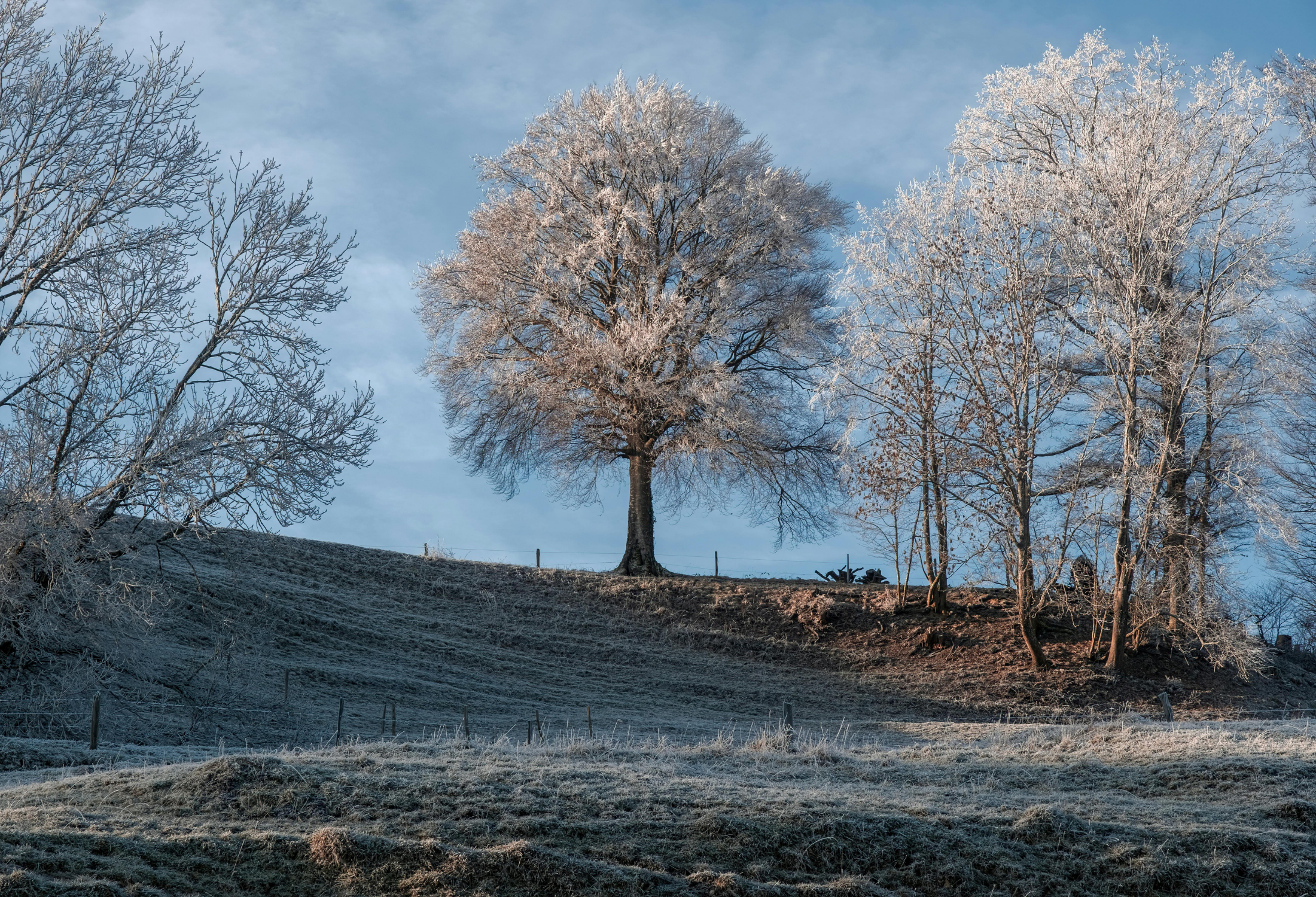
Frost-prone Australian gardens (Canberra, Highlands, Tasmania, inland Victoria) need trees built for cold, not just tolerant of it. Ten reliable picks across iconic frost-hardy native, classic European cold-climate shade, dramatic deciduous features and formal frost-hardy evergreens. Match the species to your frost zone and garden style.

Cold ClimateFrost TolerantTree Selection

Frost-prone gardens need trees that thrive in cold, not just tolerate it.

The difference matters. A marginal frost-tolerant species planted in Canberra will look ragged after every winter. A genuinely frost-hardy species will look better with each cold year that passes. The picks below evolved in cold climates and produce their best display when winter is biting.

Three things determine the right frost-hardy tree: your frost zone (light suburban frost vs hard inland frost vs alpine snow), deciduous vs evergreen trade-off, and the garden role (canopy shade, feature flowering, formal hedge, dramatic autumn colour).

The ten picks

Ordered by category: iconic frost-hardy native, classic cold-climate shade, dramatic feature deciduous, frost-hardy evergreen.

  1. Eucalyptus pauciflora (Snow Gum): the iconic Australian alpine native, twisted white bark, handles snow.
  2. Quercus palustris (Pin Oak): centuries-long American cold-climate shade canopy.
  3. Tilia cordata 'Greenspire' (Small-leaved Linden): formal European cold-climate avenue, fragrant summer flowers.
  4. Liriodendron tulipifera (Tulip Tree): dramatic tulip-shaped leaves, brilliant golden autumn, ultra cold-hardy.
  5. Ginkgo biloba (Maidenhair Tree): living fossil, unique fan leaves, brilliant golden autumn carpet.
  6. Pyrus nivalis (Snow Pear): silver-foliage refined cold-climate feature with four-season silver.
  7. Acer rubrum 'October Glory': brilliant red autumn Maple bred for reliable colour.
  8. Magnolia x soulangeana (Saucer Magnolia): huge saucer flowers in late winter on bare branches.
  9. Cupressus sempervirens 'Glauca' (Italian Pencil Pine): frost-hardy formal Mediterranean column for year-round structure.
  10. Photinia robusta: classic frost-hardy formal hedge with feature red new growth.

Compare at a glance

CultivarHeightWidthFormFoliageBest if you…
Eucalyptus pauciflora
Snow Gum
6 to 10m4 to 6mMulti-stemmed with twisted white feature barkFine grey-green sclerophyll leaves, evergreenAlpine and high-country gardens, severe frost-prone properties, native feature with iconic Australian bark.
Quercus palustris
Pin Oak
15 to 20m10 to 12mPyramidal young, spreading with ageGlossy mid-green summer, brilliant red-bronze autumnCold-climate country properties, frost-prone inland gardens, long-lived shade canopy in Canberra/Highlands/Tasmania conditions.
Tilia cordata 'Greenspire'
Small-leaved Linden / Greenspire Linden
12 to 15m6 to 8mCompact upright pyramidalHeart-shaped mid-green summer, buttery yellow autumnCold-climate European country house gardens, formal frost-hardy avenues, pollinator-attracting cold gardens.
Liriodendron tulipifera
Tulip Tree
20 to 25m10 to 15mUpright pyramidal with high straight trunkDistinctive tulip-shaped mid-green summer, brilliant golden autumnLarge cool-climate country properties, dramatic frost-hardy feature, golden autumn colour show.
Ginkgo biloba
Maidenhair Tree
12 to 20m8 to 10mUpright pyramidal young, broadening with ageDistinctive fan-shaped mid-green summer, brilliant gold autumnCool-climate feature tree, frost-prone gardens, dramatic golden autumn carpet.
Pyrus nivalis
Snow Pear
6 to 8m4 to 5mRounded uprightSilver-grey spring/summer, orange-red autumn, silver-grey winter barkFrost-prone cool-climate gardens, silver-palette feature planting, refined country house gardens, modest-scale entrances.
Acer rubrum 'October Glory'
October Glory Canadian Maple
8 to 12m6 to 8mUpright ovalMid-green summer, brilliant red autumnCool to cold climate front gardens, seasonal showpiece feature, formal cold-climate avenues.
Magnolia x soulangeana
Saucer Magnolia
5 to 8m4 to 6mRounded, multi-trunkMid green, deciduousCool-climate front garden feature, late winter flowering theatre, frost-prone gardens wanting dramatic flowering tree.
Cupressus sempervirens 'Glauca'
Italian Pencil Pine
8 to 12m1 to 1.5mStrict narrow upright columnDense silver-blue scale conifer, evergreenCool-climate Mediterranean gardens needing year-round structure, formal frost-hardy vertical accents, entrance pairs.
Photinia robusta
Robusta Photinia
3 to 5m (clip to size)1.5 to 2mUpright dense, clippableGlossy dark green mature with dramatic red new growth, evergreenFrost-hardy formal hedging, year-round structure in cold gardens, feature colour through red new growth.
Understand your frost zone
Frost severity varies dramatically across Australian cold-climate gardens. Match the species to your actual conditions.

Suburban cool zone (light frosts, occasional minus 2 to minus 5): All ten picks handle this comfortably.

Inland cold zone (hard frosts, regularly minus 5 to minus 10, e.g. Canberra, Orange, Tablelands): Pin Oak, Tilia, Liriodendron, Ginkgo, Snow Pear, October Glory all thrive here.

Alpine zone (severe frost and snow, below minus 10, e.g. Highlands, alpine NSW): Eucalyptus pauciflora (Snow Gum) is the standout. Ginkgo and Pin Oak also handle these extremes.
Deciduous vs evergreen in frost
Both work in frost-prone gardens, just differently.

Deciduous (drops leaves before winter): Pin Oak, Tilia, Liriodendron, Ginkgo, Snow Pear, October Glory, Saucer Magnolia. These have a built-in winter dormancy strategy that makes them inherently cold-hardy. They also deliver dramatic autumn colour shows.

Evergreen (holds foliage through winter): Snow Gum, Pencil Pine, Photinia robusta. These hold year-round structure but need genuine frost hardiness in the leaf tissue itself.

Most cool-climate gardens combine both for layered structure and seasonal interest.
Pick by garden role
Match the tree to the job it needs to do.

Long-lived shade canopy: Pin Oak, Tilia 'Greenspire', Liriodendron tulipifera.

Dramatic feature tree: Ginkgo, Snow Pear, October Glory, Liriodendron, Saucer Magnolia, Snow Gum.

Late-winter flowering theatre: Saucer Magnolia.

Formal year-round structure: Cupressus Pencil Pine, Photinia robusta.

Iconic native: Snow Gum.
Plant siting matters in frost-prone gardens
Where you plant affects how a tree experiences cold even more than the species choice.

Avoid frost pockets: Cold air pools in low-lying spots. Even very frost-hardy species suffer if planted in a frost pocket.

Use sheltered sites for marginal species: Saucer Magnolia flowers can be damaged by late frost if exposed. Position in northeast-facing sheltered spots to protect early flowers.

Position evergreens away from prevailing cold winds: Cold winds damage evergreen foliage even on frost-hardy species. Use windbreaks or buildings as shelter.
Mulch and protect young trees
Young trees are more vulnerable to frost than mature trees, but the right preparation makes a huge difference.

Heavy mulch over the root zone insulates roots through winter and prevents soil heaving from freeze-thaw cycles.

Stake young trees to prevent winter wind damage, which is often more harmful than the frost itself.

Plant in autumn or early spring, not winter: Establishing roots into warm soil before facing winter cold is much safer than planting into frozen ground.

1. Eucalyptus pauciflora (Snow Gum)

The Snow Gum is the iconic alpine native, the tree that grows above the snow line in the Australian Alps. Twisted white bark in patterns of cream, grey and pale green, fine grey-green leaves, multi-stem habit that handles deep snow cover, severe frost and the brutal exposure of high country sites. The native answer for the coldest Australian gardens.

Type
Iconic frost-hardy alpine native
Height
6 to 10m
Width
4 to 6m
Growth rate
Moderate
Foliage
Fine grey-green sclerophyll leaves, evergreen
Flowers
Cream flowers in summer feeding native bees
Form
Multi-stemmed with twisted white feature bark
Conditions
Full sun, well-drained soil, extreme frost and snow tolerant
Maintenance
Almost none. Self-shaping.
Best for
Alpine and high-country gardens, severe frost-prone properties, native feature with iconic Australian bark.

Why choose it

Few trees in cultivation match the Snow Gum for cold tolerance. The species evolved at altitudes of 1500m+ in the Australian Alps and handles routine -15 to -20 degrees Celsius without damage. The twisted white bark, fine grey-green foliage and graceful multi-stem habit are also one of the most distinctive sights in the Australian landscape, which means a frost-hardy feature tree that's also iconic.

Perfect pair

Plant as a feature in cold-climate native gardens, or alongside Quercus palustris for a layered native-and-deciduous cold-climate palette.

Tips for planting

Plant in full sun on sharp-drained soil. No phosphorus fertiliser. The white bark colour deepens with age, so position where the trunk is visible from inside the house.

The native that grows above the snow line.

Shop Eucalyptus pauciflora

2. Quercus palustris (Pin Oak)

The Pin Oak is the classic frost-hardy American shade canopy. Pyramidal young form broadens to a graceful spreading canopy with age, brilliant red-bronze autumn colour, and centuries of longevity in cold climates. Built for inland frost-prone Australian gardens where many other shade species struggle.

Type
Large deciduous shade tree, frost-hardy
Height
15 to 20m
Width
10 to 12m
Growth rate
Moderate to fast
Foliage
Glossy mid-green summer, brilliant red-bronze autumn
Flowers
Insignificant catkins in spring
Form
Pyramidal young, spreading with age
Conditions
Full sun, well-drained soil, very frost hardy
Maintenance
Low. Light formative pruning when young.
Best for
Cold-climate country properties, frost-prone inland gardens, long-lived shade canopy in Canberra/Highlands/Tasmania conditions.

Why choose it

Quercus palustris evolved in the cold winters of the American midwest where temperatures regularly drop below -25 degrees Celsius. In Australian conditions this translates to no frost damage even in the coldest inland gardens. The species also delivers brilliant red-bronze autumn colour that responds positively to cold autumns, which means frost-prone gardens get the strongest autumn shows.

Perfect pair

Plant as a single feature shade tree, or in matched rows of six or more along long cold-climate driveways. Pair with Tilia 'Greenspire' for layered European cold-climate canopy.

Tips for planting

Plant in autumn or early spring. Heavy mulch protects roots through hard winters. Light formative pruning to train single leader. Allow 5m clearance from buildings.

The centuries-long cold-climate shade canopy.

Shop Quercus palustris

3. Tilia cordata 'Greenspire' (Small-leaved Linden / Greenspire Linden)

'Greenspire' is the formal European Linden bred for cold-climate avenues and feature planting. Frost-hardy, heart-shaped leaves turn buttery yellow in autumn, fragrant cream summer flowers fill the air with honey scent. The refined European answer for cool inland Australian gardens.

Type
Formal deciduous European avenue tree, frost-hardy
Height
12 to 15m
Width
6 to 8m
Growth rate
Moderate
Foliage
Heart-shaped mid-green summer, buttery yellow autumn
Flowers
Fragrant cream summer flowers, prolific bee food
Form
Compact upright pyramidal
Conditions
Full sun, adaptable soil, frost hardy, cold-climate preferred
Maintenance
Low. Light formative pruning when young.
Best for
Cold-climate European country house gardens, formal frost-hardy avenues, pollinator-attracting cold gardens.

Why choose it

Tilia cordata is one of the classic European cold-climate trees, native to the deciduous forests of central and eastern Europe where winters routinely drop below -20 degrees Celsius. 'Greenspire' brings this cold tolerance to Australian frost-prone gardens with a compact upright habit, refined heart-shaped foliage and the fragrant summer flowers that make Linden so beloved across Europe.

Perfect pair

Plant as a feature in cool-climate front gardens, in matched avenue rows at 6 to 8m spacing, or beside Quercus palustris for layered European cold-climate shade.

Tips for planting

Plant in autumn or early spring. Heavy winter mulch. Light formative pruning to maintain single leader. Position in full sun.

The fragrant European cold-climate avenue.

Shop Tilia cordata 'Greenspire'

4. Liriodendron tulipifera (Tulip Tree)

The Tulip Tree is one of the most distinctive deciduous trees in cultivation. Unique tulip-shaped leaves (genuinely shaped like a tulip outline), cup-shaped greenish-yellow summer flowers, and brilliant golden autumn colour. Ultra cold-hardy and frost-tolerant. A dramatic feature tree for cool-climate properties with space for a 20m+ canopy.

Type
Large feature deciduous tree, frost-hardy
Height
20 to 25m
Width
10 to 15m
Growth rate
Fast
Foliage
Distinctive tulip-shaped mid-green summer, brilliant golden autumn
Flowers
Cup-shaped greenish-yellow flowers in summer
Form
Upright pyramidal with high straight trunk
Conditions
Full sun, well-drained soil, very frost hardy
Maintenance
Low. Light formative pruning when young.
Best for
Large cool-climate country properties, dramatic frost-hardy feature, golden autumn colour show.

Why choose it

Liriodendron tulipifera is one of the very few trees to combine genuine cold hardiness with truly distinctive leaf shape. The tulip-shaped foliage is a year-round talking point, the cup-shaped summer flowers are unique among large deciduous trees, and the brilliant golden autumn colour rivals the best Ginkgo. The species is from the eastern North American forest belt and handles the same severe winters as Pin Oak.

Perfect pair

Plant as a single dramatic specimen in larger cool-climate properties. Pair with Ginkgo biloba for layered golden autumn colour.

Tips for planting

Plant in autumn or early spring. Needs minimum 10m clearance from buildings for mature canopy. Best on larger country properties. Heavy winter mulch.

Tulip-shaped leaves, golden autumn, ultra cold-hardy.

Shop Liriodendron tulipifera

5. Ginkgo biloba (Maidenhair Tree)

The Ginkgo is the world's oldest living tree species, with fossils dating back 270 million years. Unique fan-shaped leaves turn brilliant gold in autumn then drop suddenly to create a golden carpet. Ultra cold-hardy (tolerates -30 degrees Celsius in its native range), pest-free, pollution-tolerant. The single most resilient large feature tree available.

Type
Living-fossil ultra-cold-hardy feature tree
Height
12 to 20m
Width
8 to 10m
Growth rate
Moderate
Foliage
Distinctive fan-shaped mid-green summer, brilliant gold autumn
Flowers
Insignificant (we sell male grafted clones, no fruit)
Form
Upright pyramidal young, broadening with age
Conditions
Full sun, adaptable soil, ultra cold-hardy, pollution-tolerant
Maintenance
Almost none. Pest-free, disease-free.
Best for
Cool-climate feature tree, frost-prone gardens, dramatic golden autumn carpet.

Why choose it

Ginkgo biloba is a living link to the dinosaur era and one of the toughest trees in cultivation. The species survived ice ages, the dinosaur extinction event and even the Hiroshima atomic bomb (Ginkgos near the bomb site recovered and still grow). Practically, this translates to a tree that handles whatever Australian frost-prone gardens can throw at it: extreme cold, pollution, drought, poor soil, urban conditions. The fan-shaped foliage and golden autumn carpet are bonuses on top of bulletproof resilience.

Perfect pair

Plant as a single feature in front gardens, or in matched pairs flanking an entrance. Pair with Liriodendron tulipifera for layered golden autumn show.

Tips for planting

Plant in autumn or early spring. Tolerates almost any soil. Slow to establish but unstoppable once away. Position in full sun for strongest autumn colour.

The 270-million-year-old tree that handles any frost.

Shop Ginkgo biloba

6. Pyrus nivalis (Snow Pear)

The Snow Pear is built for cold climates, the species is literally named for its ability to thrive where actual snow falls. Silver-grey leaves through summer, pure white blossom on bare branches in spring, orange-red autumn colour and silver-grey winter bark. A refined frost-hardy feature with four-season silver tones.

Type
Silver-foliage frost-hardy deciduous feature
Height
6 to 8m
Width
4 to 5m
Growth rate
Moderate
Foliage
Silver-grey spring/summer, orange-red autumn, silver-grey winter bark
Flowers
Pure white spring blossom on bare branches
Form
Rounded upright
Conditions
Full sun, well-drained soil, very frost and cold hardy
Maintenance
Low. Minimal pruning required.
Best for
Frost-prone cool-climate gardens, silver-palette feature planting, refined country house gardens, modest-scale entrances.

Why choose it

Most ornamental Pears tolerate frost but don't necessarily thrive in it. Snow Pear is the exception: the species evolved in the Balkan mountains where winters are severe and produces the strongest silver foliage colour, sharpest white blossom and most reliable autumn show when grown in genuinely cold climates. Frost-prone gardens get the best of this tree.

Perfect pair

Plant as a single front-garden feature, in matched pairs flanking an entrance, or beside Cupressus 'Glauca' Pencil Pine for a silver cool-climate Mediterranean palette.

Tips for planting

Plant in autumn or early spring. Full sun gives strongest silver colour. Light winter pruning only if needed for shape. Cold climates produce the best display.

Silver elegance for cold-climate gardens.

Shop Pyrus nivalis

7. Acer rubrum 'October Glory' (October Glory Canadian Maple)

'October Glory' is the dramatic red autumn Maple selected for reliable colour in Australian cool-climate conditions. Brilliant red foliage in autumn, upright oval form, frost-hardy and cold-climate preferred. The seasonal showpiece for frost-prone gardens that want a guaranteed red display every autumn.

Type
Deciduous feature tree with brilliant red autumn, frost-hardy
Height
8 to 12m
Width
6 to 8m
Growth rate
Moderate to fast
Foliage
Mid-green summer, brilliant red autumn
Flowers
Small red spring flowers
Form
Upright oval
Conditions
Full sun, well-drained slightly acid soil, frost hardy, cool climate preferred
Maintenance
Low. Light formative pruning when young.
Best for
Cool to cold climate front gardens, seasonal showpiece feature, formal cold-climate avenues.

Why choose it

Red Maples are the autumn colour signature of the cold forests of New England and southern Canada. 'October Glory' was specifically bred to deliver that signature red autumn colour reliably in slightly warmer southern Australian conditions, which makes it the standout pick for cool-climate Australian gardens that want guaranteed red autumn drama every year.

Perfect pair

Plant in matched pairs at an entrance, or in matched rows of 4 to 6 at 6 to 8m spacing along driveways. Pair with Ginkgo biloba for layered red-and-gold autumn colour.

Tips for planting

Plant in autumn or early spring. Prefers cool to cold climate for strongest red colour. Slightly acid soil for richest colour. Full sun. Light winter prune only.

Brilliant red autumn for cold-climate gardens.

Shop Acer rubrum 'October Glory'

8. Magnolia x soulangeana (Saucer Magnolia)

Saucer Magnolia is the late-winter showpiece for frost-prone gardens. Huge saucer-shaped pink-and-white flowers open on bare branches in late winter just as the cold is breaking, the most theatrical event in any cold-climate garden calendar. Frost-hardy and at home in cool inland Australian conditions.

Type
Frost-hardy deciduous feature with late winter flowers
Height
5 to 8m
Width
4 to 6m
Growth rate
Moderate
Foliage
Mid green, deciduous
Flowers
Huge saucer-shaped pink and white late winter to early spring on bare branches
Form
Rounded, multi-trunk
Conditions
Full sun to part shade, well-drained soil, frost hardy
Maintenance
Low. Minimal pruning required.
Best for
Cool-climate front garden feature, late winter flowering theatre, frost-prone gardens wanting dramatic flowering tree.

Why choose it

Most flowering trees wait for spring warmth. Saucer Magnolia opens its huge saucer flowers in late winter on bare branches, the early visual signal that winter is breaking. The species is frost-hardy and actually performs best in cold-climate gardens where the bare-branch flowering effect is most dramatic against the winter sky. A late-frost can damage open flowers, so position in a sheltered northeast-facing site for best results in the coldest gardens.

Perfect pair

Plant as a single feature tree at the front of the house where late-winter flowers can be seen from inside. Pair with Pyrus nivalis for layered late-winter to spring flowering succession.

Tips for planting

Position with shelter from late frosts to protect open flowers. Mulch heavily. Surface soil benefits from staying cool and moist.

Saucer flowers on bare branches, late-winter theatre.

Shop Magnolia x soulangeana

9. Cupressus sempervirens 'Glauca' (Italian Pencil Pine)

The Italian Pencil Pine is the formal evergreen column that handles frost without complaint. Strict narrow upright form, silver-blue scale foliage, full frost and drought tolerance once established. The formal evergreen vertical for cool-climate Mediterranean style gardens that need year-round structure through winter.

Type
Frost-hardy evergreen Mediterranean conifer column
Height
8 to 12m
Width
1 to 1.5m
Growth rate
Moderate
Foliage
Dense silver-blue scale conifer, evergreen
Flowers
Insignificant
Form
Strict narrow upright column
Conditions
Full sun, well-drained soil, frost hardy, drought tolerant
Maintenance
Very low. Naturally narrow, no clipping needed.
Best for
Cool-climate Mediterranean gardens needing year-round structure, formal frost-hardy vertical accents, entrance pairs.

Why choose it

Most Mediterranean species are drought-tolerant but not necessarily frost-hardy. Cupressus sempervirens 'Glauca' is the exception. The species comes from the Mediterranean basin and holds full Mediterranean drought tolerance plus genuine frost hardiness, which makes it the rare evergreen column that handles cool inland Australian conditions where Italian gardens look uncertain.

Perfect pair

Plant in matched pairs flanking an entrance, in rows of three or five for boundary rhythm, or with Pyrus nivalis for layered silver Mediterranean cold-climate palette.

Tips for planting

Plant in autumn or early spring. No clipping needed. Full sun for the silver-blue colour. Tolerates cool inland conditions including frost.

Frost-hardy silver-blue Mediterranean vertical.

Shop Cupressus sempervirens 'Glauca'

10. Photinia robusta (Robusta Photinia)

Photinia robusta is the classic frost-hardy formal hedge with dramatic red new growth. Glossy dark green mature leaves plus vibrant red flushes through spring and after every clip. Cold-tolerant, reliable in inland Australian conditions, and the standard formal hedge for frost-prone gardens that need year-round structure.

Type
Fast-growing frost-hardy formal hedge
Height
3 to 5m (clip to size)
Width
1.5 to 2m
Growth rate
Fast
Foliage
Glossy dark green mature with dramatic red new growth, evergreen
Flowers
White clusters in spring
Form
Upright dense, clippable
Conditions
Full sun to part shade, well-drained soil, frost tolerant
Maintenance
Two to three clips per year for repeat red flush
Best for
Frost-hardy formal hedging, year-round structure in cold gardens, feature colour through red new growth.

Why choose it

Most fast formal hedges struggle in genuine frost. Photinia robusta is the reliable exception, handling severe Australian inland frost without losing density or the signature red new growth. The species combines the formal evergreen hedge function with seasonal feature colour, which is exactly what cool-climate gardens need to break up the deciduous winter bareness.

Perfect pair

Plant as a formal hedge in cool-climate gardens at 1m spacing. Combines well with Cupressus 'Glauca' Pencil Pine as matched evergreen formal structure.

Tips for planting

Plant at 1m spacing. Clip after each major growth flush to encourage repeat red new growth. Full sun gives strongest red colour.

Frost-hardy formal hedge with feature red flushes.

Shop Photinia robusta

How to plant and care for them

Plant in autumn or early spring
Avoid planting through deep winter. Autumn planting gives roots a chance to establish before the worst cold. Early spring planting (just after the last hard frost) is the next best window. Mid-summer planting in cold-climate gardens often fails through transplant shock.
Heavy mulch over the root zone
Apply 100mm of organic mulch out to the drip line. Mulch insulates the root zone through winter freezes, prevents soil heaving from freeze-thaw cycles, and gives roots a thermal buffer. Keep mulch a hand's width clear of the trunk.
Stake young trees against winter wind
In cold-climate gardens, winter wind often does more damage than frost. Stake each young tree with a single stake and adjustable ties for the first 18 to 24 months. Remove stakes once the trunk is self-supporting.
Watering through establishment
Watering is essential through establishment. Dry winter conditions can dehydrate young trees even when temperatures are below freezing. Adjust based on weather and how the trees are performing.
Prune in late winter
For deciduous picks, prune in late winter while the tree is still dormant but the worst frost is past. Avoid autumn pruning, which can stimulate new soft growth that gets damaged by early frost. Evergreen picks (Photinia, Pencil Pine) clip in spring after the last hard frost.

Frequently asked questions

How cold can these trees handle?
All ten picks handle Australian inland frost down to minus 10 degrees Celsius reliably. The strongest cold-tolerance comes from Eucalyptus pauciflora (Snow Gum, evolved at altitudes above 1500m), Ginkgo biloba (handles minus 30 in its native range) and Quercus palustris (American midwest winters). These three are the picks for the coldest sites including alpine gardens.
Will late frosts damage spring-flowering trees?
Open flowers can be damaged by late frost on Saucer Magnolia and Pyrus species, although the tree itself is unharmed and continues normally. To protect early flowers in the coldest gardens, position these species in sheltered northeast-facing sites that get morning sun (which thaws frost gently rather than rapidly). Pin Oak, Tilia, Ginkgo and Liriodendron flower or leaf out later in spring after the worst late-frost risk has passed.
Are Snow Gums the only frost-hardy native?
Snow Gum (Eucalyptus pauciflora) is the standout, but plenty of other natives handle moderate frost. Banksia integrifolia, Acacia varieties, and several other Eucalyptus species tolerate light to moderate Australian frosts. For genuine alpine and high-country cold, Snow Gum is the reliable choice.
Where should I avoid planting in a frost-prone garden?
Cold air pools in low-lying spots overnight, creating 'frost pockets' that can be several degrees colder than the surrounding garden. Avoid planting marginal species in these zones. Also avoid exposing evergreen species (Pencil Pine, Photinia) to prevailing cold winds, which damage foliage even on frost-hardy species. Use buildings, hedges or topography as windbreaks.
Do I need to protect young trees through winter?
Yes. Young trees are more vulnerable than mature trees, but proper preparation makes a huge difference. Plant in autumn so roots establish before the worst cold. Apply heavy mulch over the root zone for insulation. Stake each young tree against winter wind damage. After 2 to 3 years the tree is generally self-sufficient for cold protection.

The wrap up

Frost-prone gardens need trees that thrive in cold, not just tolerate it. Ten reliable picks across iconic frost-hardy native, classic cold-climate shade, dramatic deciduous features and formal frost-hardy evergreens.