



Skip to content

VOLUME DISCOUNTS APPLY AUTOMATICALLY AT CHECKOUT.

All stock is grown, maintained and graded in strict accordance with AS 4373-2007, Australian Standard for Nursery Stock.

Flowering Trees: 6 Picks for a Year of Garden Colour

Flowering Trees: 6 Picks for a Year of Garden Colour

From summer crepe myrtles to spring magnolias and native flowering gums, the right flowering trees give your garden a colour rhythm across the whole year. Here are six picks to plant for back-to-back seasonal interest in Australian conditions.

ColourCrepe MyrtlesFeature TreesFlowering TreesJacarandaMagnolia

Flowering trees do the heavy lifting in any garden. A single specimen in full bloom can change how the whole space feels for weeks at a time. The trick is layering picks so something is always flowering — from late winter Magnolias right through summer Crepe Myrtles and autumn native gums.

The six flowering trees below cover the seasonal arc. Choose two or three for back-to-back colour, or plant all six across a larger garden for a continuous show.

  • Magnolia x soulangeana — the classic deciduous Saucer Magnolia. Large pink-and-white tulip-shaped flowers on bare branches in early spring. Pure drama for a few weeks each year.
  • Lagerstroemia 'Natchez' — the long-flowering Crepe Myrtle. White summer panicles, smooth cinnamon trunks, autumn red. Three seasons in one tree.
  • Jacaranda mimosifolia — the iconic purple spring display. The lavender-purple canopy is one of the most photographed sights in the country.
  • Pyrus nivalis — the Snow Pear. Pure white spring blossom and silver-grey foliage. Refined Mediterranean elegance.
  • Corymbia 'Wildfire' — the grafted Red Flowering Gum. Crimson summer flower clusters feed honeyeaters for weeks on a reliable native frame.
  • Magnolia 'Kay Parris' — the longest-flowering grandiflora. Wavy dark green leaves with dramatic bronze undersides and creamy summer flowers from spring through autumn.

Compare at a glance

CultivarHeightWidthFormFoliageBest if you…
Lagerstroemia indica 'Natchez'
Natchez Crepe Myrtle
6-8m4-6mVase-shaped with smooth cinnamon barkMid-green leaves turning fiery orange and red in autumnSunny front gardens, courtyard feature, summer colour
Lagerstroemia indica 'Lipan'
Lipan Crepe Myrtle
4-5m3-4mRounded with smooth multi-stem barkBronze new growth, mid-green summer leaves, red and orange autumn tonesSmaller gardens, courtyards, pots
Magnolia x soulangeana
Saucer Magnolia
5-7m4-5mSpreading with multiple low branchesLarge mid-green leaves through summer, golden yellow in autumnFront lawns, cool climate gardens, feature plantings
Jacaranda mimosifolia
Jacaranda
10-15m8-10mSpreading umbrella shapeFine fern-like green foliage through summerLarge gardens, avenues, statement front yards
Pyrus nivalis
Snow Pear
6-8m4-6mUpright roundedSilver-grey new growth maturing to soft green, holds well into winterCool gardens, feature plantings, soft Mediterranean schemes
Corymbia ficifolia 'Wildfire'
Wildfire Flowering Gum
5-7m3-5mCompact roundedGlossy mid to dark green leaves year roundNative gardens, attracting birds, smaller yards
Match the season to the flowering window
Late winter to early spring: Magnolia x soulangeana. Spring: Snow Pear, Jacaranda. Late spring to summer: Kay Parris Magnolia. Summer: Natchez, Wildfire. Layer two or three for back-to-back colour.
Climate fit
Magnolias and Snow Pear love cool to warm-temperate. Jacaranda prefers warm-temperate to subtropical. Natchez and Wildfire handle a wide range — both flower strongest in full sun and warmth.
Block size matters
Jacaranda needs 12 to 15m clear all round. Magnolia x soulangeana, Natchez and Wildfire sit in 5 to 8m at maturity. Snow Pear at 8 to 10m. Kay Parris stays compact at 3 to 5m.
Evergreen or deciduous
Kay Parris and Wildfire are evergreen — structure plus flowers. Magnolia x soulangeana, Natchez, Snow Pear and Jacaranda are deciduous — seasonal drama with bare winter form.
Pair with structure
The strongest flowering plantings layer a deciduous flowering feature against an evergreen hedge or screen behind. That way the garden still reads as designed when the deciduous show ends.

1. Lagerstroemia indica 'Natchez' (Natchez Crepe Myrtle)

Pure white blooms cascade through summer like fresh snow on warm air. Natchez carries the show from December through to autumn, then hands over to cinnamon bark for winter interest.

Type
Deciduous flowering feature tree
Height
6-8m
Width
4-6m
Growth rate
Fast
Foliage
Mid-green leaves turning fiery orange and red in autumn
Flowers
Large panicles of pure white flowers across summer and into autumn
Form
Vase-shaped with smooth cinnamon bark
Conditions
Full sun, free-draining soil, tolerates heat and drought once established
Maintenance
Low. Light winter prune to shape
Best for
Sunny front gardens, courtyard feature, summer colour

Why choose it

Three seasons of interest in one tree. Summer flowers, autumn colour, winter bark.

Perfect pair

Underplant with a clipped Buxus hedge for a relaxed-formal contrast.

Tips for planting

Plant in your sunniest spot. The more sun, the better the flower display.

A feature tree that earns its keep across every season.

Shop Lagerstroemia indica 'Natchez'

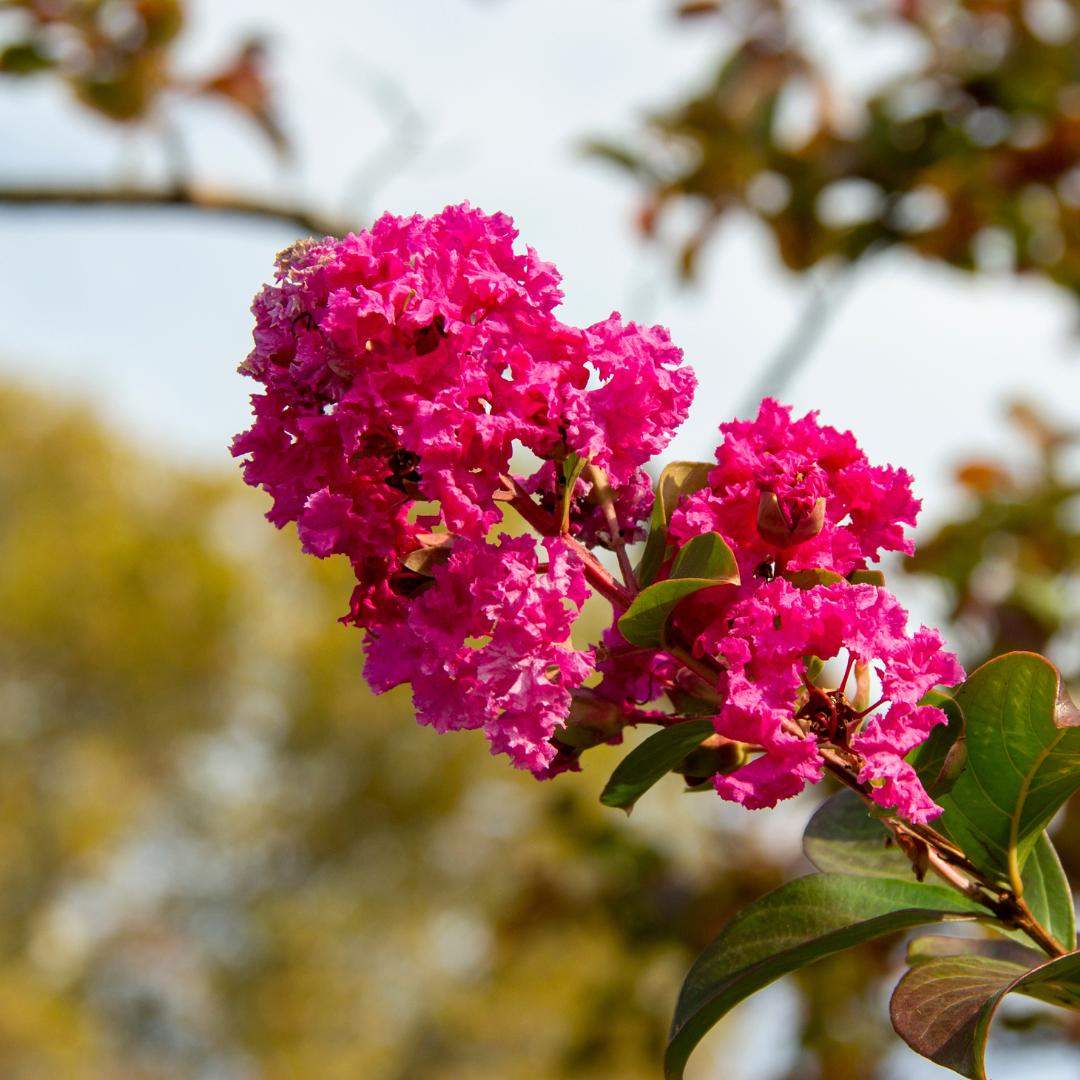
2. Lagerstroemia indica 'Lipan' (Lipan Crepe Myrtle)

Soft lavender-pink panicles brighten the warmest months. Lipan is the gentler cousin of the crepe myrtle family, with a rounded shape that fits suburban front yards beautifully.

Type
Deciduous flowering feature tree
Height
4-5m
Width
3-4m
Growth rate
Moderate to fast
Foliage
Bronze new growth, mid-green summer leaves, red and orange autumn tones
Flowers
Lavender-pink panicles from mid-summer to early autumn
Form
Rounded with smooth multi-stem bark
Conditions
Full sun, well-drained soil, frost and drought tolerant
Maintenance
Low. Prune lightly in winter for shape
Best for
Smaller gardens, courtyards, pots

Why choose it

Long-flowering and compact. One of the most reliable crepe myrtles for Australian conditions.

Perfect pair

Pair with a clipped Bay tree for a soft-meets-structured combination.

Tips for planting

Mulch well in spring to lock in moisture before the heat hits.

Months of soft pink colour with almost no maintenance.

Shop Lagerstroemia indica 'Lipan'

3. Magnolia x soulangeana (Saucer Magnolia)

Spring opens with goblet-shaped flowers on bare branches. Saucer Magnolia is one of the most spectacular small trees for late winter to early spring colour in cooler Australian gardens.

Type
Deciduous flowering feature tree
Height
5-7m
Width
4-5m
Growth rate
Moderate
Foliage
Large mid-green leaves through summer, golden yellow in autumn
Flowers
Large pink and white tulip-shaped blooms in late winter and early spring
Form
Spreading with multiple low branches
Conditions
Full sun to part shade, deep moist well-drained soil, frost tolerant
Maintenance
Low. Avoid heavy pruning
Best for
Front lawns, cool climate gardens, feature plantings

Why choose it

Few trees give a more dramatic spring show than a Saucer Magnolia in full flower.

Perfect pair

Plant near a Buxus or Murraya hedge to frame the spring display.

Tips for planting

Position out of strong westerly wind to protect the blooms.

The spring centrepiece every cool-climate garden deserves.

Shop Magnolia x soulangeana

4. Jacaranda mimosifolia (Jacaranda)

When jacarandas flower, whole streets turn purple. This is the tree that says spring in Sydney and Brisbane, with a soft fern-like foliage and a graceful spreading form.

Type
Deciduous flowering feature tree
Height
10-15m
Width
8-10m
Growth rate
Fast
Foliage
Fine fern-like green foliage through summer
Flowers
Lavender-purple trumpet flowers in late spring
Form
Spreading umbrella shape
Conditions
Full sun, free-draining soil, frost-sensitive when young
Maintenance
Low. Prune only to remove dead branches
Best for
Large gardens, avenues, statement front yards

Why choose it

Nothing else replicates the purple carpet a mature Jacaranda creates in late spring.

Perfect pair

Pair with a clipped Murraya hedge underneath for year round greenery beneath the spring show.

Tips for planting

Give it room. Jacarandas need space to show their best form.

The most iconic spring flowering tree in Australia.

Shop Jacaranda mimosifolia

5. Pyrus nivalis (Snow Pear)

Soft silver foliage and clouds of white spring flowers. Snow Pear is the dreamy cool-climate choice for a feature tree that also doubles as a privacy element.

Type
Semi-deciduous ornamental pear
Height
6-8m
Width
4-6m
Growth rate
Moderate
Foliage
Silver-grey new growth maturing to soft green, holds well into winter
Flowers
Masses of pure white blooms in early spring
Form
Upright rounded
Conditions
Full sun, tolerates most soils, very frost hardy
Maintenance
Low. Light prune to maintain shape
Best for
Cool gardens, feature plantings, soft Mediterranean schemes

Why choose it

Silver foliage is rare. Snow Pear gives you year round soft tones plus a spring flower hit.

Perfect pair

Pair with a clipped Bay tree to anchor the soft silver foliage with rich green structure.

Tips for planting

Plant in a sunny aspect for the most reliable spring flowering.

The understated elegance of silver and white in one tree.

Shop Pyrus nivalis

6. Corymbia ficifolia 'Wildfire' (Wildfire Flowering Gum)

Vivid scarlet flowers that wake up the garden in summer. Wildfire is a grafted flowering gum bred for compact size and reliable, brilliant colour.

Type
Evergreen flowering native
Height
5-7m
Width
3-5m
Growth rate
Moderate
Foliage
Glossy mid to dark green leaves year round
Flowers
Large clusters of bright red flowers from December to February
Form
Compact rounded
Conditions
Full sun, free-draining soil, drought tolerant once established
Maintenance
Very low. Light tip prune after flowering
Best for
Native gardens, attracting birds, smaller yards

Why choose it

Pulls native birds and bees in by the dozen. Brilliant red flowers when most trees have finished.

Perfect pair

Plant with a clipped Lilly Pilly hedge to give the red flowers a dark green backdrop.

Tips for planting

Avoid heavy clay. Grafted gums prefer free-draining soil.

Pure summer drama in a compact native package.

Shop Corymbia ficifolia 'Wildfire'

How to plant and care for them

Pick the position
All six want full sun for the strongest flowering. Allow the mature canopy width clear of buildings and other trees.
Prepare the planting hole
Dig the hole twice the width of the rootball and the same depth. Mix the original soil with aged compost. Magnolias prefer slightly acidic well-drained soil.
Plant level
Set the rootball so the top sits level with surrounding soil, never deeper. Backfill with the soil and compost mix and leave a watering well at the surface.
Water in deeply at planting
Soak the rootball thoroughly so the new soil settles around the roots.
Mulch out to the drip line
Lay 75 to 100mm of organic mulch from 50mm clear of the trunk out to the drip line.
Water deeply through the first two summers
Twice a week deep watering in warm weather, once a week in mild weather, through the first two summers. Established trees hold their own on rainfall.
Light shaping prune only
Prune lightly in winter for shape — never hard back. The natural form carries the flowering show.

The wrap up

The six flowering picks cover the seasonal arc. Magnolia x soulangeana leads early spring. Snow Pear and Jacaranda carry spring. Kay Parris runs late spring through autumn. Natchez and Wildfire hold summer.

Layer two or three of these picks for back-to-back colour and the garden will roll through the seasons almost without a break.