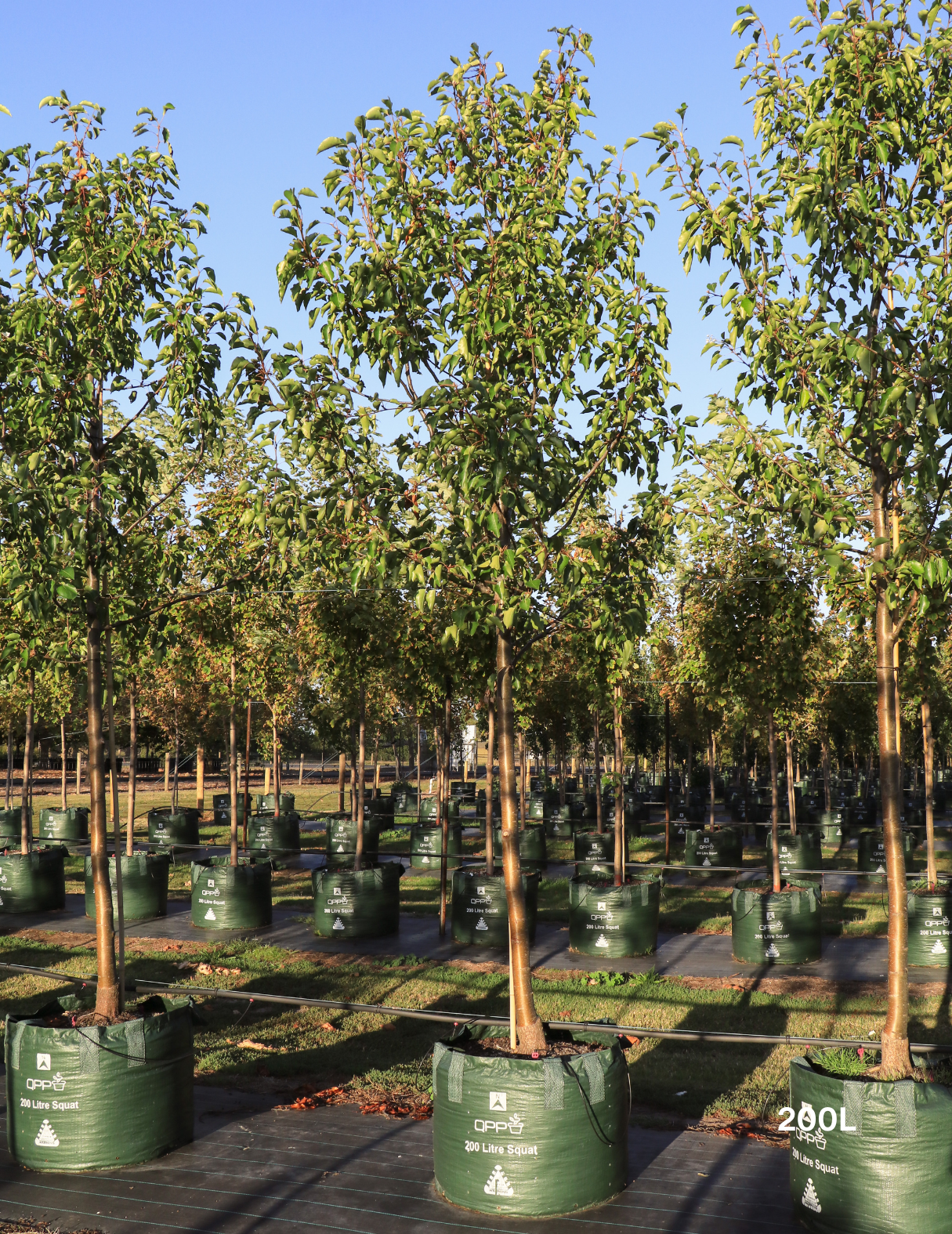
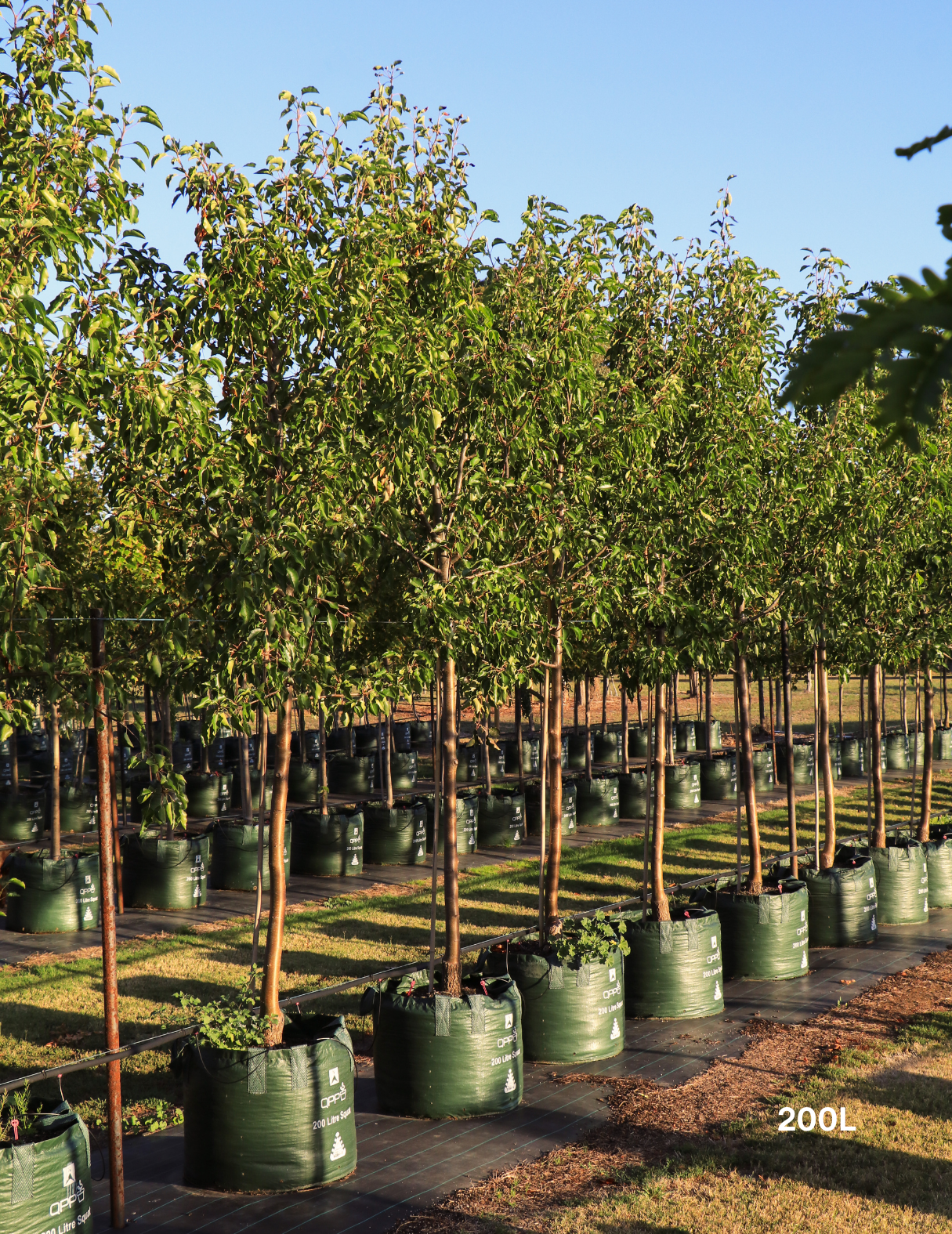
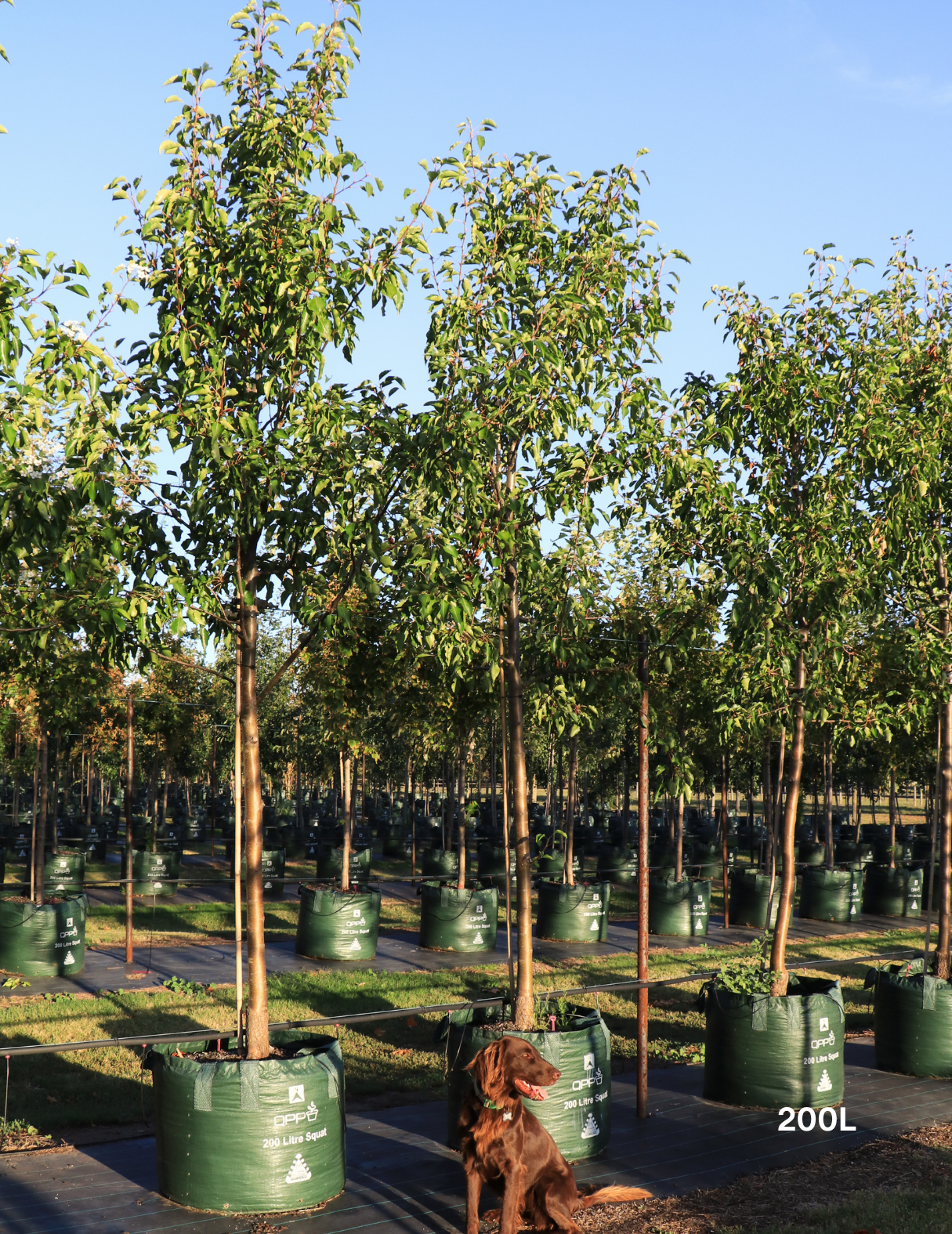
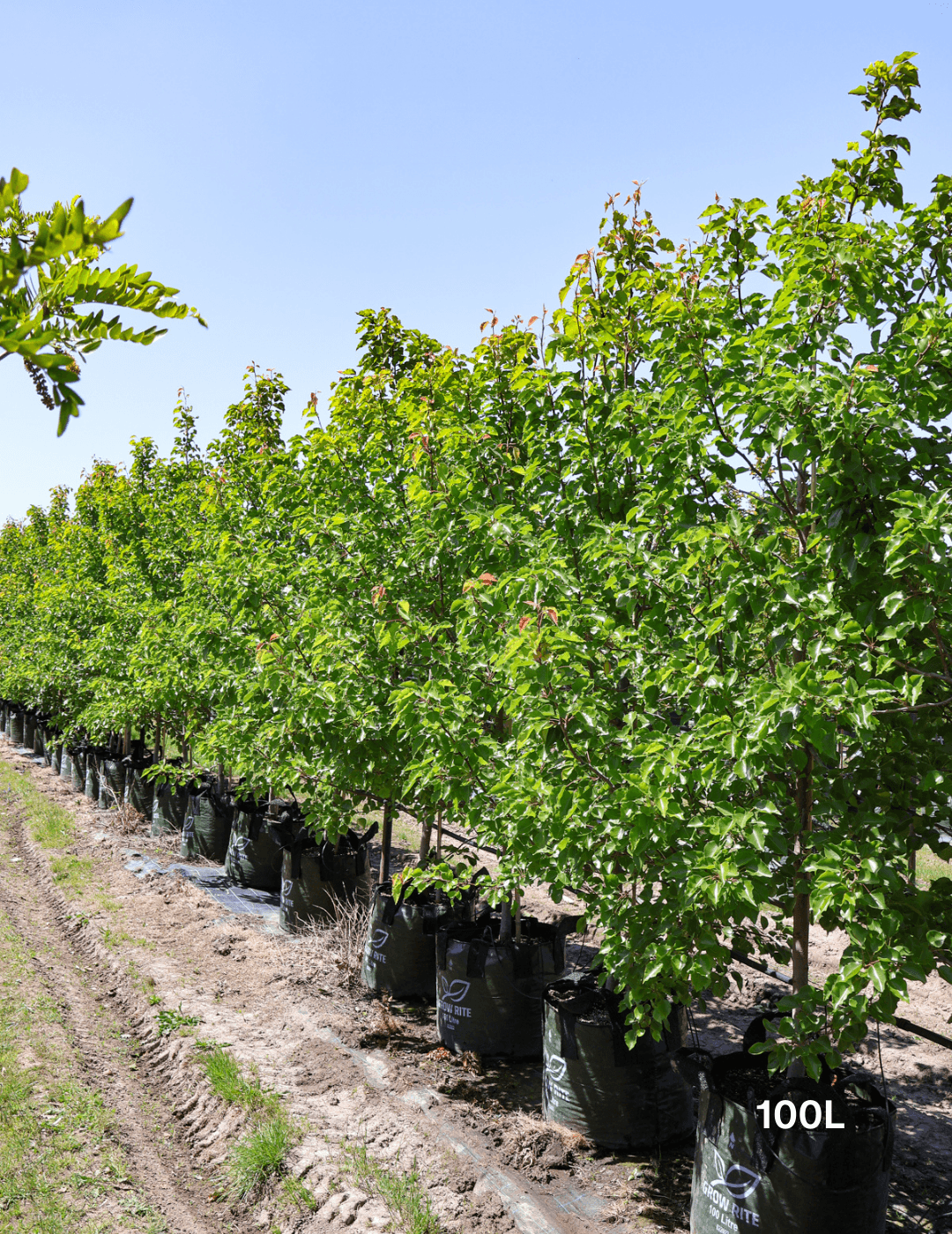
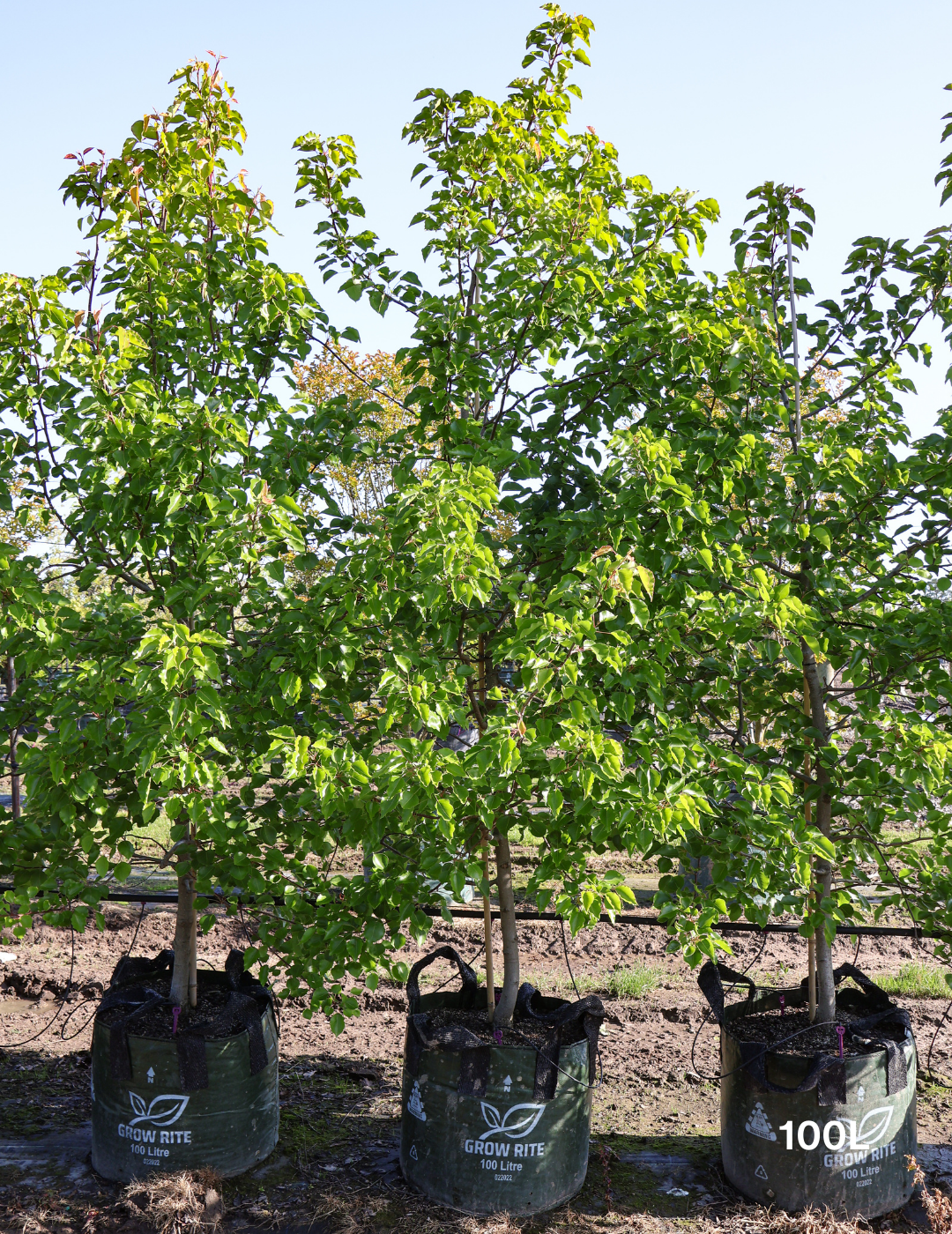
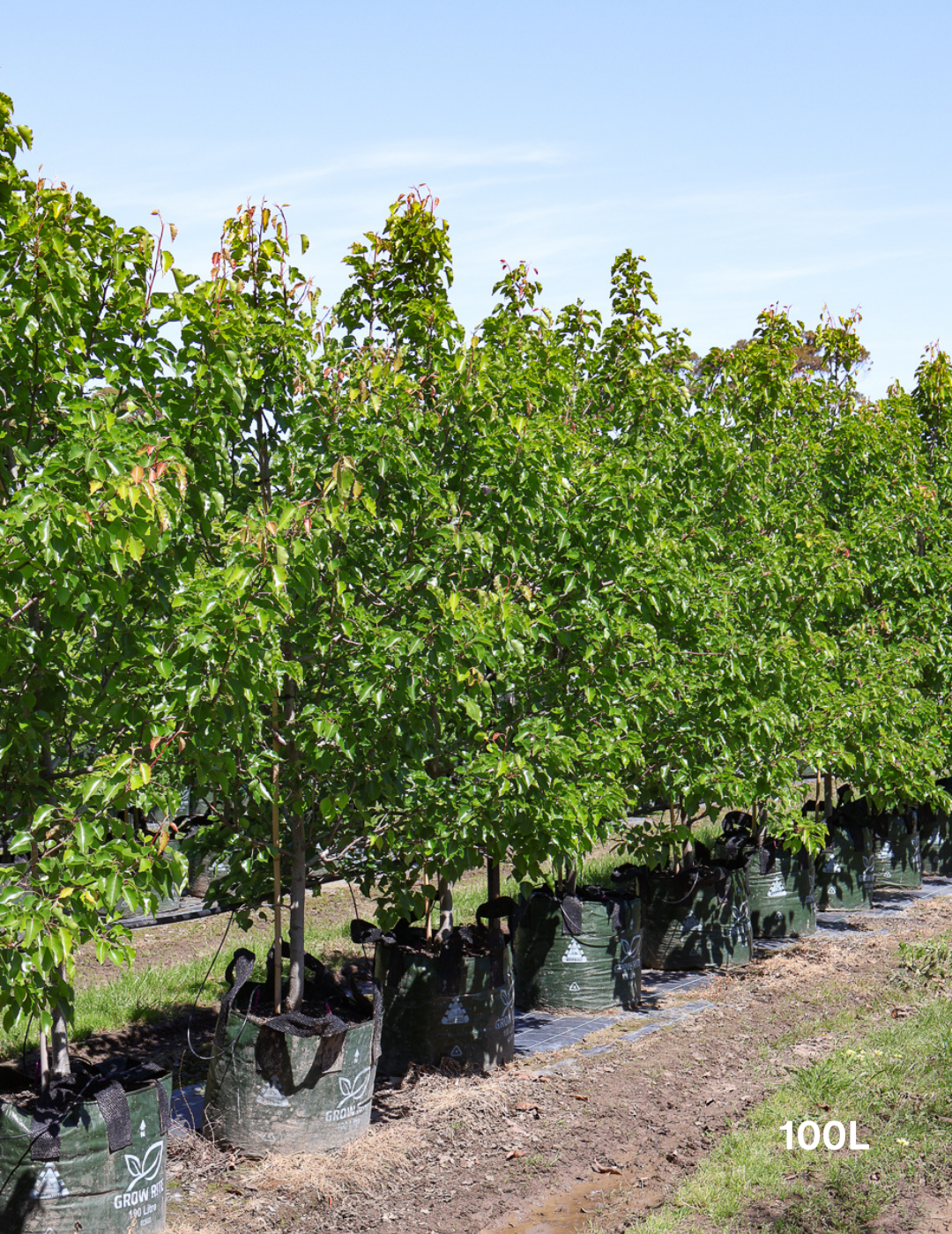
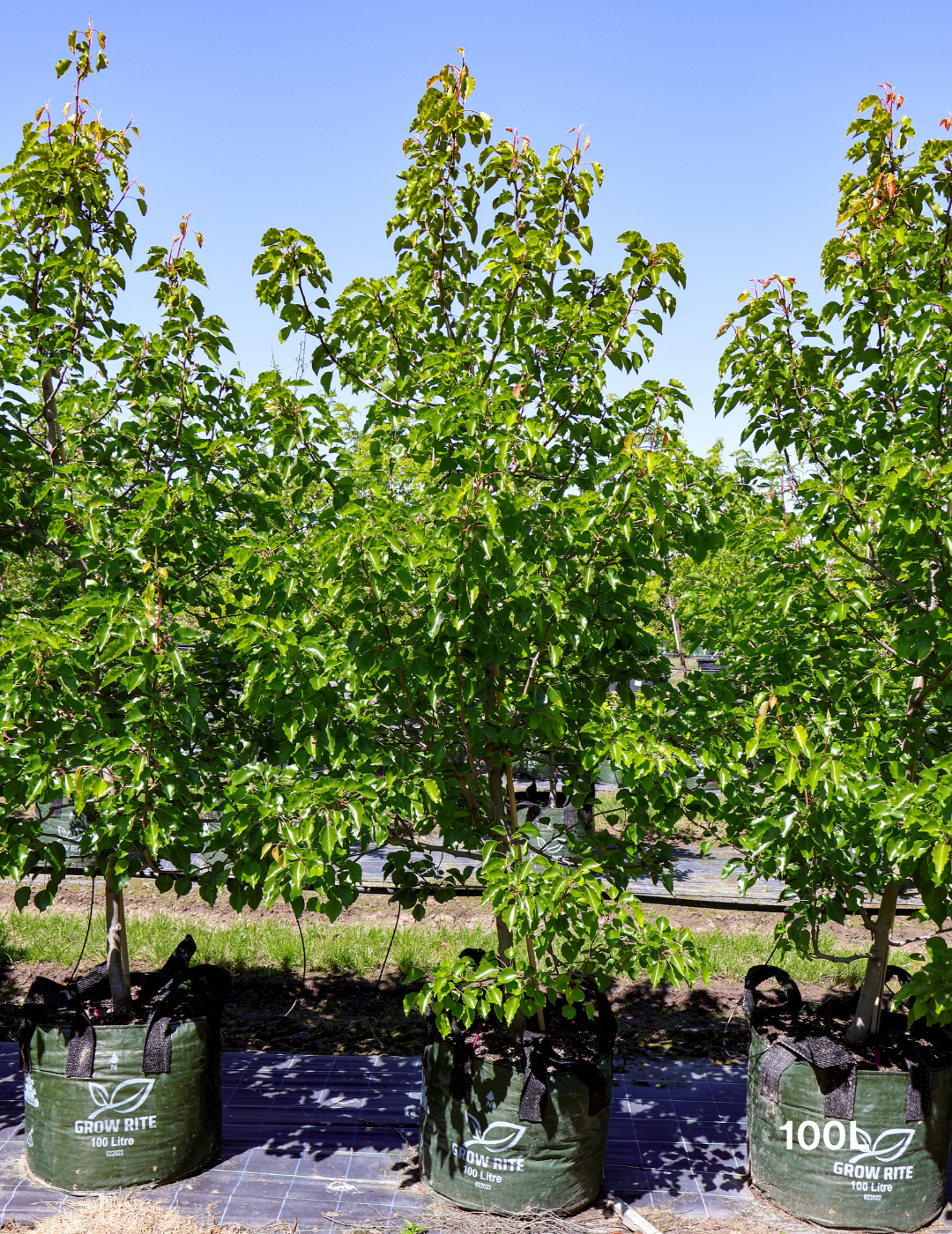
Pyrus ussuriensis – Manchurian Pear
Pyrus ussuriensis – Manchurian Pear
Couldn't load pickup availability
Current Stock Height Guides
Current Stock Height Guides
Height guide disclaimer: Height ranges are approximate only. As living products, plant heights naturally vary between individual plants, batches, and seasons. No guarantee is given that supplied plants will fall within the stated range. If minimum heights are required, you mustconfirm current batch heights with Evergreen Trees Direct prior to purchase. Variation in height is normal and is not grounds for return, refund, replacement, or compensation.
Trade Customers
Trade Customers
We supply advanced trees to landscapers, developers, architects, and councils Australia-wide. Trade clients receive fast quotes, expert advice, and access to premium stock with reliable freight.
Root Ball Dimensions (Height & Width)
Root Ball Dimensions (Height & Width)
Use this as a reference when digging your planting hole. We recommend digging at least 10% wider than the dimensions below to encourage strong root development.
- 30cm Pot: 33cm (W) × 30cm (D)
- 40cm/45L Pot: 44cm (W) × 41.5cm (D)
- 50cm Pot / 70L Pot: 55cm (W) × 41.8cm (D)
- 100L Bag: 50.6cm (W) × 52.8cm (D)
- 150L Bag: 66cm (W) × 55cm (D)
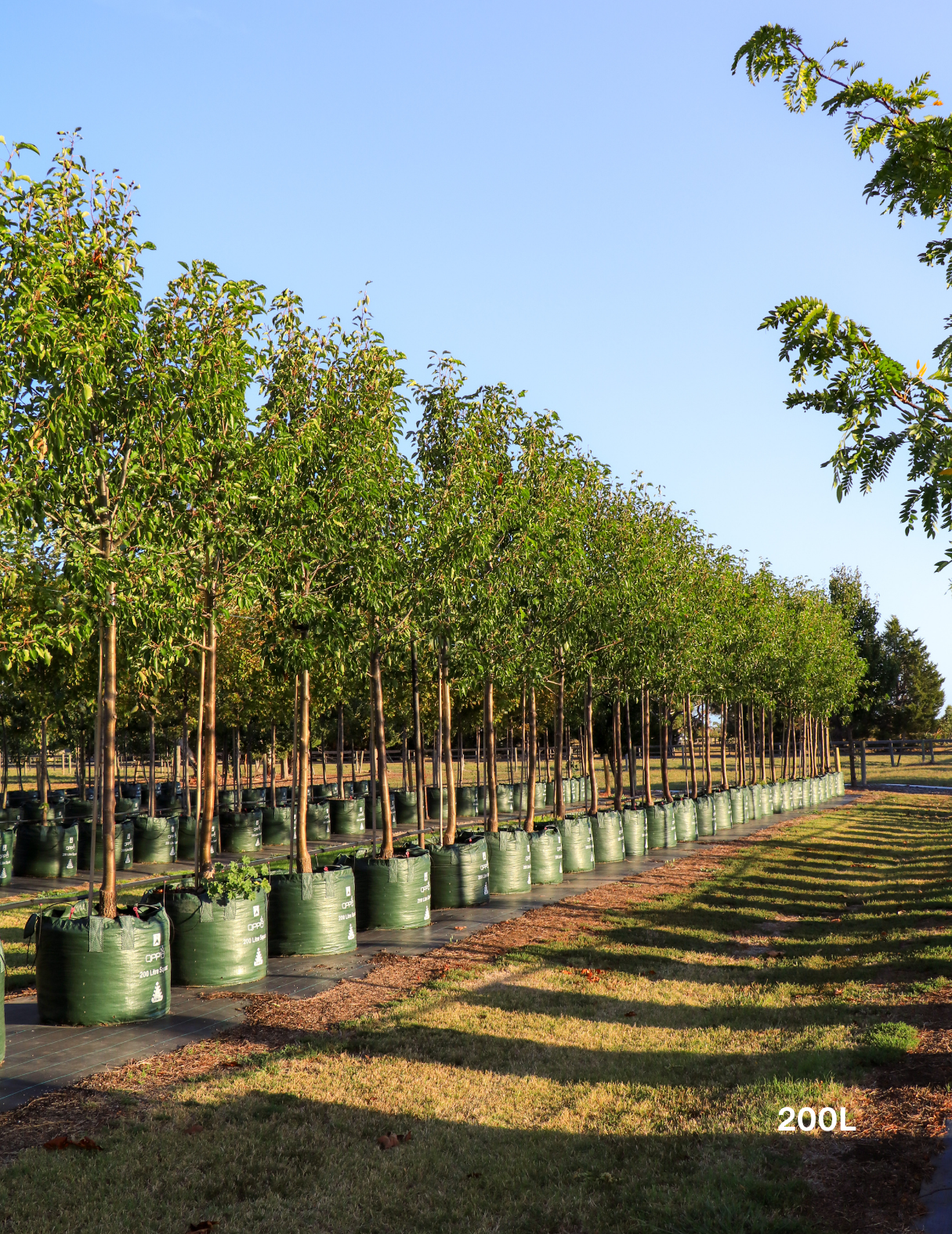
- 200L Bag: 71.5cm (W) × 60.5cm (D)
- 300L Bag: 88cm (W) × 63.8cm (D)
- 400L Bag: 99cm (W) × 66cm (D)
- 500L Bag: 122cm (W) × 66cm (D)
- 750L Bag: 134cm (W) × 69cm (D)
- 1000L Bag: 146.3cm (W) × 71.5cm (D)
- 2000L Bag: 176cm (W) × 82.5cm (D)
Share this product
About Pyrus ussuriensis – Manchurian Pear
About Pyrus ussuriensis – Manchurian Pear
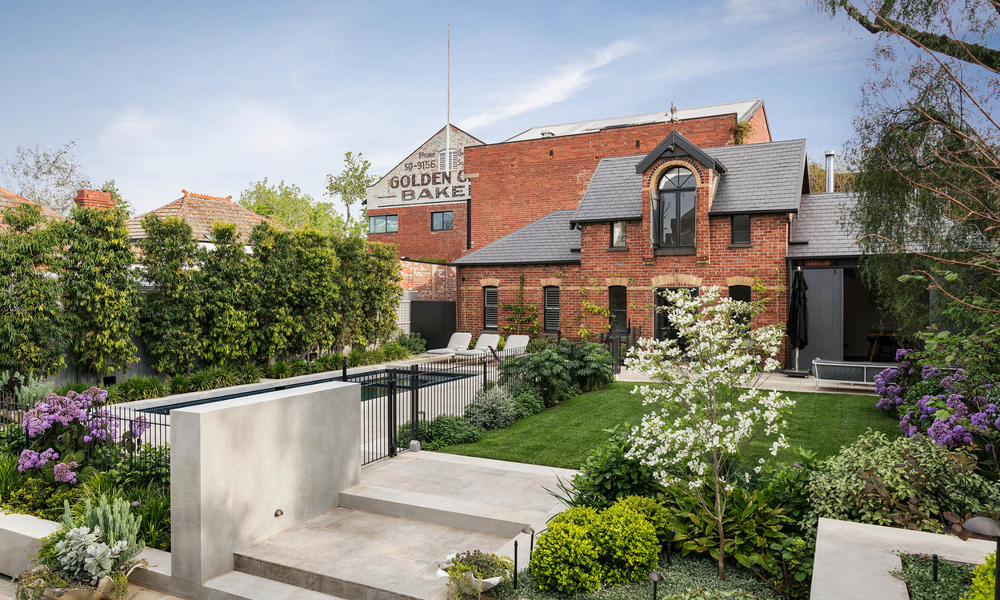
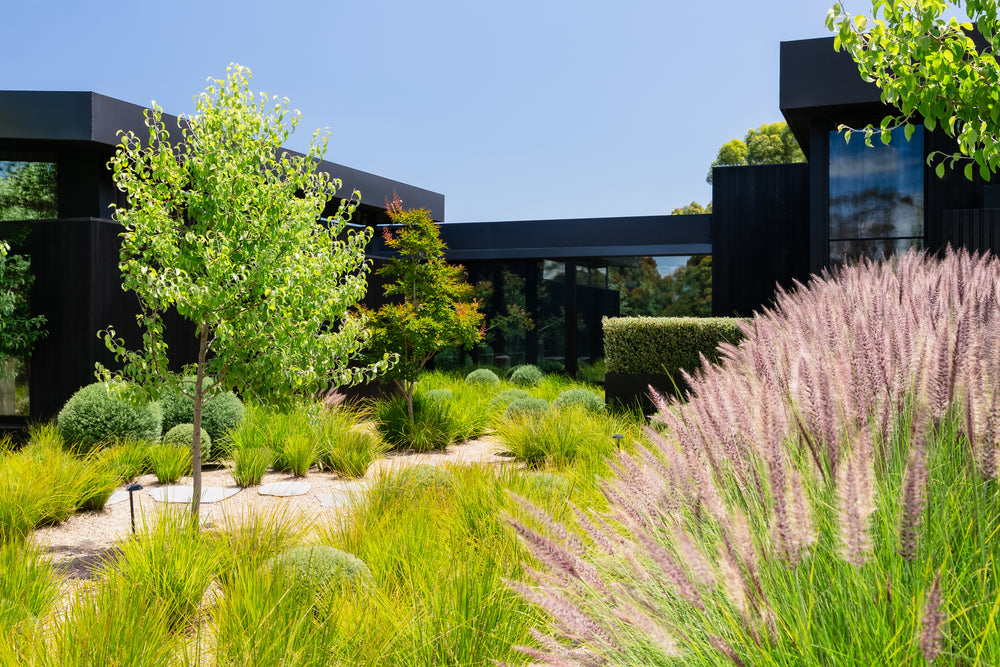
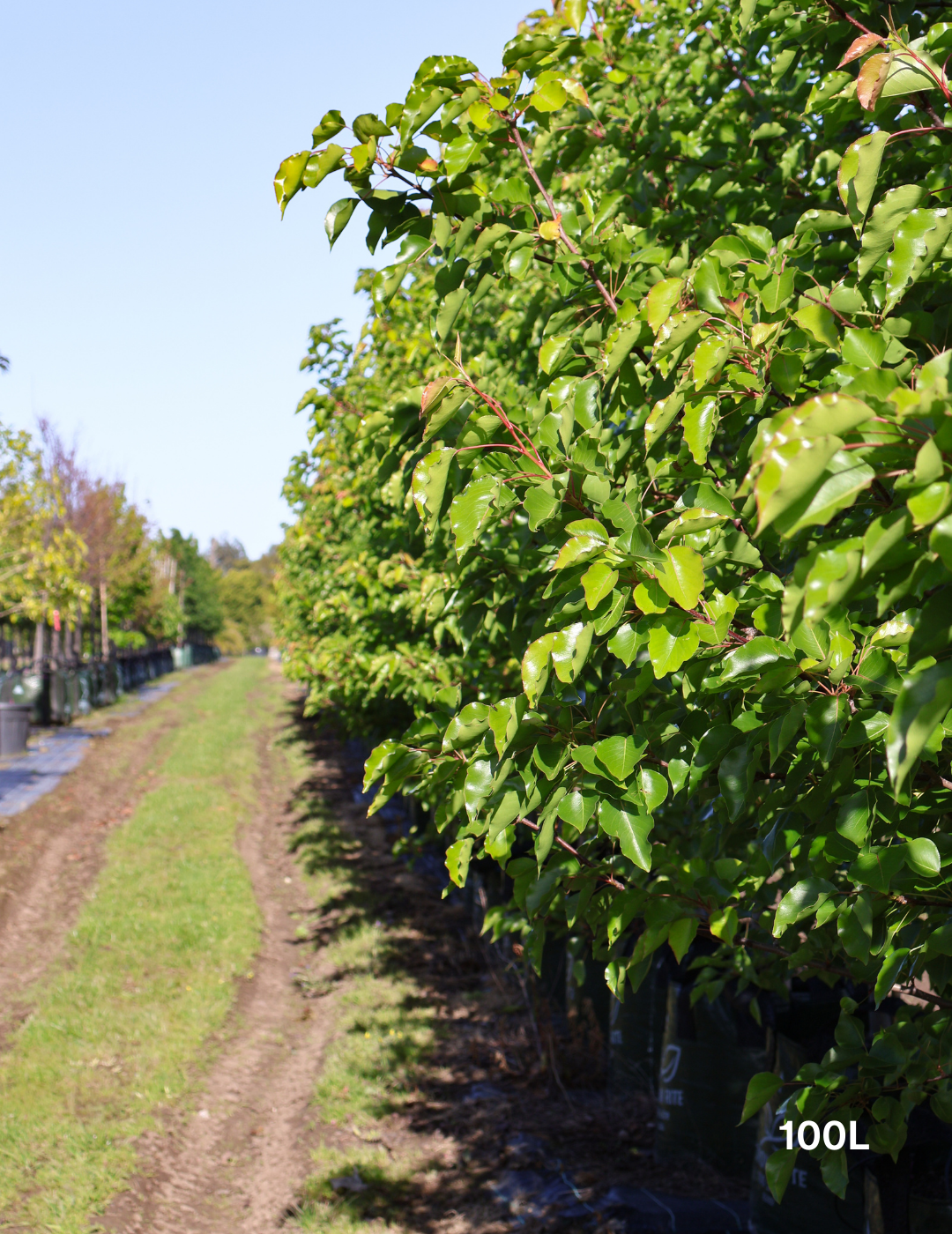
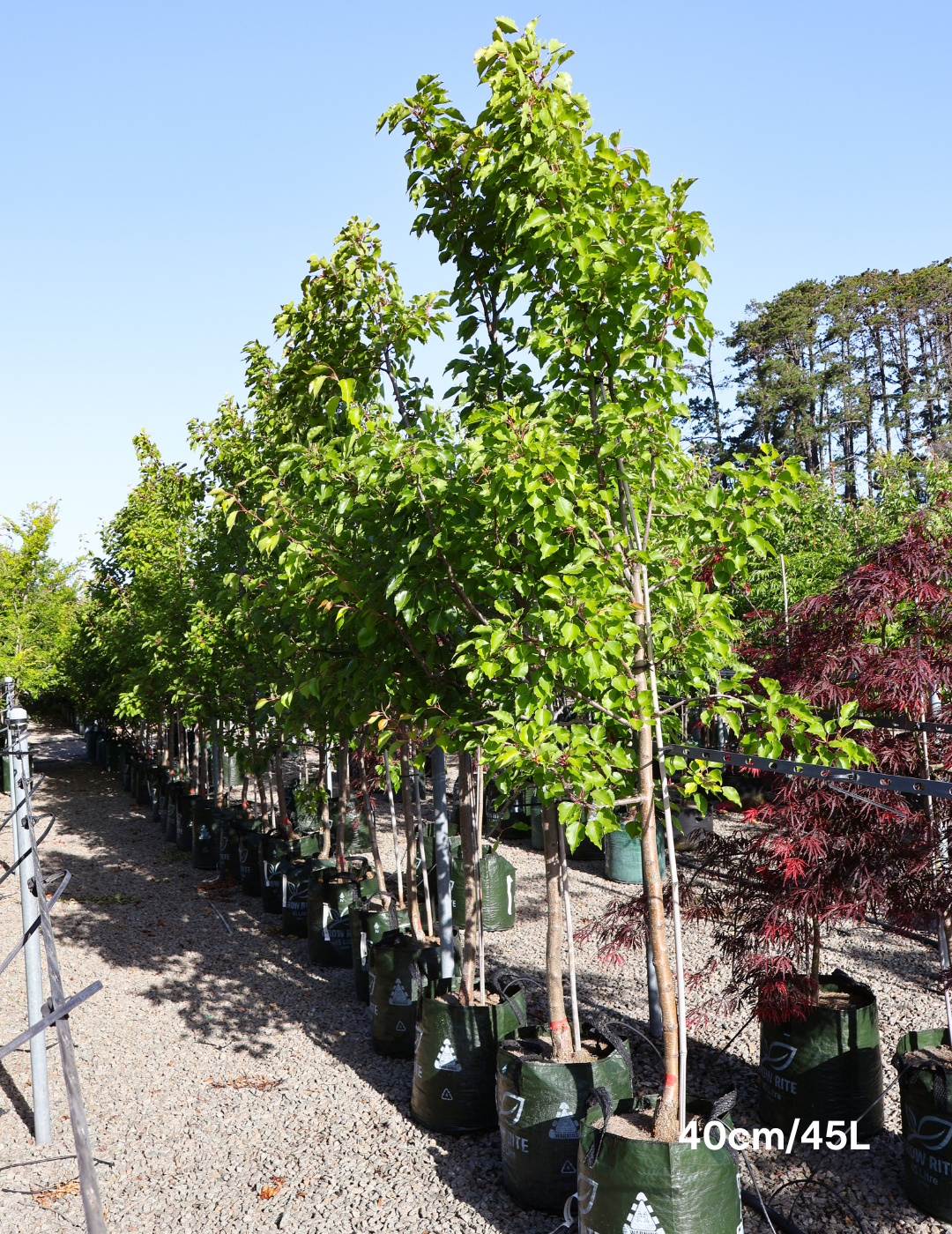
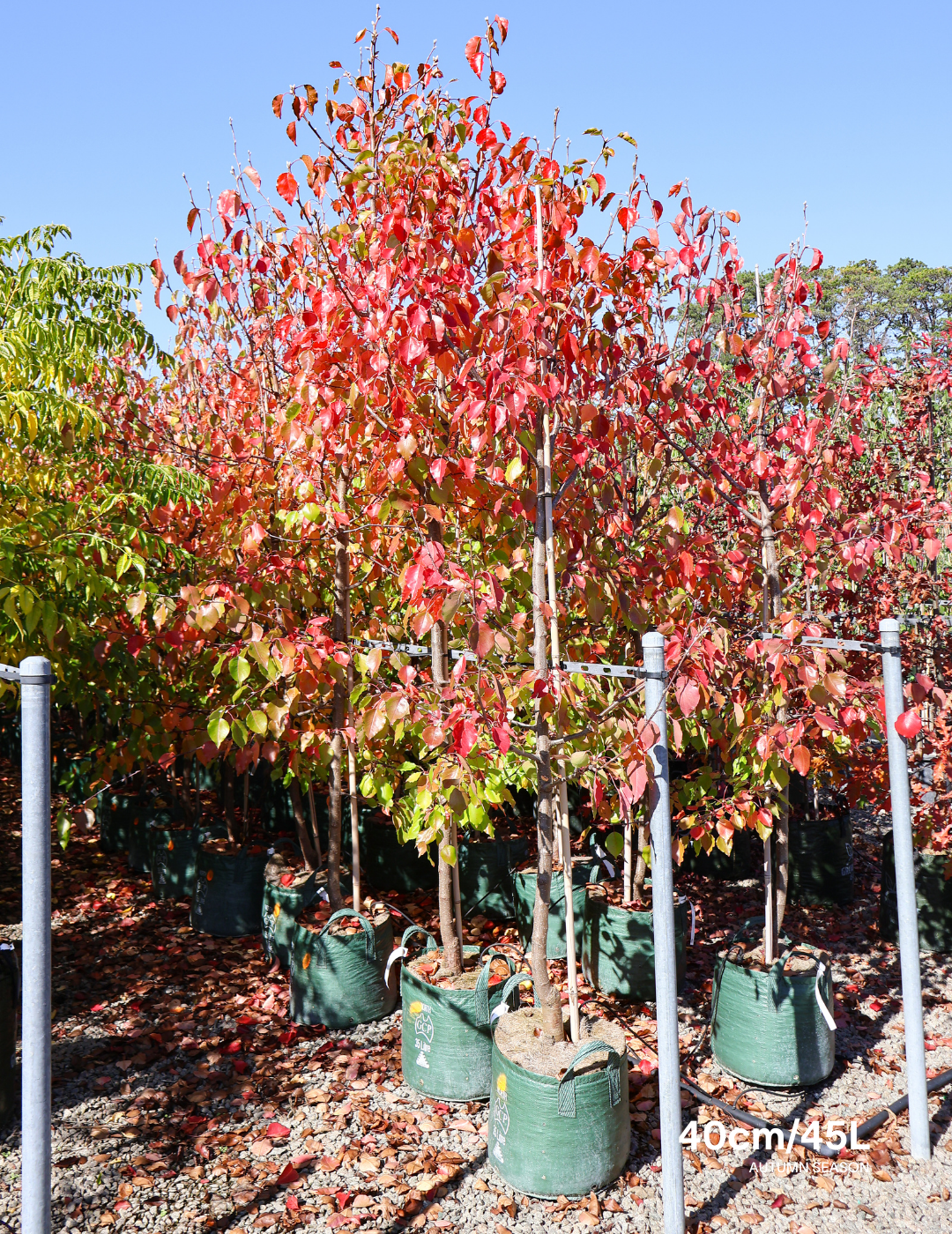
Pyrus ussuriensis – Manchurian Pear is a medium to large deciduous tree best known for its early spring flowering, dense, symmetrical crown, and fiery autumn display. Maturing to 9–12 metres tall and 6–8 metres wide, it is a strong performer in urban, residential, and rural landscapes, bringing elegance and shade to both formal and natural designs.
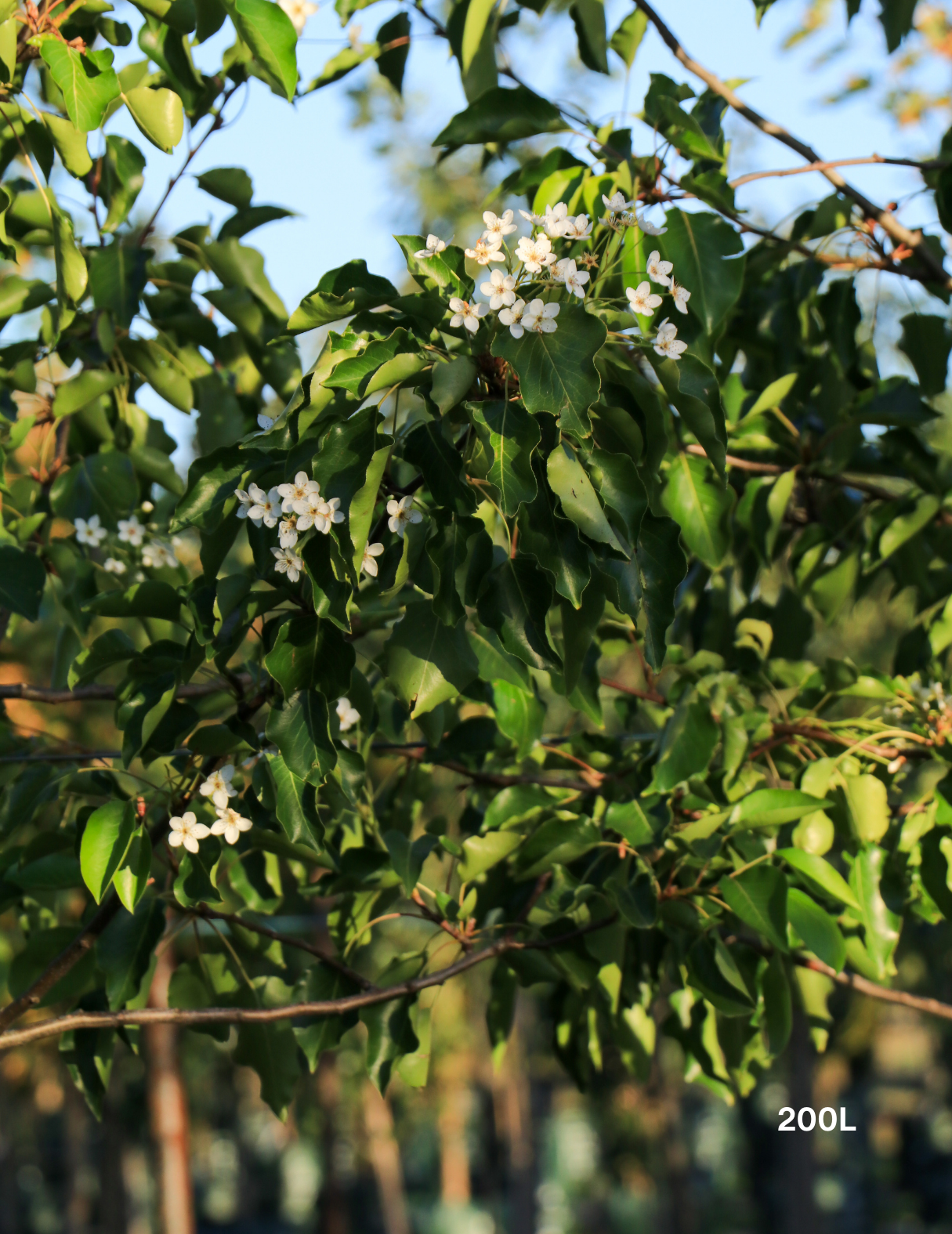
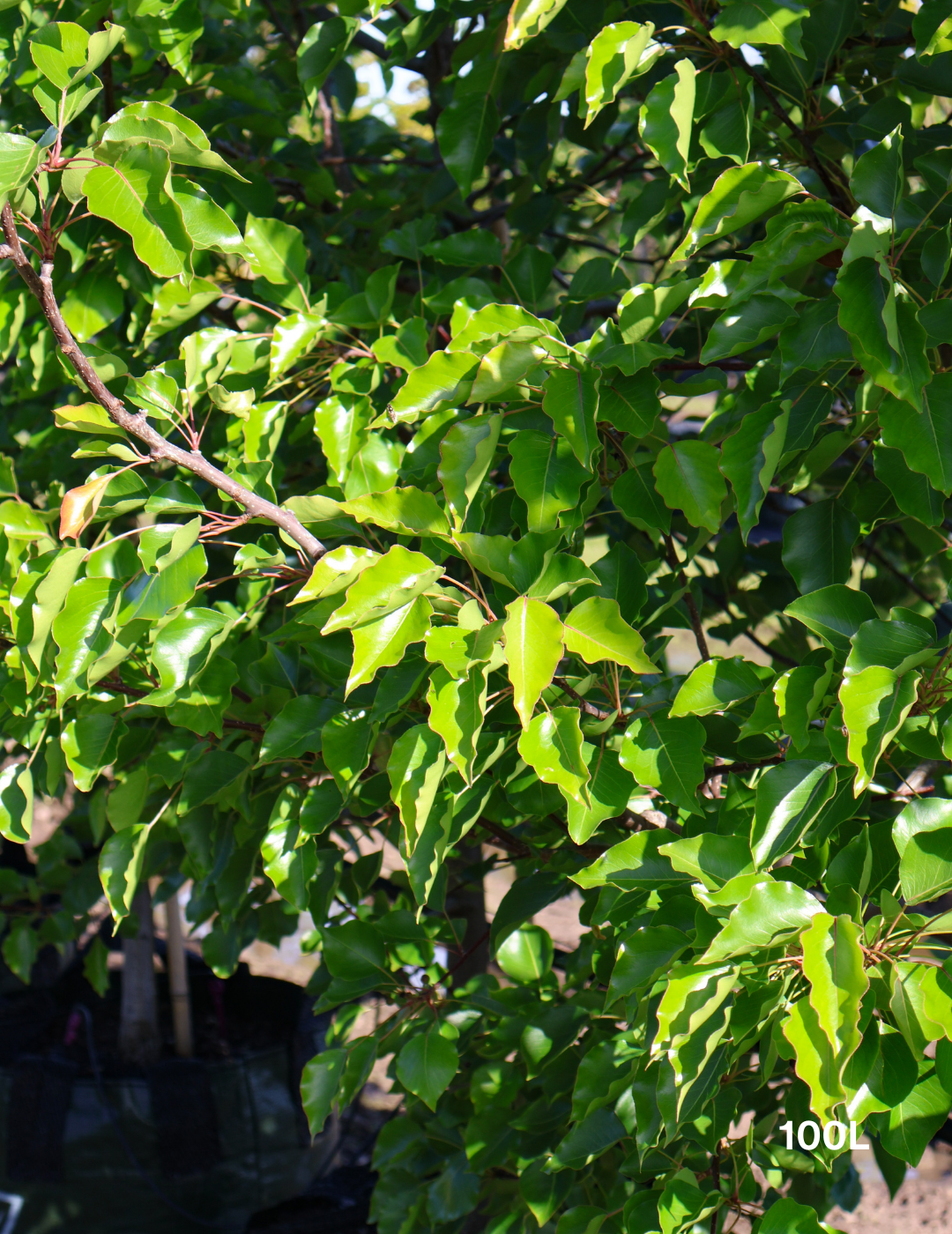
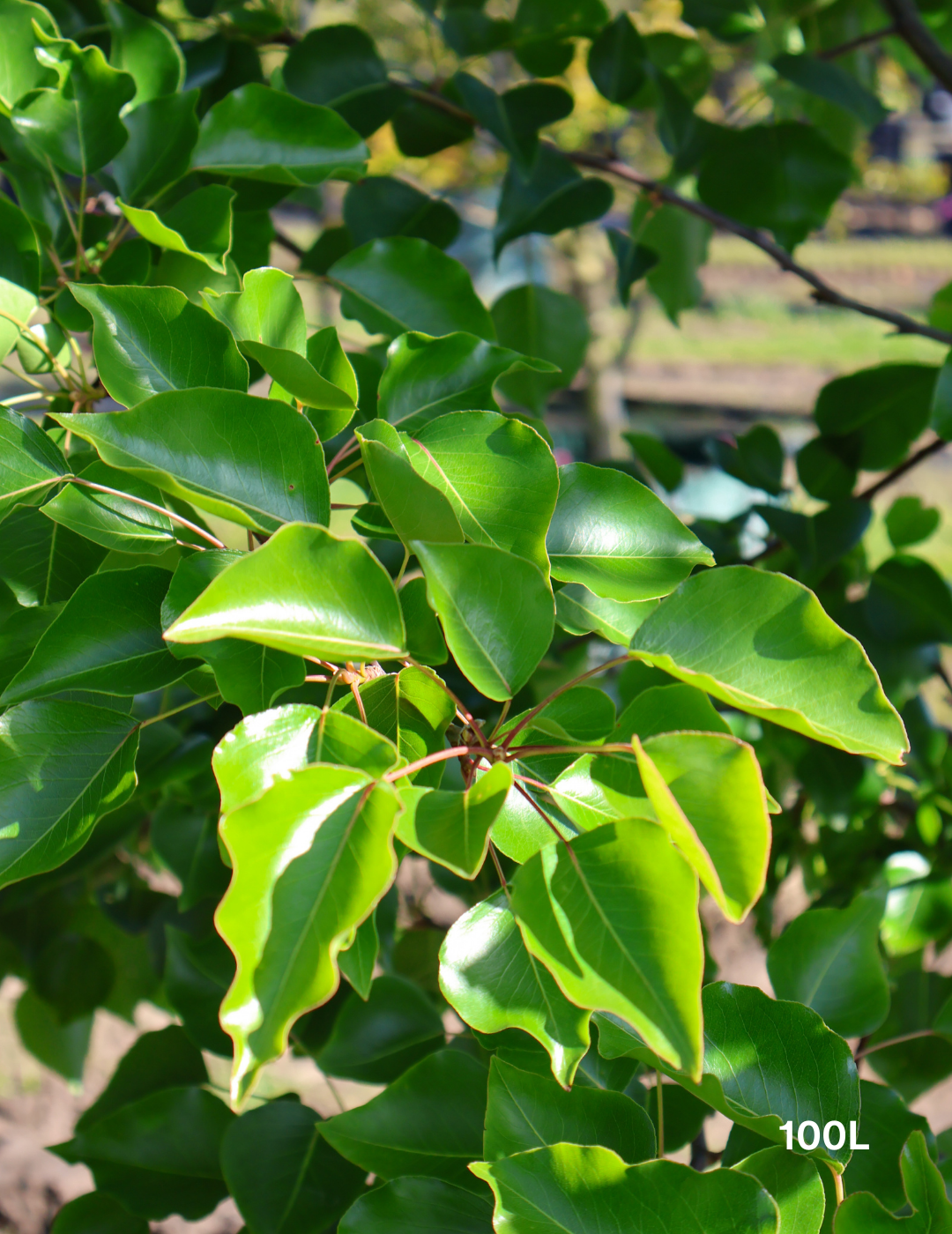
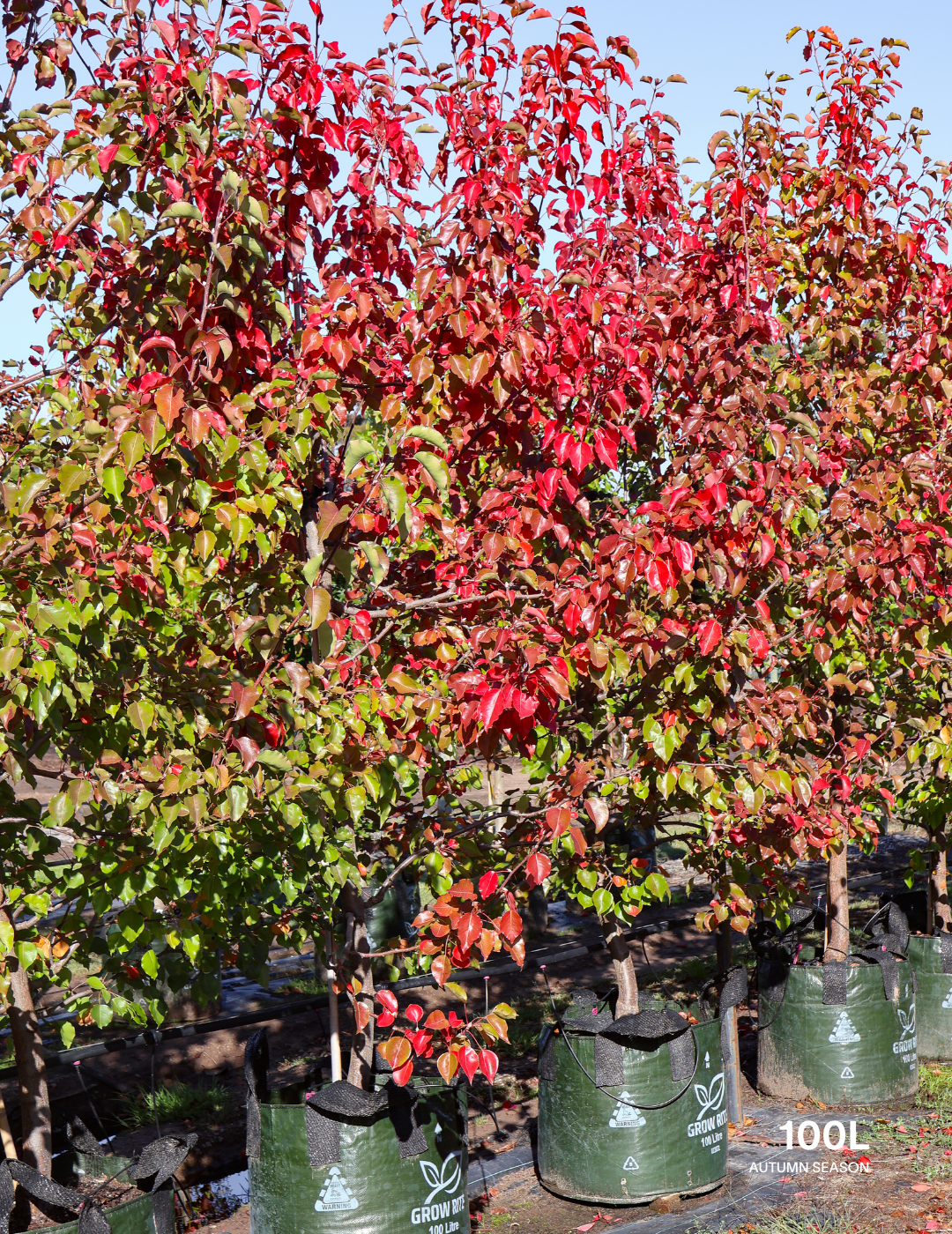
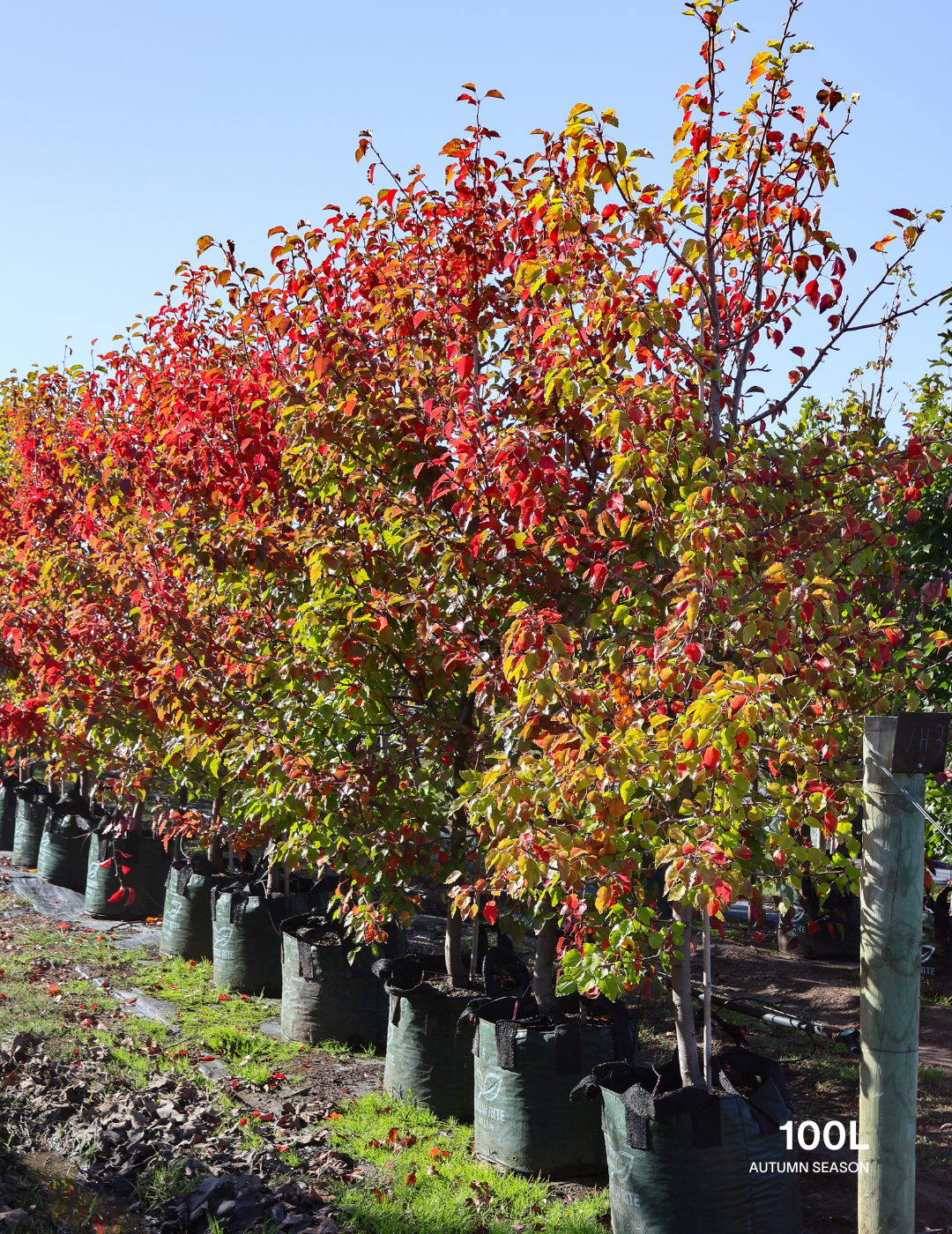
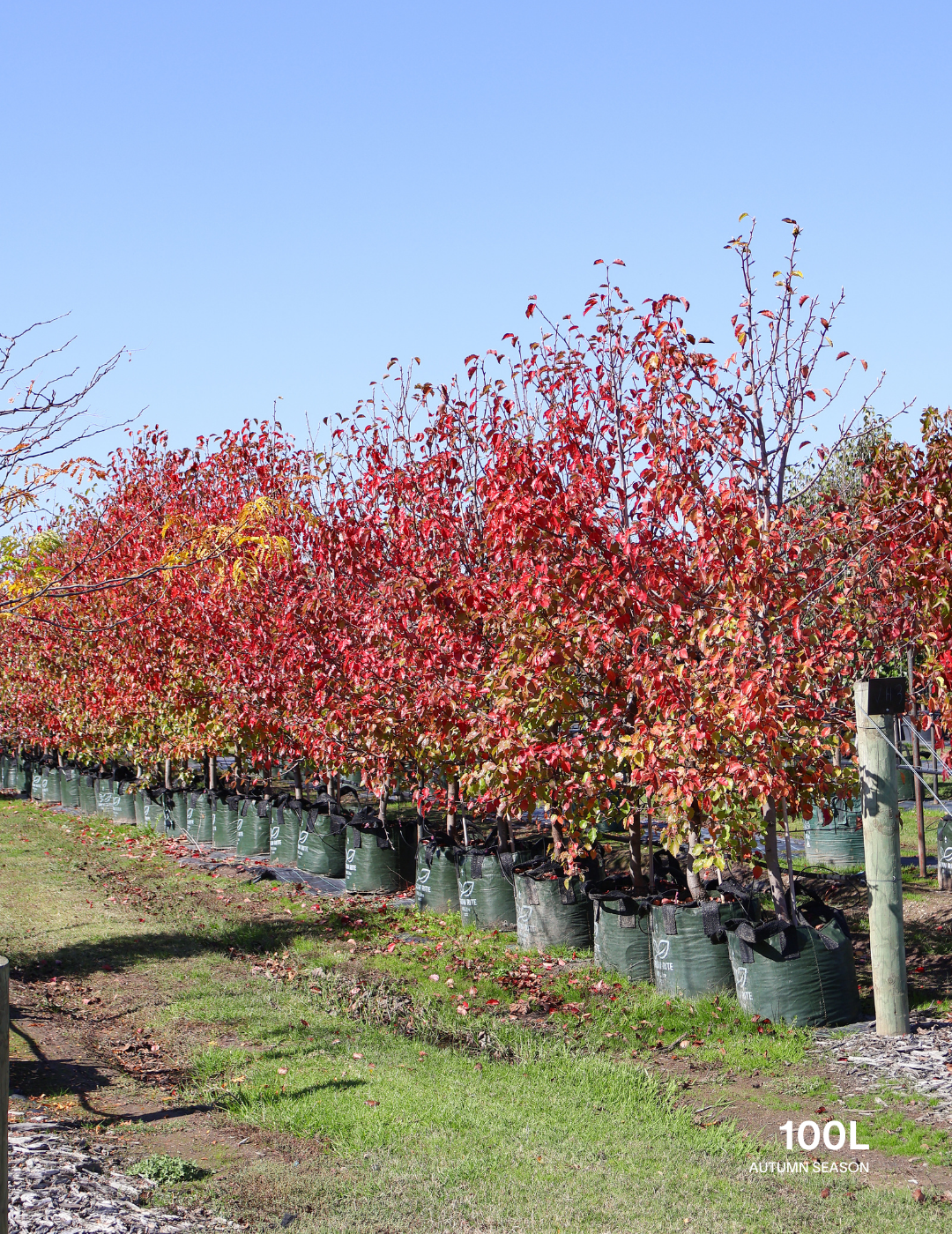
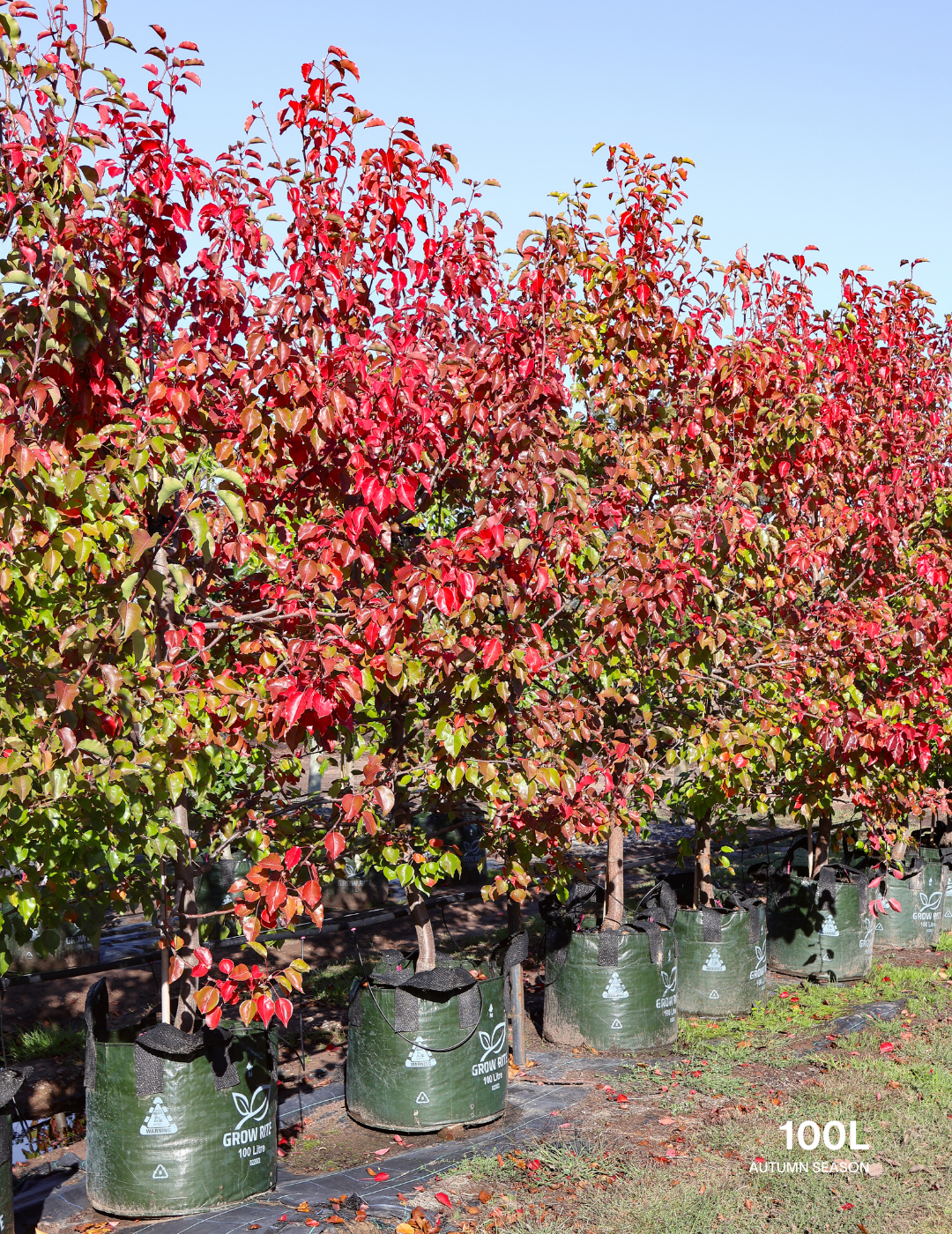
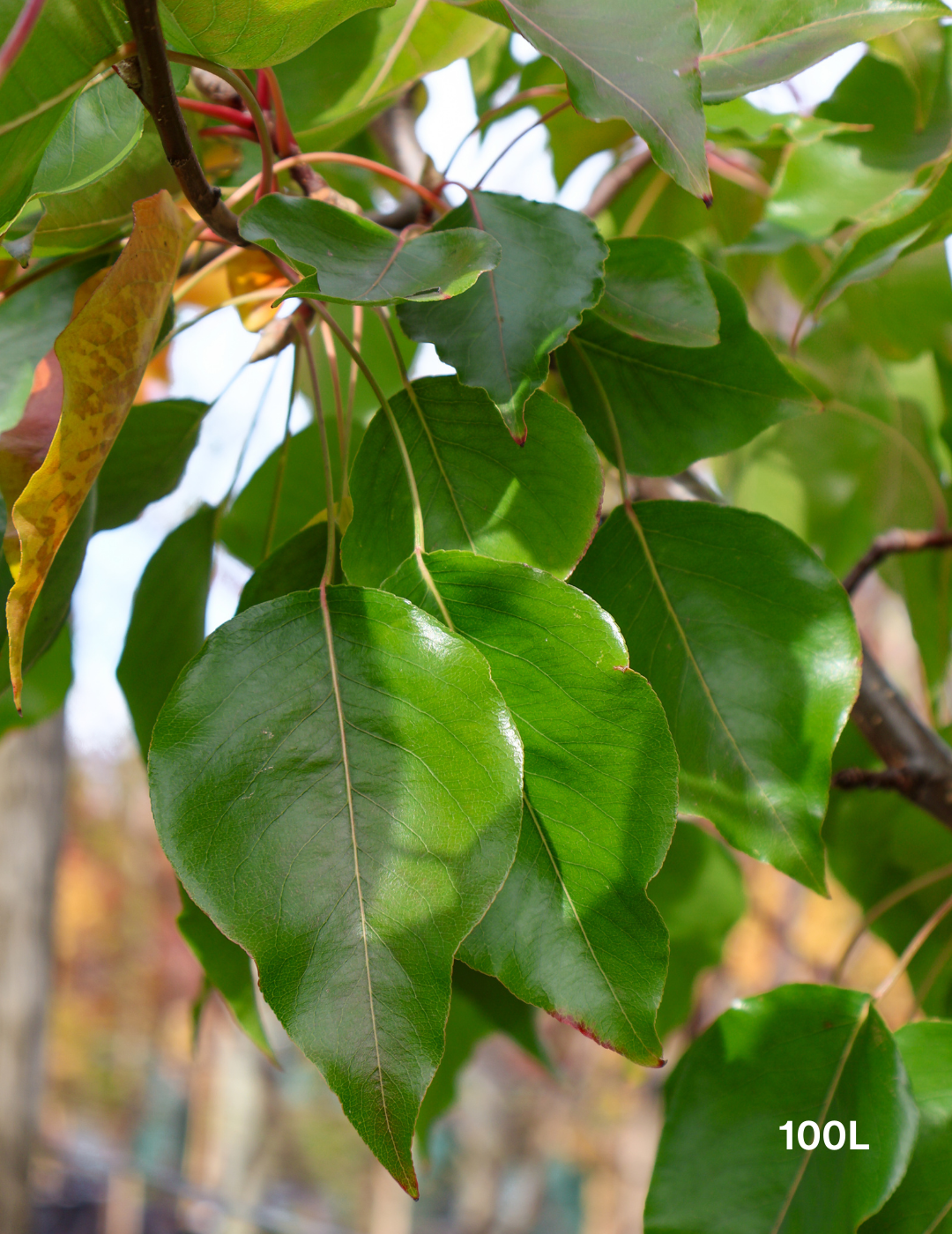
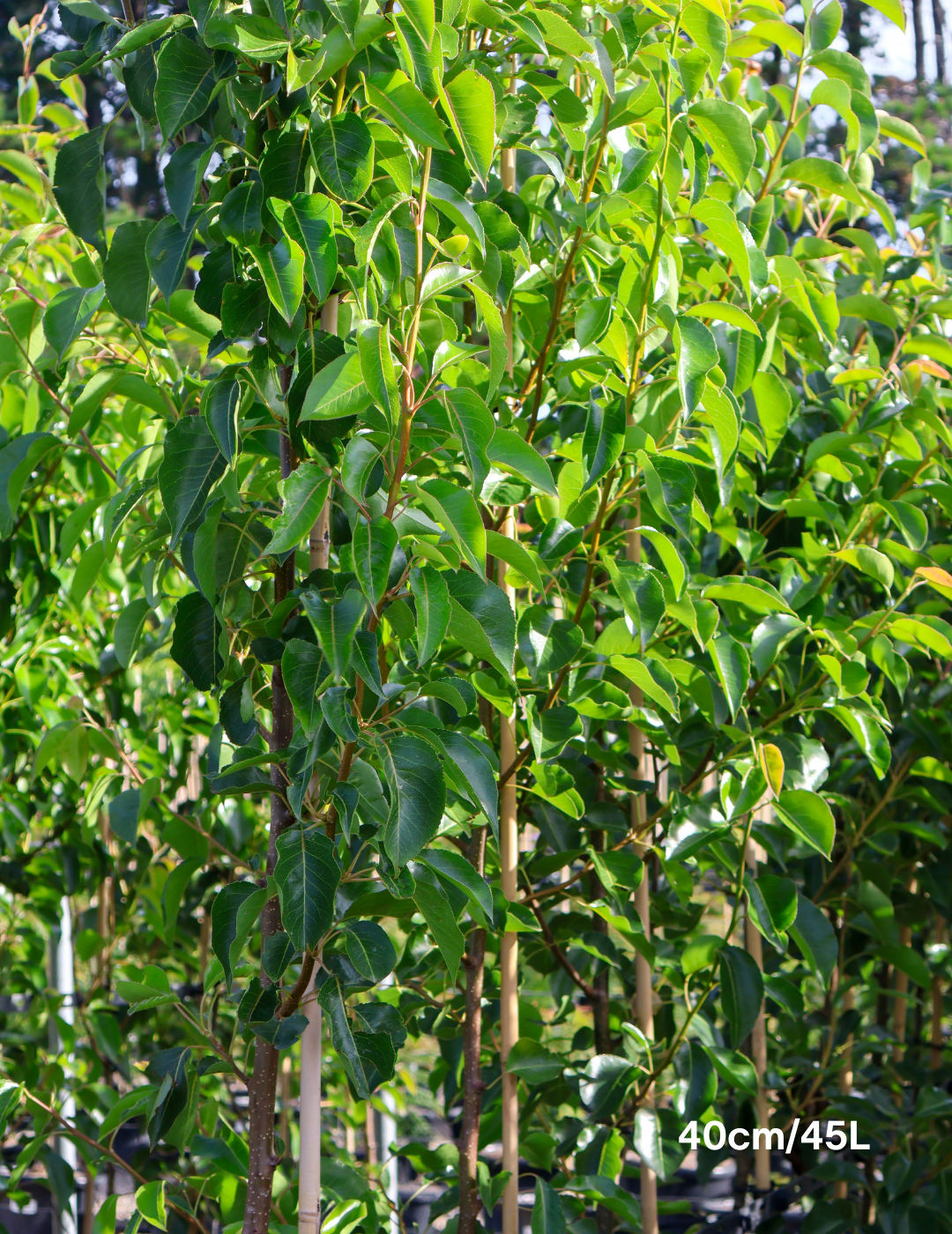
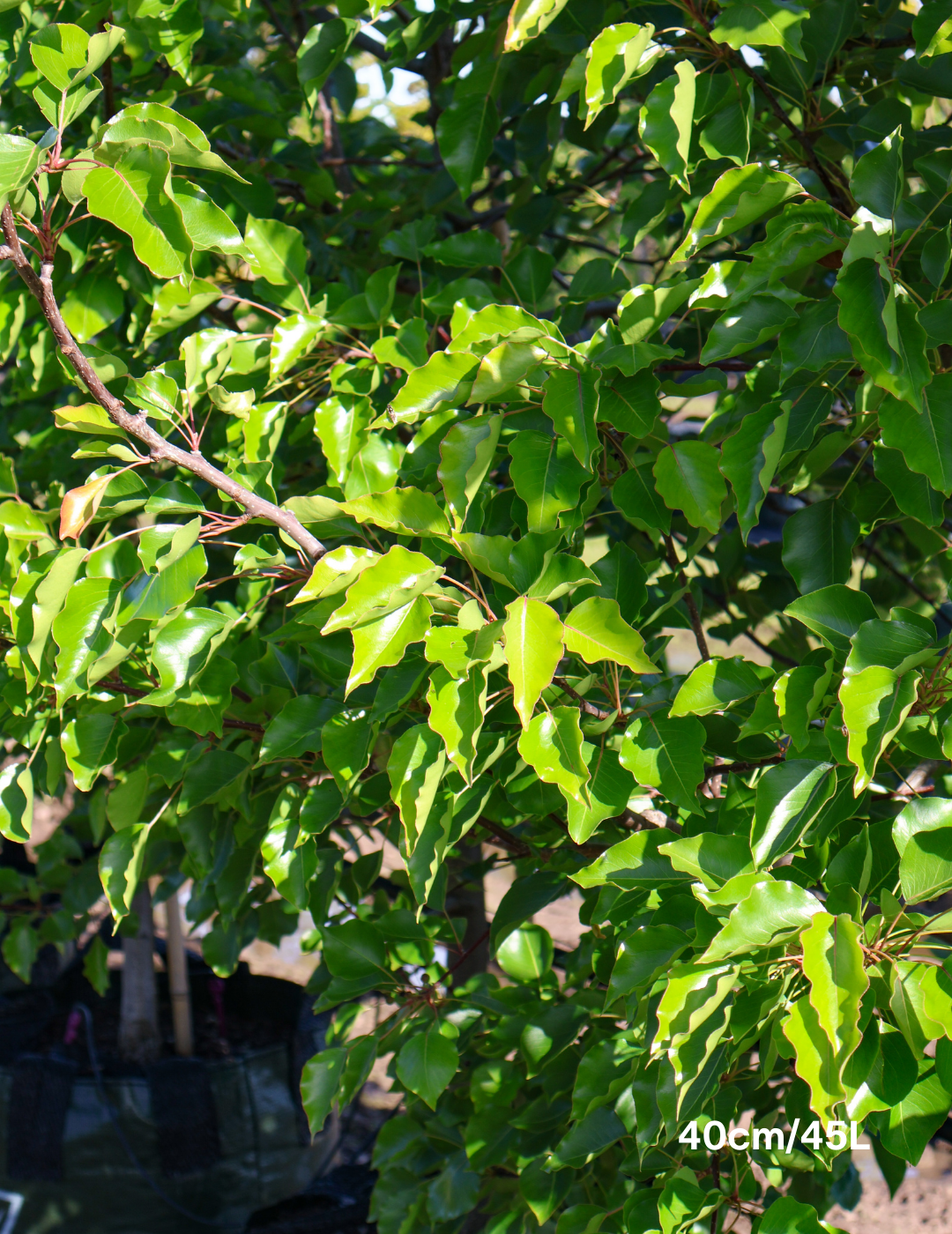
In early spring, the tree erupts in masses of pure white flowers, followed by broad, glossy green leaves that provide dense summer coverage. As temperatures cool, the foliage turns stunning shades of orange, red, and burgundy, making it one of the most eye-catching trees of the season.
Pyrus ussuriensis is extremely cold hardy, drought-tolerant once established, and adaptable to loam, clay, or sandy soils—making it a highly flexible and low-maintenance choice. It holds a strong central leader and grows with a naturally uniform shape, often requiring minimal formative pruning.
Key Details
-
Botanical Name: Pyrus ussuriensis
-
Common Name: Manchurian Pear
-
Mature Height: 9–12 metres
-
Mature Width: 6–8 metres
-
Foliage: Broad green leaves; brilliant red, orange, and burgundy in autumn
-
Flowers: Masses of white blossoms in early spring
-
Form: Rounded, symmetrical canopy; upright growth
-
Sunlight: Full sun
-
Soil: Adaptable to loam, clay, or sandy soil; well-drained preferred
-
Drought Tolerance: Moderate to high once established
-
Frost Tolerance: Excellent; cold hardy
-
Maintenance: Low; light formative pruning if required
-
Uses: Feature tree, street planting, avenue planting, shade tree
-
Evergreen/Deciduous: Deciduous
Common Name: Manchurian Pear
Genus: Pyrus
Botanical Species: ussuriensis
Family: Rosaceae
Botanical Name: Pyrus ussuriensis
Uses in my Garden
Uses in my Garden
Pyrus ussuriensis – Manchurian Pear works in an:
Is Pyrus ussuriensis – Manchurian Pear Evergreen or Deciduous?
Is Pyrus ussuriensis – Manchurian Pear Evergreen or Deciduous?
Pyrus ussuriensis – Manchurian Pear is an Deciduous (Defoliates throughout colder months) Tree
Mature Height & Width
Mature Height & Width
Mature Height: 8m - 12m Approximately
Mature Width: 6 – 8 m
Pyrus ussuriensis – Manchurian Pear is expected to grow Approx 30cm – 60 cm per year (moderate).
Growth Rate of Pyrus ussuriensis – Manchurian Pear
Growth Rate of Pyrus ussuriensis – Manchurian Pear
Pyrus ussuriensis – Manchurian Pear is expected to grow Approx 30cm – 60 cm per year (moderate).
They are considered to have a:
Frost Tolerance & Ideal Climate to plant Pyrus ussuriensis – Manchurian Pear
Frost Tolerance & Ideal Climate to plant Pyrus ussuriensis – Manchurian Pear
Is Pyrus ussuriensis – Manchurian Pear frost tolerant?
Pyrus ussuriensis – Manchurian Pear is Frost Hardy – Survives heavy and frequent frost without damage.
Does Pyrus ussuriensis – Manchurian Pear Flower?
Does Pyrus ussuriensis – Manchurian Pear Flower?
Pyrus ussuriensis produces masses of pure white blossoms in early spring, often before the foliage emerges. The flowers create a striking, highly ornamental display that covers the entire canopy, making this species one of the most showy flowering pears for seasonal impact.
Does Pyrus ussuriensis – Manchurian Pear flower?
Flowering Period:
Flower Type:
Flower Colour:
White
Is Pyrus ussuriensis – Manchurian Pear an Australian Native Tree?
Is Pyrus ussuriensis – Manchurian Pear an Australian Native Tree?
No
Pyrus ussuriensis – Manchurian Pear is Native to Native to northeast Asia, including China, Korea, and Manchuria, where it grows in cool temperate regions. Widely cultivated for its ornamental display and adaptability.
What is the Wildlife Value of Pyrus ussuriensis – Manchurian Pear ?
What is the Wildlife Value of Pyrus ussuriensis – Manchurian Pear ?
Its profusion of spring blossoms provides nectar and pollen for bees and beneficial insects, while the dense summer canopy offers shelter and light nesting sites for small birds. The tree supports a healthy seasonal food web and is particularly valuable in suburban gardens where flowering trees enhance biodiversity.
How much Sunlight does Pyrus ussuriensis – Manchurian Pear need?
How much Sunlight does Pyrus ussuriensis – Manchurian Pear need?
Pyrus ussuriensis – Manchurian Pear will thrive best in:
Preferred Soil?
Preferred Soil?
Pyrus ussuriensis performs best in well-drained loam or sandy loam soils with a neutral to slightly acidic pH. It will also tolerate lighter sandy soils if enriched with organic matter to support moisture retention and fertility. Avoid heavy clay, compacted or waterlogged soils unless significantly improved, as poor drainage can restrict root health and reduce flowering. Keep the soil evenly moist during establishment, then gradually reduce watering as the tree matures. Ready for the next one, Arabella — just send it through.
Is Pyrus ussuriensis – Manchurian Pear Drought Tolerant?
Is Pyrus ussuriensis – Manchurian Pear Drought Tolerant?
Is Pyrus ussuriensis – Manchurian Pear Drought tolerant?
As a young tree it requires regular deep watering to establish well. Once established, Manchurian Pear develops good drought tolerance and performs reliably through warm, dry periods when planted in well-drained soil. Occasional supplementary watering during extended heat helps maintain foliage quality and consistent seasonal growth.

Planting Information
How To Plant Your Pyrus ussuriensis – Manchurian Pear
How To Plant Your Pyrus ussuriensis – Manchurian Pear
Recommended Planting Spacing For Your Pyrus ussuriensis – Manchurian Pear
Recommended Planting Spacing For Your Pyrus ussuriensis – Manchurian Pear
Pyrus ussuriensis – Manchurian Pear is expected to grow Approx 30cm – 60 cm per year (moderate).
Long Term Care For Your Pyrus ussuriensis – Manchurian Pear
Long Term Care For Your Pyrus ussuriensis – Manchurian Pear
Planting Your Pyrus ussuriensis – Manchurian Pear in Different Soil
Planting Your Pyrus ussuriensis – Manchurian Pear in Different Soil
Root Ball Dimensions (Width × Depth) For Planting
Root Ball Dimensions (Width × Depth) For Planting
Use this as a reference when digging your planting hole. We recommend digging at least 10% wider than the dimensions below to encourage strong root development.
- 30cm Pot: 33cm (W) × 30cm (D)
- 40cm/45L Pot: 44cm (W) × 41.5cm (D)
- 50cm Pot / 70L Pot: 55cm (W) × 41.8cm (D)
- 100L Bag: 50.6cm (W) × 52.8cm (D)
- 150L Bag: 66cm (W) × 55cm (D)
- 200L Bag: 71.5cm (W) × 60.5cm (D)
- 300L Bag: 88cm (W) × 63.8cm (D)
- 400L Bag: 99cm (W) × 66cm (D)
- 500L Bag: 122cm (W) × 66cm (D)
- 750L Bag: 134cm (W) × 69cm (D)
- 1000L Bag: 146.3cm (W) × 71.5cm (D)
- 2000L Bag: 176cm (W) × 82.5cm (D)
Frequently Asked Questions
Frequently Asked Questions
We have been featured in