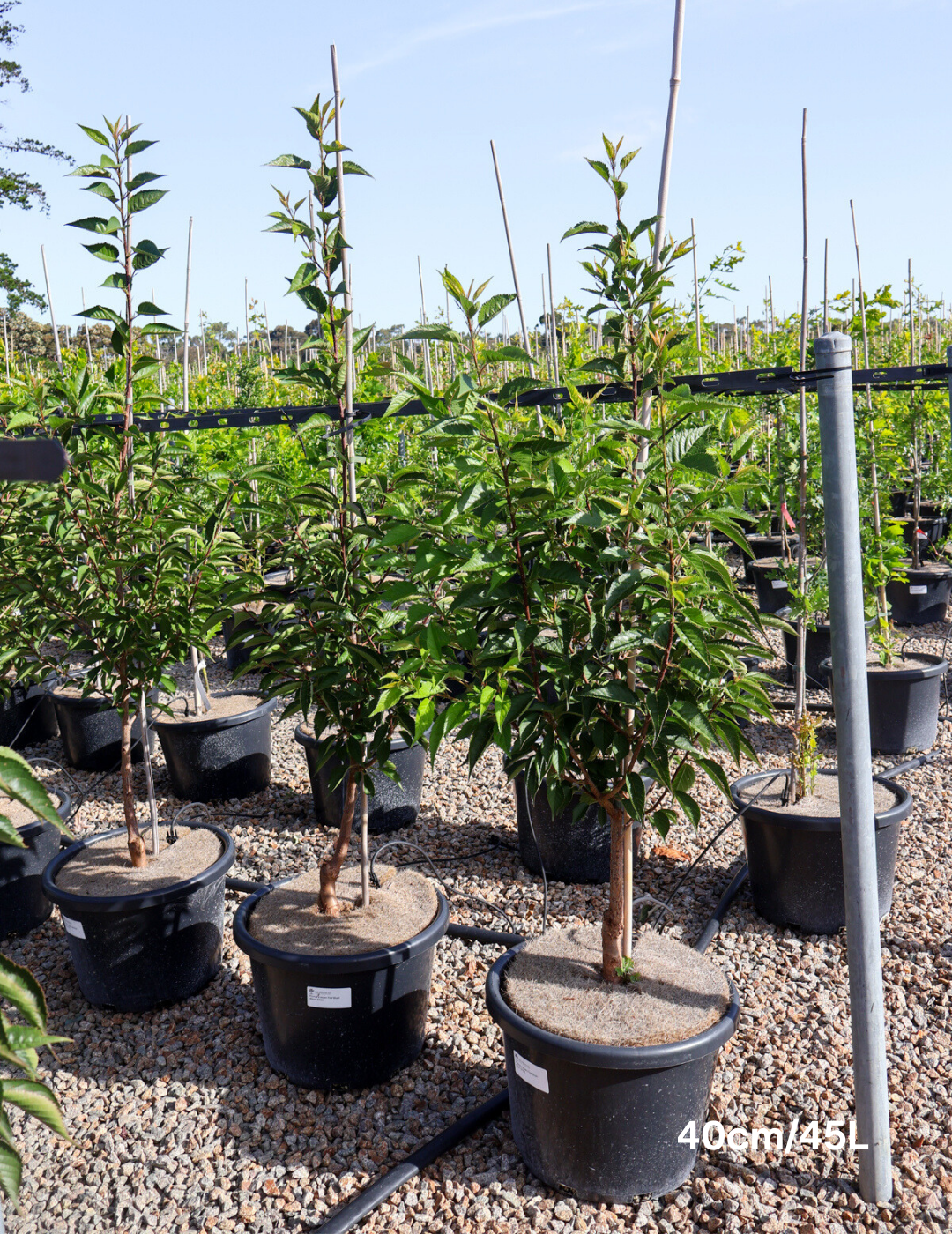
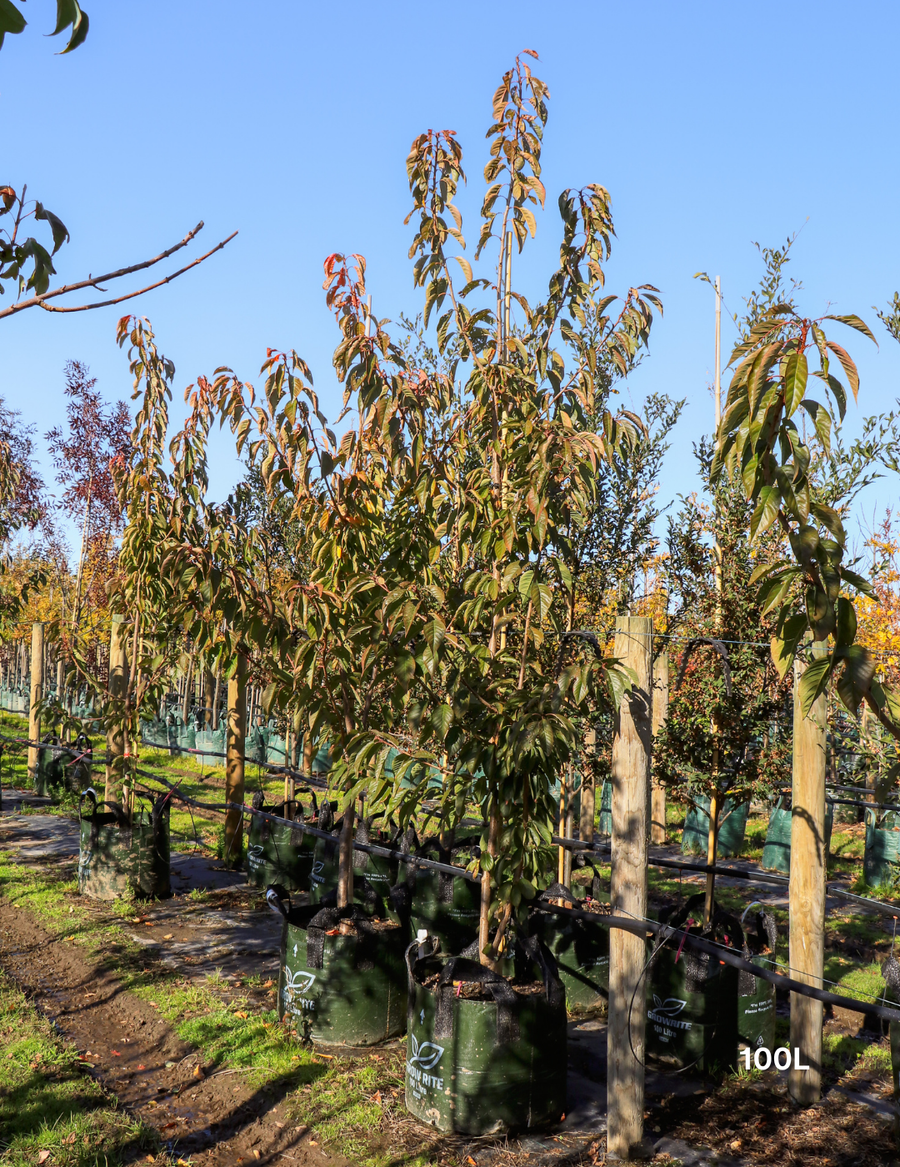
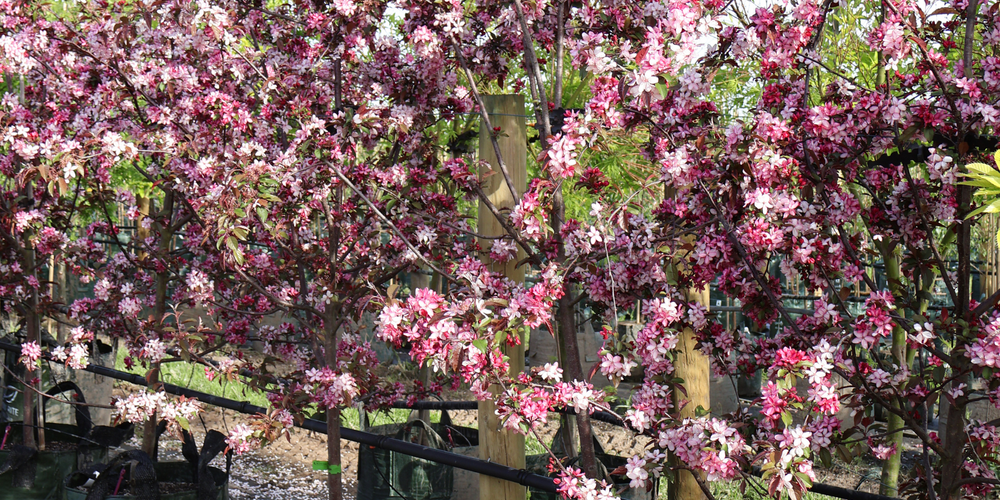
Prunus 'First Blush' is a small deciduous flowering cherry, sold here as First Blush Cherry. It carries soft pink blossom along bare stems in spring, then opens fresh green leaves that turn warm bronze before autumn leaf fall. The habit is neatly rounded, branching low enough to read as a garden tree rather than a shade tree.
Grow it in full sun to light afternoon shade in soil that drains freely. It suits cool and temperate districts through southern Australia, including frost prone inland gardens, and colours best where winters are properly cold. Growth is moderate, roughly 30 to 50 centimetres a year, with some drought tolerance once the roots are down.
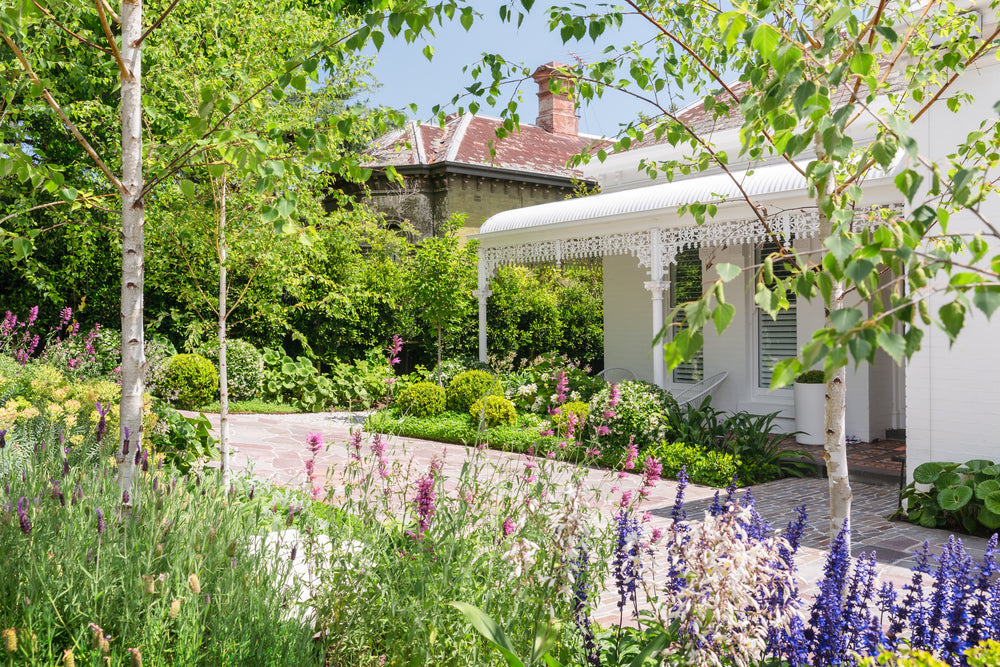
At 2.5 to 3.5 metres each way it fits courtyards, front gardens and narrow beds where a larger cherry would crowd. Plant it as a single specimen near a window or a seat, or in a loose group of three for a longer spring display. Small enough to keep, big enough to matter.
Frequently Asked Questions
About First Blush Cherry
What is Prunus 'First Blush'?
It is a compact deciduous flowering cherry in the rose family, Rosaceae, grown for its pink spring blossom rather than for fruit. The tree forms a rounded canopy on a short trunk, with broad green leaves that shift to bronze tones in autumn. It is not an Australian native, and it behaves much like other ornamental cherries in cool districts.
How big does First Blush Cherry grow?
Expect 2.5 to 3.5 metres in height and 2.5 to 3.5 metres across at maturity, so height and spread finish close to equal. That puts it firmly in the small tree bracket, well under the size of a Yoshino or Kanzan cherry. Allow roughly 3 to 4 metres between trees if you are planting more than one.
When does it flower?
Blossom appears in spring, generally September through to November depending on how far south and how high above sea level you are. In warmer coastal gardens flowering starts early and finishes quickly, while cold inland districts hold the display longer. Flowers open on bare or barely leafed stems, which is what makes the pink read so strongly against the branches.
Is it evergreen or deciduous?
Deciduous. The tree drops its leaves through the colder months and stands bare over winter, then flowers before the new foliage hardens off. That bare period is part of how it works in a garden, letting winter sun through to the ground and the windows behind it. Leaves return in spring and hold until autumn colour arrives.
Is it frost tolerant?
Yes. It handles frost well and needs a genuine cold season to flower reliably, so it is a sound choice for the tablelands, Victorian and Tasmanian gardens, and inland districts that drop below zero. Young trees appreciate shelter through their first winter, but established plants take normal southern Australian frosts without damage.
Can it grow in a pot?
It can be container grown for several years in a pot of at least 60 to 80 litres using a free draining mix. Growth slows and the tree stays smaller than it would in open ground. Water more often through summer, feed each spring, and plan to move it into the garden eventually if you want full size and a full flowering display.
How do I care for First Blush Cherry?
Water deeply through the first two summers, then only in long dry spells. Mulch to keep the root zone cool and keep that mulch clear of the trunk. Prune in late summer or early autumn rather than in winter, which lowers the risk of silver leaf and bacterial canker. Remove crossing wood and any suckers rising from below the graft.