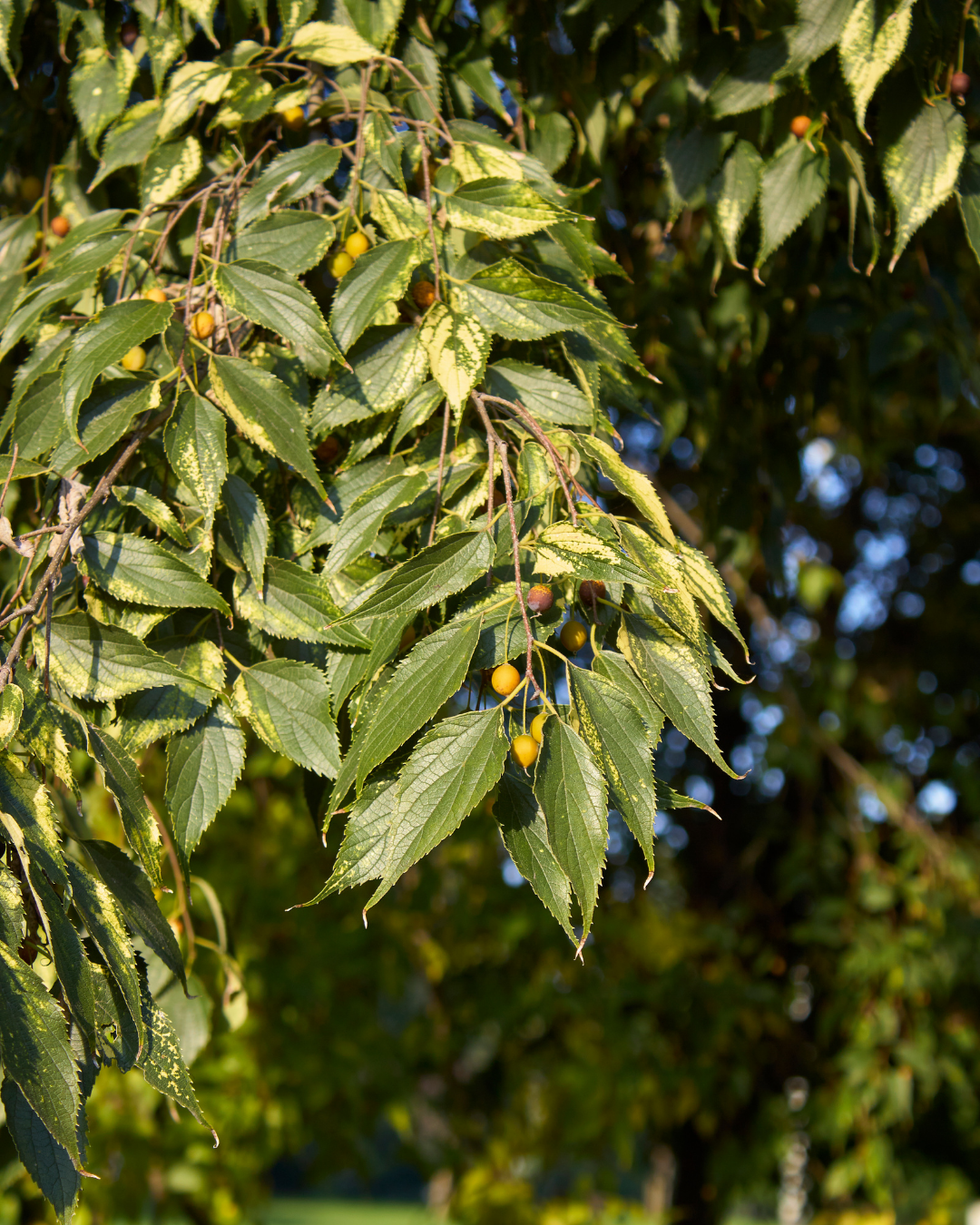
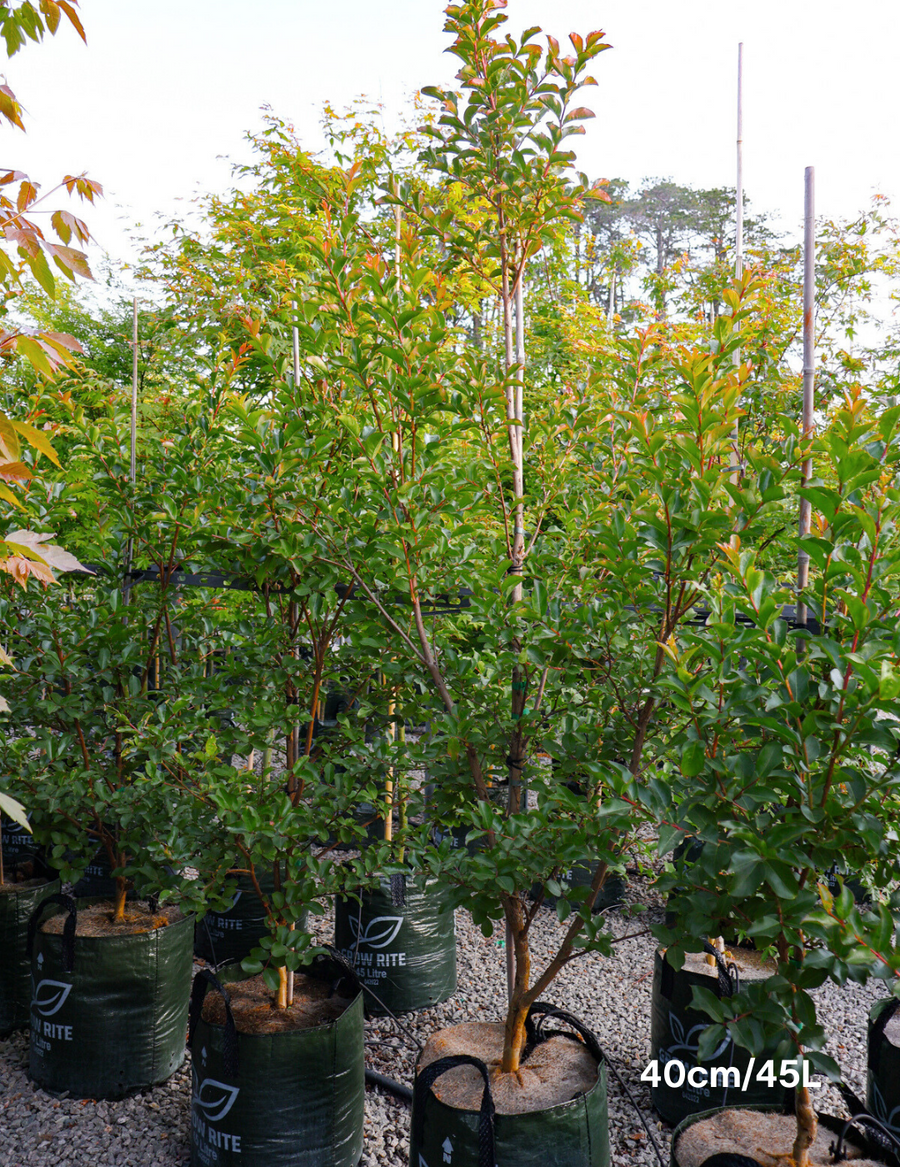
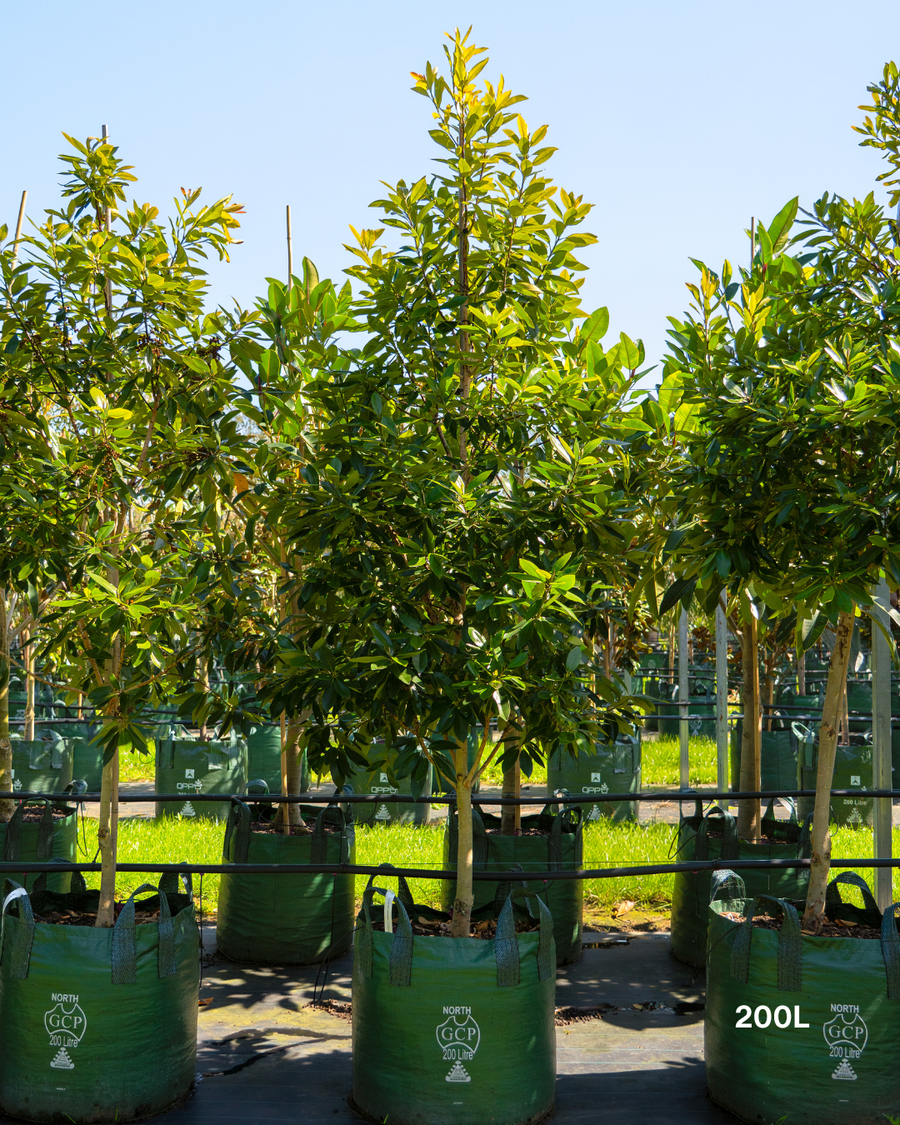
Celtis australis, the European Nettle Tree or Mediterranean Hackberry, is a deciduous shade tree with smooth grey bark, a straight trunk and a broad rounded canopy. The leaves are dark green, rough to the touch and finely toothed, turning clear yellow in autumn before dropping. Small dark fruit follow inconspicuous spring flowers.
It tolerates full sun to partial shade, poor and compacted soils, alkaline ground, urban pollution and heat, and it survives heavy and frequent frost without damage. Growth is about 50 to 80 centimetres a year. Once established it is markedly drought tolerant, which suits Mediterranean, temperate and dry inland districts across southern Australia.
It is planted as a street tree, in avenues, in car parks, on rural driveways and in civic landscapes where a durable deciduous canopy is needed. The high branching habit clears vehicles and pedestrians. Where conditions defeat softer species, this one keeps growing, which is why councils specify it so often.
Frequently Asked Questions
About European Nettle Tree
How big does Celtis australis grow?
Expect roughly 12 to 18 metres tall and 10 to 15 metres wide at maturity in good conditions, forming a broad, rounded canopy on a straight trunk. It grows about 50 to 80 centimetres a year, reaching useful street tree size within a decade. On dry, poor or shallow sites it stays smaller.
Is it evergreen or deciduous?
Deciduous. The dark green leaves turn a clear yellow in autumn and drop for winter, letting light through when it is wanted and shading heavily in summer. Leaf out is in mid spring. Autumn colour is dependable in cool districts and softer in mild coastal gardens, where leaves often fall while still green.
Is it drought tolerant?
Very. It is native to southern Europe, North Africa and western Asia, all summer dry regions, and it holds foliage through heat and dry that defoliates other deciduous trees. Water through the first two or three summers to establish a root system, after which it copes on rainfall in most temperate parts of Australia.
Is it a good street tree?
It is one of the more reliable deciduous street trees for hot Australian conditions. It handles compacted soil, reflected heat, pollution and restricted root space, branches high enough to clear traffic, and holds a clean, even canopy. Fruit drop is light and the timber is strong, so limb failure is uncommon.
Does it have invasive roots?
Roots are well behaved compared with poplars, willows or figs, but this is still a large tree and roots follow moisture. Allow at least 5 to 6 metres from footings, drains and paving, and more on reactive clay. A generous planting pit and deep, infrequent early watering encourage roots to go downward.
Where does it grow best in Australia?
It performs best in temperate and Mediterranean districts, so Adelaide, Melbourne, Perth, Canberra, inland New South Wales and the Victorian and South Australian regions all suit it. It is equally at home in cold inland towns and in hot dry country. Humid tropical regions are the one climate where it is rarely used.
How do I care for a European Nettle Tree?
Water deeply through the first few summers, mulch the root zone and keep turf away from the base while the tree establishes. Formative pruning in the early years sets a single clear leader and good branch spacing. After that it needs very little, beyond removing dead or crossing wood in winter.