



Skip to content

OUR END OF FINANCIAL YEAR SALE IS LIVE!

20% OFF ORDERS OVER $1,500 - DISCOUNT APPLIES AUTOMATICALLY AT CHECKOUT

Best Trees to Attract Birds and Bees to Your Garden

Best Trees to Attract Birds and Bees to Your Garden

Five native flowering trees and shrubs that bring honeyeaters, lorikeets and native bees into your garden. Banksia, Eucalyptus, Corymbia Wildfire, Grevillea and Callistemon.

Australian nativeBanksiabee attracting treesbird attracting treesCallistemonCorymbia ficifoliaGrevilleanative flowering treeswildlife garden

The right native trees turn a garden into a feeding station for native birds and pollinators. Nectar-rich flowers, dense foliage for shelter, and the kind of habitat value that imported trees can't deliver.

The six native habitat picks below feed honeyeaters, native bees, parrots and pollinators across the year.

How to choose a tree for birds and bees

Match the season
Spring and summer flowering: Eucalyptus melliodora, Wildfire, Resilience, Waterhousea. Autumn and winter flowering: Banksia integrifolia. Year-round: Westringia.
Layer the habitat
Tall canopy: Yellow Box, Wildfire. Mid-canopy: Banksia. Screens: Resilience, Waterhousea. Low shrub: Westringia.
Native feeding only
Use low-phosphorus native fertiliser only. Heavy phosphorus damages Banksia and Eucalyptus.
Don't deadhead
Let seed pods and berries persist. They feed the next layer of native wildlife.

1. Banksia integrifolia (Coast Banksia)

Honeyeater magnet. Golden cylindrical flowers carry the cold months when other nectar sources have finished.

Type
Evergreen native flowering tree
Height
8-15m
Width
4-6m
Growth rate
Moderate to fast
Foliage
Leathery dark green with silver underside
Flowers
Golden cylindrical brushes, autumn to winter
Form
Upright with a layered canopy
Conditions
Full sun. Sandy or loam soils. Coastal, frost and drought tolerant once established.
Maintenance
Low. Avoid phosphorus fertilisers.
Best for
Bird gardens, coastal blocks, wildlife corridors, native screens.

Why choose it

Flowering through winter when nectar is scarce makes this one of the most useful trees for resident honeyeaters and lorikeets.

Perfect pair

Pair as a feature with Callistemon viminalis as the screen behind to extend the flowering season.

Tips for planting

Plant in free-draining soil. A native slow-release fertiliser annually is plenty.

Winter food for honeyeaters in your own garden.

Shop Banksia integrifolia

2. Eucalyptus leucoxylon 'Euky Dwarf' (Euky Dwarf Yellow Gum)

A compact flowering gum that pulls in honeyeaters, lorikeets and native bees without the size of a full eucalypt.

Type
Evergreen native flowering tree
Height
5-8m
Width
3-5m
Growth rate
Moderate
Foliage
Grey-green narrow leaves
Flowers
Pink, red or cream gum blossoms across long flowering periods
Form
Upright, evenly branched
Conditions
Full sun, free-draining soil, coastal, frost and drought tolerant.
Maintenance
Low. Light shaping while young.
Best for
Suburban nectar gardens, street and avenue planting, bird attracting feature trees.

Why choose it

All the bird-attracting power of a flowering gum on a tree that suits an average suburban block.

Perfect pair

Pair as a flowering feature with Banksia integrifolia for staggered nectar across the year.

Tips for planting

Plant in a sunny open position with good drainage. Avoid heavy clay and overwatering.

A flowering gum that fits a real backyard.

Shop Eucalyptus leucoxylon 'Euky Dwarf'

3. Corymbia ficifolia 'Wildfire' (Wildfire Flowering Gum)

Spectacular crimson-red summer blooms covering the canopy in clusters. The most photogenic flowering gum you can plant.

Type
Evergreen native flowering feature tree
Height
6-8m
Width
4-5m
Growth rate
Moderate
Foliage
Dark green leathery lance-shaped leaves
Flowers
Vivid crimson-red gum blossoms in summer
Form
Rounded dense canopy on a clean trunk
Conditions
Full sun. Free-draining soil. Drought tolerant once established.
Maintenance
Low. Light prune after flowering if needed.
Best for
Front garden feature trees, bird and bee gardens, street feature planting.

Why choose it

Few small trees attract this much wildlife. Lorikeets and rainbow bee-eaters work the canopy from morning to dusk in flower.

Perfect pair

Pair as a feature with Grevillea Moonlight as a feeding shrub layer below.

Tips for planting

Buy grafted plants for reliable flowering. Avoid wet feet in heavy soils.

Summer fireworks that the birds love.

Shop Corymbia ficifolia 'Wildfire'

4. Grevillea x 'Moonlight' (Moonlight Grevillea)

Elegant fern-like foliage and large creamy-white spider flowers that work as a nectar buffet for months at a time.

Type
Evergreen native flowering shrub or small tree
Height
3-5m
Width
3-4m
Growth rate
Fast
Foliage
Silvery-green divided fern-like foliage
Flowers
Large creamy-white spider flower racemes most of the year
Form
Soft rounded canopy
Conditions
Full sun. Free-draining soil. Drought tolerant. Avoid phosphorus.
Maintenance
Low. Tip prune after flowering to keep dense.
Best for
Bird gardens, native screens, mid-layer planting under feature trees.

Why choose it

Almost continuous flowering keeps nectar feeders coming back. The seedheads also feed native birds.

Perfect pair

Pair as a feeding shrub layer under a Corymbia Wildfire feature tree.

Tips for planting

Plant in a sunny well-drained spot. Use a low-phosphorus native fertiliser only.

A near year-round buffet for honeyeaters.

Shop Grevillea x 'Moonlight'

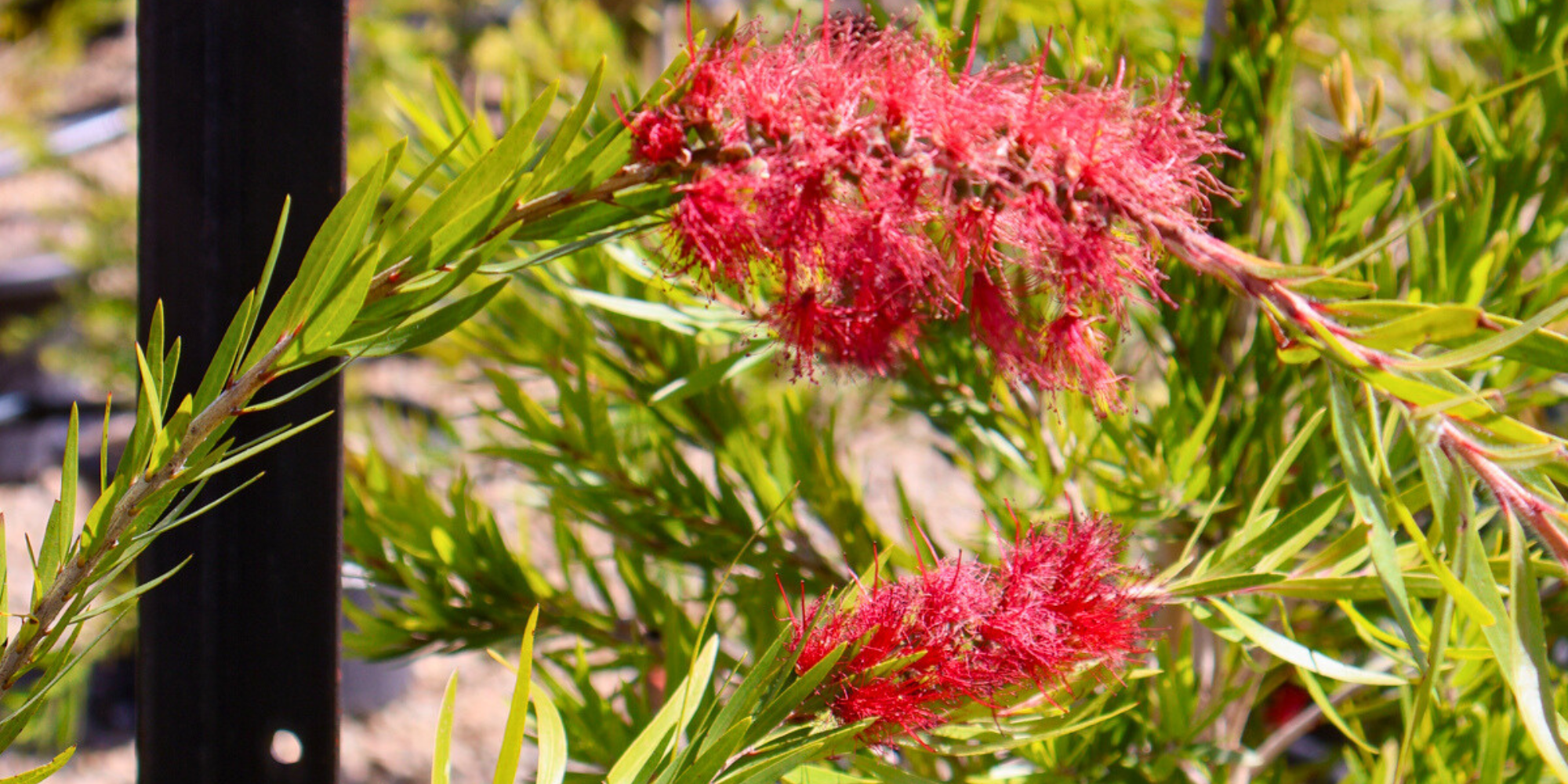
5. Callistemon 'Kings Park Special' (Kings Park Special Bottlebrush)

Dense foliage with vivid red bottlebrush flowers in spring and autumn that attract honeyeaters, lorikeets and native bees.

Type
Evergreen native flowering tree or hedge
Height
3-5m
Width
2-3m
Growth rate
Fast
Foliage
Fine bright green leaves with new bronze growth
Flowers
Vivid red bottlebrush flowers, spring and autumn flushes
Form
Upright dense bush, can be pruned to desired height
Conditions
Full sun. Tolerates a wide range of soils including damp ground. Coastal, frost and drought tolerant.
Maintenance
Low. Trim lightly after each flush to encourage dense growth.
Best for
Bird-attracting hedges, native screens, mixed flowering borders.

Why choose it

Two big flowering flushes a year keep nectar feeders returning. Easy to keep neat as a hedge.

Perfect pair

Pair as a flowering hedge backdrop with Banksia integrifolia as the feature tree in front.

Tips for planting

Plant 1.5m apart for a hedge. Light prune after the main spring flush boosts the autumn show.

A flowering hedge that brings the wildlife in.

Shop Callistemon 'Kings Park Special'

Compare at a glance

CultivarHeightWidthFormFoliageBest if you…
Banksia integrifolia
Coast Banksia
8-15m4-6mUpright with a layered canopyLeathery dark green with silver undersideBird gardens, coastal blocks, wildlife corridors, native screens.
Eucalyptus leucoxylon 'Euky Dwarf'
Euky Dwarf Yellow Gum
5-8m3-5mUpright, evenly branchedGrey-green narrow leavesSuburban nectar gardens, street and avenue planting, bird attracting feature trees.
Corymbia ficifolia 'Wildfire'
Wildfire Flowering Gum
6-8m4-5mRounded dense canopy on a clean trunkDark green leathery lance-shaped leavesFront garden feature trees, bird and bee gardens, street feature planting.
Grevillea x 'Moonlight'
Moonlight Grevillea
3-5m3-4mSoft rounded canopySilvery-green divided fern-like foliageBird gardens, native screens, mid-layer planting under feature trees.
Callistemon 'Kings Park Special'
Kings Park Special Bottlebrush
3-5m2-3mUpright dense bush, can be pruned to desired heightFine bright green leaves with new bronze growthBird-attracting hedges, native screens, mixed flowering borders.

How to plant and care for them

Pick the position
Full sun for the strongest flowering.
Prepare the planting hole
Twice the rootball width, same depth.
Plant level and water deeply
Rootball level with surrounding soil. Soak thoroughly.
Mulch out to the drip line
75 to 100mm of organic mulch.
Water through the first two summers
Deep watering through establishment. After that natives hold their own on rainfall.
Native feeding rule
Low-phosphorus native fertiliser in early spring if any.

Frequently asked questions

Which of these flowers in winter?
Banksia integrifolia flowers from autumn through winter, making it one of the most useful winter nectar sources for honeyeaters.
Which attracts the most native bees?
Grevillea Moonlight and Callistemon Kings Park Special are heavy native bee draws, with Corymbia Wildfire pulling in stingless bees and blue-banded bees in summer.
Can I plant these in pots?
Grevillea Moonlight and Callistemon will grow well in large pots. Eucalyptus and Banksia prefer the ground for their root systems.

The wrap up

Six native picks turn the garden into a year-round feeding station for birds and pollinators. Layer flowering windows for continuous habitat value across the seasons.