



Skip to content

OUR END OF FINANCIAL YEAR SALE IS LIVE!

20% OFF ORDERS OVER $1,500 - DISCOUNT APPLIES AUTOMATICALLY AT CHECKOUT

How to Choose Trees That Support Local Fauna

How to Choose Trees That Support Local Fauna

Five native trees that feed honeyeaters, lorikeets and pollinators across Australian seasons.

banksiabird attractingcallistemoncorymbiaeucalyptusgrevilleanative treeswildlife garden

A working bird garden plants for the calendar. Different species flower in different months, so layering means the nectar never runs out. Get the layering right and you'll have honeyeaters, lorikeets and wrens visiting daily.

This is a shortlist of five Australian natives that feed local fauna across the year.

Plant for the calendar

Banksia integrifolia flowers autumn to winter. Callistemon and Grevillea cover spring. Corymbia ficifolia and Eucalyptus mannifera hit summer. Plant all five and the birds eat year round.

Add ground cover under the trees for small birds like wrens. Mulch heavily and use a low-phosphorus native fertiliser blend, since these species thrive on the right native feed.

Native tree feeding honeyeater birds

The autumn-winter feeder

Banksia integrifolia produces golden flower spikes through the colder months when most other nectar has stopped. Resident honeyeaters depend on it.

Native gum feeding nectar birds

The spring-summer flush

Grafted Corymbia ficifolia 'Wildfire' delivers spectacular crimson clusters that pull lorikeets in flocks. Callistemon viminalis adds reliable red brushes for honeyeaters. Eucalyptus mannifera supports the broader insect food chain that small birds depend on.

Grevillea attracting honeyeater birds

Pairing the layers

Plant a Banksia feature and Grevillea hedge as the year-round backbone. Add Eucalyptus mannifera for canopy and Callistemon plus Corymbia Wildfire for seasonal punch. That's a working bird garden in five species.

FAQs

What attracts the most birds?
Diversity. One species feeds one type of bird. Layered planting feeds many.

How long before birds arrive?
Honeyeaters find new flowers within weeks. Resident bird populations build over 2 to 3 years.

Do I need to feed birds with seed too?
No — the trees do the work. Just provide water in a shallow dish at ground level.

1. Banksia integrifolia (Coast Banksia)

Year-round nectar for honeyeaters and lorikeets in a tough coastal native.

Type
Evergreen tree
Height
6-15m
Width
4-8m
Growth rate
Moderate to fast
Foliage
Dark green with silver underside
Flowers
Golden cylindrical spikes autumn to winter
Form
Upright open
Conditions
Full sun, well-drained soil, salt and drought tolerant
Maintenance
Very low
Best for
Gardens designed to feed native birds through winter when other food is scarce.

Why choose it

Flowers in autumn and winter when most other nectar sources have stopped, making it crucial for resident birds.

Perfect pair

Plant Banksia as the bird-feeding feature and run a Callistemon hedge for spring and summer nectar.

Tips for planting

Avoid phosphorus fertiliser. Plant in groups for stronger bird response

Winter-flowering native that keeps the birds fed.

Shop Banksia integrifolia

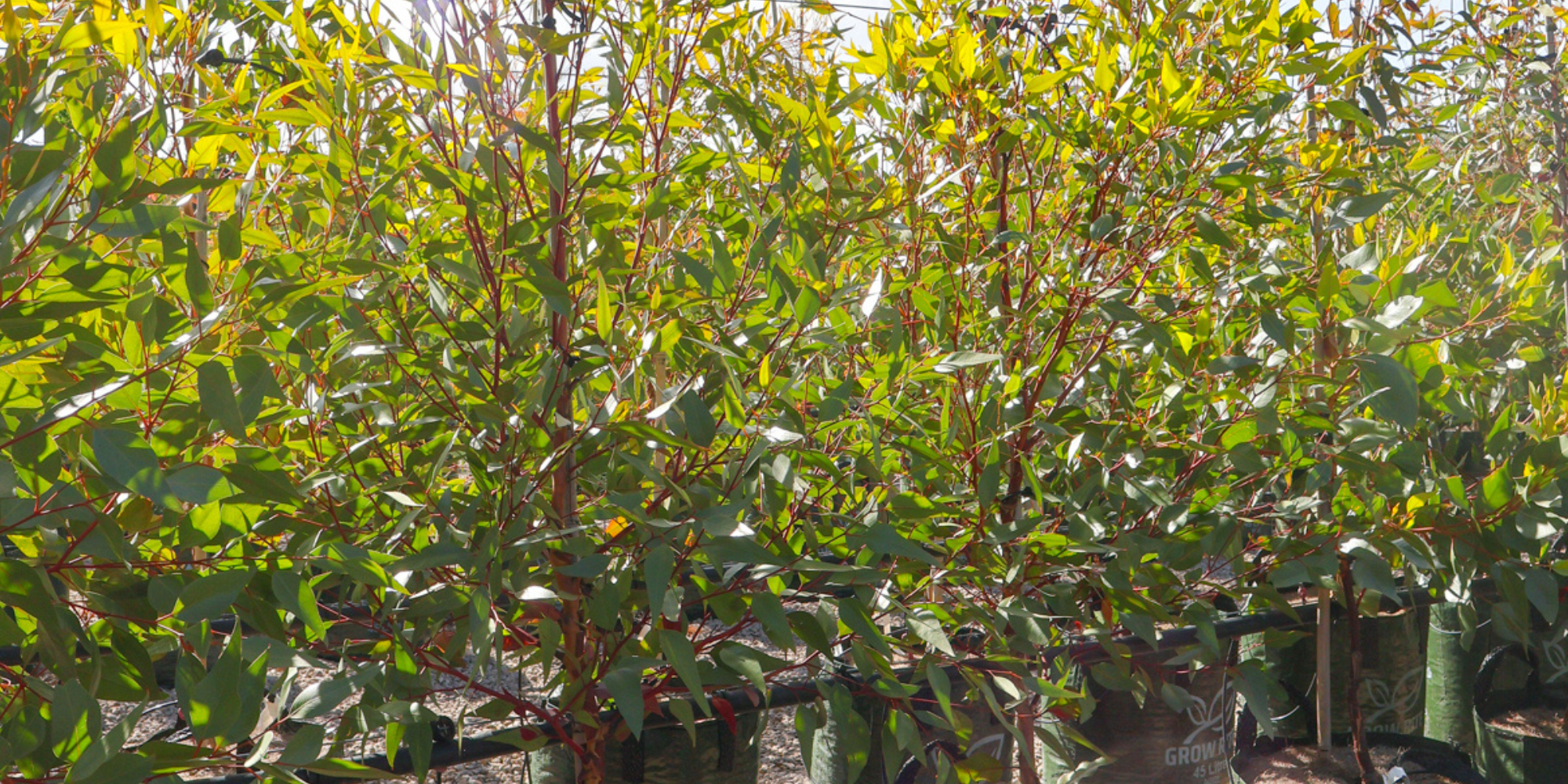
2. Eucalyptus mannifera (Brittle Gum)

Smooth-trunked gum that hosts pollinators and feeds nectar-eating birds.

Type
Evergreen tree
Height
10-15m
Width
6-8m
Growth rate
Moderate to fast
Foliage
Narrow grey-green aromatic
Flowers
White cup-shaped in summer
Form
Upright open
Conditions
Full sun, well-drained soil, frost and drought tolerant
Maintenance
Very low
Best for
Large gardens where you want a feature tree that supports the full food chain.

Why choose it

Aromatic flowers feed lorikeets and parrots, while bark and foliage host insects that feed wrens and robins.

Perfect pair

Anchor with Brittle Gum and run a Grevillea hedge for layered native nectar through the year.

Tips for planting

Avoid pruning during flowering. Leave fallen branches for insect habitat

A complete food-chain native in one tree.

Shop Eucalyptus mannifera

3. Corymbia ficifolia 'Wildfire' (Wildfire Flowering Gum)

Grafted Red Flowering Gum that pulls in honeyeaters with spectacular crimson summer flowers.

Type
Evergreen tree
Height
6-8m
Width
4-6m
Growth rate
Moderate
Foliage
Dark green leathery
Flowers
Massive crimson clusters in summer
Form
Compact rounded
Conditions
Full sun, well-drained soil, drought tolerant
Maintenance
Low
Best for
Small to medium gardens designed to attract honeyeaters and lorikeets.

Why choose it

The crimson flowers are a magnet for native nectar birds and produce in spectacular density on a small tree.

Perfect pair

Plant Wildfire as the feature and run a Banksia integrifolia hedge for layered year-round bird food.

Tips for planting

Plant in free-draining soil. No phosphorus

Crimson flowers that bring the birds home.

Shop Corymbia ficifolia 'Wildfire'

4. Callistemon viminalis (Weeping Bottlebrush)

Native bottlebrush with weeping branches and red flowers that feed honeyeaters from spring.

Type
Evergreen tree
Height
5-8m
Width
3-5m
Growth rate
Moderate to fast
Foliage
Soft narrow weeping green
Flowers
Red cylindrical brushes spring to summer
Form
Weeping rounded
Conditions
Full sun, adaptable soil, drought tolerant
Maintenance
Low. Prune after flowering
Best for
Native gardens needing reliable spring nectar for birds.

Why choose it

Flowers prolifically with red brush-shaped blooms that perfectly fit honeyeater beaks.

Perfect pair

Plant Callistemon as a feature and run a Grevillea hedge nearby for staggered nectar through the year.

Tips for planting

Prune after flowering to encourage more blooms. Mulch well

Reliable spring nectar in weeping form.

Shop Callistemon viminalis

5. Grevillea 'Moonlight' (Moonlight Grevillea)

Large cream toothbrush flowers feed nectar birds almost year round.

Type
Evergreen shrub or small tree
Height
3-5m
Width
2-3m
Growth rate
Fast
Foliage
Silver-green fern-like
Flowers
Cream toothbrush almost year round
Form
Upright rounded
Conditions
Full sun, well-drained soil, drought tolerant
Maintenance
Low. Light prune after flowering
Best for
Smaller gardens or hedging that supports nectar birds year round.

Why choose it

Almost continuous flowering means the birds keep coming back, and the dense foliage shelters small birds from predators.

Perfect pair

Plant Moonlight as a hedge and add a Banksia integrifolia feature for layered native bird buffet.

Tips for planting

Light prune after main flowering. No phosphorus

Nearly continuous nectar for nearly continuous birds.

Shop Grevillea 'Moonlight'

Compare at a glance

CultivarHeightWidthFormFoliageBest if you…
Banksia integrifolia
Coast Banksia
6-15m4-8mUpright openDark green with silver undersideGardens designed to feed native birds through winter when other food is scarce.
Eucalyptus mannifera
Brittle Gum
10-15m6-8mUpright openNarrow grey-green aromaticLarge gardens where you want a feature tree that supports the full food chain.
Corymbia ficifolia 'Wildfire'
Wildfire Flowering Gum
6-8m4-6mCompact roundedDark green leatherySmall to medium gardens designed to attract honeyeaters and lorikeets.
Callistemon viminalis
Weeping Bottlebrush
5-8m3-5mWeeping roundedSoft narrow weeping greenNative gardens needing reliable spring nectar for birds.
Grevillea 'Moonlight'
Moonlight Grevillea
3-5m2-3mUpright roundedSilver-green fern-likeSmaller gardens or hedging that supports nectar birds year round.

Frequently asked questions

What attracts the most birds?
Diversity. One species feeds one type of bird. Layered planting feeds many.
How long before birds arrive?
Honeyeaters find new flowers within weeks. Resident bird populations build over 2 to 3 years.
Do I need to feed birds with seed too?
No the trees do the work. Just provide water in a shallow dish at ground level.