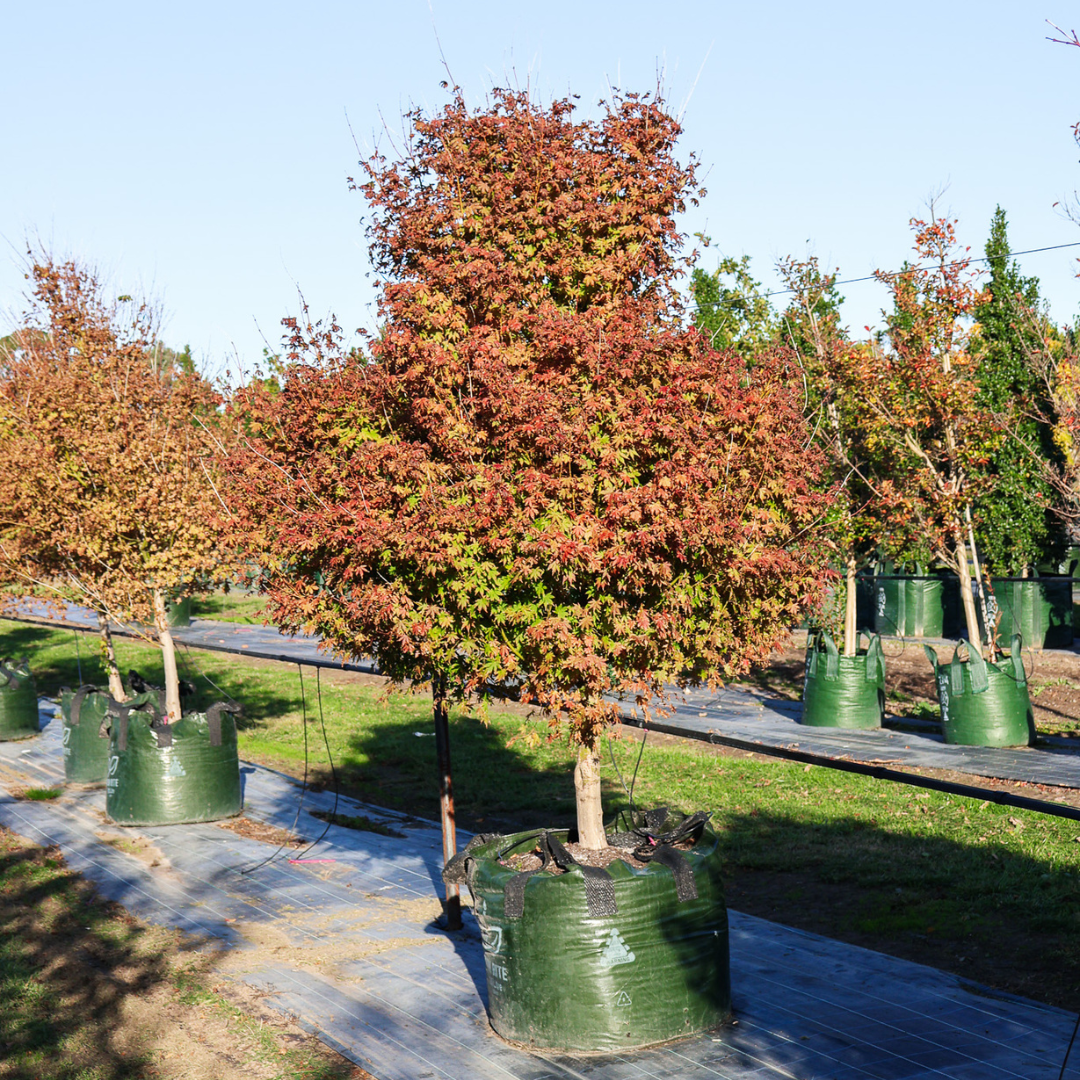
Planting a tree is only the beginning.
What determines its long-term success happens underground: invisibly, quietly, and often misunderstood. Professional growers and arborists focus heavily on the establishment phase, because this is when a tree transitions from nursery-grown roots to soil-driven growth.
This guide explains the biological processes that begin immediately after planting, how your tree adapts to its new environment, and what truly matters during the first weeks and months.
1. The Establishment Window: A Tree’s Most Important Phase
Once planted, a tree enters a critical period known as the establishment window.This is when the root system must:
anchor itself in its new soil
extend fine feeder roots
rebuild damaged tissues
adapt its water uptake to site conditions
Professionally, we call this period “physiological stabilisation”, the transition from nursery conditions to open-ground growth.
A tree can only grow above the soil as fast as it establishes below it.
2. Root Priorities After Planting: Expansion, Not Growth
Many people think a tree grows leaves and canopy first.Professionally, we know the opposite is true.
Below the soil, the tree is:
producing new fine root hairs (essential for water absorption)
extending the root plate horizontally
repairing minor transplant shock
forming new symbiotic relationships with soil biology
adjusting water pressure (hydraulic conductivity)
Above the soil, the tree is:
holding still
limiting canopy growthI nee
regulating moisture loss through stomata
This is normal.A tree that “does nothing” in the first season is actually investing in survival.
3. How Roots Anchor Themselves (And Why Disturbance Matters)
The first four to twelve weeks are when roots begin binding to the surrounding soil.This process is called mechanical anchorage.
During this period, avoid:
pushing, pulling, or straightening the tree
rotating the trunk
disturbing the root zone
removing stakes early
Roots anchor by growing microscopic lateral fibres into soil pores.Any movement breaks these fine structures and resets the anchorage process.
4. Soil–Root Interaction: The Critical Bond Professionals Watch
When a tree is planted, the root ball and native soil are two separate materials.Over time, roots begin bridging this boundary.
This bridging requires:
consistent moisture
oxygen flow
stable temperature
low disturbance
time
Once bridged, the tree becomes self-sufficient in its site soil, not its nursery mix.
This is the moment when growth “switches on.”
5. How Trees Regulate Water After Planting (Sap Flow & Stress Physiology)
Immediately after planting, a tree must adjust its internal water pressure.
It does this by:
slowing transpiration
reducing sap velocity
prioritising root hydration
allocating energy to new root hairs
This is why newly planted trees may show:
slower leaf production
softer or paler new growth
reduced shoot extension
These signals are not negative; they are physiologically correct.
6. Early Symptoms to Expect (and Why They Are Normal)
Many customers worry when they see:
slight leaf curl
minor wilt during hot days
light bronzing
temporary soft growth
reduced leaf size
These are typical responses to transplant adjustment.Professional growers expect them, and they self-correct as the root system stabilises.
7. The First 12 Weeks: What Actually Matters Most
Forget fertilising, turning soil, or encouraging top growth.What truly matters is:
Moisture Consistency
Not too dry, not waterlogged.Roots prefer consistent hydration; they grow toward stability.
Root Zone Protection
Mulch, weed control, and no disturbance create the right environment.
Temperature Moderation
Stable soil temperature drives faster root initiation.
Patience
Most establishment work is invisible.
Once roots stabilise, canopy growth accelerates naturally and reliably.
8. The Long-Term Payoff
Trees that experience strong establishment exhibit:
better drought tolerance
stronger anchorage
more efficient nutrient uptake
superior canopy density
significantly longer lifespan
Excellent planting initiates the process.Strong establishment completes it.
In summary, the true measure of a tree’s success lies beneath the surface. A thorough understanding of root establishment, soil conditions, and physiological processes is essential for anyone wishing to nurture healthy, long-lived trees. By prioritising early root development, minimising disturbance, and maintaining consistent moisture and temperature, you provide the best possible foundation for vigorous growth in the years ahead. Remember, patience and observation in these crucial first weeks will yield rewards that endure for decades.
Learn more