



Skip to content

VOLUME DISCOUNTS APPLY AUTOMATICALLY AT CHECKOUT.

All stock is grown, maintained and graded in strict accordance with AS 4373-2007, Australian Standard for Nursery Stock.

Drought-Tolerant Trees for Australia's Hot Summers

Drought-Tolerant Trees for Australia's Hot Summers

Five drought tolerant trees that handle Australian summers without constant watering. Native and Mediterranean picks.

BanksiaBrachychitonClimate ResilientDrought TolerantEucalyptusMediterranean TreesNative TreesOlea

A drought tolerant tree is one that survives the second and third dry summer, not just the first. The key is choosing species adapted to dry conditions, planting in autumn, and resisting the urge to keep watering once the tree is away.

What drought tolerant actually means

It means the tree can survive extended dry periods once the root system is established. In the first one to two years every tree needs deep regular watering. After that the right species copes on rainfall alone in most years.

Olea europaea Manzanillo

Olea europaea Manzanillo

Silver foliage, edible fruit, one of the toughest drought trees we grow. Handles 40°C and above with the right preparation.

Brachychiton populneus, Kurrajong

Native bottle tree with a slightly swollen trunk that stores moisture. Survives where almost nothing else does.

Banksia integrifolia

Banksia integrifolia, Coastal Banksia

Salt, wind and drought tolerance in one tree. Reliable bird draw through the cool months.

Eucalyptus mannifera, Brittle Gum

Smooth white bark, light open canopy, drought tolerant. A feature tree that earns its space.

Bay Tree drought tolerant

Laurus nobilis, Bay Tree

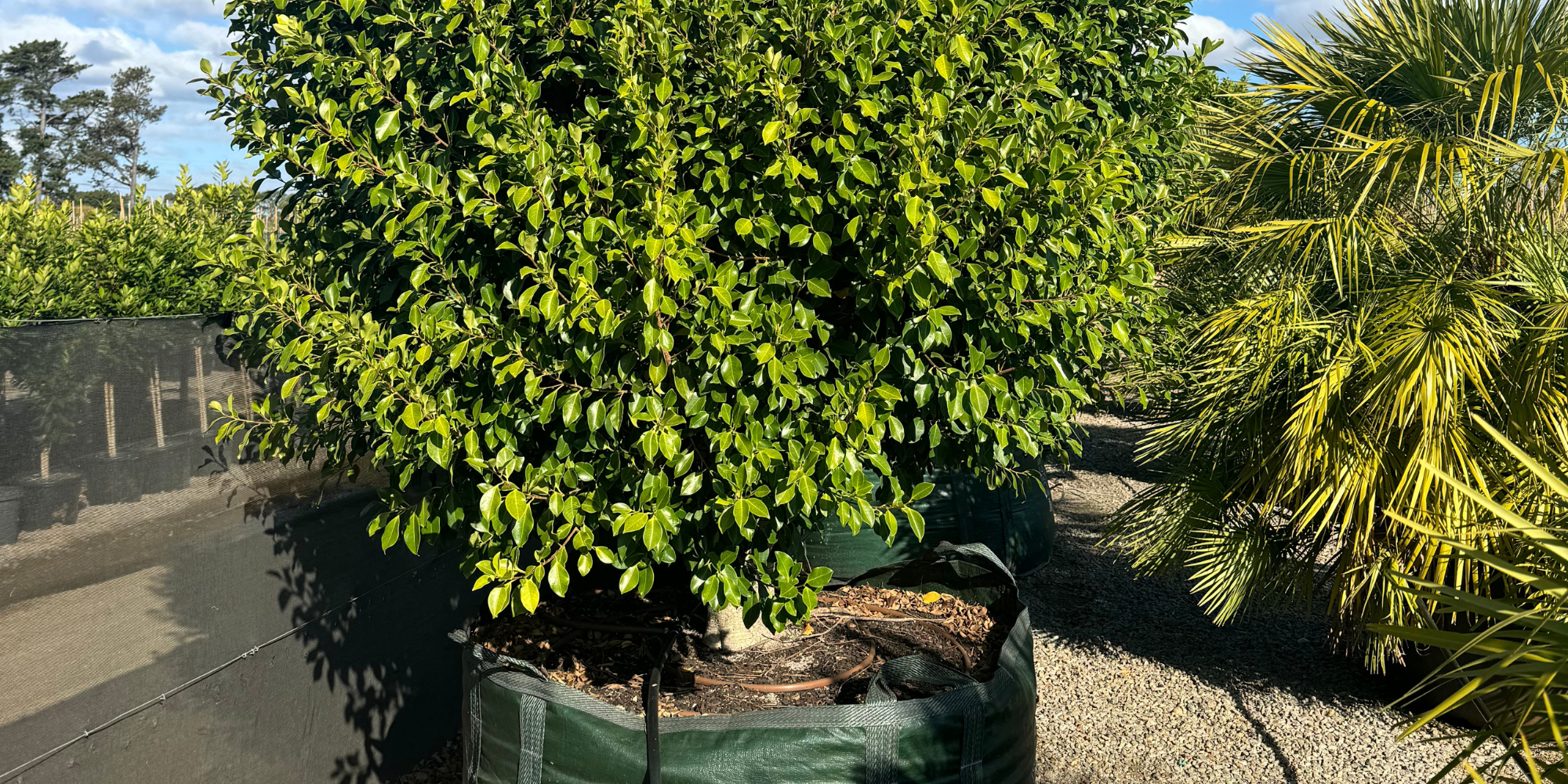
Mediterranean evergreen wired for dry summers. Handles dry heat and inland frost.

Planting for drought tolerance

Plant in autumn so the roots get a head start before summer. Mulch deeply with coarse material. Water deeply once a week through the first summer then taper off. Stop fertilising once the tree is away.

FAQ

Do drought tolerant trees need any water? Yes, deep regular watering for the first one to two years. After that they can rely on rainfall in most seasons.

Can these handle 40°C and above? All five will. Olive and Kurrajong are the toughest at extreme heat.

Compare at a glance

CultivarHeightWidthFormFoliageBest if you…
Olea europaea Manzanillo
Manzanillo Olive
4 to 6 metres3 to 5 metresRounded crownSilver grey greenMediterranean gardens, drought sites, feature, harvest
Brachychiton populneus
Kurrajong / Bottle Tree
10 to 15 metres5 to 8 metresUpright pyramidal crownGlossy dark green poplar like leavesDrought sites, paddock shade, feature tree
Banksia integrifolia
Coastal Banksia
10 to 15 metres6 to 10 metresUpright spreading crownLong dark green leaves with silver undersidesCoastal exposed sites, drought tolerant gardens, bird habitat
Eucalyptus mannifera
Brittle Gum
10 to 15 metres6 to 8 metresOpen upright crownLance shaped grey greenDrought sites, feature bark, light shade
Laurus nobilis
Bay Tree
3 to 8 metres, can be pruned to desired height1 to 3 metresUpright denseAromatic dark green leatheryMediterranean gardens, dry climate hedges, edible feature

1. Olea europaea Manzanillo (Manzanillo Olive)

Manzanillo Olive holds silver foliage, edible fruit and one of the toughest drought constitutions of any feature tree. Suits hot dry inland and coastal gardens alike.

Type
Evergreen drought tolerant fruit tree
Height
4 to 6 metres
Width
3 to 5 metres
Growth rate
Moderate
Foliage
Silver grey green
Form
Rounded crown
Conditions
Full sun, well drained soils, hot dry sites
Maintenance
Low, shape if you want a denser canopy
Best for
Mediterranean gardens, drought sites, feature, harvest

Why choose it

Heat, drought, salt and frost all tolerated once established.

Perfect pair

Pair with a Bay Tree hedge to anchor a Mediterranean planting.

Tips for planting

Plant into free draining ground. Avoid waterlogged soils. Mulch with coarse stone or gravel.

The benchmark drought tolerant feature tree.

Shop Olea europaea Manzanillo

2. Brachychiton populneus (Kurrajong / Bottle Tree)

Kurrajong is one of the toughest natives in cultivation. The slightly swollen trunk stores moisture and the tree shrugs off drought, heat and poor soils.

Type
Evergreen Australian native shade tree
Height
10 to 15 metres
Width
5 to 8 metres
Growth rate
Moderate
Foliage
Glossy dark green poplar like leaves
Form
Upright pyramidal crown
Conditions
Full sun, well drained soils, very drought tolerant
Maintenance
Very low
Best for
Drought sites, paddock shade, feature tree

Why choose it

Stores moisture in the trunk, handles serious drought.

Perfect pair

Pair with a Banksia integrifolia as a flowering native understorey feature.

Tips for planting

Allow generous root run. Plant in autumn for best establishment.

A drought hardy native that survives almost anything.

Shop Brachychiton populneus

3. Banksia integrifolia (Coastal Banksia)

Coastal Banksia handles salt, wind and dry inland conditions. Tough leaf, deep roots, reliable nectar flowers through cool months.

Type
Evergreen Australian native tree
Height
10 to 15 metres
Width
6 to 10 metres
Growth rate
Moderate
Foliage
Long dark green leaves with silver undersides
Flowers
Yellow cylindrical spikes
Form
Upright spreading crown
Conditions
Full sun, free draining soils, very tough
Maintenance
Low
Best for
Coastal exposed sites, drought tolerant gardens, bird habitat

Why choose it

Salt, wind and drought tolerance in one tree.

Perfect pair

Pair with a Brachychiton populneus as a drought tolerant canopy tree.

Tips for planting

Avoid phosphorus rich fertilisers. Water through the first summer only.

Tough, useful, and good for the local birds.

Shop Banksia integrifolia

4. Eucalyptus mannifera (Brittle Gum)

Brittle Gum carries smooth white bark that flushes pink as it sheds. Drought hardy once established and a feature in any dry climate planting.

Type
Evergreen Australian native tree
Height
10 to 15 metres
Width
6 to 8 metres
Growth rate
Moderate
Foliage
Lance shaped grey green
Flowers
White nectar flowers in summer
Form
Open upright crown
Conditions
Full sun, well drained soils, frost and drought tolerant
Maintenance
Low
Best for
Drought sites, feature bark, light shade

Why choose it

Standout bark, light open canopy, drought hardy.

Perfect pair

Pair with a Banksia integrifolia for a native drought tolerant pairing.

Tips for planting

Allow space for root run. Avoid heavy mulch against the trunk.

Decorative bark and serious drought tolerance.

Shop Eucalyptus mannifera

5. Laurus nobilis (Bay Tree)

Bay Tree handles dry heat and the cold inland winter. The Mediterranean origin means it is wired for dry summers and free draining soils.

Type
Evergreen drought tolerant tree or hedge
Height
3 to 8 metres, can be pruned to desired height
Width
1 to 3 metres
Growth rate
Slow
Foliage
Aromatic dark green leathery
Form
Upright dense
Conditions
Full sun, well drained soils, drought tolerant
Maintenance
Low, trim if used as hedge
Best for
Mediterranean gardens, dry climate hedges, edible feature

Why choose it

Drought hardy and edible, very long lived.

Perfect pair

Pair with an Olea Manzanillo as a feature within a dry garden.

Tips for planting

Avoid waterlogged soils. Mulch with coarse material.

A drought tolerant evergreen with culinary value.

Shop Laurus nobilis

Frequently asked questions

Can these handle 40°C and above?
All five will. Olive and Kurrajong are the toughest at extreme heat.