



Skip to content

VOLUME DISCOUNTS APPLY AUTOMATICALLY AT CHECKOUT.

All stock is grown, maintained and graded in strict accordance with AS 4373-2007, Australian Standard for Nursery Stock.

Top 5 Frost-Tolerant Hedging Trees for Australian Gardens

Top 5 Frost-Tolerant Hedging Trees for Australian Gardens

Five frost-tolerant hedging trees that hold form through cold Australian winters. Practical guide covering Bay 'Miles Choice', Syzygium 'Resilience', Photinia 'Robusta', Cupressus 'Better Green' and Elaeagnus, with planting and pruning advice.


Cold ClimateEvergreen HedgesFrost TolerantHedgingPrivacy Screens

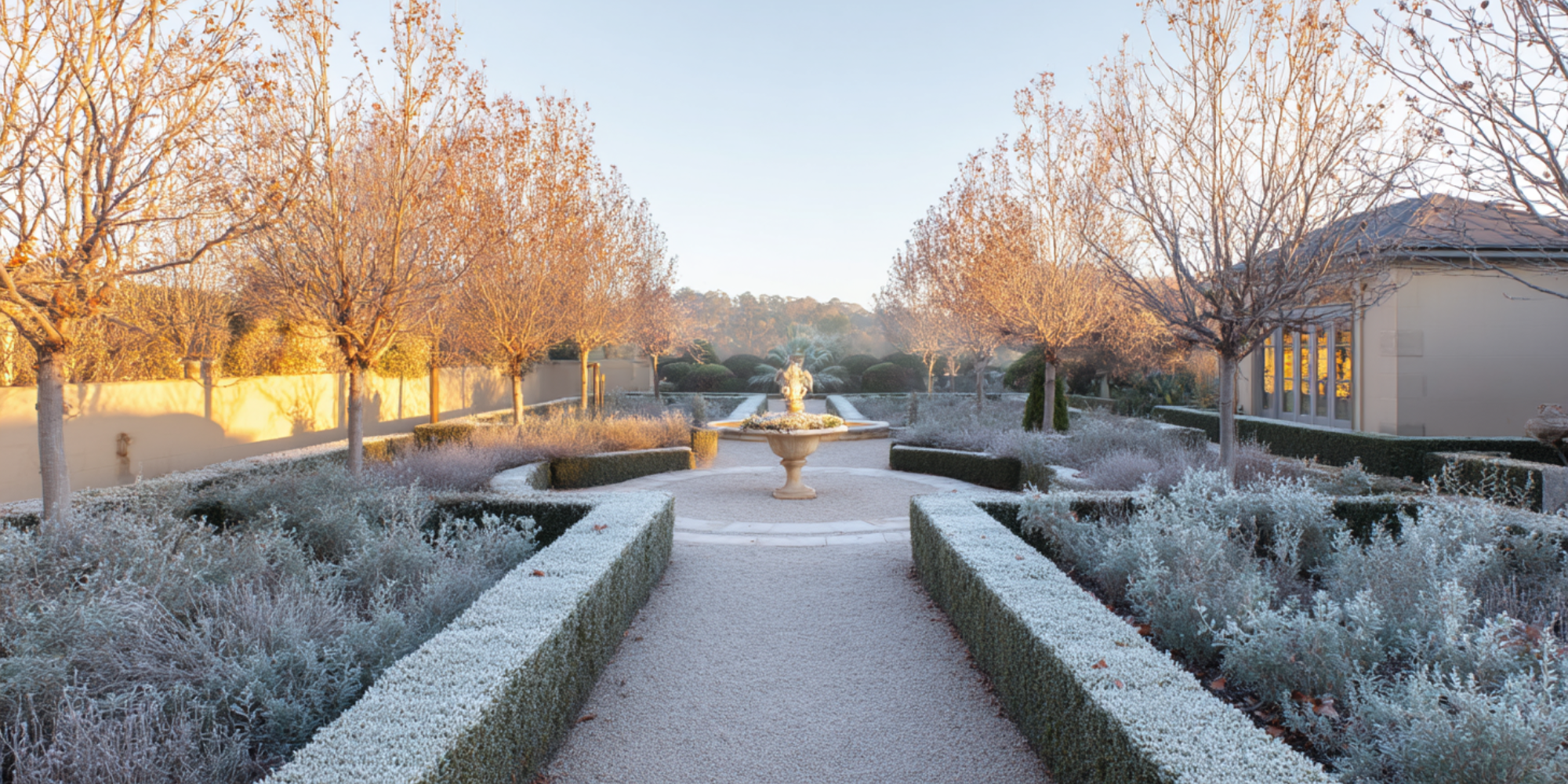
Cold-climate gardens deserve hedges that hold their structure through Australian winters. These five proven options keep their foliage and shape through the cold months, delivering privacy and windbreak when you want them most.

Laurus nobilis 'Miles Choice' (Bay)

An improved bay cultivar selected for compact upright growth and stronger frost tolerance. Miles Choice holds dense foliage from base to crown right through cold winters.

A formal evergreen for paths, courtyards and clipped borders. Holds shapes well and thrives in dry positions once established.

Laurus nobilis Miles Choice

Syzygium australe 'Resilience' (Lilly Pilly)

A psyllid-resistant lilly pilly with dense glossy foliage and bronze new growth. Holds frost well in cool temperate climates while remaining tough across most of Australia.

Excellent as a fast privacy hedge with native value. Takes regular clipping and recovers strongly from formative pruning.

Photinia robusta

A classic Australian hedging plant with bright red new growth flushing against dense dark green foliage. Reliable in cold positions and quick to fill out.

Thrives on regular pruning and stands up to demanding conditions. The red flush is best stimulated by clipping twice a year.

Photinia robusta

Cupressus leylandii 'Better Green'

An improved Leighton Green selection. Very fast growing, reliably frost hardy and the go-to conifer for rural windbreaks and tall boundary screens.

Handles strong wind, salt exposure and sub-zero temperatures. Plant in late summer pruning windows so growth firms up before frost.

Cupressus Better Green

Elaeagnus ebbingei (Silverberry)

A tough hardy evergreen with silvery-green foliage and intensely fragrant inconspicuous flowers in autumn. One of the most reliable hedge plants for frost-prone and exposed positions.

Fast growing and adaptable to poor soils. The silver foliage works particularly well against deeper green companions.

Frost tolerant evergreen

Cold Climate Planting Tips

  • Choose evergreens for year round privacy.
  • Plant before autumn ends so roots settle in before deep frost.
  • Use coarse bark mulch, not fine, as it traps warmth more effectively.
  • Water deeply every 10 to 14 days through dry winters, even when trees look dormant.

Compare at a glance

CultivarHeightWidthFormFoliageBest if you…
Laurus nobilis 'Miles Choice'
Miles Choice Bay Tree
3 to 4m1.5 to 2mUpright dense columnAromatic dark green leathery leavesFormal evergreen hedges, courtyards, paths, frost-prone gardens. Can be pruned to desired height.
Syzygium australe 'Resilience'
Resilience Lilly Pilly
4 to 6m2 to 3mDense upright shrub or small treeGlossy green with bronze new growthPrivacy hedges, screens, formal and informal gardens. Can be pruned to desired height.
Photinia robusta
Robusta Photinia
3 to 5m2 to 3mDense upright shrub or small treeGlossy dark green with brilliant red new growthPrivacy hedges, screens, colour contrast. Can be pruned to desired height.
Cupressus leylandii 'Better Green'
Better Green Leyland Cypress
Up to 15m, can be pruned lower2 to 3mUpright conicalSoft-textured rich greenRural windbreaks, fast privacy screens, large boundaries. Can be pruned to desired height.
Elaeagnus ebbingei
Silverberry
3 to 4m2 to 3mDense rounded shrubSilvery-green leathery foliageFrost-prone hedges, coastal screens, low-maintenance boundaries. Can be pruned to desired height.

1. Laurus nobilis 'Miles Choice' (Miles Choice Bay Tree)

Miles Choice is an improved bay cultivar bred for compact upright growth and improved cold tolerance. Holds dense foliage where the standard species often defoliates in frost.

Type
Evergreen formal hedge
Height
3 to 4m
Width
1.5 to 2m
Growth rate
Moderate, 20 to 40cm per year
Foliage
Aromatic dark green leathery leaves
Form
Upright dense column
Conditions
Full sun to part shade, well-drained soil. Very good frost tolerance once established
Maintenance
Clip twice a year for a tidy hedge
Best for
Formal evergreen hedges, courtyards, paths, frost-prone gardens. Can be pruned to desired height.

Why choose it

Where standard bay can mark in frost, Miles Choice keeps its foliage looking fresh. Holds clipped shapes well and tolerates dry positions once established.

Perfect pair

Pair with Pyrus calleryana 'Capital' as the narrow deciduous feature tree, letting the bay hedge frame the trunks.

Tips for planting

Mulch well in winter to insulate roots in frost pockets. Plant 80cm apart for a dense hedge.

An improved bay that holds form through cold winters.

Shop Laurus nobilis 'Miles Choice'

2. Syzygium australe 'Resilience' (Resilience Lilly Pilly)

Resilience is one of the most planted lilly pilly cultivars in Australia, selected for psyllid resistance and dense glossy foliage. Holds frost well in cool temperate gardens.

Type
Evergreen native hedge
Height
4 to 6m
Width
2 to 3m
Growth rate
Fast
Foliage
Glossy green with bronze new growth
Flowers
Small cream flowers followed by edible pink berries
Form
Dense upright shrub or small tree
Conditions
Full sun to part shade, most soils. Good frost tolerance once established
Maintenance
Clip 2 to 3 times a year for a formal hedge
Best for
Privacy hedges, screens, formal and informal gardens. Can be pruned to desired height.

Why choose it

Resilient to the psyllid pest that damages older lilly pilly cultivars, and tougher in cold positions than many natives. Reliable across most of Australia.

Perfect pair

Pair with Waterhousea floribunda as the taller feature tree, with Resilience as the dense lower hedge.

Tips for planting

Plant 1m apart for hedges. Water deeply through the first two summers, especially in heat above 30°C and above.

A reliable lilly pilly for cold-tolerant native hedges.

Shop Syzygium australe 'Resilience'

3. Photinia robusta (Robusta Photinia)

Photinia robusta is a versatile evergreen with bright red new growth that flushes against dense dark green foliage. Tolerates regular clipping and tough conditions.

Type
Evergreen formal hedge
Height
3 to 5m
Width
2 to 3m
Growth rate
Fast
Foliage
Glossy dark green with brilliant red new growth
Form
Dense upright shrub or small tree
Conditions
Full sun to part shade, most soils. Frost tolerant once established
Maintenance
Clip twice a year to encourage red new growth
Best for
Privacy hedges, screens, colour contrast. Can be pruned to desired height.

Why choose it

Fast-growing with reliable frost tolerance and outstanding seasonal interest from the red new growth. A classic Australian hedging plant for cold zones.

Perfect pair

Pair with Magnolia grandiflora 'Little Gem' as the formal evergreen feature tree at the front of the hedge line.

Tips for planting

Plant 1m apart for hedges. Clip lightly to maintain a tight form and stimulate the bright red flush.

A frost-hardy hedge with year round colour.

Shop Photinia robusta

4. Cupressus leylandii 'Better Green' (Better Green Leyland Cypress)

Better Green is an improved Leighton Green selection with a more uniform habit and reliable performance in cold climates. A workhorse for tall windbreaks and rural screens.

Type
Evergreen conifer windbreak
Height
Up to 15m, can be pruned lower
Width
2 to 3m
Growth rate
Very fast, 1 to 2m per year
Foliage
Soft-textured rich green
Form
Upright conical
Conditions
Full sun, well-drained soil, excellent frost tolerance
Maintenance
Annual prune in late summer to maintain density
Best for
Rural windbreaks, fast privacy screens, large boundaries. Can be pruned to desired height.

Why choose it

Stays green through sub-zero temperatures. Handles strong wind and salt exposure, which makes it the go-to conifer for exposed rural blocks.

Perfect pair

Pair with Acer palmatum as the seasonal feature tree inside the boundary, sheltered by the conifer screen.

Tips for planting

Plant 1m apart for a fast wall. Prune in late summer to avoid soft growth before frost. Needs good drainage.

Fast, reliable, frost hardy.

Shop Cupressus leylandii 'Better Green'

5. Elaeagnus ebbingei (Silverberry)

Elaeagnus ebbingei is a hardy fast-growing evergreen with silvery-green foliage and intensely fragrant inconspicuous autumn flowers. Tough across cold, dry and coastal positions.

Type
Evergreen hedge
Height
3 to 4m
Width
2 to 3m
Growth rate
Fast
Foliage
Silvery-green leathery foliage
Flowers
Small fragrant cream flowers in autumn
Form
Dense rounded shrub
Conditions
Full sun to part shade, tolerates poor soils. Excellent frost tolerance
Maintenance
Light clip twice a year
Best for
Frost-prone hedges, coastal screens, low-maintenance boundaries. Can be pruned to desired height.

Why choose it

One of the toughest hedge plants available, with the bonus of silvery foliage and fragrant flowers. Performs where many evergreens fail.

Perfect pair

Pair with Brachychiton rupestris as the sculptural feature tree, letting the silver hedge frame its bottle trunk.

Tips for planting

Plant 80cm apart for a dense hedge. Mulch well to protect roots through cold winters.

A silver evergreen built for tough conditions.

Shop Elaeagnus ebbingei

Frequently asked questions

What is the most frost tolerant hedge?
Cupressus 'Better Green' and Elaeagnus ebbingei are both rated excellent for frost tolerance. For a formal evergreen hedge in frost-prone gardens, Bay 'Miles Choice' is the most reliable.
When should I plant a hedge in a cold climate?
Plant before autumn ends so roots establish before heavy frost. Use coarse bark mulch to insulate and water deeply every 10 to 14 days through dry winters.