



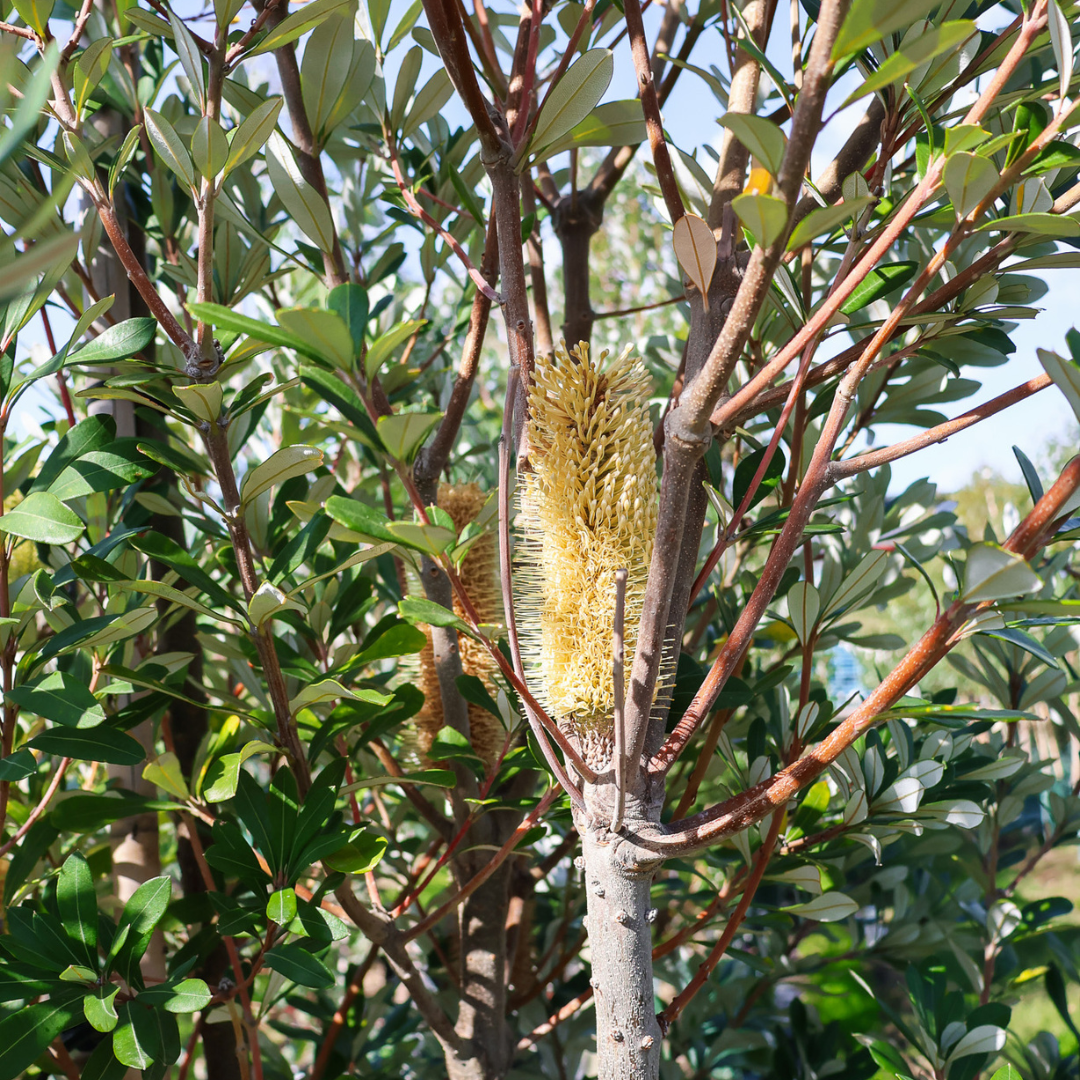

1. Banksia integrifolia (Coast Banksia)
Banksia integrifolia is the most widely planted Banksia in Australia and one of the tallest in the genus. The Coast Banksia thrives on sandy coastal soils and rewards with cream-yellow flower spikes that draw birds and bees through autumn and winter.
- Type
- Evergreen native
- Height
- 8 to 20m, can reach 30m in ideal conditions
- Width
- 4 to 6m
- Growth rate
- Moderate
- Foliage
- Dark green leaves with silver-white undersides
- Flowers
- Pale yellow cylindrical flower spikes from autumn into winter
- Form
- Upright tree form with spreading foliage
- Conditions
- Full sun, sandy well-drained soils, coastal and frost tolerant
- Maintenance
- Low, light tip pruning after flowering keeps it compact
- Best for
- Coastal gardens and windbreaks
Large feature shade trees
Native wildlife and bird gardens
Long-lived avenue planting
Carbon offset planting in suburban blocks
Soils that defeat other natives
Why choose it
Of all Banksia species, B. integrifolia is the workhorse. It tolerates coastal exposure, poor soils and frost, lives for decades, and gives you a tall genuine tree form rather than a shrub. The silver-backed foliage catches light beautifully in the afternoon.
Perfect pair
Pairs perfectly with Westringia fruticosa as a low coastal underplanting. The soft grey-green Westringia mound against the upright Coast Banksia trunk gives a layered native look that handles salt and wind together.
Tips for planting
Plant in full sun with sharp drainage. Avoid phosphorus-rich fertilisers. Mulch lightly and water through the first two summers only — established trees handle dry spells on their own.
The tall, tough, coastal Banksia that anchors a native garden.
Shop Banksia integrifolia


Comments