



Skip to content

OUR END OF FINANCIAL YEAR SALE IS LIVE!

20% OFF ORDERS OVER $1,500 - DISCOUNT APPLIES AUTOMATICALLY AT CHECKOUT

Waterhousea floribunda: The Best Native Hedging Tree

Waterhousea floribunda: The Best Native Hedging Tree

Waterhousia floribunda, the Weeping Lilly Pilly, is the fast native hedger that creates dense privacy in two to three seasons. Here is why it has become the default for native screens and how to grow it well.

EvergreenHedgingLilly PillyNativePrivacy TreesWaterhousia

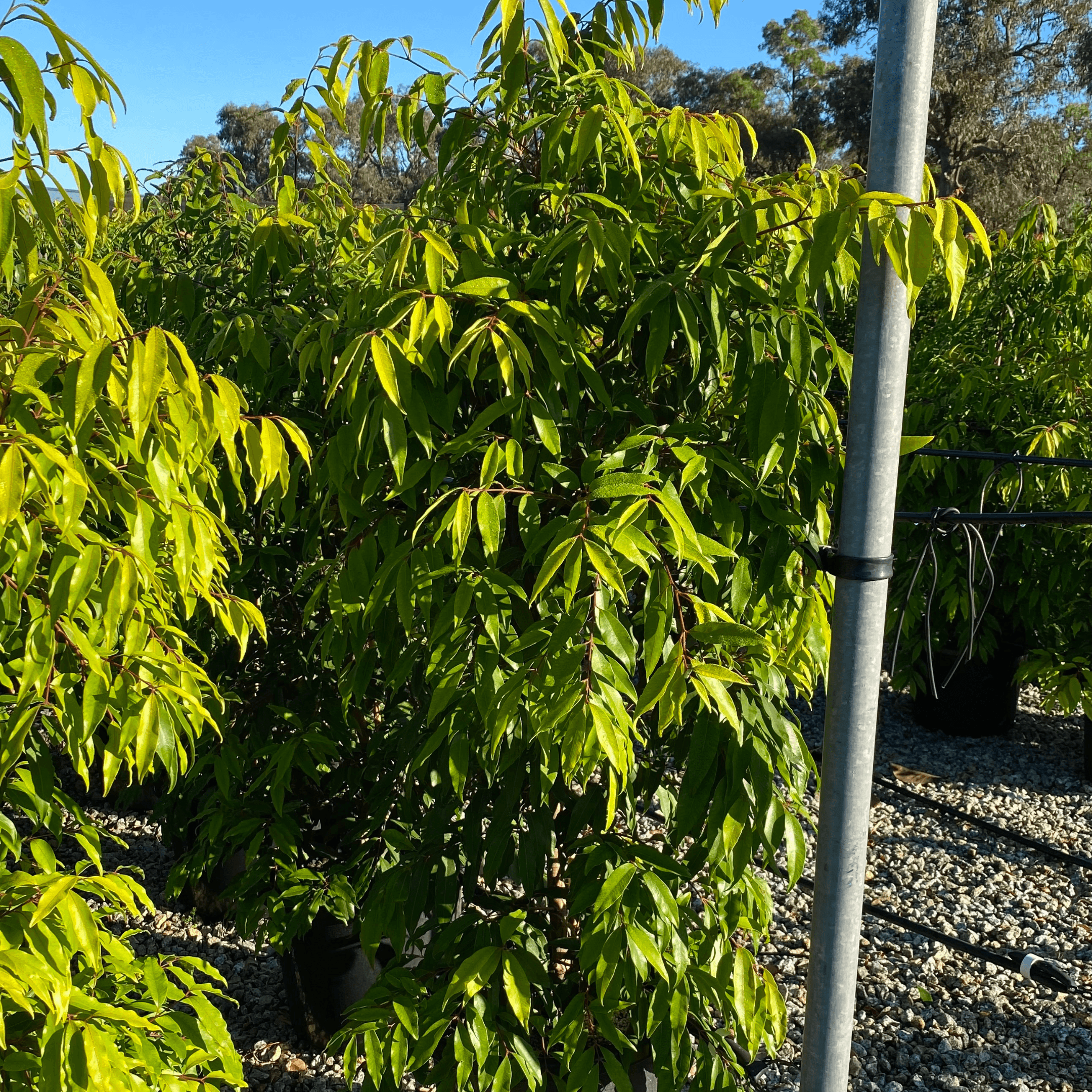
Waterhousea floribunda is one of the most planted Australian native hedging trees for a reason. Soft weeping foliage, fast establishment, dense screen formation and a relaxed habit that reads as part of the landscape rather than fighting against it.

This guide covers why Waterhousea earns its place at the top of our native hedging recommendations, how to plant it, how to keep it looking its best, and how to pair it with other plants for a layered garden.

What makes Waterhousea floribunda the standout native hedge

Three things set Waterhousea apart from other native hedging options. The soft weeping habit gives the screen movement and depth that boxy hedges can't match. The pink-bronze new growth flushes give the hedge constant warm colour through the warmer months. And the dense fine foliage handles tropical and humid coastal climates better than most Lilly Pilly cultivars — with strong psyllid resistance.

Where Waterhousea works best

Waterhousea is the pick when you want a tall soft native screen at 5 to 8m — boundary privacy that reads as garden rather than fence. It loves humid coastal and warm-temperate climates with consistent soil moisture. It tolerates part shade but reaches its densest screen in full sun.

Spacing and planting

Plant Waterhousea at 1m spacing for a dense screen. Dig a trench along the hedge line, twice the width of the rootball and the same depth. Mix the original soil with aged compost. Plant level, water in deeply, mulch heavily out to the row, and water through the first two summers.

Care across the year

Two light prunes a year keeps the weeping habit tidy and the screen dense. Tip prune in spring and again in late summer. Mulch annually, water deeply through summer in dry years, and feed with a native blend in early spring.

The Waterhousea perfect pair

Waterhousea pairs beautifully with a single feature tree out in front — Acer palmatum for a sheltered courtyard, Magnolia 'Coolwyn Gloss' for polished evergreen, Lagerstroemia 'Natchez' for summer flowering. Add Japanese Box Topiary Balls at the base for sculptural punctuation and Gardenia 'Magnifica' as a fragrant midstorey.

Final thoughts

Waterhousea floribunda is the soft native screen that frames the garden. Plant at 1m spacing, water through the first two summers, trim straight after each flush — the hedge holds its job for decades.

1. Waterhousia floribunda (Weeping Lilly Pilly)

Waterhousia floribunda is Australia's go-to native hedging tree. Glossy dark green leaves, a soft weeping habit, pink and bronze new growth flushes and reliable fast growth that creates a privacy screen in two to three seasons.

Type
Hedging and screening tree
Height
Up to 10 m if unpruned, easily held at 3 to 5 m as a hedge
Width
3 to 5 m
Growth rate
Fast, around 50 cm per year once settled
Foliage
Glossy dark green with pink and bronze new growth, soft weeping habit
Flowers
Fluffy white flowers in summer attractive to bees and birds
Form
Soft, weeping, dense at the base
Conditions
Full sun to part shade, prefers moist well-drained soil, tolerates frost and 30 degrees C and above once established
Maintenance
Deep water through the first two summers, mulch generously, can be pruned to desired height once or twice a year
Best for
Native privacy hedges, screening along boundaries, softer alternative to Ficus

Why choose it

Combines speed, density and that soft weeping habit, all from a native that handles heat well

Perfect pair

Pair with a Magnolia Coolwyn Gloss as feature for layered foliage tones and white perfumed flowers

Tips for planting

Plant 1 m apart for a continuous hedge, keep mulch off the trunk, do not let it dry out in year one

The native gold standard for fast hedging.

Shop Waterhousia floribunda

2. Ficus microcarpa 'Flash' (Ficus Hillii Flash)

Ficus Hillii Flash is the formal evergreen alternative to Waterhousia, with a denser more structured look and an even faster growth rate of 40 to 60 cm per year. Great where a clipped formal hedge is the brief.

Type
Hedging and screening tree
Height
Up to 15 m if unpruned, easily kept at 2 to 4 m as a hedge
Width
4 to 6 m if unpruned, 1 to 1.5 m as a hedge
Growth rate
Fast, 40 to 60 cm per year
Foliage
Glossy mid-green, dense
Form
Upright, dense, very responsive to pruning
Conditions
Full sun to part shade, well-drained soil, copes with heat
Maintenance
Deep water young plants, spring and autumn feed, can be pruned to desired height
Best for
Formal hedges, fast tall screens, contemporary boundary planting

Why choose it

The closest direct competitor to Waterhousia on speed, with a more formal finished look

Perfect pair

Pair with a feature Magnolia Teddy Bear in front for layered foliage contrast

Tips for planting

Plant 80 cm to 1 m apart, tip prune from the start

Formal and fast.

Shop Ficus microcarpa 'Flash'

3. Syzygium australe 'Resilience' (Resilience Lilly Pilly)

Syzygium 'Resilience' is the psyllid-resistant Lilly Pilly bred for clean leaves and reliable growth. A smaller cousin to Waterhousia and the right choice when you want a tidy native screen at lower heights.

Type
Hedging and screening tree
Height
Up to 5 m if unpruned, comfortable at 2 to 3 m
Width
2 to 3 m
Growth rate
Fast, 40 to 50 cm per year
Foliage
Glossy green with red new growth flushes, dense
Form
Upright, dense, neat
Conditions
Full sun to part shade, most well-drained soils
Maintenance
Water and feed in the first two seasons, can be pruned to desired height two to three times a year
Best for
Smaller native hedges and screens where psyllid is a concern

Why choose it

Cleaner leaf, more compact form than Waterhousia, perfect for tighter spots

Perfect pair

Pair with a Magnolia Little Gem feature for height and white perfumed flowers

Tips for planting

Plant 70 to 80 cm apart, mulch generously

The clean-leafed compact option.

Shop Syzygium australe 'Resilience'

4. Laurus nobilis 'Miles Choice' (Miles Choice Bay Tree)

Bay 'Miles Choice' is the improved upright form of the classic Mediterranean bay. A slower more refined hedger that delivers a tightly clipped formal look and edible aromatic leaves.

Type
Hedging and screening tree
Height
Up to 5 m if unpruned, comfortable at 2 to 3 m as a hedge
Width
1 to 2 m
Growth rate
Slow to moderate
Foliage
Glossy dark green aromatic leaves, dense
Form
Upright, compact
Conditions
Full sun to part shade, well-drained soil, frost tolerant once established
Maintenance
Light pruning two or three times a year, slow steady growth makes it easy to maintain shape, can be pruned to desired height
Best for
Formal entries, kitchen garden edges, pool surrounds

Why choose it

Where Waterhousia is the fast soft option, Bay is the slow formal option

Perfect pair

Pair with a feature Magnolia Coolwyn Gloss for layered glossy foliage

Tips for planting

Plant 60 to 70 cm apart for a tight hedge, mulch well

The classic formal hedger.

Shop Laurus nobilis 'Miles Choice'

Compare at a glance

CultivarHeightWidthFormFoliageBest if you…
Waterhousia floribunda
Weeping Lilly Pilly
Up to 10 m if unpruned, easily held at 3 to 5 m as a hedge3 to 5 mSoft, weeping, dense at the baseGlossy dark green with pink and bronze new growth, soft weeping habitNative privacy hedges, screening along boundaries, softer alternative to Ficus
Ficus microcarpa 'Flash'
Ficus Hillii Flash
Up to 15 m if unpruned, easily kept at 2 to 4 m as a hedge4 to 6 m if unpruned, 1 to 1.5 m as a hedgeUpright, dense, very responsive to pruningGlossy mid-green, denseFormal hedges, fast tall screens, contemporary boundary planting
Syzygium australe 'Resilience'
Resilience Lilly Pilly
Up to 5 m if unpruned, comfortable at 2 to 3 m2 to 3 mUpright, dense, neatGlossy green with red new growth flushes, denseSmaller native hedges and screens where psyllid is a concern
Laurus nobilis 'Miles Choice'
Miles Choice Bay Tree
Up to 5 m if unpruned, comfortable at 2 to 3 m as a hedge1 to 2 mUpright, compactGlossy dark green aromatic leaves, denseFormal entries, kitchen garden edges, pool surrounds