



Skip to content

OUR END OF FINANCIAL YEAR SALE IS LIVE!

20% OFF ORDERS OVER $1,500 - DISCOUNT APPLIES AUTOMATICALLY AT CHECKOUT

Best Trees for Coastal Gardens: 14 Salt-Tolerant Picks for Australian Coastal Conditions

Best Trees for Coastal Gardens: 14 Salt-Tolerant Picks for Australian Coastal Conditions

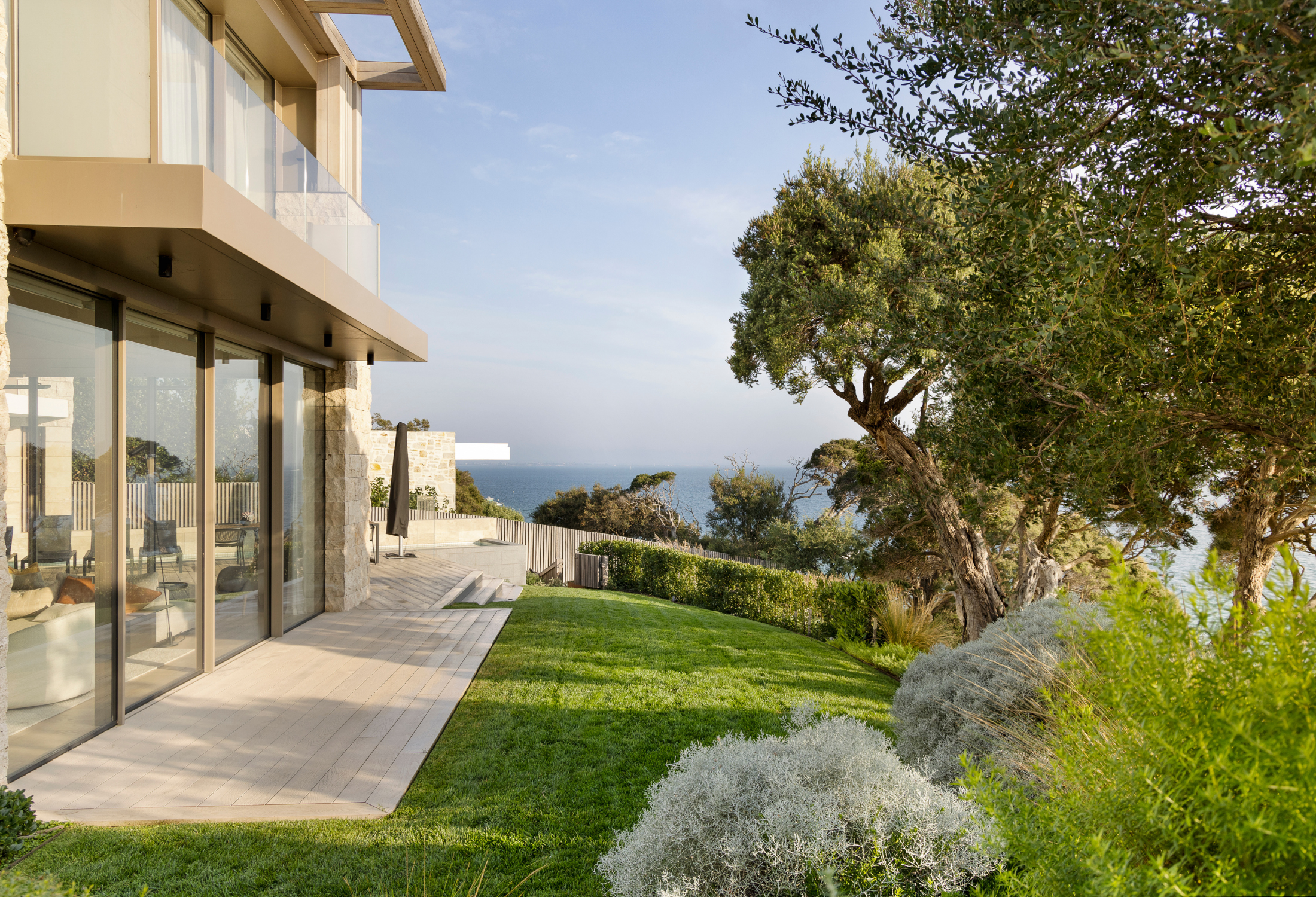
A practical guide to designing for the Australian coast. Front-line salt-tolerant natives, second-row Mediterranean species, and the layering moves that turn a wind-blasted yard into a designed coastal garden.


Australian NativeCoastal TolerantSalt TolerantWind Resistant

The coast tests every garden. Salt-laden wind tears at foliage, sun bleaches colour, sandy soils drain water away within hours, and the species that thrive in inland gardens decline within a season. Most planting failures in coastal Australia come from choosing trees that look right but cannot handle the conditions.

This guide is for anyone planting a garden within a kilometre of the sea. From the front-line natives that hold the kerb against direct salt spray, to the Mediterranean and tropical species that thrive in protected courtyards behind them, the fourteen picks below cover every layer of a coastal garden.

Front line vs second row

The single most important decision in a coastal garden is which species sit in the wind and which sit behind shelter. Front-line plants take the direct salt spray and wind off the water. Banksia integrifolia, Coastal Tea Tree, Westringia, Casuarina and Moonah were all evolved for these conditions and thrive where most others fail.

Second-row plants benefit from the windbreak the front-line provides. Bay, Olive, Frangipani and Bougainvillea can all do well in coastal gardens, but they need the protection of the front-line species to perform their best. Plan the layout in two tiers and the planting holds together. Get this decision wrong and even the toughest species struggle.

The silver-coast palette

Coastal gardens read best in a restrained palette. Silver and grey-green foliage species (Olive, Banksia silver-back leaf, Westringia, Eucalyptus cinerea) handle the strong sun better than dark-leaved species and form the visual base of the planting. Layer in green textures (Casuarina 'Cousin It', Hibiscus tiliaceus) for contrast.

Strong colour comes from flowers (Banksia gold cones, Bougainvillea white or pink, Frangipani fragrant white) rather than foliage. This palette is also forgiving in coastal sun, where dark-leaved species can scorch and bleach within a few seasons. Pick the palette first, then choose species that fit it.

Wind, salt and soil

Coastal soils are typically sandy and free-draining, which suits most of the picks below. Improve the planting hole with aged compost and a moisture-retaining additive (coco coir or aged manure) before planting any new tree. Mulch heavily with chunky bark and refresh annually. Fine compost mulches blow away in coastal wind and provide little benefit.

Wind is the persistent challenge. Stake new plants firmly with two stakes, not one, and use soft figure-eight ties to allow some flex. The flex is critical: a tree that can move slightly in wind develops a stronger root system than one held rigid. Plan staggered planting to break wind exposure progressively across the site, with the toughest natives at the front and softer species behind.

Layering and structure

A coastal garden built without layers reads as scrubland. Plan the four tiers from sea to house: a wind-front layer of low Westringia or Coastal Tea Tree, a mid layer of Banksia 'Sentinel' or 'Greenwave' Casuarina, a feature layer of Moonah or Coast Banksia, and a backdrop layer of Hibiscus tiliaceus or a tall Eucalyptus.

In sheltered courtyards behind the structure, swap in the Mediterranean and tropical second-row species: Olive 'Tolley's Upright', Bay Miles Choice, Plumeria Tricolour, Bougainvillea 'White Cascade', Alcantarea 'Silver Plum'. The transition from front-line natives to sheltered Mediterranean reads as deliberate design when done well, with the planting style shifting as you move from the exposed front to the protected interior.

Before you start: what you'll need

Site assessment for coastal exposure
Walk the boundary. Map the wind.

Before you choose a single plant, work out the conditions you're planting into.

• Prevailing wind direction (typically the salt-laden one)
• Distance to the water line (front-line species under 200 m, second-row from 200 m to 1 km)
• Soil type (sand, sandy loam, or rocky)
• Existing windbreak (a fence, a structure, neighbouring trees)
• Frost risk (uncommon coastal, but possible in sheltered inland coastal pockets)

The decisions you make based on this assessment determine whether the planting thrives or fails.
Soil amendments for sandy coastal soil
Free-draining sand is a gift for drainage and a problem for nutrients and moisture.

Coastal sandy soils dry out within hours of rain and lose nutrients fast. The fix is to improve the planting hole before any tree goes in.

• Aged compost (one part to four parts existing soil)
• Coco coir or aged manure for moisture retention
• Slow-release fertiliser at planting (low-phosphorus for natives, general for Mediterranean)
• Pelletised seaweed for soil biology

The amended planting hole holds moisture long enough for new roots to push out into the surrounding sand and find their own way.
Two stakes and soft ties
Coastal wind defeats single-stake plantings.

Always use two hardwood stakes per new tree, driven outside the rootball on either side. Tie with soft figure-eight ties that allow some flex.

The flex matters. A tree held rigidly to the stake develops a weak surface root system. A tree allowed to flex slightly develops a deeper anchor.

Keep stakes in place for two full growing seasons. Check ties every six months and loosen as the trunk thickens.
Chunky bark mulch, applied heavily
Fine compost mulches blow away on the coast.

Use chunky pine bark, eucalyptus mulch, or pebble mulch over drainage layers. Apply 75 to 100 mm depth, kept 50 mm clear of trunks to prevent collar rot.

Mulch on a coastal garden has three jobs: hold the moisture in sand that wants to drain it away, insulate roots from extreme sun, and protect surface roots from salt deposit. Refresh annually before summer.
The right feed for each species
One bag of fertiliser will not feed every plant in the garden.

Australian natives (Banksia, Leptospermum, Westringia, Casuarina, Melaleuca) need a low-phosphorus native plant fertiliser only. A standard garden feed will kill them within a season.

Mediterranean species (Olive, Bay) take a moderate slow-release general fertiliser in spring. Tropical species (Frangipani, Bougainvillea, Hibiscus tiliaceus) benefit from a slow-release tropical or general fertiliser in spring.

Buy two bags: native, and general. Apply each to the right plants in early spring and the whole garden moves into the growing season properly fed.

How to keep your tree happy

Water deeply through establishment, then back off
Two summers of deep weekly watering is the foundation of a coastal garden.

Through years one and two, water deeply once a week in dry weather. Use a slow soak rather than a sprinkler so water penetrates rather than running off the sand. After year two, most established coastal plants need almost no supplementary water.

The species most at risk from over-watering once established are the front-line natives (Banksia, Leptospermum, Westringia). These plants evolved for poor sandy soils and minimal water. Continued frequent watering past establishment causes root rot, weak growth and decline.
Feed once in spring, no more
One light feed a year is enough for most coastal plants.

Apply the appropriate feed (native or general) in early spring as growth restarts. Use a half-rate first feed for newly planted trees, full rate for established ones.

Don't be tempted to feed again in summer or autumn for natives. Over-feeding leads to leggy growth that breaks in coastal wind, and pushes flowering at the wrong time of year.

Liquid seaweed every six weeks through spring and summer is the gentlest top-up and benefits everything in the garden.
Mulch annually, refresh after storms
Heavy chunky mulch is the most cost-effective intervention in any coastal garden.

Apply 75 to 100 mm of chunky bark mulch over all garden beds. Refresh annually before summer and again after any major coastal storm that blows mulch away.

Mulch on a coastal garden does five jobs: conserves moisture, insulates roots from temperature swings, suppresses weeds, breaks down to feed the soil, and reads as a finished garden visually. The annual top-up cost is one of the highest-return investments in coastal garden maintenance.
Check stakes and ties for two years
The wind that broke last year's stakes will break this year's too.

Inspect stakes and ties every six months for the first two growing seasons. Check that ties haven't started to cut into thickening trunks. Replace any stakes that have rotted at the base.

After two full growing seasons, remove stakes entirely. A tree that has been gradually allowed to flex through year one and two is now anchored. Continued staking after this point actually weakens the trunk by preventing the strengthening response to wind.
Wash salt off foliage after major storms
For front-row exposed gardens within 200 m of the surf, rinsing foliage after major weather events is a high-return move.

After cyclonic conditions or extreme onshore winds, hose the foliage of any salt-burned plants with fresh water within 24 hours. Salt that sits on leaves continues to draw moisture out long after the wind has died.

Front-line natives (Banksia, Leptospermum, Casuarina) are generally tough enough to recover on their own. Second-row species (Bay, Olive, Frangipani) benefit significantly from the rinse.

Perfect pairs for the front garden

Banksia integrifolia + Banksia 'Sentinel'
The native coastal hedge plus feature.

A wide spreading Coast Banksia (Banksia integrifolia) set back as the canopy feature, with a row of narrow Banksia 'Sentinel' planted along the front as a hedge-like vertical screen.

Why it works: same species, two completely different silhouettes. Same gold cones, same toughness, dramatically different forms. The pair delivers both the spreading canopy and the narrow vertical in one consistent native palette.
Olive 'Tolley's Upright' + Lavender
The Mediterranean coastal courtyard.

A row of Olive 'Tolley's Upright' as the narrow vertical Mediterranean feature, underplanted with a sweep of Lavandula in front. Pebble mulch ties the two together.

Why it works: the silver of the Olive foliage and the silver of the Lavender flowers share a tonal palette. Both species thrive in coastal sandy free-draining conditions and tolerate the salt that defeats softer plantings.
Coastal Tea Tree + Westringia front line
The front-line wind break.

A row of Leptospermum laevigatum (Coastal Tea Tree) as the front-line tall windbreak, with Westringia fruticosa clipped tight at the base as the low formal layer.

Why it works: the Tea Tree carries the height and breaks the wind for everything behind. The clipped Westringia delivers the formal lower band that turns a wind break into a designed garden boundary. Both species handle direct salt spray and thrive in pure sand.
Frangipani + Agave attenuata
The sheltered tropical courtyard.

A Plumeria rubra 'Tricolour' Frangipani as the deciduous sculptural feature in a sheltered courtyard. At its base, a sweep of Agave attenuata for year-round bold rosette form.

Why it works: the Frangipani delivers the seasonal flowering moment and the fragrance that defines a coastal courtyard, while the Agave holds the planting through winter when the Frangipani is bare. Both species need protection from direct salt spray but thrive in sandy coastal soil.
Bougainvillea on fence + Westringia balls
The colour-and-formality pair for a coastal fence.

Bougainvillea 'White Cascade' trained along the front fence, with clipped Westringia topiary balls in matching companion pots or in-ground at the base.

Why it works: the Bougainvillea delivers the coastal-tropical white cascade that reads from across the road. The Westringia balls deliver the formal anchor that prevents the planting from reading as casual scrubland.
Casuarina 'Greenwave' hedge + 'Cousin It' at base
The full Casuarina compose.

A weeping Casuarina 'Greenwave' as the mid-height screening row, with prostrate Casuarina 'Cousin It' as the matching ground cover at the base.

Why it works: two forms of the same genus, two completely different scales. The Greenwave brings movement and screening overhead; the Cousin It carries the fine textural cover at ground level. Both species are hardy coastal natives that handle wind and salt without complaint.
Moonah + Coast Banksia
The native sculptural cluster.

A Melaleuca lanceolata (Moonah) as the gnarled twisted-trunk feature, with a single Coast Banksia (Banksia integrifolia) planted nearby for canopy contrast.

Why it works: both species are visual standouts for completely different reasons. The Moonah brings the bonsai-like trunk character that no other native can match. The Coast Banksia brings the spreading canopy with golden cones. Planted together they create the coastal sculptural moment that defines a designed front yard.
Bay Standards + Alcantarea 'Silver Plum'
The Mediterranean-tropical mix for a sheltered courtyard.

Two Laurus 'Miles Choice' Bay Standards in matching pots flanking the courtyard entrance, with a sculptural Alcantarea 'Silver Plum' planted in-ground or in a generous pot as the central feature.

Why it works: the Bay carries the classical Mediterranean formality of trained lollipop standards. The Alcantarea delivers the tropical architectural moment in a single sculptural rosette. Both species handle coastal heat without fuss and bring two distinct garden styles into deliberate dialogue.

Caring for your tree through the seasons

Spring: feed once and watch for new growth
The single feeding window for the year.

Apply the appropriate spring feed (low-phosphorus native fertiliser for natives, slow-release general for Mediterranean and tropical species) in early spring as growth restarts. One feed only, at the right rate, sets the year up properly.

Refresh chunky bark mulch to 75 to 100 mm. Inspect for early pests, particularly on Frangipani and Hibiscus. Plant any new coastal trees once frost risk has passed. Check that stakes from the previous season are still doing their job and replace any that have rotted.
Summer: water through extreme heat, watch for salt burn
Coastal sun bleaches and salt spray burns.

Deep weekly soak in dry weather for trees in years one and two. Established trees from year three onward generally need no supplementary water unless conditions are extreme.

After any major coastal storm, rinse foliage of second-row species (Bay, Olive, Frangipani) with fresh water to remove salt deposits. Apply liquid seaweed every six weeks to support new growth. Watch for fruit fly on Plumeria and scale on Bay and Olive.
Autumn: enjoy flowering and prep for winter
The Banksia flowering season for coastal natives.

Banksia integrifolia and Banksia 'Sentinel' both flower through autumn. Allow the cones to develop and feed the local birds. Frangipani enters dormancy and drops its leaves cleanly through autumn.

Top-dress all beds with fresh mulch before winter storms. Reduce watering for Mediterranean species (Olive, Bay) as they enter their natural slowdown. Cease feeding by late autumn. Inspect staking and ties one final time before winter weather sets in.
Winter: structural prune and storm recovery
The quiet months for active growth, the busy months for structural work.

Major structural pruning on deciduous species (Frangipani, Bougainvillea, Hibiscus tiliaceus) while dormant. Light tip-pruning on natives if needed; never cut into old wood.

After any storm, check the garden for damage. Stake any leaning trees firmly back to vertical. Replace mulch that has blown away. Frost-protect tender species in inland coastal pockets. Plan any new plantings and order for early-spring delivery.

Pruning: when, how, and why it matters

Native pruning: tip prune only
The single most important pruning rule for coastal natives.

Banksia, Leptospermum, Westringia, Casuarina and Melaleuca will not reshoot from hard old wood. Tip prune only, working on the soft new growth at the end of branches. Never cut into the woody centre.

Timing: light tip prune after the main flowering flush for each species. For Banksia, that's after autumn flowering. For Westringia, after the spring flush. The goal is form maintenance, not reshaping.
Mediterranean pruning: light shape twice a year
Olive and Bay take regular light shaping.

Olive 'Tolley's Upright' suits a light shape after spring flush and again in early autumn to maintain the upright form. Bay Standards need clipping twice a year to hold the lollipop head shape; once after the spring growth flush, once in early autumn before winter rest.

Both species tolerate harder pruning if structure has been lost, but recovery takes a full growing season. Maintenance is always cheaper than restoration.
Tropical pruning: minimal, after flowering
Frangipani, Hibiscus tiliaceus and Alcantarea need very little active pruning.

Frangipani sets the next year's flowers on the previous year's branch tips, so any pruning sacrifices flowering. Limit pruning to dead or damaged wood, done in late winter while dormant. Hibiscus tiliaceus shapes itself; remove only crossing or damaged branches.

Alcantarea is a bromeliad and the rosette itself is the form; never cut leaves. Remove only completely dead lower leaves as the rosette matures.
Bougainvillea: hard prune in late winter
The exception to the coastal pruning rules.

Bougainvillea 'White Cascade' benefits from a hard pruning in late winter while dormant. Cut back the previous year's flowering wood by half to two thirds. New growth from the cuts produces the year's flower display.

Untouched Bougainvillea becomes a tangled woody mess with sparse flowering. Hard-pruned Bougainvillea delivers the spectacular cascading display the species is grown for. Wear thick gloves and long sleeves: the species has serious thorns.

Our favourite picks

1. Banksia integrifolia (Coast Banksia)

The iconic Australian coastal native. Leathery dark green leaves with silver undersides, large golden cylindrical flower cones through autumn-winter, indestructible across the harshest coastal conditions. Coast Banksia is named for what it does best.

Type
Iconic coastal native flowering tree
Height
6 to 10m
Width
3 to 5m
Growth rate
Moderate
Foliage
Leathery dark green with silver undersides
Flowers
Large golden cones, autumn-winter
Form
Upright spreading
Conditions
Full sun, well-drained, full direct salt spray tolerant
Maintenance
Very low.
Best for
the iconic salt-tolerant native for direct front-line coastal positions, or autumn-winter golden cones attracting honeyeaters.

Why we love it

Banksia integrifolia is the definitive coastal native. Where most trees suffer in direct salt spray, Coast Banksia thrives — the species evolved on Australian coastal headlands. Golden autumn-winter cones add seasonal interest when most coastal plants are quiet.

Perfect pair

Plant in front-line coastal exposure with Banksia 'Sentinel' for layered native column-spreading.

Tips for planting

Direct salt spray tolerant. Full sun. Avoid phosphorus fertiliser.

The iconic direct-coastal native. Golden autumn-winter cones.

Shop Banksia integrifolia

2. Banksia integrifolia 'Sentinel' (Sentinel Banksia)

Narrow columnar Coast Banksia cultivar. Same coastal toughness in a tight upright form — perfect for narrow coastal driveways, matched-pair entries and tight planting zones in salt-spray gardens.

Type
Narrow native coastal column
Height
4 to 6m
Width
1.5 to 2m
Growth rate
Moderate
Foliage
Glossy dark green leathery
Flowers
Golden cones, autumn-winter
Form
Tight narrow columnar
Conditions
Full sun, well-drained, direct salt spray tolerant
Maintenance
Very low.
Best for
a narrow salt-tolerant native column, or matched-pair coastal sentinels at the entry.

Why we love it

Sentinel adds narrow architectural form to the indestructible Coast Banksia toughness. Perfect for coastal positions where the standard species would spread too wide.

Perfect pair

Plant in matched pair at gate, or pair with Banksia integrifolia for layered native column-spreading.

Tips for planting

Direct salt spray tolerant. Full sun. 3m spacing for sentinel row.

Narrow coastal native column with golden autumn cones.

Shop Banksia integrifolia 'Sentinel'

3. Laurus nobilis 'Miles Choice' (Miles Choice Bay Laurel)

Refined Mediterranean Bay handles coastal conditions reliably. Dense glossy aromatic foliage, tidy upright form, drought and salt tolerant once established. The Mediterranean structure pick for coastal gardens.

Type
Mediterranean coastal evergreen
Height
3 to 5m
Width
1.5 to 2.5m
Growth rate
Moderate
Foliage
Glossy dark green aromatic
Flowers
Small cream in spring
Form
Dense upright
Conditions
Full sun to part shade, well-drained, second-row coastal positions
Maintenance
Light pruning to shape.
Best for
refined Mediterranean structure in a coastal garden, or aromatic culinary Bay in slightly sheltered second-row coastal positions.

Why we love it

Bay 'Miles Choice' brings refined Mediterranean structure to coastal gardens. Handles salt-laden air and drought once established, and the dense tight habit holds shape in coastal wind.

Perfect pair

Plant with Olea 'Tolley's Upright' for layered Mediterranean coastal.

Tips for planting

Second-row coastal positions preferred. Salt tolerant once established.

Refined Mediterranean Bay for the coastal garden.

Shop Laurus nobilis 'Miles Choice'

4. Leptospermum laevigatum (Coastal Tea Tree)

Tough Australian native with twisted multi-trunk form and soft grey-green foliage. The indestructible coastal native — thrives in salt, wind and poor sandy soils, and mature specimens develop sculptural character.

Type
Tough coastal native feature
Height
4 to 6m
Width
3 to 4m
Growth rate
Moderate
Foliage
Soft grey-green linear
Flowers
White small in spring
Form
Twisted multi-trunk sculptural
Conditions
Full sun, well-drained, full direct salt spray tolerant
Maintenance
Very low.
Best for
indestructible front-line coastal positions, or sculptural twisted multi-trunk feature.

Why we love it

Coastal Tea Tree is named for what it does best. Tolerates salt spray, sandy soils, wind and drought — conditions that defeat most other species. Mature specimens develop sculptural twisted multi-trunk form that becomes the garden's defining feature.

Perfect pair

Plant as informal grove of three to five, or pair with Melaleuca lanceolata (Moonah) for layered twisted-trunk native sculpture.

Tips for planting

Direct salt spray tolerant. Develops character with age.

The indestructible coastal native. Twisted multi-trunk sculpture.

Shop Leptospermum laevigatum

5. Melaleuca lanceolata (Moonah Tree)

Iconic coastal native with dramatic gnarled multi-trunk form, dark papery bark and soft fine grey-green foliage. The most sculptural coastal native in cultivation — mature Moonahs read as living coastal art.

Type
Sculptural coastal native feature
Height
5 to 8m
Width
4 to 6m
Growth rate
Slow
Foliage
Fine soft grey-green
Flowers
White cream cylindrical brushes
Form
Gnarled multi-trunk sculptural
Conditions
Full sun, well-drained, direct salt spray and drought tolerant
Maintenance
Very low.
Best for
the most sculptural coastal native in cultivation, or living art in a coastal feature position.

Why we love it

Moonah develops the most dramatic gnarled multi-trunk form of any Australian native. Each mature specimen is unique — living coastal sculpture that becomes the property's identifying feature.

Perfect pair

Plant as single sculptural specimen, or pair with Leptospermum laevigatum for layered twisted-trunk coastal grove.

Tips for planting

Slow growing — buy mature specimens for impact. Direct salt spray tolerant.

Gnarled coastal native sculpture. Living art.

Shop Melaleuca lanceolata

6. Olea europaea 'Tolley's Upright' (Tolley's Upright Olive)

Narrow Mediterranean Olive with silver-grey foliage. Refined column form, drought and salt tolerant, low-fruiting habit. The Mediterranean refinement pick for coastal gardens.

Type
Mediterranean coastal column
Height
3 to 5m
Width
1 to 1.5m
Growth rate
Moderate
Foliage
Silver-grey narrow evergreen
Flowers
Insignificant cream
Form
Narrow upright column
Conditions
Full sun, well-drained, drought and salt tolerant
Maintenance
Light pruning.
Best for
the refined Mediterranean column for coastal gardens, or matched-pair Mediterranean coastal sentinels.

Why we love it

Tolley's Upright brings Mediterranean refinement to coastal gardens. Silver-grey foliage and narrow column form contrast beautifully against native coastal plants, and the species is highly salt and drought tolerant.

Perfect pair

Plant with Westringia for layered Mediterranean-coastal.

Tips for planting

2 to 2.5m spacing. Salt and drought tolerant. Low-fruiting variety.

Mediterranean column for the coastal garden.

Shop Olea europaea 'Tolley's Upright'

7. Westringia fruticosa (Coastal Rosemary)

Australian native that reads as Mediterranean herb. Fine grey-green foliage, pale year-round flowers, salt and drought tolerant. The native coastal alternative to European Rosemary — reliably handles harsh coastal conditions.

Type
Native Mediterranean-look coastal evergreen
Height
1 to 1.5m
Width
1 to 1.5m
Growth rate
Moderate
Foliage
Fine grey-green needle-like
Flowers
Pale lavender-white year-round
Form
Dense rounded mounding
Conditions
Full sun, well-drained, direct salt and coastal tolerant
Maintenance
Light pruning. Clips to a tight ball.
Best for
a Mediterranean-look native for direct coastal exposure, or clipped formal balls for coastal structure.

Why we love it

Westringia is the native pick that gives Mediterranean herb texture without struggling in salt. Where European Rosemary suffers in coastal conditions, Westringia thrives — same fine grey-green texture, native toughness.

Perfect pair

Plant as low hedge under Olea 'Tolley's Upright', or as ground layer beside Banksia integrifolia.

Tips for planting

Full sun. Direct salt tolerant. Clips beautifully.

Native Mediterranean herb for the coastal garden.

Shop Westringia fruticosa

8. Plumeria rubra 'Tricolour' (Frangipani)

Iconic tropical Frangipani with intensely fragrant pink-cream-yellow flowers in summer-autumn. Sculptural deciduous form, drought tolerant once established. The classic coastal-tropical fragrance pick.

Type
Tropical fragrant coastal feature
Height
4 to 6m
Width
3 to 4m
Growth rate
Slow to moderate
Foliage
Large soft mid-green deciduous
Flowers
Intensely fragrant tricolour summer-autumn
Form
Open sculptural multi-trunk
Conditions
Full sun, well-drained, frost-free, tolerates coastal conditions
Maintenance
Very low.
Best for
iconic tropical coastal fragrance, or a Frangipani feature beside the pool or entry.

Why we love it

Frangipani is the iconic tropical coastal feature. Handles coastal exposure once established, the intense fragrance perfumes the surrounding area, and the sculptural form reads as resort holiday.

Perfect pair

Plant beside the pool entry, or pair with Bougainvillea 'White Cascade' for layered tropical coastal.

Tips for planting

Frost-free. Drought tolerant once established. Deciduous winter form is part of the appeal.

Iconic tropical coastal fragrance and form.

Shop Plumeria rubra 'Tricolour'

9. Bougainvillea 'White Cascade' (White Cascade Bougainvillea)

Cascading clouds of pure white bracts from spring through autumn. Iconic Mediterranean-tropical climber, drought and salt tolerant once established. The white-cascade wall climber for coastal gardens.

Type
Cascading tropical-coastal climber
Height
4 to 6m climbing
Width
3 to 4m
Growth rate
Fast
Foliage
Small mid-green
Flowers
Cascading pure white bracts spring through autumn
Form
Cascading climber or large mounding
Conditions
Full sun, well-drained, drought and salt tolerant
Maintenance
Prune after main flush.
Best for
the iconic cascading white climber for coastal walls or pergolas.

Why we love it

Bougainvillea is the high-impact coastal climber. Tolerates direct coastal exposure once established, and the cascading white bracts deliver one of the most dramatic flowering displays in any garden.

Perfect pair

Train against a coastal wall or pergola, or pair with Bougainvillea 'Mrs H.C. Buck' (Pink) for layered cascading colour.

Tips for planting

Drought tolerant once established. Tip-prune for compact form.

Cascading white clouds. The iconic coastal climber.

Shop Bougainvillea 'White Cascade'

10. Agave attenuata (Foxtail Agave)

Soft architectural Agave with pale blue-green curved rosette of leaves and no spines — safe to plant beside paths and seating. The most refined Agave for coastal feature positions, drought and salt tolerant, sculptural year-round.

Type
Soft architectural coastal succulent
Height
1 to 1.5m
Width
1.5 to 2m
Growth rate
Slow to moderate
Foliage
Pale blue-green curved rosette, spineless
Flowers
Spectacular arching foxtail spike once per lifetime
Form
Symmetrical curved rosette
Conditions
Full sun to part shade, well-drained, drought and salt tolerant
Maintenance
Very low. Minimal water once established.
Best for
the spineless coastal architectural succulent, or a safe sculptural feature beside paths and seating.

Why we love it

Agave attenuata is the spineless coastal Agave — architectural curved-rosette form without the dangerous spines of standard Agave species. Safe to plant beside paths, pool surrounds and seating areas where bigger spined Agaves can't go. The soft blue-green colour suits modern coastal design.

Perfect pair

Plant as single sculptural feature beside the pool or entry, or pair with Alcantarea 'Silver Plum' for layered architectural coastal.

Tips for planting

Spineless and path-safe. Drought tolerant once established. Salt tolerant.

Spineless architectural coastal Agave. Safe living sculpture.

11. Casuarina glauca 'Greenwave' (Greenwave Swamp Oak)

Cultivar of Australian native Casuarina with weeping fine green needle-foliage that moves dramatically in coastal wind. Tough across salt, drought and poor soils. The native textural feature that turns coastal wind into garden movement.

Type
Weeping native coastal feature
Height
5 to 8m
Width
3 to 5m
Growth rate
Moderate
Foliage
Fine weeping green needle-like
Flowers
Insignificant
Form
Upright weeping
Conditions
Full sun, well-drained, direct salt and drought tolerant
Maintenance
Very low.
Best for
a weeping native textural feature for coastal wind, or a tough native shade tree for harsh sites.

Why we love it

Greenwave Casuarina turns coastal wind into garden movement. The fine weeping foliage catches and moves with every breeze, and the species is native-tough across salt, drought and poor soils.

Perfect pair

Plant beside seating where the foliage movement is visible, or pair with Casuarina 'Cousin It' for layered native textural coastal.

Tips for planting

Direct salt tolerant. Full sun. Plant where wind movement can be appreciated.

Weeping native that catches coastal wind.

Shop Casuarina glauca 'Greenwave'

12. Casuarina glauca 'Cousin It' (Cousin It Casuarina)

Iconic prostrate ground cover Casuarina with cascading fine weeping foliage. Reads as flowing hair across coastal banks and slopes, holds direct salt exposure, drought tolerant. The most distinctive native ground cover in cultivation.

Type
Prostrate native coastal ground cover
Height
0.3 to 0.5m
Width
2 to 3m
Growth rate
Moderate
Foliage
Cascading fine weeping green
Flowers
Insignificant
Form
Prostrate cascading ground cover
Conditions
Full sun, well-drained, direct salt and drought tolerant
Maintenance
Very low.
Best for
iconic flowing ground cover for coastal banks and slopes, or a textural alternative to lawn in coastal positions.

Why we love it

Cousin It is the most distinctive coastal ground cover. The flowing cascading foliage reads as flowing hair across the landscape — a textural feature no other ground cover matches. Direct salt tolerant.

Perfect pair

Plant across coastal banks and slopes, or pair with Casuarina 'Greenwave' for layered weeping native coastal.

Tips for planting

Direct salt tolerant. Spreads to 3m. Excellent on banks and slopes.

Flowing native ground cover for coastal slopes.

Shop Casuarina glauca 'Cousin It'

13. Hibiscus tiliaceus 'Rubra' (Cottonwood Hibiscus)

Coastal native Hibiscus with massive bronze-purple leaves and yellow Hibiscus flowers that fade to bronze through the day. Dramatic bold leaf scale, salt and wind tolerant. The tropical-look native for coastal feature positions.

Type
Bold-leaf tropical coastal native
Height
5 to 8m
Width
4 to 6m
Growth rate
Fast
Foliage
Massive heart-shaped bronze-purple
Flowers
Yellow Hibiscus flowers, fade to bronze through day
Form
Upright spreading
Conditions
Full sun, well-drained, direct salt and coastal tolerant
Maintenance
Light pruning to shape.
Best for
bold-leaf tropical coastal feature, or massive bronze-purple foliage in a salt-tolerant native.

Why we love it

Cottonwood Hibiscus brings tropical bold-leaf scale to coastal gardens at native-tough reliability. The bronze-purple leaves are dramatic, the day-changing yellow-to-bronze flowers add unusual feature, and salt tolerance makes it ideal for front-line coastal feature positions.

Perfect pair

Plant beside coastal entry or pool, or pair with Banksia integrifolia for layered native coastal.

Tips for planting

Direct salt tolerant. Full sun. Fast growing.

Bronze-purple coastal native. Tropical look, native tough.

Shop Hibiscus tiliaceus 'Rubra'

14. Alcantarea imperialis 'Silver Plum' (Silver Plum Bromeliad)

Massive architectural Bromeliad with silvery-plum coloured leaves forming a dramatic rosette up to 1.5m wide. The most architectural coastal-tropical accent in cultivation — reads as living sculpture in coastal feature positions.

Type
Architectural coastal Bromeliad
Height
1 to 1.5m
Width
1 to 1.5m
Growth rate
Slow
Foliage
Massive silvery-plum strappy rosette
Flowers
Spectacular flower spike once per lifetime
Form
Massive symmetrical rosette
Conditions
Full sun to part shade, well-drained, drought and coastal tolerant
Maintenance
Very low.
Best for
the most architectural coastal Bromeliad in cultivation, or living sculpture beside the pool or entry.

Why we love it

Alcantarea 'Silver Plum' is the architectural coastal accent. The silvery-plum colour is unique among coastal plants, the massive rosette reads as living sculpture, and the species tolerates coastal conditions reliably.

Perfect pair

Plant as single specimen feature, or pair with Agave americana for layered architectural coastal.

Tips for planting

Drought and coastal tolerant. Single specimen reads strongest.

Silvery-plum coastal Bromeliad. Living sculpture.

Shop Alcantarea imperialis 'Silver Plum'

Frequently asked questions

What trees survive direct salt spray on the Australian coast?
The most reliable front-line salt-tolerant trees for Australian coastal conditions are Banksia integrifolia (Coast Banksia), Banksia 'Sentinel', Leptospermum laevigatum (Coastal Tea Tree), Melaleuca lanceolata (Moonah), Westringia fruticosa (Coastal Rosemary), Casuarina 'Greenwave' and Casuarina 'Cousin It'. All seven handle direct exposure to salt-laden wind and recover from cyclonic conditions.
What's the best hedge for a coastal garden?
For a front-line salt-spray hedge, Westringia fruticosa is the best choice. It clips tight, holds form, takes direct salt and recovers fast. For a taller informal coastal screen, Leptospermum laevigatum (Coastal Tea Tree) or Casuarina 'Greenwave' both screen well while handling direct exposure. Second-row sheltered gardens can support Bay Miles Choice or Lilly Pilly hedges.
Will olive trees grow on the Australian coast?
Yes, in second-row positions with some shelter from direct salt spray. Olives are highly salt tolerant compared to most ornamentals and thrive in sandy free-draining coastal soils. Choose Olea 'Tolley's Upright' for narrow vertical form, or an ex-ground mature Olive for sculptural feature impact. Plant behind a windbreak of native species like Banksia or Coastal Tea Tree.
Are Australian natives the best choice for coastal gardens?
For the front-line positions in direct salt spray, yes. Australian coastal natives like Banksia integrifolia, Leptospermum, Westringia, Casuarina and Melaleuca evolved in these exact conditions and thrive. For second-row sheltered positions behind a windbreak, Mediterranean species (Olive, Bay) and tropical species (Frangipani, Bougainvillea) all do well and bring different design qualities to the planting. The best coastal gardens combine both layers.
How do I protect coastal trees from wind?
Always stake new trees with two hardwood stakes, driven on either side of the rootball, with soft figure-eight ties that allow some flex. The flex is critical: trees held rigidly develop weak root systems. Keep stakes for two full growing seasons. Choose species evolved for wind exposure (Banksia, Leptospermum, Westringia) for front-line positions. Plan staggered layered planting so each tier of trees provides shelter for the tier behind.
What's the best coastal ground cover?
Casuarina 'Cousin It' is the standout prostrate coastal native, with fine weeping needle-like foliage that handles direct salt spray. For an architectural succulent ground layer in sheltered positions, Agave attenuata (the spineless Foxtail Agave) is the most striking option and is safe beside paths and entries. For Mediterranean-style coastal courtyards, Lavandula and prostrate Rosemary both work well in second-row positions.